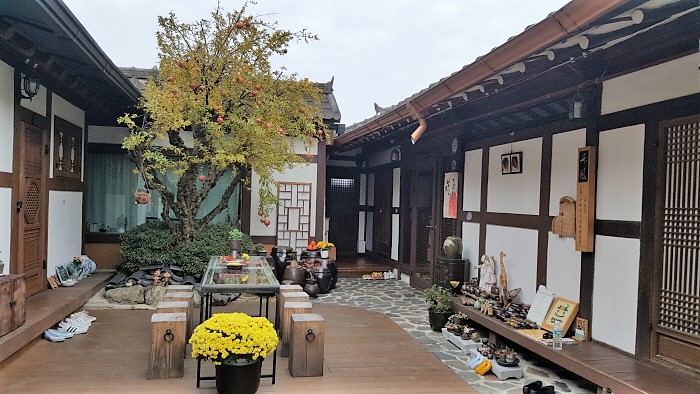
Inyeon Hanok (인연)
445.1M 2024-07-01
36 , Hanji-gil, Wansan-gu, Jeonju-si, Jeonbuk-do
Inyeon is a hanok stay positioned near the public parking lot in Jeonju Hanok Village, Jeollabuk-do - a little away from the bustling main streets and so a quiet place to stop. (The name Inyeon means ‘a special relationship’.) As well as bathrooms and AC, all guestrooms have bare-beam ceilings, lacquered hanji flooring and traditional household items evoking old-time village life. In the yard stands a 200-year-old pomegranate tree and a table made of reclaimed wood where visitors can rest. Free traditional games such as Yutnori and Jegichagi are provided.

Omokdae and Imokdae Historic Sites (오목대와 이목대)
506.8M 2025-07-22
55 Girin-daero, Wansan-gu, Jeonju-si, Jeonbuk-do
Omokdae Historic Site is located on top of a steep hill and is one of the places where Yi Seong-gye, who later became King Taejo, the first king of the Joseon dynasty, stopped to celebrate his victory on his way home from a war against the Japanese army at Unbong Peak of Hwangsan Mountain. Across the bridge from Omokdae is Imokdae Historic Site, situated at the foot of Seungamsan Mountain. Approximately 80 meters downhill from Imokdae are memorial stones and a building where Mokjo, the great-great-grandfather of King Taejo, once used to live. The engraved letters on the stones are the handwritings of Emperor Gojong. Mokjo moved to Hamgyeongdo as a result of a dispute with the then minister of Jeonju, an incident which King Taejo believed to have laid the foundation for him to shape the Joseon dynasty.
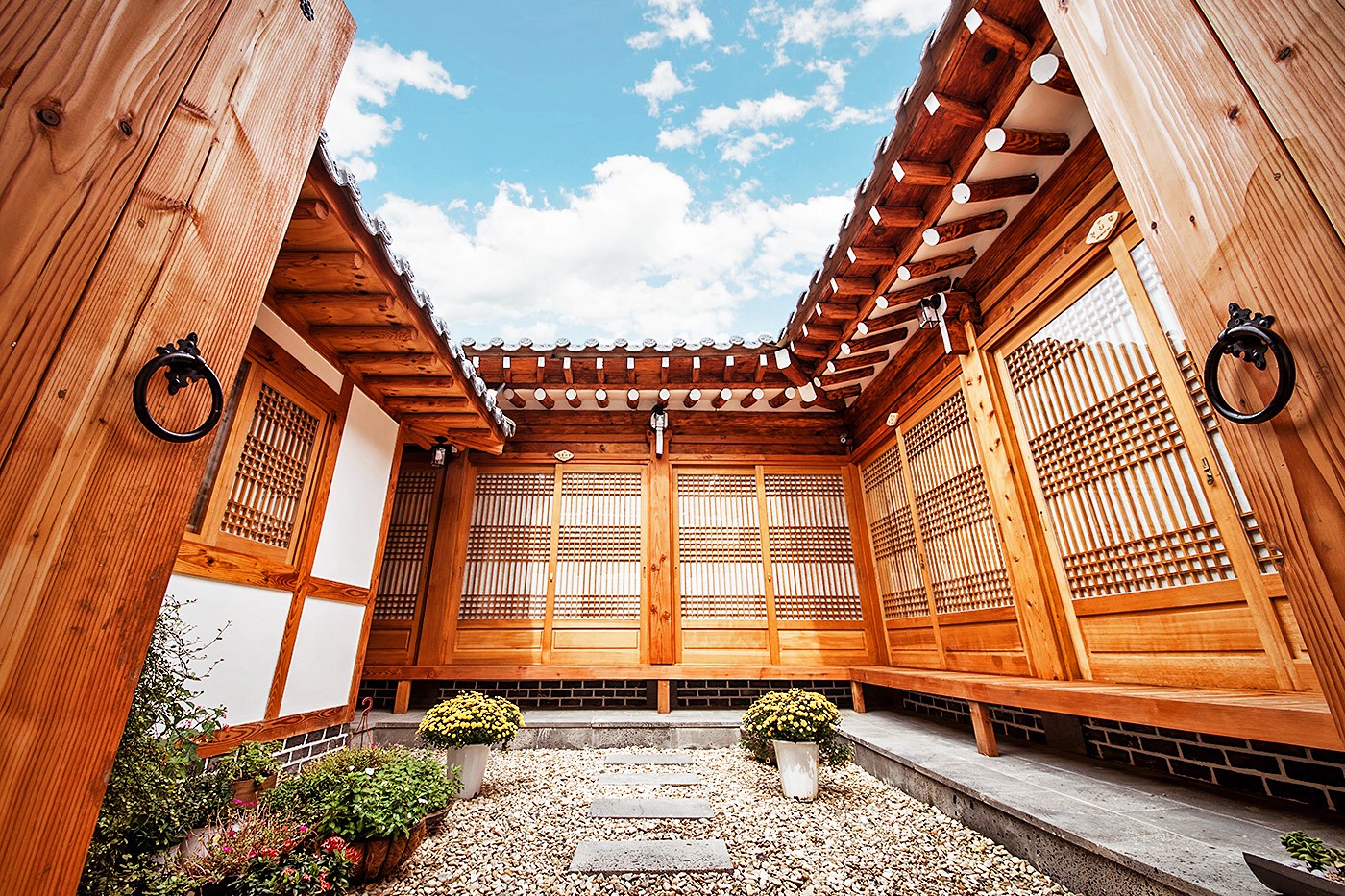
Jeonggahanog / 정가한옥
514.2M 2025-03-05
78-3 , Girin-daero, Wansan-gu, Jeonju-si, Jeonbuk-do
Jeongga Hanok, standing right across the road from Jeonju Hanok Village, Jeollabuk-do, is a newbuild hanok combining traditional style with modern comfort. Guestrooms are cypress-walled and red clay-grounded. Thus the Cypress room has walls and ceilings of cypress wood. The Maple room and the Gingko room both have attics. Nearby tourist attractions, which can all be reached on foot, include Gyeonggijeon Hall, Jeondong Cathedral, Jeonju Hyanggyo Confucian School, Jaman Mural Village - and of course Jeonju Hanok Village.
Gaeksa-gil (객사길)
525.5M 2024-04-07
10-1 Jungang-dong 2(i)-ga, Wansan-gu, Jeonju-si, Jeonbuk-do
Gaeksa, which was installed in every town during the Goryeo and Joseon periods, was a type of accommodation where foreign envoys or government officials from other regions stayed. Gaeksa can still be seen today in downtown Jeonju and there's a "Gaeksa-gil Street" at the main street of the old city center. The street features countless roadside shops and franchise restaurants so both Jeonju locals and tourists frequently visit the area. Also, Jeonju Gaeksa-gil is where the Jeonju International Film Festival is held every year. Considered as one of the three main Korean film festivals, the Jeonju International Film Festival primarily presents independent films and has discovered many hit movies and new actors. On one side of Gaeksa-gil, you can also find Jeonju Cine Complex and several movie theaters, which is why it is called the "Film Street." In the back of the Film Street, restaurants, cafes and clothing shops attract movie fans to form so-called "Gaengnidan-gil."
Hakindang (학인당)
541.9M 2024-08-05
45 , Hyanggyo-gil, Wansan-gu, Jeonju-si, Jeonbuk-do
Hagindang - also known as Injae’s Old House - is the oldest house in Jeonju Hanok Village, and a designated Jeollabuk-do cultural treasure. The house was built in the royal architecture style by some of the best late Joseon artisans. The Sarangchae guestroom has two sleeping rooms and a living room, suitable for families; while the Byeoldangchae has three guestrooms, one with a tea room space. Guests can use the free minibar while contemplating the old house’s fine traditional garden.
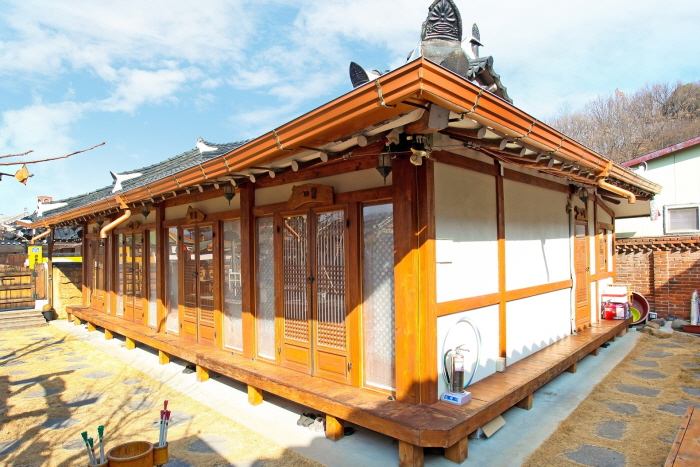
Siwon / 시원
560.1M 2025-06-11
45-41 , Omokdae-gil, Wansan-gu, Jeonju-si, Jeonbuk-do
Siwon is a timber and clay-built hanok stay, part of Jeonju Hanok Village in Jeollabuk-do. It has four guestrooms, all but one with a small attic - so guests can have fun climbing up and down the ladder! The rooms have all been insulated and draft-proofed to keep visitors warm and comfortable. In the yard is a small garden and swing, and guests can play traditional games such as Tuho and Jegichagi - or even take part in a carpentry workshop. Must-see sites such as Gyeonggijeon, Jeondong Cathedral, Omokdae, and Nambu Market can all be reached on foot.
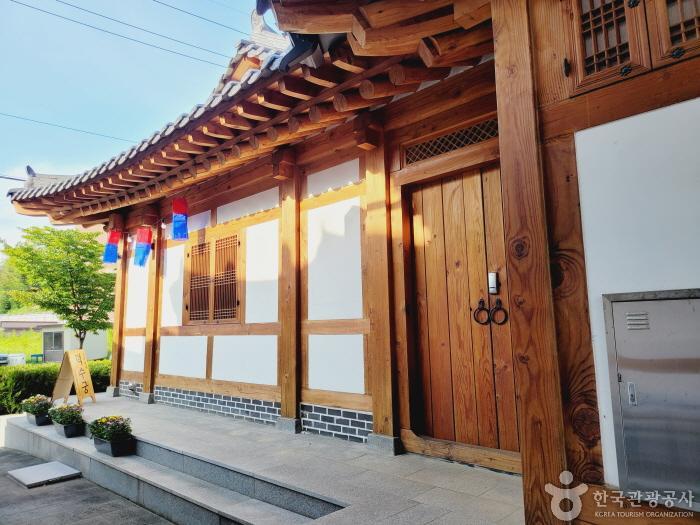
Ducksugung (전주 한옥마을 덕수궁)
570.3M 2024-12-13
10 , Gannap-ro, Wansan-gu, Jeonju-si, Jeonbuk-do
Deoksugung is a traditional hanok stay situated in a residential area across from the entrance to Jeonju Hanok Village. It has seven rooms for couples and one room for four people, all of which are ondol rooms. Rooms are equipped with a bathroom, a mini-refrigerator, television, and a private parking lot. There is no cooking allowed in the rooms, but you are welcome to prepare simple meals in the shared kitchen. Rentals of hanboks and rail bikes are available at a discount at the hotel.
Hanokstory (한옥이야기)
573.1M 2024-08-05
83-14 , Eunhaeng-ro, Wansan-gu, Jeonju-si, Jeonbuk-do
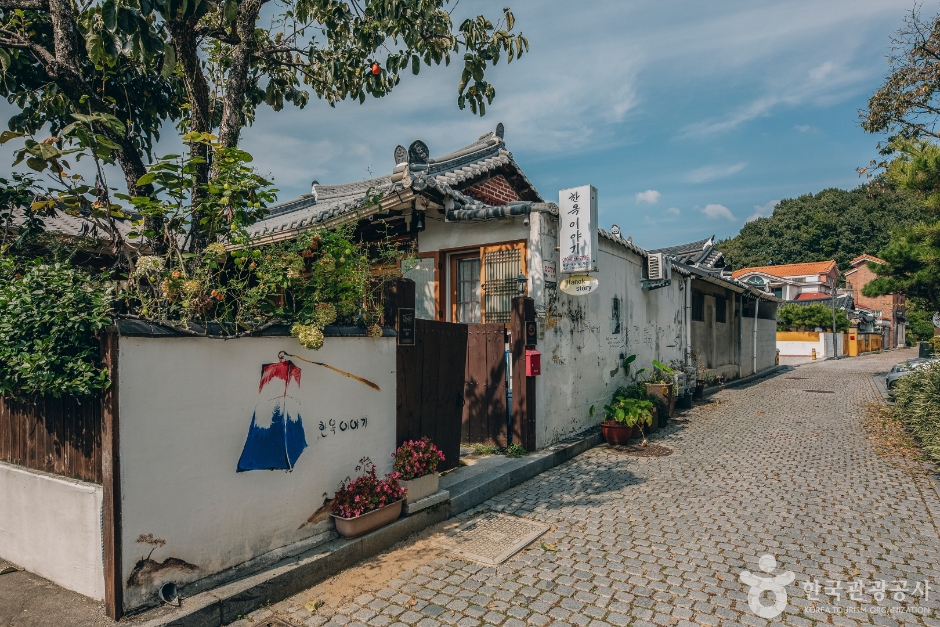
Hanok Story, on Hyanggyo-gil in Jeonju Hanok Village, Jeollabuk-do, is a hanok guesthouse that harmonizes tradition with convenience. Each room is equipped with a toilet, TV and AC, and one room has cooking facilities. In the yard is a 50-year-old persimmon tree - the house’s tutelary spirit - and a cafeteria built of cypress wood. Here visitors can enjoy tea or a free breakfast, while at weekends tea ceremonies are held (but book ahead for this).

Hanok Garden in Jeonju / 전주한옥마당
595.5M 2025-03-05
80-13 , Jeonjucheondong-ro, Wansan-gu, Jeonju-si, Jeonbuk-do
Jeonju Hanok Garden in Jeonju Hanok Village, Jeollabuk-do, is a guesthouse combining traditional hanok charm with modern comfort. All guestrooms have a modern bathroom and toilet and a toenmaru wooden porch, while two rooms (Hope and Faith) have an additional inner floors attached to it. The room interiors have exposed wooden beams and hanji-covered walls and doors. From any room, guests enjoy a view of the beautiful yard with its jangdokdae jar store, flower pots and young pine trees.
Gangam Calligraphy Museum (강암서예관)
615.4M 2024-04-07
74, Jeonjucheondong-ro, Wansan-gu, Jeonju-si, Jeonbuk-do
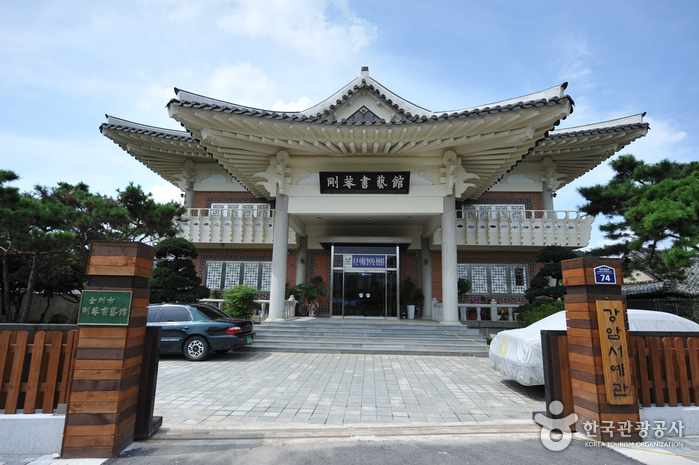
The Gangam Calligraphy Museum (est. 1995) in Jeonju Hanok Village has on display over 1,000 works from famous artists such as Kim Jeong-hee (1786-1856, calligrapher, painter, & scholar), Lee Sam-man (1770-1847, calligrapher), Kim Hong-do (1745-?, artist), and Jeong Yak-yong (1762-1836, scholar). This museum also houses a seminar room for calligraphy-related events and educational programs.
 English
 한국어
한국어 日本語
日本語 中文(简体)
 Deutsch
 Français
 Español
 Русский


