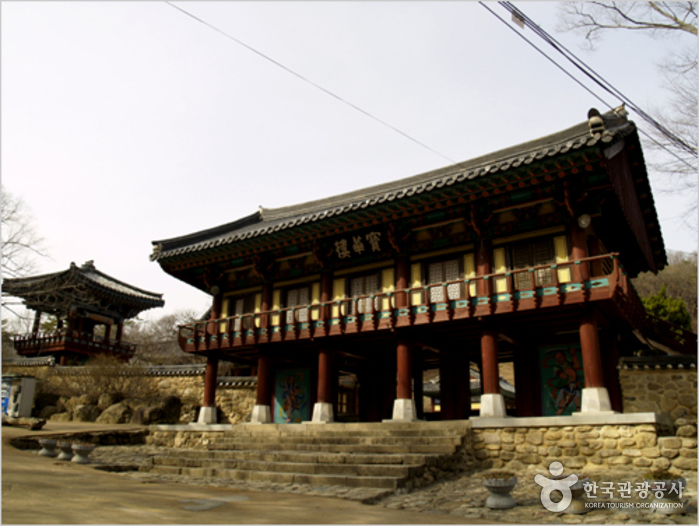
Yeongcheon Eunhaesa Temple (은해사 (영천))
18.3Km 2021-12-21
951, Cheongtong-ro, Yeongcheon-si, Gyeongsangbuk-do
+82-54-335-3318
Eunhaesa Temple, located on Palgongsan Mountain in Yeongcheon city, Gyeongsangbuk-do, is one of two major temples on the mountain along with Donghwasa Temple.
The temple was founded by Monk Hyecheol and was given the name Haeansa Temple in the first year of King Heondeok’s reign during the Silla Kingdom (AD 809), but was moved to the current site in the Joseon dynasty in 1546 (the first year of King Myeongjong). Upon its relocation, King Injong of Joseon dynasty was commemorated with a new lecture hall along with a memorial stone plaque where the king's umbilical cord was buried and sealed. It was then when the temple was also given its current name, Eunhaesa Temple.
The temple houses the main shrine, Bohwaru pavilion, Seolseondan Hall, Shimgeondang Hall, eight small hermitages, as well as Baegeungam Temple, Jungangam Temple, and a professional Buddhist education institution, the Eunhaesa Buddhist University. Eunhaesa Temple is home to a National Treasure, Geojoamyongsanjeon Hall, and Treasure, Baekheungamgeukrakjeon Hall. It also contains Treasure, the Sunidan Buddha Platform; Treasure, the Wunbuamcheongdongbosal Seated Buddha Statue; and Treasure, the Eunhaesa Temple Gwaebultaeng hanging Buddha picture. The area is also close to the Seongbu Museum, which exhibits cultural assets from Eunhaesa Temple and the neighboring areas, as well as popular tourist attractions such as Geukrakgul grotto of Jungangam temple (Hwaeomgul Grotto), Geondeul Rock, Manyeonsong Pine Tree, Ganggunsu Waters, and Anheungpokpo Falls of Gigiam Temple.

Hayang Life Sports Park (하양생활체육공원)
19.4Km 2024-02-23
33 Yongcheonjebang-gil, Hayang-eup, Gyeongsan-si, Gyeongsangbuk-do
Hayang Life Sports Park was constructed to enhance physical education amenities and offer a relaxation space for residents. It features a football field, futsal court, foot volleyball court, gateball court, and a lawn for relaxation. Additionally, it boasts a floor fountain, a pavilion, a walking trail, and various photo zones. During the summer, a water playground is available. Nearby attractions include Palgongsan Mountain and Daegu Stadium.
Yongyeonsa Temple (Daegu) (용연사(대구))
19.4Km 2024-02-15
260 Yongyeonsa-gil, Okpo-eup, Dalseong-gun, Daegu
The name Yongyeonsa has its roots in a legend: a dragon is said to have ascended from the pond at the temple's entrance, leading to the name Yongyeon ("yong" means "dragon" and "yeon" means "pond" in Korean). This temple is renowned as one of the sites that enshrine the Buddha's sarira (relics). Inside Yongyeonsa, the ordination platform holds special significance as the resting place of the Buddha's sarira, where rituals are conducted. This symbolizes the enduring presence of the Buddha. The approach to Yongyeonsa Temple is through a forest-rich path, offering an experience akin to a forest bathing. This path also doubles as a hiking trail leading up to Biseulsan Mountain.
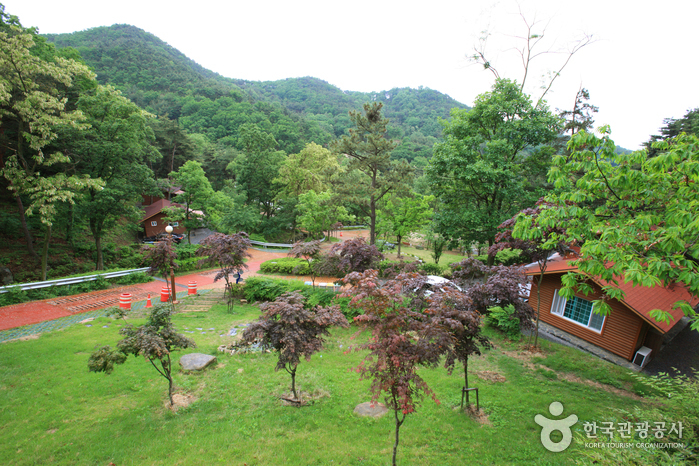
Songjeong Recreational Forest (송정 자연휴양림)
19.9Km 2022-09-07
88, Bangye 3-gil, Chilgok-gun, Gyeongsangbuk-do
+82-54-979-6600
Songjeong Recreational Forest is located at the foot of Gibansan Mountain (464.7 meters). The forest is filled with wild flora and fauna and is a habitat for many wild animals like hare and roe deer. “House in the Forest,” the park's accommodation for visitors, is made of all natural, eco-friendly materials such as red clay and logs. Situated within close vicinity of urban areas, it serves as the perfect weekend getaway for those who want a refreshing break in the woods.
 English
 한국어
한국어 日本語
日本語 中文(简体)
 Deutsch
 Français
 Español
 Русский


