16.9Km 2024-05-30
Seonggok-dong, Andong-si, Gyeongsangbuk-do
+82-54-852-6800
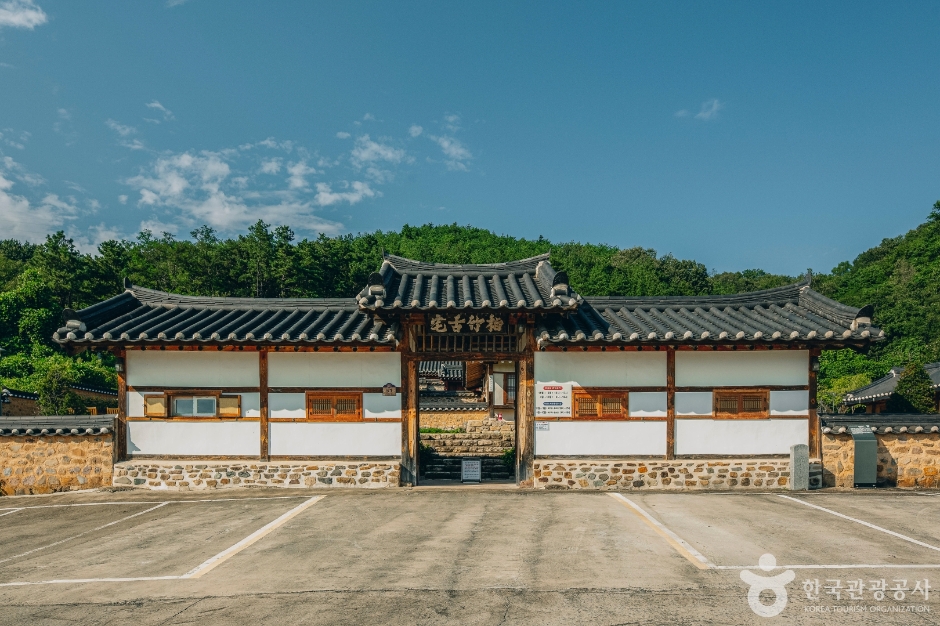
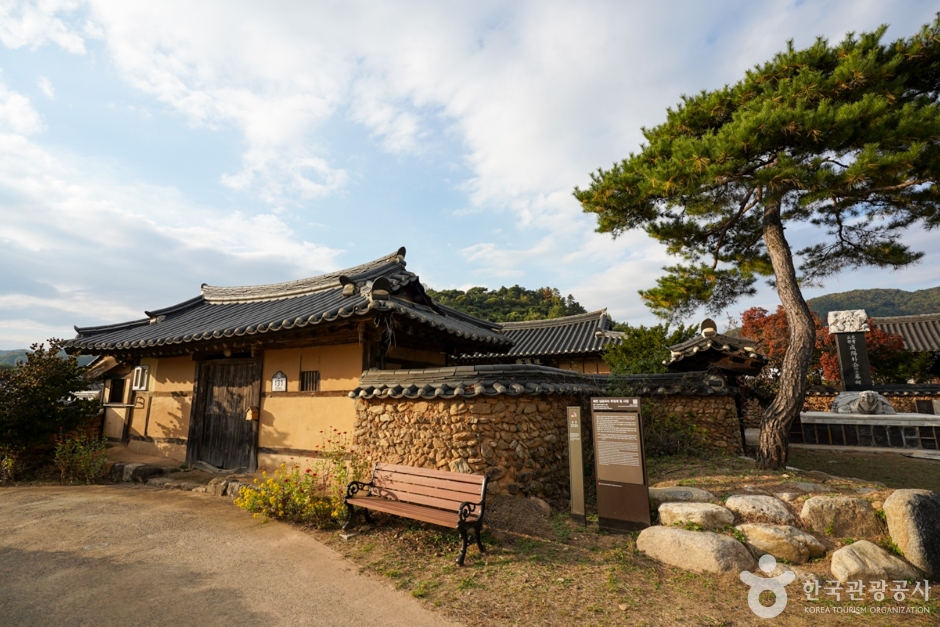
On the other side of the subsidiary dam of Andong Dam, thatched houses can be sparsely seen on a hilltop. The area is practically an outdoor museum, displaying traditional houses that were moved to safety prior to the construction of Andong Dam. Two jangseung (traditional Korean totem poles) are raised at the entrance of the outdoor museum, followed by a monument inscribed with the poem of famous Andong poet and democracy activist, Lee Yuk-sa. On the monument, his most noted work “Gwangya” (Wild Plain) is carved.
Nearby attractions include Andong Museum, Lee Yuk-sa Monument, a filming site of “Taejo Wang Geon (2000)," and Andongho Lake.
17.1Km 2024-12-20
190 , Minsokchon-gil, Andong-si, Gyeongsangbuk-do
+82-54-823-9001
Gurume Resort in Andong-si, Gyeongsangbuk-do, consists of seven traditional hanok dating from the 17th, 18th and 19th centuries that were moved to this location because of a flood. The re-assembled hanok have been equipped with modern toilets, bathrooms, and AC units - plus a modern security system. Facilities include a book-cafe, a restaurant, a traditional experience room and a plaza.
17.2Km 2021-08-24
31-12, Museom-ro 234beon-gil, Yeongju-si, Gyeongsangbuk-do
+82-54-638-1127
Located in Sudo-ri in Yeongju, Gyeongsangbuk-do, Museom Village is a charming hanok village surrounded by water. Flowing down from Sobaeksan Mountain and Taebaeksan Mountain, Naeseongcheon Stream and Yeongjucheon Stream converge and loop around Museom Village, surrounding the village on three sides with water. This peninsula-like village is not only the center of traditional Korean culture, but also has a gorgeous natural landscape complete with a wide sandy riverside and a lush inland forest.
Known for Haeudang and Manjukje Houses (two of the most historical hanok houses in the area), the village is also home to other outstanding traditional houses such as the Kim Gyu-jin House and the Kim Wi-jin House. Manjukje House is located at the heart of the village and the oldest traditional house in this hanok village. Manjukje was built in 1666 (7th year of King Heonjong's reign) by Bak Su (the father of the Bannam Bak Family).
Nearby Manjukje is Manun House, built in the early 19th century and named after Kim Hwi-geol (penname “Manun”). The house later became the home of the wife of the famous poet Jo Ji-hun, author of “Byeolli,” a poem expressing the beauty of Museom Village.
Other notable houses include the Kim Wi-jin House (a house belonging to aristocrats), the Kim Jeong-gyu House (a house without the traditional outer fencing), and the Bak Jae-yeon House, where the writings of Bak Gyu-su (a respected scholar during the Joseon period) still remain today.
Another famous attraction in the village is the Single Log Bridge, which was the village’s only connection to the outside world for over 350 years before the construction of Sudo Bridge in 1979. It is a tiny bridge in terms of x_width (30 cm), but it stretches for over 150 meters. It is said that the bridge was rebuilt annually after being destroyed each rainy season. With the construction of Sudo Bridge, the Single Log Bridge was no longer needed, but was rebuilt some time later in its original form. To celebrate the bridge’s impressive history, the village hosts the Single-Log Bridge Festival every October.
17.3Km 2024-10-30
11-10 , Museom-ro 234beon-gil, Yeongju-si, Gyeongsangbuk-do
+82-54-638-1127
Manjukjae House is the oldest hanok in Museom Village, Yeongju, Gyeongsangbuk-do, with a history dating back 360 years. Originally built by Park Su to live the life of a reclusive gentleman after the Manchu Invasion of Korea, the house has been passed down from generation to generation through 13 generations. There are four guest rooms, Seomgye Chodang, Sarangchae (detached building), Anchae (main building), and Chaekbang (study), all of which can accommodate two people. Among them, Seomgye Chodang offers the best view, from where guests can enjoy the scenery of the log bridge in Museom Village, the Naeseongcheon Stream, and the white sandy beach. With the windows wide open, you can enjoy the cool breeze and the soothing sounds of nature.
17.3Km 2024-11-14
423 Sanga-dong, Andong-si, Gyeongsangbuk-do
Nakgangmulgil Park, called the Giverny of Korea, is a small waterside park located near Andong Dam. The park is the perfect setting for a relaxing moment, with benches placed under trees and beside walkways throughout the park. The natural environment creates plenty of photo spots. Visitors looking for a longer walk in nature can follow the riverside deck to Wolryeong Park.
18.0Km 2024-05-30
346-30 Gwangwangdanji-ro, Andong-si, Gyeongsangbuk-do
Confucian Land, located within Andong Culture & Tourism Resort, is a themed exhibition hall that focuses on Korea's Confucian culture. The facility uses the edu-tainment method to make a difficult subject matter easy to understand for young children. Exhibitions include the teachings of famous Confucian scholars like Toegye Yi Hwang and Yulgok Yi I, traditional musical instruments such as the gayageum and haegeum, as well as a video hall with 3D film capabilities and a children's game area with motion-tracking.
18.2Km 2024-05-29
346-95 Gwangwangdanji-ro, Andong-si, Gyeongsangbuk-do
Zootopium is the largest animal & plant themed park in Gyeongsangbuk-do, home to over 200 species. The park provides the perfect environment for children to learn more about nature and living organisms. The park features both indoor and outdoor sections, as well as amenities such as a restaurant and play areas for children.
18.4Km 2025-03-05
101 , Matjil-gil, Yecheon-gun, Gyeongsangbuk-do
+82-54-655-1717
Chunoojae Old House in Jeogok-ri, Yecheon-gun, Gyeongsangbuk-do, is a late Joseon period hanok built by Kwon Jin, grandson of Kwon Eui. Gingko, peepal trees and chrysanthemums grow in its well-tended yard, and every year the petals are gathered for tea brewing, and the branches trimmed and soaked to make alcohol. There are seven guestrooms, and in the summer group visitors can make a bigger space by renting 2 or 3 together. Various traditional food experiences, such as soybean paste making, are offered. For groups of 10 or more, reservations should be made at least a week in advance.
19.1Km 2024-02-23
54 Geumdangsil-gil, Yongmun-myeon, Yecheon-gun, Gyeongsangbuk-do
Yecheon Geumdangsil Village is celebrated for its cultural relics and traditional houses, earning its name for resembling a lotus flower afloat on water. Visitors can explore the remnants of Yi Yuin's expansive 99-room house, dating back to the late Joseon era. The village is also home to significant cultural landmarks such as Choganjeong Pavilion, Yongmunsa Temple, Geumgokseowon Confucian Academy, and Bansongjae Gotaek (Kim Bin's Old House). A standout feature of the village is the Geumdangsil Pine Forest, recognized as a natural monument. This impressive pine grove, comprising over 900 trees, spans 800 meters, stretching from the base of Omibong Peak in Geumdangsil to the vicinity of Yongmun Elementary School.

19.4Km 2023-04-07
1333-5, Toegye-ro, Andong-si, Gyeongsangbuk-do
+82-54-841-0511
Andong School of Korean Etiquette, which is located in Andong, is a mecca of Korea's Confucian customs and provides an opportunity to experience traditional Korean etiquette.
In addition to Korean traditional etiquette, Andong School of Korean Etiquette also teaches tea etiquette and traditional Korean music using instruments such as janggu and gayageum. Students can also experience the joy of learning how to play folk games such as yunnori and kite-flying. The school offers a wide variety of hands-on programs related to Korea's traditions and customs such as mask dance, paper craft, cooking, wedding, and eco-rafting on Nakdonggang River.
There are other popular tourist attractions nearby such as Dosanseowon Confucian Academy, Forest Science Museum and Yi Yuk-sa Literary Hall.