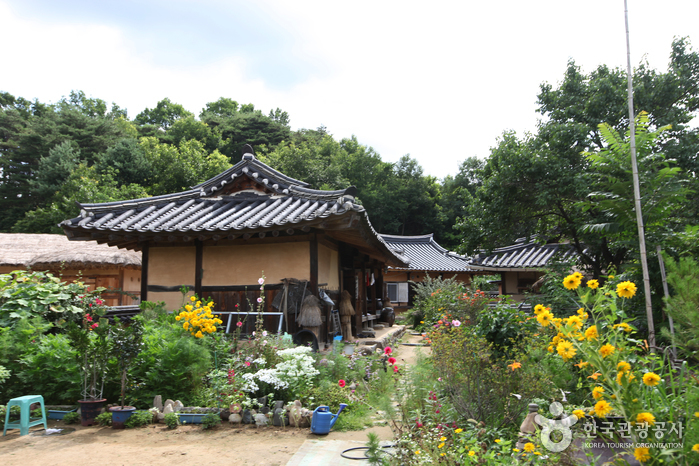
Yeongju Museom Village (영주 무섬마을)

  • Yeongju Museom Village (영주 무섬마을)
  • Yeongju Museom Village (영주 무섬마을)
  • Yeongju Museom Village (영주 무섬마을)
  • Yeongju Museom Village (영주 무섬마을)
  • Yeongju Museom Village (영주 무섬마을)

Explanation

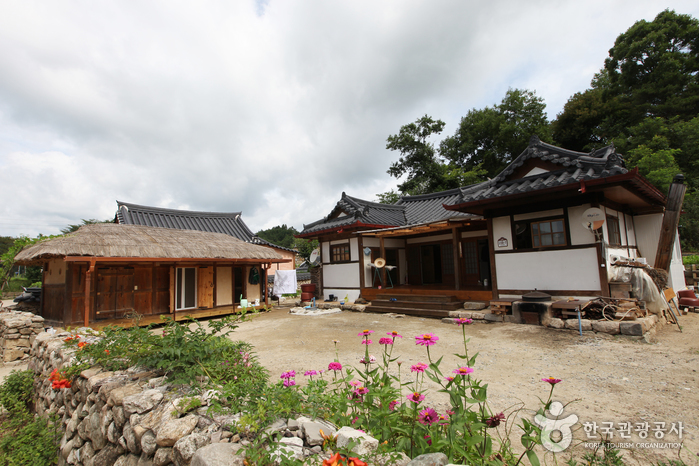
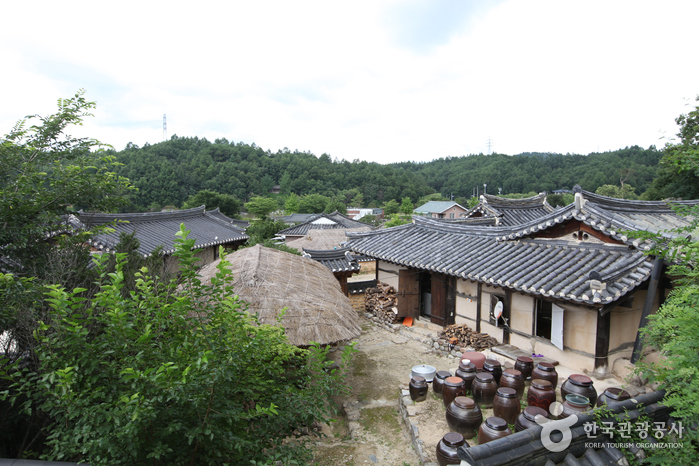
Located in Sudo-ri in Yeongju, Gyeongsangbuk-do, Museom Village is a charming hanok village surrounded by water. Flowing down from Sobaeksan Mountain and Taebaeksan Mountain, Naeseongcheon Stream and Yeongjucheon Stream converge and loop around Museom Village, surrounding the village on three sides with water. This peninsula-like village is not only the center of traditional Korean culture, but also has a gorgeous natural landscape complete with a wide sandy riverside and a lush inland forest.

Known for Haeudang and Manjukje Houses (two of the most historical hanok houses in the area), the village is also home to other outstanding traditional houses such as the Kim Gyu-jin House and the Kim Wi-jin House. Manjukje House is located at the heart of the village and the oldest traditional house in this hanok village. Manjukje was built in 1666 (7th year of King Heonjong's reign) by Bak Su (the father of the Bannam Bak Family).

Nearby Manjukje is Manun House, built in the early 19th century and named after Kim Hwi-geol (penname “Manun”). The house later became the home of the wife of the famous poet Jo Ji-hun, author of “Byeolli,” a poem expressing the beauty of Museom Village.

Other notable houses include the Kim Wi-jin House (a house belonging to aristocrats), the Kim Jeong-gyu House (a house without the traditional outer fencing), and the Bak Jae-yeon House, where the writings of Bak Gyu-su (a respected scholar during the Joseon period) still remain today.

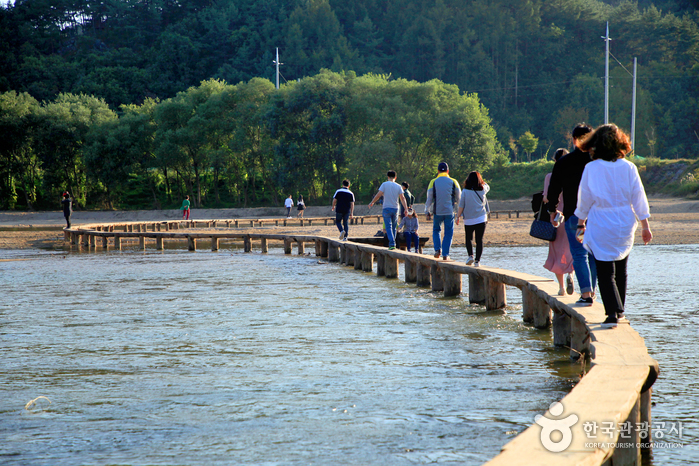
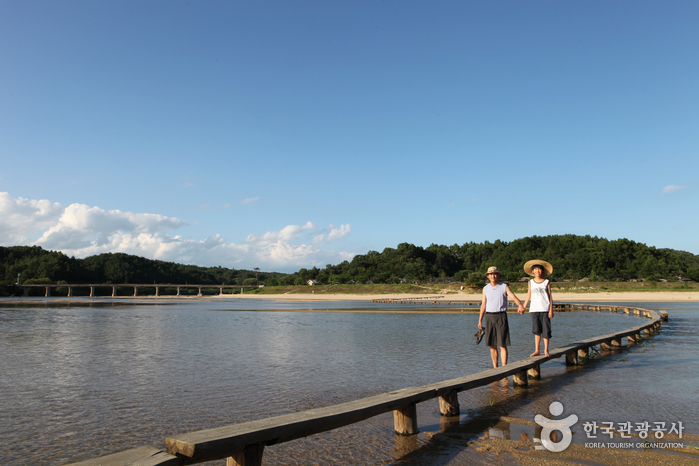
Another famous attraction in the village is the Single Log Bridge, which was the village’s only connection to the outside world for over 350 years before the construction of Sudo Bridge in 1979. It is a tiny bridge in terms of x_width (30 cm), but it stretches for over 150 meters. It is said that the bridge was rebuilt annually after being destroyed each rainy season. With the construction of Sudo Bridge, the Single Log Bridge was no longer needed, but was rebuilt some time later in its original form. To celebrate the bridge’s impressive history, the village hosts the Single-Log Bridge Festival every October.


Inquiry

+82-54-638-1127


Homepage

www.yeongju.go.kr


Information Use

Experience Guide : Hanokstay

Contact and Information : • 1330 Travel Hotline: +82-2-1330
(Korean, English, Japanese, Chinese)
• For more info: +82-54-638-1127

Parking facilities : Available

Day off : N/A (Open all year round)


More information

Film Locations
Drama "Love Rain (2012)"

Available Facilities
Accommodations

Restrooms
Available

Admission Fees
Free

Location

31-12, Museom-ro 234beon-gil, Yeongju-si, Gyeongsangbuk-do

Suamgol Mural Village (수암골 벽화마을)

Suamgol Mural Village (수암골 벽화마을)

2026-01-27

58 Suam-ro, Sangdang-gu, Cheongju-si, Chungcheongbuk-do

Formed as a hillside village where refugees settled after the Korean War, it has since transformed into a vibrant village filled with charming, colorful murals. The village has also served as a filming location for various K-dramas, attracting many visitors. Located at the foot of Uamsan Mountain, it offers panoramic views of downtown Cheongju, with especially beautiful scenery at sunset. Restaurants and cafes with great views have also been established throughout the area.

Seomun Pungmul Night Market & Seomun Market Samgyeopsal (Pork Belly) Street (서문풍물야시장&서문시장삼겹살거리)

Seomun Pungmul Night Market & Seomun Market Samgyeopsal (Pork Belly) Street (서문풍물야시장&서문시장삼겹살거리)

2026-01-27

18 Musimdong-ro 392beon-gil, Sangdang-gu, Cheongju-si, Cheongbuk-do (Seomun-dong)

Seomun Market, located west of the Seomun-dong intersection, is home to Samgyeopsal (Pork Belly) Street, which opened in 2012. Here, visitors can enjoy Cheongju-style samgyeopsal (grilled pork belly), a local specialty known for its distinctive preparation method that has been passed down through generations.

Yudal Recreation Area (유달유원지)

Yudal Recreation Area (유달유원지)

2026-01-27

59 Haeyangdaehak-ro, Mokpo-si, Jeollanam-do

Yudal Recreation Area, located beneath Yudalsan Mountain, has been developed into a tourist destination and a relaxation space for Mokpo citizens through the renovation of the area around the former Daebandong Beach. Although the beach is currently closed and swimming is not allowed, visitors can enjoy views of Mokpo Bridge, one of the city’s landmarks, as well as the distinctive dragon head of Gohado Island. The maritime cable car running between Yudalsan Mountain and Gohado Island offers stunning vistas of the surrounding sea. In front of the recreation area, yachts gently floating on the water create a unique coastal scene, complemented by well-equipped facilities such as cafes and restaurants. Additionally, a well-maintained seaside path allows visitors to enjoy a pleasant walk along the shore without the discomfort of sand.

Seogwi Dawon (서귀다원)

Seogwi Dawon (서귀다원)

2026-01-27

717 516-ro, Seogwipo-si, Jeju-do

Seogwi Dawon was originally operated as a tangerine farm but has been transformed into a tea plantation since 2005. This quiet tea garden cultivates Jeju green tea at an altitude of 250 meters on Hallasan Mountain. Compared to other tea gardens, it attracts fewer visitors, making it ideal for a leisurely visit. Tree-lined paths, lush camellia trees, basalt sculptures, and expansive tea fields blend harmoniously, creating a serene landscape where Hallasan Mountain and the green tea fields come together to create a breathtaking panorama.

Seongeup Green Tea Cave (성읍녹차동굴)

Seongeup Green Tea Cave (성읍녹차동굴)

2026-01-27

4772 Jungsangandong-ro, Pyoseon-myeon, Seogwipo-si, Jeju-do

Seongeup Green Tea Cave is a well-known natural lava cave photo spot in Jeju, known for its subtle and mysterious atmosphere. Photos taken from inside the cave looking outward capture beautifully nuanced colors. Located within Seongeup Green Tea Village, the cave allows visitors to enjoy sweeping green tea fields and the cave scenery in one visit. The village also features a cafe where visitors can purchase green tea souvenirs and relax with a foot bath.

Seongeup Green Tea Village (성읍녹차마을)

Seongeup Green Tea Village (성읍녹차마을)

2026-01-26

4778 Jungsangandong-ro, Pyoseon-myeon, Seogwipo-si, Jeju-do

Seongeup Green Tea Village in Jeju is a tea plantation that produces green tea and a variety of green tea–related products. The village also operates a cafe offering green tea–based treats such as rice cakes and ice cream, along with unique experiences including a foot bath and cart rides. The tea is grown under natural conditions, benefiting from volcanic ash soil rich in organic matter and clean volcanic spring water. Along the path leading to the forest behind the village is the Green Tea Cave, a distinctive spot that has gained popularity for its scenic views of the tea fields, framed by Hallasan Mountain and Yeongjusan Mountain in the background.

Picasso Mural (피카소 벽화)

Picasso Mural (피카소 벽화)

2026-01-19

333 Banpo-daero, Seocho-gu, Seoul

The underground public pedestrian passage connecting Express Bus Terminal Station and Banpo Hangang Park has been planned as a street gallery for all citizens who love Seoul. In particular, the Picasso Mural created in collaboration with the Spanish Tourism Board, Malaga Tourism Board, and Seocho-gu Office is a 65-meter mural showcasing various aspects of Spain's Malaga and Seoul through the eyes of Picasso, including architecture, food, tradition, and daily life. The artist who painted this mural is Eduardo Luque, also known as Lalone, a world-renowned graffiti artist and the winner of the European Urban Art Championship. A behind-the-scenes video of the mural's creation and clips of Lalone at work are shown in the café-style rest area next to the mural.

Maldo Island (말도)

Maldo Island (말도)

2026-01-19

Maldo-ri, Okdo-myeon, Gunsan-si, Jeonbuk-do

Maldo Island is located in Okdo-myeon, Gunsan, at the end of the Gogunsan Archipelago, and is also known as "Kkeumseom Island" (End-point Island). It is a small island with about 30 households, but due to the surrounding waters being a golden fishing ground, it has the largest lighthouse in the Gogunsan Archipelago, making it a tourist attraction. The island is dotted with unique landmarks such as lighthouses, cheonnyeongsong (millennium pines), and Dalbawi Rock, and is well-known for its beautiful sunset views. Maldo Island was reportedly first settled during the mid-Joseon dynasty by Sim Ban-seo, an exile from Seoul who cultivated the land and laid the foundation for the island's growing population.

Chamin Plastic Surgery (차민성형외과의원)

2026-01-02

4th–6th Floors, Cheongha Building, 503 Gangnam-daero, Seocho-gu, Seoul

ChamIn Plastic Surgery specializes in a wide range of procedures, including revision rhinoplasty, primary rhinoplasty, facelift and mini facelift, forehead lift and forehead reduction, double-chin contouring, eyelid surgery, and various skin treatments such as fillers, Botox, and skin boosters.

All consultations, evaluations, procedures, and follow-up care are provided directly by our medical specialists on a one-to-one basis.
The clinic is structured into a streamlined system with a Treatment Center on the 4th floor, an Operating Center on the 5th floor, and a Consultation Center on the 6th floor.

At ChamIn Medical Center, a gastroenterology specialist provides endoscopy, ultrasound, health check-ups, fecal microbiota transplantation (FMT), and other internal medicine services.

ChamIn Plastic Surgery values trust and professional expertise, offering personalized treatment plans tailored to each individual.

Yonsei GoodDay Dental Clinic Yangjae Office (연세굿데이치과의원 양재점)

2026-01-02

5th–6th Floors, 206 Gangnam-daero, Seocho-gu, Seoul

This is Yonsei Good Day Dental Clinic where English is available. Specialists from university hospitals with more than 10 years of experience gather and treat by field. We provide a wide range of treatment services, including affiliated hotels and tax refund. Experience pain-free dental treatment with painless anesthesia and sleep anesthesia.