Goseong Unification Observatory (고성 통일전망타워)

  • Goseong Unification Observatory (고성 통일전망타워)
  • Goseong Unification Observatory (고성 통일전망타워)
  • Goseong Unification Observatory (고성 통일전망타워)
  • Goseong Unification Observatory (고성 통일전망타워)
  • Goseong Unification Observatory (고성 통일전망타워)
  • Goseong Unification Observatory (고성 통일전망타워)

Explanation

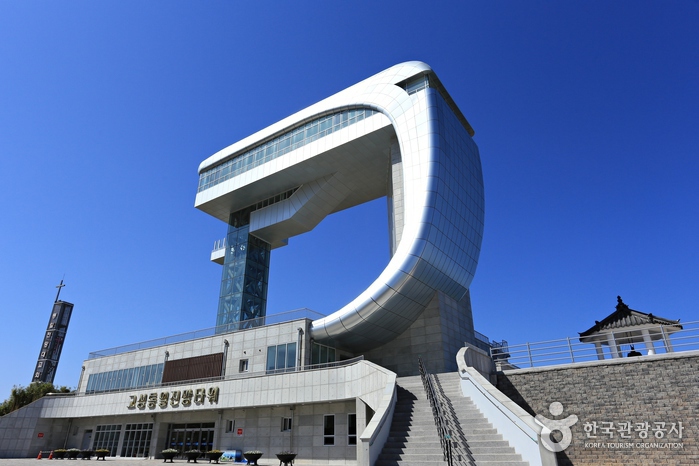
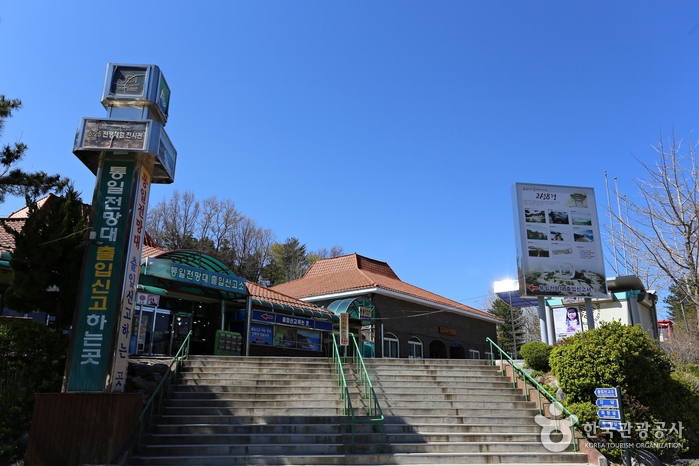
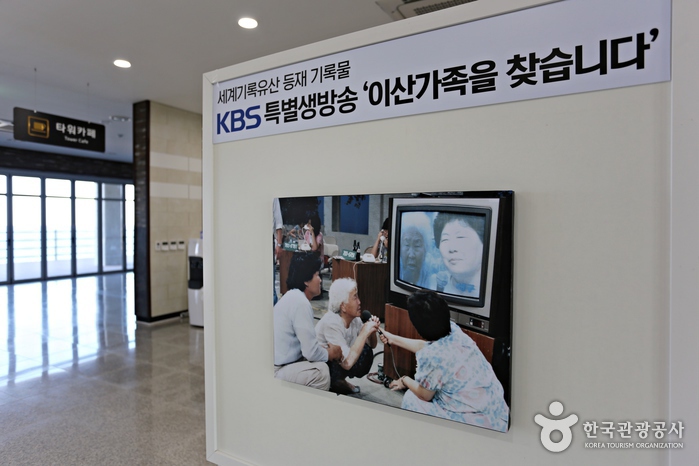
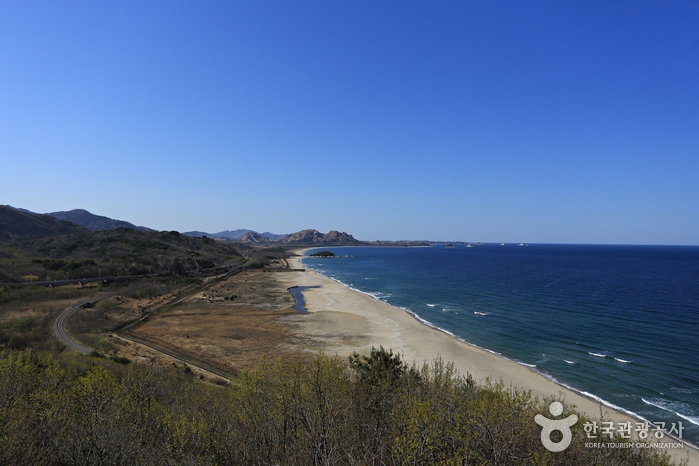
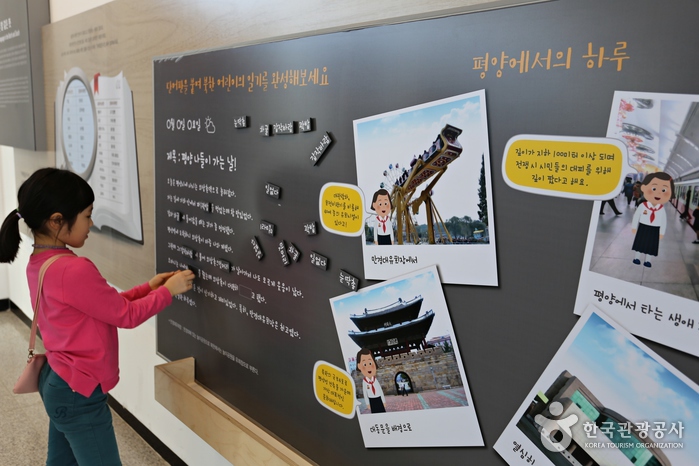
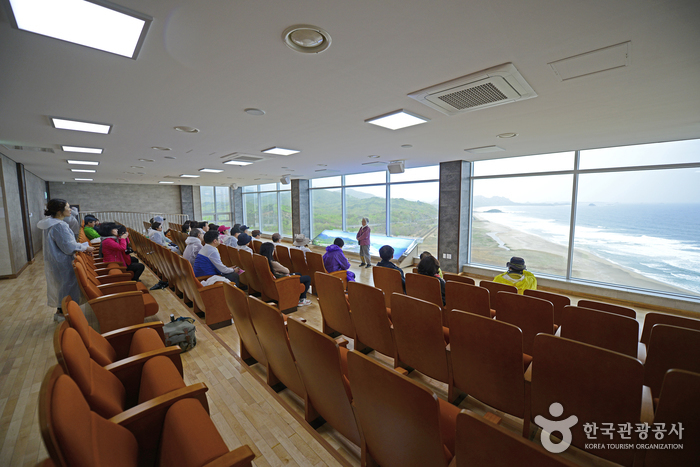
The Goseong Unification Observatory stands as the northernmost observatory in South Korea. It provides panoramic views of the DMZ, the East Sea, and North Korea's Geumgangsan Mountain. Established as a symbol of hope for the reunification of the Korean Peninsula, it features an exhibition hall dedicated to educating visitors about the Korean War (1950-1953). Due to its location near the DMZ, visitors must bring an ID, such as a passport or foreigner resident card, for entry.


Homepage

www.tongiltour.co.kr


Information Use

Contact and Information : +82-33-682-0088

Parking facilities : Available

Day off : N/A (open all year round)
* 2025 scheduled closed dates: Jan 6, 20 / Feb 3, 17 / Mar 17, 31
* Subject to close without advance notice due to unforseen circumstances; check in advance before visiting.

Hours : [March 1 - July 14 / August 21 - October 31] 09:00-16:50
[July 15 - August 20] 09:00-17:50
[November 1 - February 28] 09:00-15:50


More information

Admission Fees
Individuals - Adults 3,000 won / Children & Senior citizens 1,500 won
Groups - Adults 2,000 won / Children 1,200 won / Senior citizens 1,000 won

* Group: 30 people or more
* Senior citizens: Ages 65 and older
* Children: Elementary - High School students
* Fee includes admission to Korean War Exhibition Hall.

Restrooms
Available

Available Facilities
[Unification and Security Park] Admission checkpoint, lecture hall, rest area
[Unification Observation Tower] Unification Hall, lecture hall, Korean War Exhibition Hall, etc.
* Visitors must present valid ID & sign in via admission log

Parking Fees
- 5,000 won (10 seats or fewer)
- 6,000 won (11 seats or more)
- School group: 6,000 won (10 seats or more)

Location

481 Geumgangsan-ro, Hyeonnae-myeon, Goseong-gun, Gangwon-do
Beaulounge (뷰라운지)

Beaulounge (뷰라운지)

2026-05-21

2F, Kang-san Bldg., Suseong University, 15 Dalgubeol-daero 528-gil, Suseong-gu, Daegu

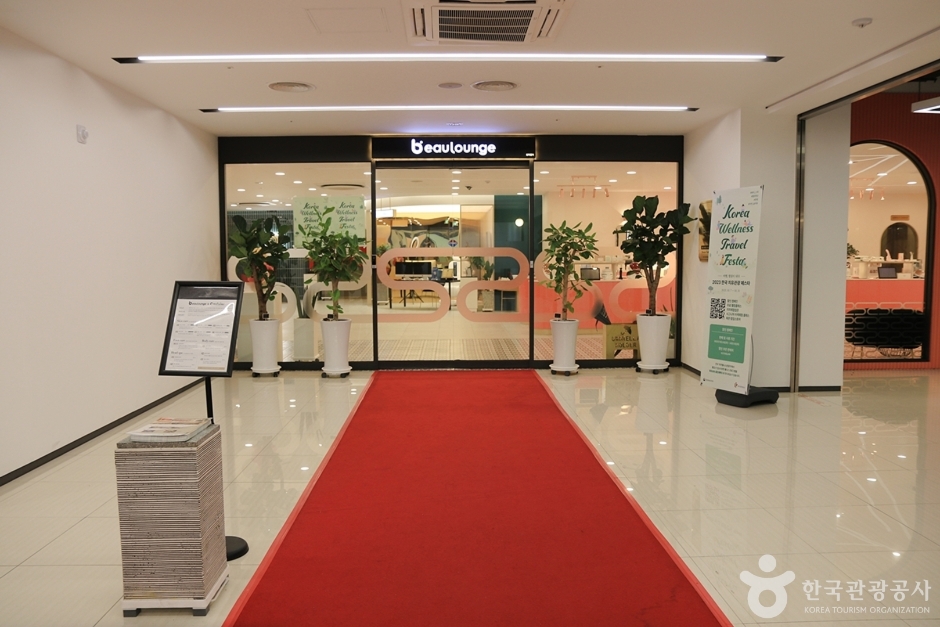
Beaulounge, located within Suseong University, provides premium aesthetic and professional skin care services. Customized treatment solutions are offered based on data obtained through smart technology, which diagnoses and analyzes customers' skin and scalp conditions. The skin care program includes multi-care, anti-aging care, brightening care, hormone care, balance care, and moisture care to help customers get healthy and younger-looking skin. Head spa services promote blood circulation in the scalp area and relax the muscles to support lymphatic flow. This helps clear toxins and waste from the scalp, nourishing it and enhancing health and elasticity for both the scalp and skin. The body care service includes relaxing, slimming, and detox therapies.Beaulounge, a place for professional premium skincare, is a new type of tourist destination that promotes the excellence of K-beauty and has helped the beauty industry develop into a tourism resource. Additionally, the facility collaborates with the Korea Tourism Organization, the Daegu Medical Tourism Development Institute, and the Medi Beauty Leader Center of Suseong University to provide special interest tourism and beauty/wellness tourism to foreigners. Beaulounge also introduces beauty products made by companies in Daegu, targeting general customers as well as overseas tourists. As a result, Beaulounge was designated as an excellent wellness tourist destination by the Korea Tourism Organization in 2022.

Incheon Jotang (인천조탕)

Incheon Jotang (인천조탕)

2026-05-14

30 Yongyuseo-ro, Jung-gu, Incheon

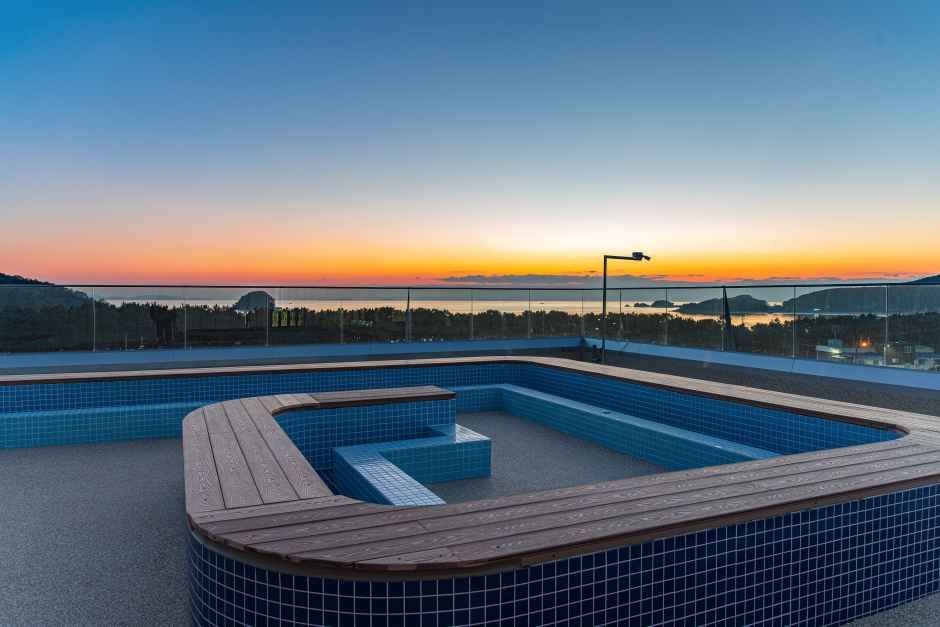
Incheon Jotang is a premium wellness spa complex inspired by Korea’s first seawater bath, Jotang, dating back to the 1920s. Spanning approximately 5,950 square meters and accommodating up to 1,600 visitors at once, it offers high-quality spa services at reasonable prices. The facility features a wide range of amenities, including a sauna, jjimjilbang, massage chair zone, comic café, outdoor foot bath, and an outdoor swimming pool.

Titasy Metal Craft (티타지 금속공예)

Titasy Metal Craft (티타지 금속공예)

2026-05-07

10 Ujeong-ro, Naju-si, Jeollanam-do

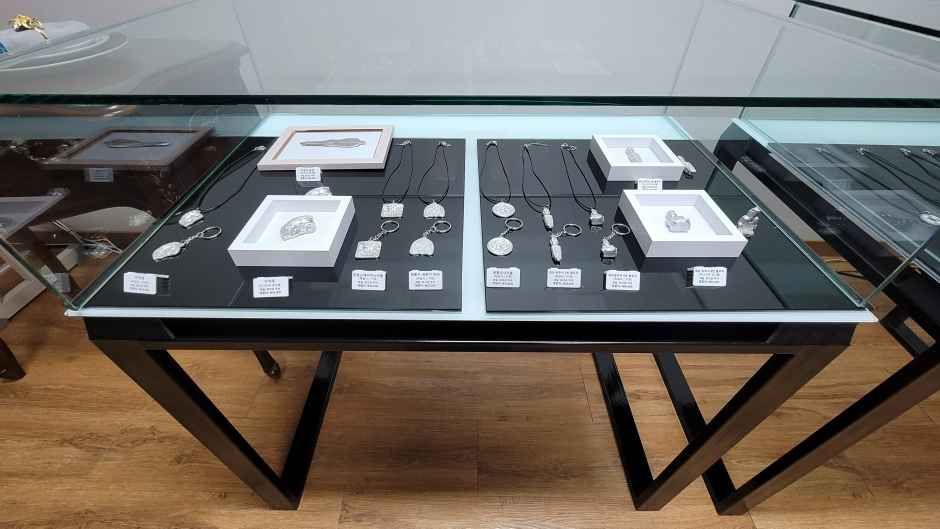
Titasy Metal Craft is a hands-on workshop where visitors can create rings, jewelry, soju cups, plates, and other everyday items using silver and eco-friendly tin. One of its signature programs allows participants to reinterpret cultural relics into modern accessories, offering both a creative and educational experience. Suitable for individuals, families, groups, and students of all ages, the workshop introduces the full metal crafting process from basic techniques to the final piece, which participants can take home as a unique souvenir.

Yeongwol Tourism Center (영월관광센터)

Yeongwol Tourism Center (영월관광센터)

2026-04-08

126-3 Cheongnyeongpo-ro, Yeongwol-eup, Yeongwol-gun, Gangwon-do

Yeongwol Tourism Center, also called Y-Square, is a cultural complex developed to support integrated tourism in the former coal mining area of Yeongwol and to help establish travel routes throughout the region. Visitors can access information on major tourist attractions, cultural heritage, natural landscapes, and historical sites, along with a range of convenient services. The center also offers customized travel itinerary guidance based on visitors’ needs. On the second floor are exhibitions and experience halls.

Shrine for Prince Wolsan (월산대군사당)

Shrine for Prince Wolsan (월산대군사당)

2026-03-23

1243-39 Hoguk-ro, Deogyang-gu, Goyang-si, Gyeonggi-do

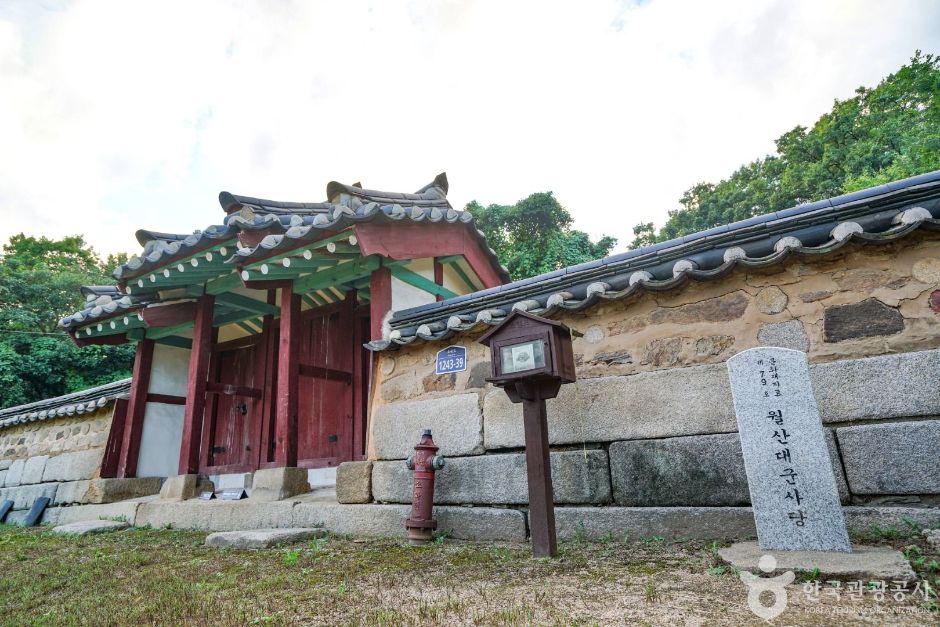
Prince Wolsan, born Yi Jeong, was the elder brother of King Seongjong, the 9th ruler of the Joseon dynasty. He was regarded as an accomplished writer, with his reputation said to have extended even to China. King Seongjong is known to have frequently visited Prince Wolsan’s residence, where he named a pavilion Pungwoljeong after the prince’s pen name. The prince is also remembered for his loyalty and close fraternal bond with the king. Adjacent to the shrine lies Prince Wolsan’s tomb. The shrine itself was established before 1693, with the current structures reconstructed in 1786. Preserved within the shrine is a small palanquin known as a yoeo, which was used to carry the prince’s spirit tablet.

Goyang Special Tourist Zone (고양관광특구)

Goyang Special Tourist Zone (고양관광특구)

2026-03-23

1271-1 Jungang-ro, Ilsandong-gu, Goyang-si, Gyeonggi-do

“Special tourist zones” are areas designated by law for the concentrated development of tourism infrastructure and services, including visitor guidance and promotional activities, with the aim of attracting international travelers. Among them is the Goyang Special Tourist Zone, which was established to draw both domestic and overseas visitors while positioning the city as an international tourism hub. The zone brings together key attractions such as KINTEX, a major venue for the MICE industry, along with Ilsan Lake Park, La Festa, Western Dome, One Mount, and Aqua Planet Ilsan. The area hosts a variety of cultural programming, including live performances, music contests, and seasonal festivals, reflecting its ongoing role as a hub for entertainment and tourism.

Jagyuru Pavilion and Gwanpungheon Hall (자규루 및 관풍헌)

Jagyuru Pavilion and Gwanpungheon Hall (자규루 및 관풍헌)

2026-03-30

61 Jungang-ro, Yeongwol-eup, Yeongwol-gun, Gangwon-do

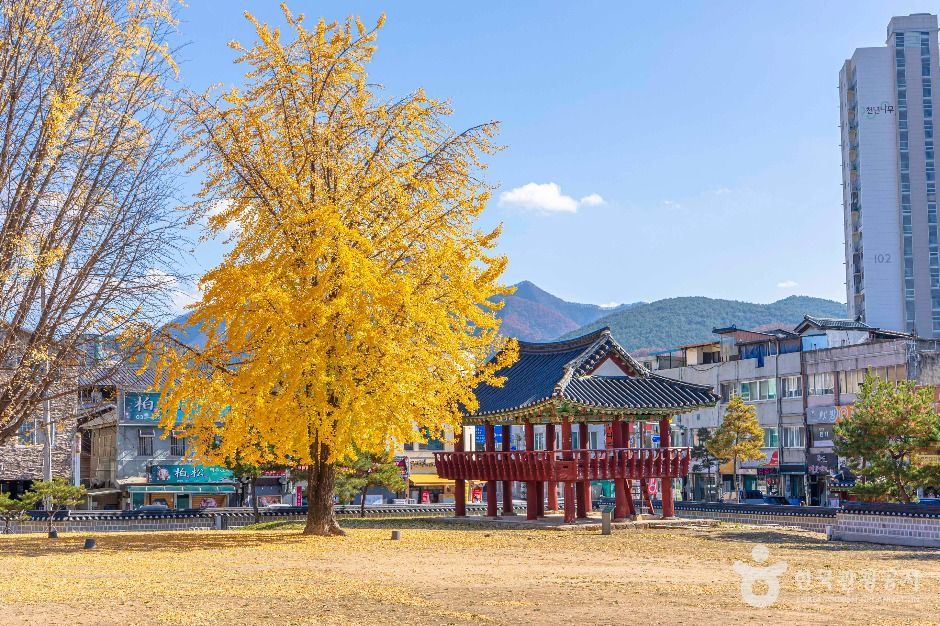
Gwanpungheon Hall was used as a magistrate’s office to handle local affairs during the Joseon Dynasty. The site consists of an annex and a 3x3 kan building (a traditional Korean structural unit). Currently, it serves as a mission center for the Bodeoksa Temple of the Jogye Order of Korean Buddhism. About 50 meters away from the hall is Jagyuru Pavilion, where King Danjong (r. 1452–1455) stayed during his exile after losing the throne to King Sejo (r. 1455–1468). It is said that Danjong frequently visited this pavilion to write poetry known as jagyu poetry. In these works, he compared his own grief to the blood-spitting cries of the jagyu (oriental scops owl), a bird characterized by its painful and mournful call. The pavilion was originally built by County Magistrate Shin Kwon-geun in 1428 (the 10th year of King Sejong's reign) and was initially called Maejungnu. It was renamed after Danjong wrote his famous poems there. The buildings were eventually lost and forgotten until they were rediscovered and restored by Gangwon Provincial Governor Yun Sa-guk in 1791 (the 15th year of King Jeongjo's reign). (Source: National Heritage Administration)

Chungju Ecology Experience Museum (충주자연생태체험관)

Chungju Ecology Experience Museum (충주자연생태체험관)

2026-03-11

260 Jideung-ro, Dongnyang-myeon, Chungju-si, Chungcheongbuk-do

Chungju Ecology Experience Museum is an interactive space designed to foster appreciation for nature through hands-on exhibits, educational programs, and its surrounding natural environment. While geared toward children, it offers a relaxing and engaging experience for visitors of all ages. The complex includes a basement, three above-ground floors, Yonggyo Bridge Ecology Park, and an annex building. The basement features a safe indoor play area with slides and activity equipment. The first and second floors include a screening room for nature documentaries, exhibition halls introducing rare native species and their characteristics, and a collection of ecology-related books.

LEGOLAND Korea Resort (레고랜드 코리아 리조트)

2026-05-14

128 Hajungdo-gil, Chuncheon-si, Gangwon-do

LEGOLAND® Korea Resort is the first global theme park of its kind in Korea, located on Jungdo Island in Chuncheon, Gangwon State, and the tenth LEGOLAND Resort worldwide. It officially opened on Children’s Day, May 5, 2022. Designed primarily for children aged 2 to 12 and their families, the resort features around 40 rides and attractions, along with a variety of shows and events. Visitors can enjoy fun-filled experiences at the LEGOLAND Park during the day and extend their stay at the LEGOLAND Hotel in the evening. The LEGOLAND Hotel offers a total of 154 rooms, each uniquely decorated in one of four LEGO-themed concepts, providing a playful and immersive stay for families.

Sujupalbong Mountain (수주팔봉)

2026-03-11

Salmi-myeon, Chungju-si, Chungcheongbuk-do

Sujupalbong Mountain is located in Hyangsan-ri, Salmi-myeon, Chungju in Chungcheongbuk-do. Though relatively low in elevation, the eight peaks are formed of sharp, rugged rock, giving them a striking and imposing appearance. The name “Sujupalbong,” meaning “eight peaks of suju,” comes from the view across the Dalcheon Stream from Palbong Village in Munju-ri. From that vantage point, the eight peaks appear to rise in a row from the riverbank to the summit. Seen from above, the scenery resembles a traditional East Asian landscape painting. Sheer rock formations such as Songgotbawi Rock, Jungbawi Rock, and Kalbawi Rock stand like blades along vertical cliffs, creating dramatic views.