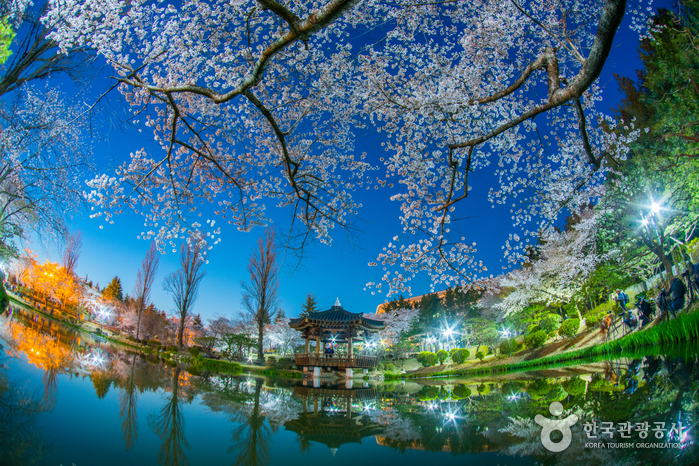
Gyeongju Bomunjeong Pavilion (보문정 (경주))
2.6Km 2022-05-06
Sinpyeong-dong, Gyeongju-si, Gyeongsangbuk-do
+82-54-745-7601
Bomunjeong Pavilion has a beautiful scenery and was listed on CNN's "50 Beautiful Places to Visit in South Korea." The octagonal pavilion and two ponds are surrounded by cherry blossom trees and maple trees making it a must-visit spot all year round.
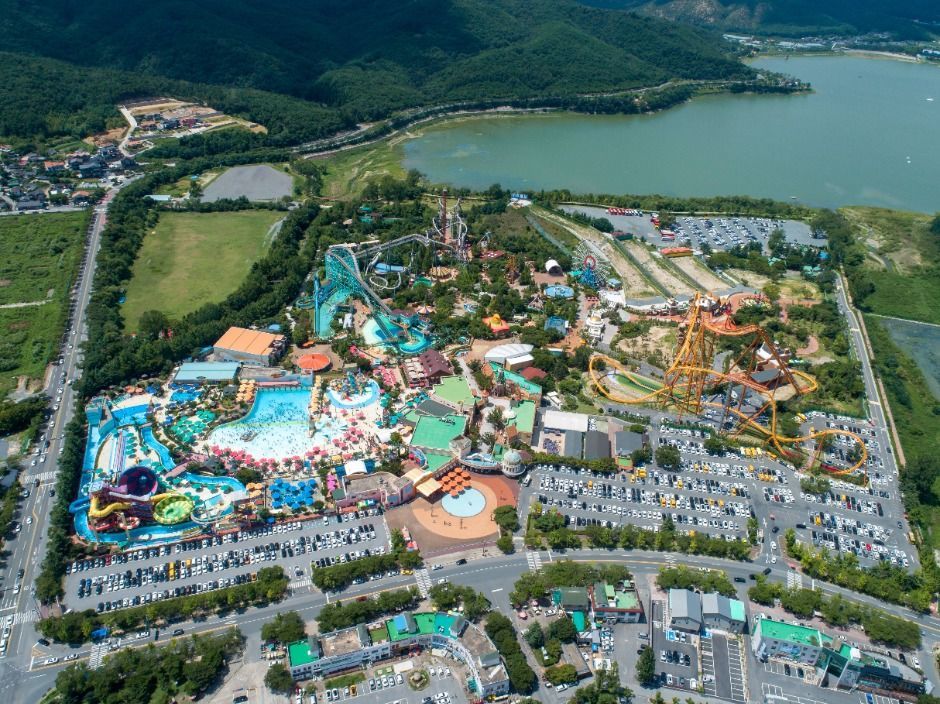
Gyeongju World (경주월드 어뮤즈먼트)
2.8Km 2025-06-12
544 Bomun-ro, Gyeongju-si, Gyeongsangbuk-do
At Gyeongju World, visitors can enjoy the popular water park California Beach in the summer, and a large-scale snow park in the winter. The Bazaar District in Gyeongju World looks like as if it came straight out of a fairy tale and serves as a popular photo spot with a various rides, convenience facilities, and restaurants. It is expected to become a must-see destination for tourists from all over the country visiting Gyeongju as it offers much to see, eat, and enjoy.
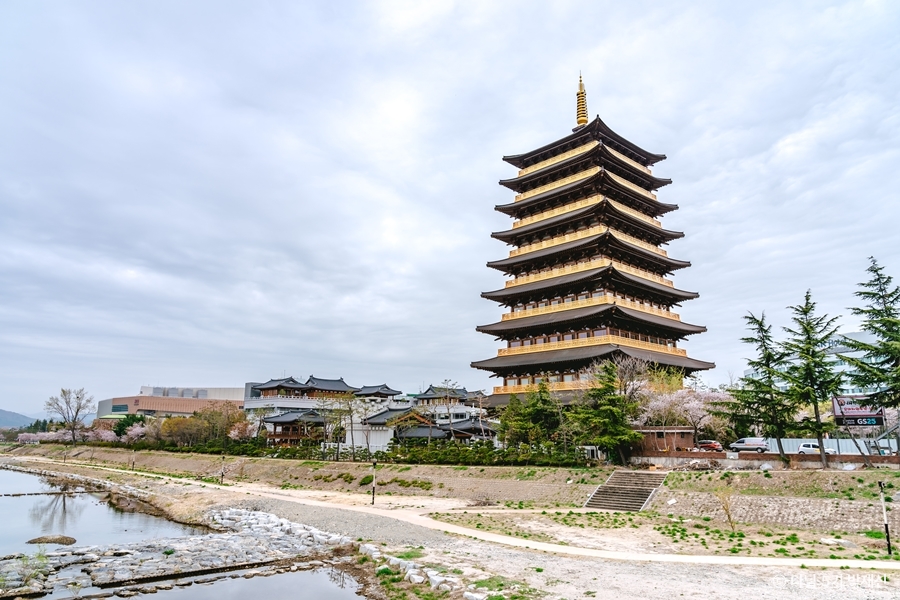
Hwang Nyong Won (황룡원)
3.1Km 2025-03-14
40 Expo-ro, Gyeongju-si, Gyeongsangbuk-do
+82-54-760-0500
This unique architecture is a reinterpretation of the Hwangnyongsa nine-story pagoda format from the Silla period using modern science technology and architecture methods. The building has become a new landmark in Bomun Tourist Complex and is also used as a training institute that offers meditation programs. There are simple one-hour programs or overnight tour courses available through prior reservation.

Gyeongju Expo Solgeo Art Museum (경주솔거미술관(솔거미술관))
3.3Km 2025-05-19
614 Gyeonggam-ro, Gyeongju-si, Gyeongsangbuk-do
Gyeongju Expo Solgeo Art Museum is Gyeongju’s first public art museum, opened in 2015 with the donation of 830 works by the Korean painter Park Dae-sung. Designed by the renowned architect Seung H-Sang, the museum’s architecture blends people, space, and nature. It features a permanent exhibition of works by Park Dae-sung, along with special rotational exhibitions by invited artists. For visitors seeking deeper insight into the artwork, the museum offers a docent program. The window in the permanent exhibition hall has become a popular SNS spot and is often referred to as a moving painting.
Salon Heritage (살롱헤리티지)
3.3Km 2025-05-26
614 Gyeonggam-ro, Gyeongju-si, Gyeongsangbuk-do
Salon Heritage is a world cultural heritage media promotion hall, located inside the Gyeongju World Expo Memorial, which was designed by renowned architect Kengo Kuma, drawing inspiration from Daereungwon Ancient Tombs and columnar joints of Gyeongju. It features dynamic media walls, a media tunnel and a world heritage study, offering visitors an immersive digital experience to explore the rich heritage of Gyeongju.
Gyeongju Expo Park (경주엑스포공원)
3.5Km 2024-11-11
614 Gyeonggam-ro, Gyeongju-si, Gyeongsangbuk-do
Gyeongju Expo Park is located in the Bomun Tourist Complex in Gyeongju, offering a thematic experience of Korean culture through exhibitions, performances, and hands-on activities showcasing the art and culture of the Silla dynasty (BC 57-AD 935). The park features various attractions such as Gyeongju Tower, Timeless Media Art, Solgeo Art Museum, Lumina Night Walk, Cheomseongdae Film Hall, and Asadal Sculpture Park.
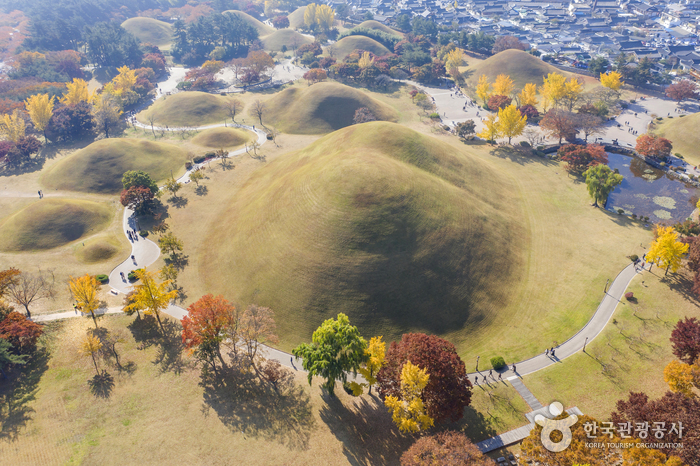
Gyeongju-si Special Tourist Zone (경주시 관광특구)
3.5Km 2025-03-25
614 Gyeonggam-ro, Gyeongju-si, Gyeongsangbuk-do
+82-54-779-6084
Gyeongju was the capital city of the ancient kingdom of Silla. The city is often referred to as a “museum without walls” because of the many cultural relics scattered throughout the city. Almost everything in this city, from the streets to the mountains, is rich in history. Gyeongju has roughly 300 sites that have been designated as a cultural heritage, with some of them being UNESCO-recognized World Heritage Sites.
The Gyeongju Special Tourist Zone includes the districts of Namsan, Wolseong, Daereungwon, Hwangryongsa, and Sanseong. This area has a total of 52 cultural assets registered on the World Heritage list. Many of the hills are actually royal tombs and fields of grass used to be sites of ancient temples.
The entire Namsan Mountain can almost be considered a cultural asset because of the many stone pagodas and Buddha statues that can be found here. The Bulguk district is home to many of Gyeongju’s most well-known attractions such as Bulguksa Temple, Seokguram Grotto, Gyeongju Folk Village, Silla Arts and Science Museum, and Goereung.
In the Bomun district, there are plenty of recreation facilities surrounding Bomunho Lake. Other attractions in the area include Gyeongju World Culture Expo Park, Gyeongju World, and Silla Millennium Park.
[Gyeongju Special Tourist Zone]
Areas included: Downtown area, Bomun Lake Resort, and Bulguksa Temple in Gyeongju-si, Gyeongsangnam-do
Area size: 32,650,000㎡
Tourist Attractions: Bulguksa Temple, Seokguram Grotto, Daereungwon Tomb Complex, Namsan Mountain, Bomunho Lake, Shilla Millennium Park, Gyeongju World Culture Expo Park, etc.
Bunhwangsa Temple (분황사)
3.8Km 2024-02-29
94-11 Bunhwang-ro, Gyeongju-si, Gyeongsangbuk-do
Bunhwangsa Temple, located next to the ruins of Hwangnyongsa Temple in Gyeongju, was established in 634 during the Silla dynasty. Visitors can see cultural assets such as the Stone Brick Pagoda designated as a national treasure, and the Pedestal for the Stele of State Preceptor Hwajaeng registered as a Historic Site. Despite being a significant and ancient temple, much of it was lost during wars such as the Mongolia invasions and the Japanese invasions of Korea, leaving only a few buildings and temple grounds like Bogwangjeon Hall. Nearby, there is the Hwangnyongsa Museum.
Donggung Palace and Wolji Pond (경주 동궁과 월지)
4.6Km 2025-10-23
102 Wonhwa-ro, Gyeongju-si, Gyeongsangbuk-do
+82-54-750-8655
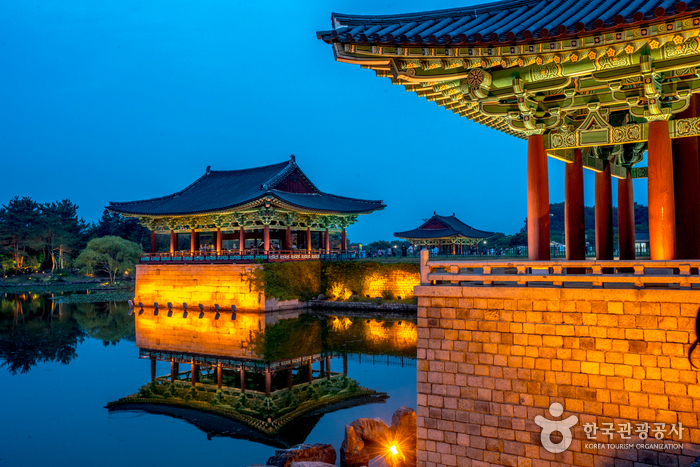
Donggung Palace and Wolji Pond in Gyeongju are secondary palace sites of Silla. The palace, along with other secondary palaces, was used as the eastern palace where the prince lived, and banquets were held during auspicious events or to welcome important guests. It is also where King Gyeongsun of Silla invited King Wang Geon of Goryeo and had a feast to complain about the critical situation in 931 after being invaded by Gyeon Hwon. After unifying the three kingdoms, Silla's King Munmu dug a large pond in the 14th year of his reign (674), creating three islands in the center of the pond along with a 12-peaked mountain to the northeast. Beautiful flowers and trees were planted here, and rare birds and animals were raised. In the Samguksagi (History of the Three Kingdoms) from the Goryeo dynasty, there is only a record of Imhaejeon Hall and no mention of Anapji Pond. After Silla fell and the place fell into ruins during the Goryeo and Joseon dynasties, poets and calligraphers looked at the pond and recited a line of poetry that says, “The once splendid palace is gone, and only geese and ducks fly in.” That's why the place is called Anapji, using the letters 'an' for wild geese and 'ab' for ducks. In the 1980s, pottery fragments with the inscription "Wolji" were excavated, and it was confirmed that this area was originally called "Wolji," which means "a pond that reflects the moon." And the name Anapji was changed to Wolji Pond afterwards.
◎ Travel information to meet Hallyu’s charm - "The Beauty Inside"
Se-gye visits this place to refresh her mind after she argues with Do-jae over the contract. Being one of the most famous tourist sites in Gyeongju, the scenery here is enough to help you forget the argument that you’ve just had, especially at night.
 English
 한국어
한국어 日本語
日本語 中文(简体)
 Deutsch
 Français
 Español
 Русский


