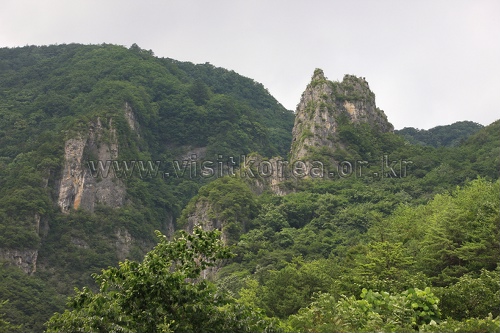
Deokangsan Mountain (덕항산)
.0M 2021-06-15
Daegi-ri, Samcheok-si, Gangwon-do
Deokangsan Mountain is where Hwanseongul Cave is located, and is part of the Samcheok Daei-ri Cave Area, designated as Natural Monument No. 178. The mountain has unique peaks and has a warm welcoming feeling from the entrance. There are various folklore relics within the mountain, leading to many visitors.
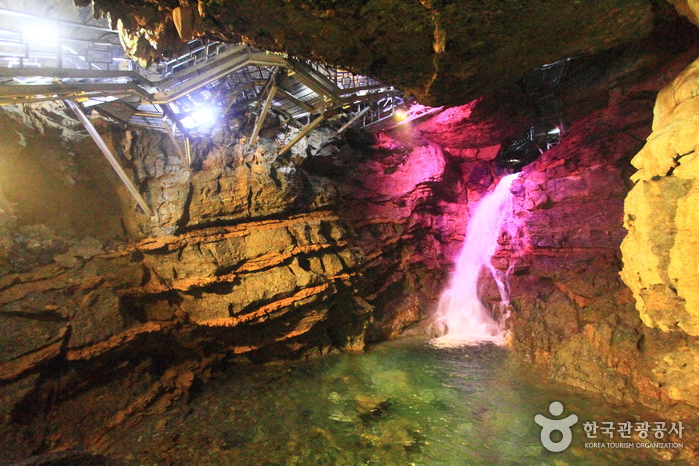
Daegeumgul Cave - Daei-ri Cave Area (대금굴 (대이리 동굴지대))
2.8Km 2025-01-07
800, Hwanseon-ro, Samcheok-si, Gangwon-do
Daegeumgul Cave is believed to be as old as Hwanseongul and Gwaneumgul Caves located nearby. The entrance to the cave was exposed during an excavation project, and after a long preparatory period, the cave was opened to the public. This newly opened, well-preserved cave is filled with limestone features such as stalactites, and a considerable amount of water flows through the cave, creating waterfalls, both large and small, along with numerous ponds.

Hwanseongul Cave (Daei-ri Cave System) (환선굴 (대이리 동굴지대))
2.8Km 2025-06-10
800 Hwanseon-ro, Singi-myeon, Samcheok-si, Gangwon-do
Hwanseongul Cave is the largest limestone cave in Asia, formed estimated 530 million years ago. The cafe features fantastic rocks in various shapes, stalagmites, and stalactites. There have been 47 new breeds of animals discovered in Hwanseongul Cave, with four of these being found to only live in this cave. In April 2010, a monorail was installed within the cave to make it more convenient for people to see all the natural habitat.
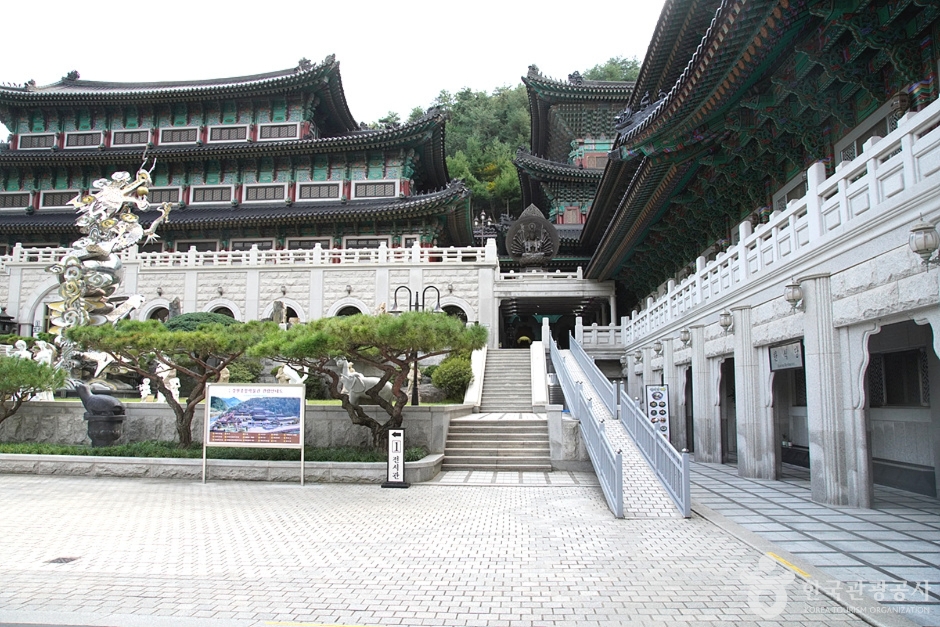
Gangwon Comprehensive Museum (강원종합박물관)
6.9Km 2024-02-16
3016 Gangwonnambu-ro, Singi-myeon, Samcheok-si, Gangwon-do
Gangwon Comprehensive Museum boasts a collection of over 20,000 artifacts from various global cultures, encompassing fields like natural history, ceramics, metalwork, folklore, religion, woodwork, and stonework. Its mission is to collect and preserve these artifacts to enhance humanity's understanding of the environment they inhabit. The museum's building draws inspiration from historic East Asian architecture, adding to its cultural richness. Located in an inland area of Samcheok, the museum is about 25 kilometers from KTX Donghae Station, making it a 25-minute car journey away.
Samcheok Hwalgi Healing Forest (삼척 활기 치유의 숲)
9.2Km 2025-10-23
651-230 Jungyeong-gil, Miro-myeon, Samcheok-si, Gangwon-do
Samcheok Hwalgi Healing Forest is nestled in the deep forest of Hwalgi-ri, Miro-myeon, Samcheok-si. It is a recreational and well-being facility that allows visitors to enjoy relaxation and vitality while being surrounded by the dense forest. It has a visitor center, therapy center, tree house, forest experience center, water therapy center, and therapy trails. It has a minimal number of visitor-convenient facilities to avoid damaging the forest. The magnificent forests here fascinate visitors, including the dense forest full of tall, old trees; a forest with beautiful autumn leaves; a forest with diverse trees; the beautiful white-barked birch forest; colonies of Chinese cork oak; a Mi-insong pine tree forest near Jungyeongmyo Tomb; and the millennium forest in Samcheok where a large pine tree stands.
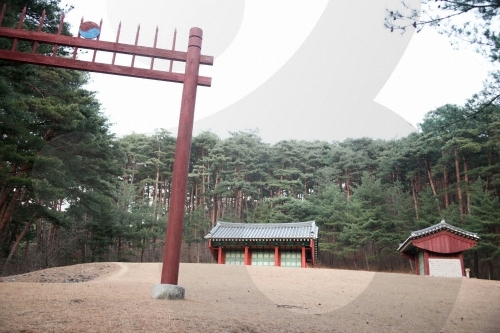
Samcheok Yeonggyeongmyo Royal Tomb (삼척 영경묘)
10.0Km 2022-09-15
Miro-myeon, Samcheok-si, Gangwon-do
Yeonggyeongmyo Royal Tomb is the grave of the mother of King Mokjo and the 5th great-grandmother of King Taejo of the Joseon dynasty. During the 3rd year of King Gojong’s reign (1899), the grave as well as memorial monuments were built together with Jungyeongmyo, a grave for the 5th great-grandfather of King Taejo. Surrounded by a rich forest, it has a beautiful view. Every April 20th, an ancestral ritual is held by the Lee family (from Jeonju).
Bunjuryeong Wildflower Trekking (분주령야생화 트레킹)
11.8Km 2024-03-20
Hwajeon-dong, Taebaek-si, Gangwon-do
Bunjuryeong Wildflower Trekking is a trekking course that extends from Geumdaebong Peak in Taebaek's Daedeoksan Mountain to the source of the Hangang River, Geomnyongso Spring. The trekking section (6.9 km) from Dumundongjae Pass to Bunjuryeong Pass is renowned as a paradise for wildflowers and wildlife, including natural monuments like the flying squirrel and ichneumon wasp. Visitors can access this trekking course by making a reservation in advance.
Miinpokpo Falls (삼척 미인폭포)
13.8Km 2023-09-26
77-162, Munuijae-ro, Dogye-eup, Samcheok-si, Gangwon-do
Miinpokpo Falls, located near Taebaek-si, has various size waterfalls from small to large. There's a sad legend on why the waterfall got its name. There is a tomb of a beautiful woman near the waterfall, who jumped to her death after losing two husbands through early death. There's also a valley that's called the Grand Canyon of Korea nearby. It takes approximately 15 minutes to get to the fall from Yeoraesa Temple parking lot on foot through 300 meters of trekking.
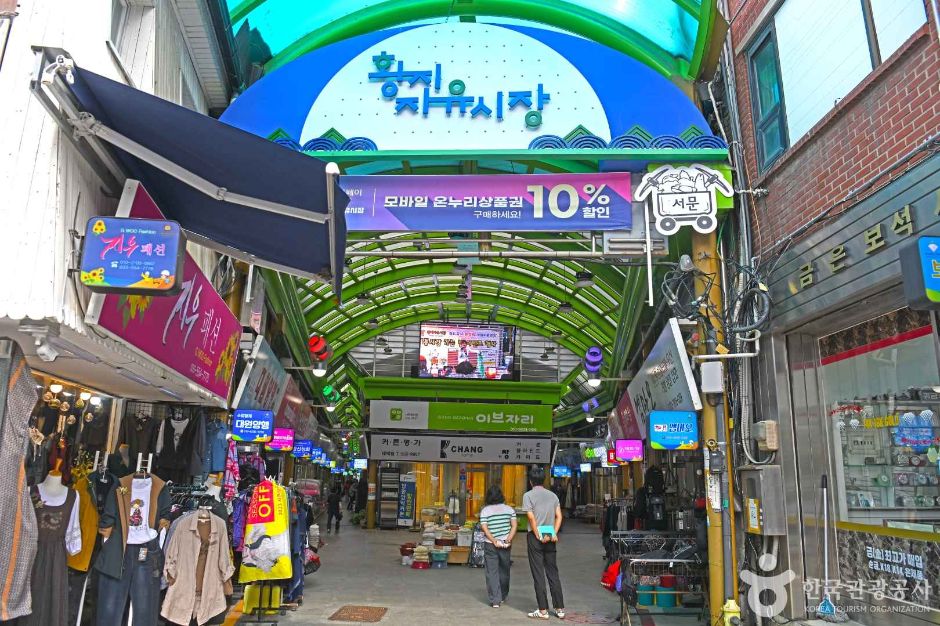
Hwangji Jayu Market(황지 자유시장)
15.0Km 2025-10-23
14 Sijangan 2-gil, Taebaek-si, Gangwon-do
Established in 1971, Hwangji Jayu Market is a traditional market with over 50 years of history and roughly 170 vendors. It welcomes customers with a wide selection of goods and high-quality local specialties, including Danggui (Korean angelica) and Cheongung (Cnidium) from the highlands of Taebaek, various mushrooms, fresh and savory fish from the nearby East Sea, fruits, miscellaneous goods, clothing, shoes, and other manufactured products. Conveniently located in central Taebaek and just a two-minute walk from Hwangji Pond, a main local attraction, the market is beloved by both residents and tourists, and continues to thrive as a bustling local hub.
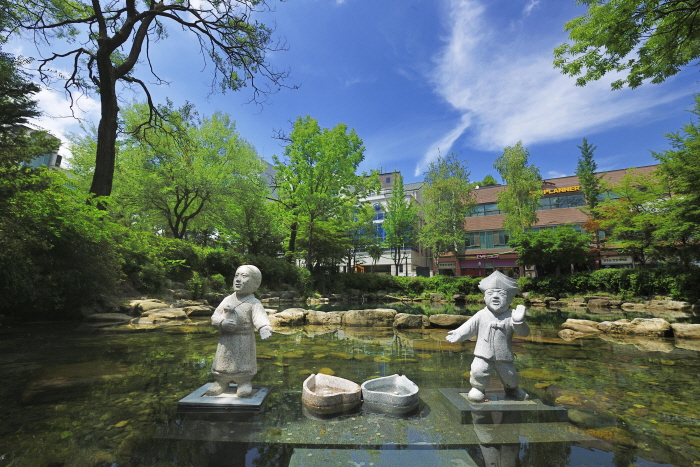
Hwangji Pond (황지연못)
15.1Km 2024-12-23
12 Hwangjiyeonmot-gil, Taebaek-si, Gangwon-do
Hwangji Pond, located in downtown Taebaek, is a source of the Nakdonggang River, flowing all the way to the Yeongnam Plain. The pond is divided into three sections: Sangji, with a diameter of 100 meters, Jungji and Haji. Although it is small in size, the pond supplies 5,000 tons of water a day.
 English
 한국어
한국어 日本語
日本語 中文(简体)
 Deutsch
 Français
 Español
 Русский


