
Naksansa Temple (낙산사)
14.9Km 2025-10-23
100 Naksansa-ro, Yangyang-gun, Gangwon-do
+82-33-672-2475
This ancient temple was built in the 11th year of King Munmu’s reign of Silla (671) by the Buddhist monk Uisang. Naksansa Temple is one of the foremost sights of Yangyang, and one of the most historic sites in the region. Along with Ganghwa’s Bomunsa Temple and Namhae’s Boriam Hermitage, it is said to be one of the three centers of the cult of Avalokitesvara in Korea. Its handsome view overlooking the East Sea has earned it a spot in the Eight Sights of Gwandong (eight famous sights in Yeongdong region of Gangwon-do), documented throughout the ages in many classic literature and poetry. Today’s Naksansa Temple is a product of many restorations and expansions, and has many examples of cultural heritage within its walls, including a 16 meter-tall statue of the Avalokitesvara Bodhisattva. A mountain fire in 2005 resulted in the loss of 20 buildings, including the building that housed its bronze bell. The temple also operates templestay programs available through its website.
Uisangdae Pavilion (낙산사 의상대)
15.2Km 2024-12-26
100 Naksansa-ro, Yangyang-gun, Gangwon-do
+82-33-672-2447
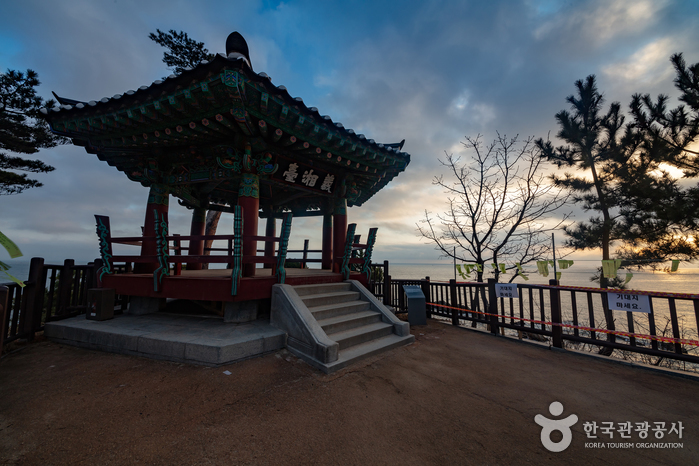
This pavilion is located on a seaside cliff on the way from Yangyang’s Naksansa Temple to Gwaneumgul Cave of Hongnyeonam Hermitage. The word “dae” in Uisangdae refers to a building built at a vantage point for areas with beautiful scenery. Indeed, the view of the East Sea and the coast from Uisangdae Pavilion awarded its recognition as one of the Eight Sights of Yangyang, and a must-visit place for all visitors to Naksansa Temple. Jeong Cheol (pen-name: Songgang), a famed scholar and writer of the poem Song of Diamond Mountains, chose the pavilion as one of the Eight Sights of Gwandong, and the pavilion is today one of the popular sites for sunrise-viewing on the east coast of Korea. Together with Hongnyeonam Hermitage, it is designated as the Scenic Site No. 27 of Korea under the name “Uisangdae Pavilion and Hongnyeonam Hermitage of Naksansa Temple, Yangyang.” Uisangdae is named after Uisang, a respected Silla-era Buddhist monk who is said to have founded this temple in 671 (11th year of King Munmu’s reign of Silla), and many stories of his deeds can still be found in the temple. For instance, Uisangdae is said to be the site where he meditated before founding Naksansa Temple at its present site. Today’s pavilion was restored to its present hexagonal form in 1995.
Jeongin Hoesikdang (정인회식당)
15.3Km 2024-02-16
32 Naksansa-ro, Ganghyeon-myeon, Yangyang-gun, Gangwon-do
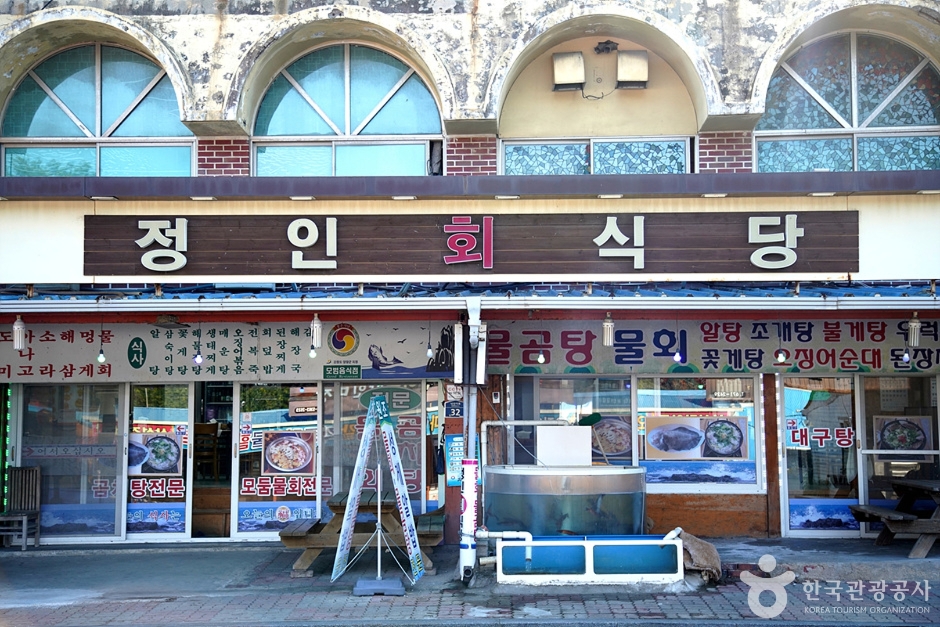
Jeongin Hoesikdang, situated near Naksan Beach in Yangyang, specializes in mul hoe (cold raw fish soup) and saengseon jjigae (fish jjigae). It prides itself on using fresh fish, sourced from nearby ports and used within a day of purchase. The restaurant's signature dish is sanureok maeuntang (spicy rockfish stew). Other popular menu items include modeum mul hoe (assorted cold raw fish soup), seongge albap (sea urchin roe rice), and ojingeo hoe deopbap (raw squid bibimbap). Additionally, soups like gomchi tang (spicy moray eel stew) and haemul tang (spicy seafood stew) are also highly recommended. For guests interested in local attractions, the scenic Naksansa Temple and Naksanhaebyeon Beach are nearby.
Naksan Beach (낙산해수욕장)
15.7Km 2024-12-27
59 Haemaji-gil, Yangyang-gun, Gangwon-do
+82-33-670-2518
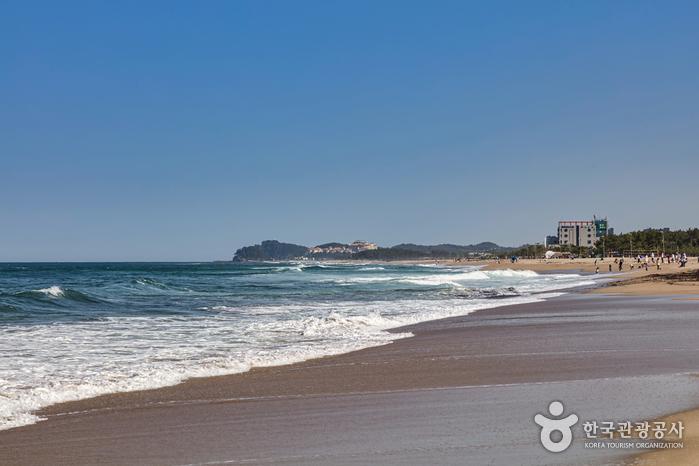
Naksan Beach is one of the most famous beaches in Yangyang, located in Joseon-ri, Yangyang-eup, Yangyang-gun, Gangwon-do. Since its opening in 1963, it has attracted more than 1 million visitors each year, its reputation being rivaled only by the Gyeongpodae Beach on the east coast of Korea. The 4 kilometer-long sand beach contrasts magnificently with the lush pine trees of the area. The water is less than 1.5 meter deep, making it a good place for all ages. Naksanhang Port marks one end of the beach, behind which Naksan Mountain, the location of Naksansa Temple, can be found. The other end has a lake formed at the delta of Namdaecheon Stream, which originates from Seoraksan Mountain. Many cafes, convenience stores, restaurants, and accommodations cater to the needs of the visitors. The beach sees considerable traffic in winter as well, when it serves as a popular venue for sunrise-watching, particularly for the New Year’s Day festival.
Baekchon Makguksu (백촌막국수)
15.8Km 2024-12-10
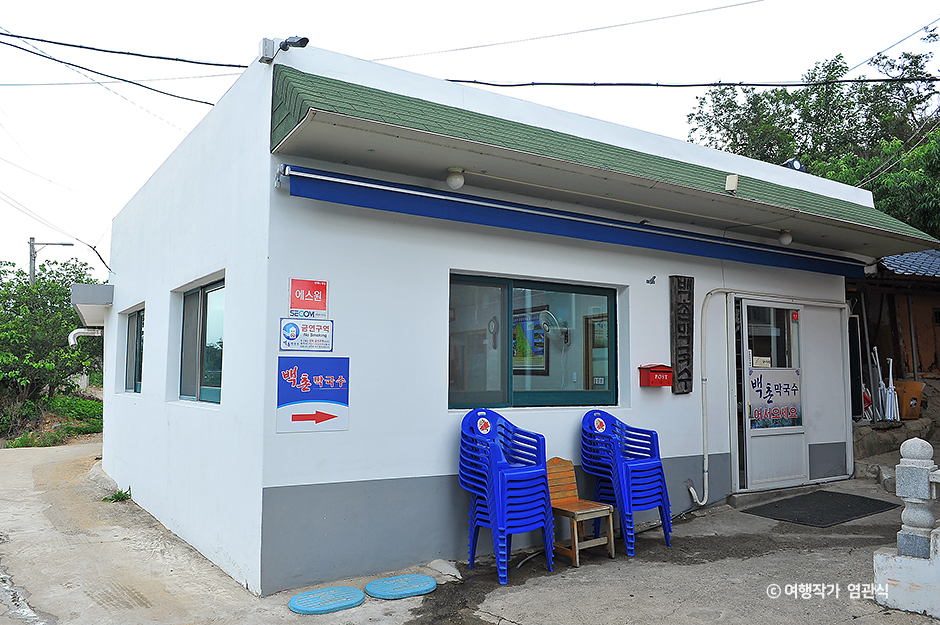
Baekchon Makguksu is a one of the most well-known restaurant in Goseong for serving delicious makguksu (buckwheat noodles), a dish that defines Gangwon-do. Buckwheat noodles in Baekchon Makguksu are served with a dried pollack salad, which, for many regulars, is the thing that makes them come back for more. Baekchon Makguksu’s take on this dish combines the flavors of dongchimi (radish water kichmi) broth with Hamheung-style cold buckwheat noodles. Ingredients consist of dongchimi and buckwheat noodles, topped with dried pollack salad, sesame oil, vinegar, sugar, mustard, and seasoning to taste. The noodles themselves retain the fragrance and the texture of buckwheat quite well. Visitors who prefer their bowl to have a more subtle yet refreshing taste can control the amount of vinegar and seasoning to bring the soup’s flavors forward. Another popular dish here is suyuk (boiled pork slices). After enjoying a meal of makguksu, visitors are recommended to take a leisurely seaside stroll at the nearby Munamhaebyeon Beach.
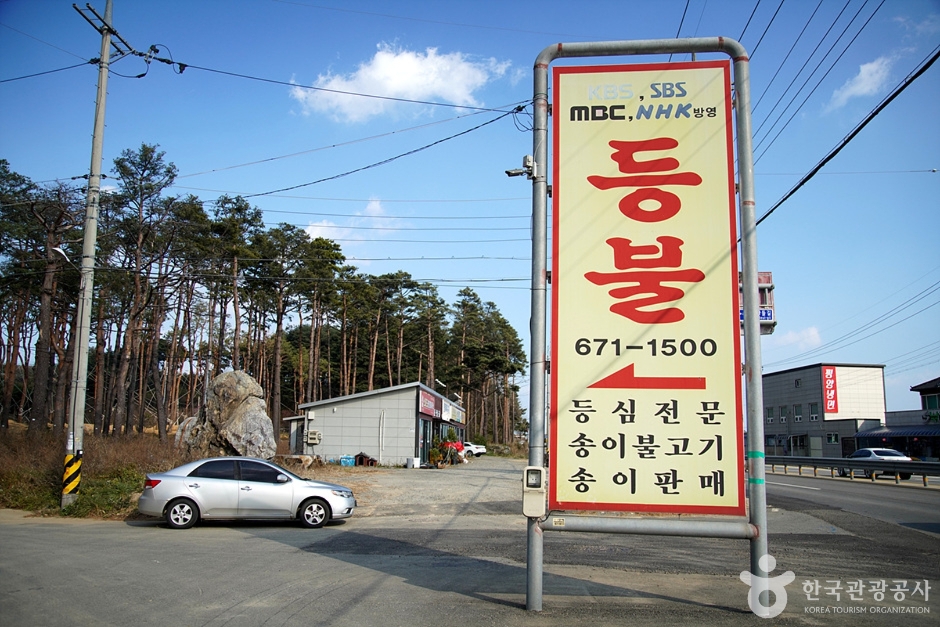
Deungbul Garden (등불가든)
16.0Km 2024-02-16
23 Powolladeul-gil, Yangyang-eup, Yangyang-gun, Gangwon-do
Located near Naksanhaebyeon Beach, Deungbul Garden specializes in Korean beef and pine mushroom dishes. Its signature dishes are hanu gui (grilled Korean beef) and songibeoseot jeongol (pine mushroom hot pot). The restaurant prides itself on serving tender and juicy Korean beef, which pairs exceptionally well with the pine mushrooms, a regional specialty known for their superior flavor, especially when grilled with the beef. Pine mushrooms, named for their growth under pine trees and their pinecone-like aroma, are celebrated for their fragrance, scent, and texture, making them a premier ingredient in Korean cuisine. The menu also features other delectable options like songibeoseot bulgogi (pine mushroom and bulgogi), yukhoe (beef tartare), and kongnamul doenjang jjigae (bean sprout soybean paste jjigae).
Deungbul Garden (등불가든)
16.0Km 2025-01-23
23 Powolladeul-gil, Yangyang-eup, Yangyang-gun, Gangwon-do
This restaurant serves the delectable combination of pine mushrooms and Yangyang Korean beef. Every fall, you can enjoy grilled natural pine mushrooms with Korean beef special cuts and rib eye. Note that while the meat is served throughout the year, pine mushrooms are only offered when they can be harvested. Other popular dishes include Korean beef bulgogi with pine mushrooms and hot pot. American pop singer and producer Kanye West once visited this restaurant.
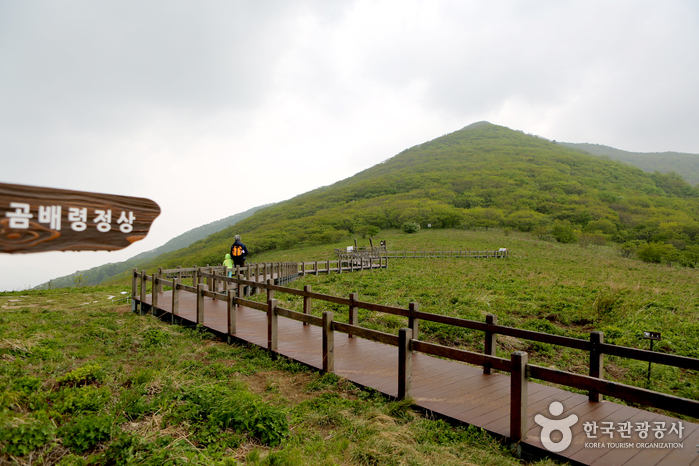
Jeombongsan Mountain Gombaeryeong Pass (점봉산 곰배령)
16.1Km 2024-02-16
12 Gombaeryeong-gil, Girin-myeon, Inje-gun, Gangwon-do
This ecological area at the summit of Jeombongsan Mountain, situated 1,100 meters above sea level, spans approximately 16.5 hectares. It is often referred to as the "garden of heaven" due to the sheer diversity of plants and wildflowers in the area. The trail leading to the pass has a relatively gentle slope, making it accessible to all. It extends for 10.5 kilometers and typically takes about four hours to complete. Visitors need to make reservations to visit the pass.
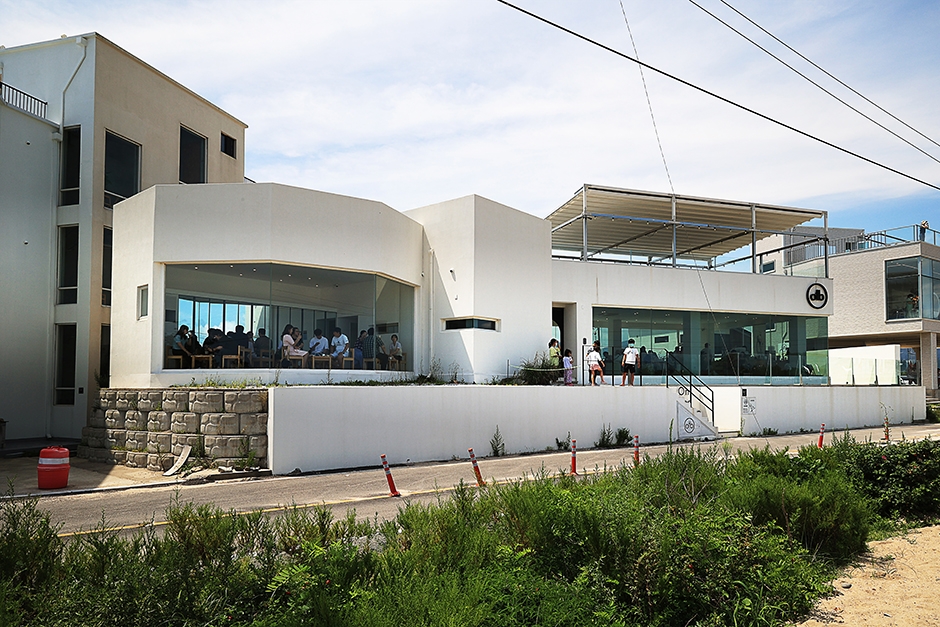
On the Button (온더버튼)
16.3Km 2024-12-27
On the Button is known for its view overlooking Munamhaebyeon Beach. The cafe’s facade features a window wall that brings the beach into view. The parking lot is located at the back of the cafe, so visitors won’t have to worry about cars blocking the view. With its chic interior and space, the cafe is also popular for photography. All beverages at On the Button are served in reusable cups. Lids are provided upon request. The second floor is a rooftop space. Children are prohibited from accessing the space due to safety reasons. The cafe serves a wide range of menu items, from Latte Verde to Summer Latte, Marron Latte, Cafe Americano, Latte, and Einspanner. Nearby tourist sites include Cheonhakjeong Pavilion, Baekdo Beach, and Gyoamri Beach.
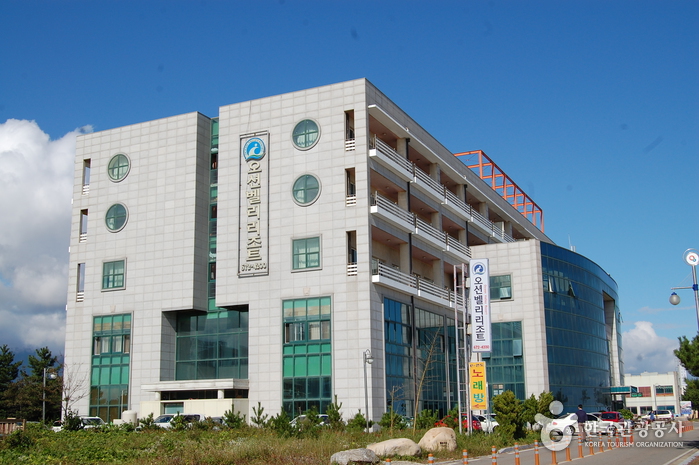
Ocean Valley Resort (오션벨리리조트)
16.5Km 2025-03-16
127-30, Ilchul-ro, Yangyang-gun, Gangwon-do
+82-33-672-4200
Ocean Valley Resort is located on the sandy shore of Naksan Beach staring out at the clean blue waters of the East Sea. The resort is the closest accommodation to the ocean in the nation. Since its opening in 2001, the resort has continued to strive to provide the best service in order for customers to have an unforgettable experience. The resort is open all year long, allowing guests to enjoy a range of activities like Naksan Beach in the summer to skiing in the winter.
There are many attractions close to the resort including Naksansa Temple, Cheoksan Hot Springs, Osaek Mineral Spring, and Unification Observatory. Guests can also enjoy a wide range of leisure sports like sea fishing, boating, water skiing and golf. Ocean Valley Resort is an environmentally conscious resort that uses solar power to cover its energy needs.
 English
 한국어
한국어 日本語
日本語 中文(简体)
 Deutsch
 Français
 Español
 Русский


