Baekdamgyegok Valley (백담계곡)
3.4Km 2021-06-25
150, Baekdam-ro, Inje-gun, Gangwon-do
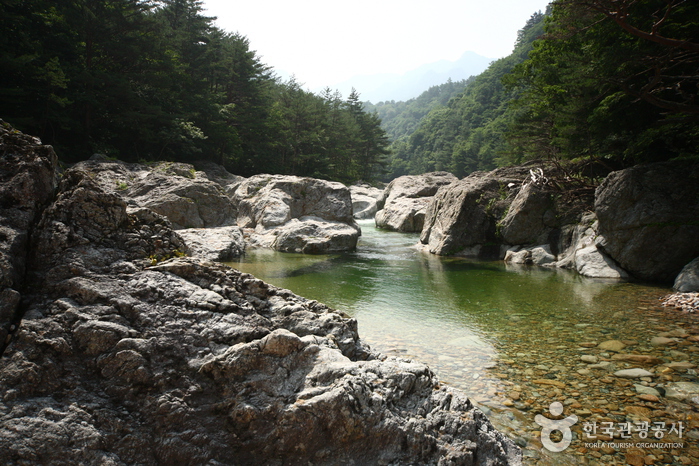
Baekdamgyegok Valley stretches over an eight kilometer section from Baekdamsa Temple to Yongdae-ri in Inje-gun. The valley has a road, but it is closed to general traffic. The valley is located within Seoraksan National Park. The stream running through the valley is wide and deep. The name of the valley comes from the claim that there are one hundred ('baek' in Korea) pools ('dam') of water along the valley. Baekdamgyegok Valley features clean water and lush forests.
Manhae Village (만해마을)
5.7Km 2021-07-29
91, Manhae-ro, Inje-gun, Gangwon-do
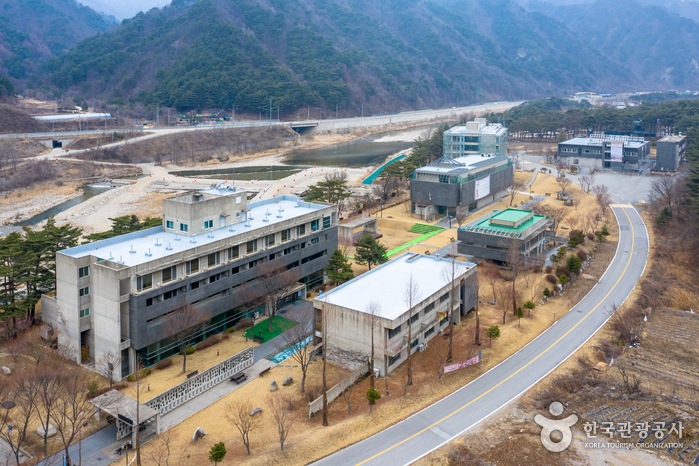
Manhae Village was established as a training center and memorial hall for national activist Monk Manhae Han Yongun, revered for his literary and philosophical inspiration, as well as his devotion to the nation and Korean people during the Democracy Movement.
Seoraksan National Park (Southern Section) (설악산국립공원 (남설악))
6.7Km 2024-04-02
801 Seorak-ro, Yangyang-gun, Gangwon-do
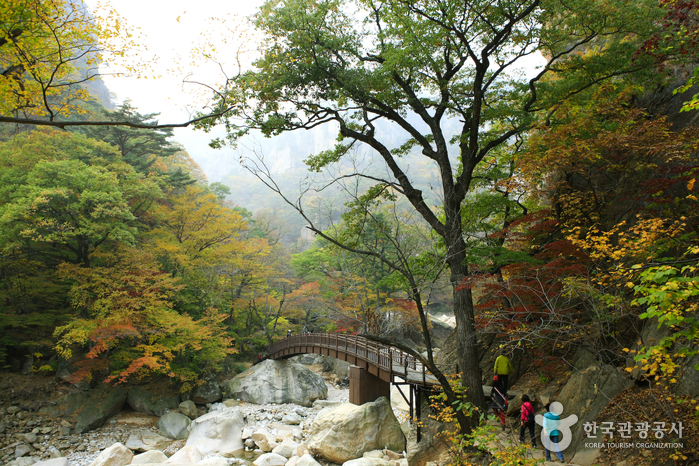
Seoraksan Mountain, the highest amid the Taebaek Mountain Range, boasts beautiful landscape and scenery all year round. To the east of Hangyeryeong and Misiryeong Passes is classified as the outer section ("Oeseorak"), to the west is the inner section ("Naeseorak"); and to the south of Hangyeryeong Pass as the southern section ("Namseorak").
The southern section is famous for its mineral water, hot springs, and waterfalls including Yongsopokpo, Sibipokpo, and Yeosinpokpo Falls. Jeongbongsan Mountain (1,424.2 meters) is also included in the area. There are also several different hiking courses varying in distance and duration.

Bongjeongam Hermitage (Inje) (봉정암(인제))
7.7Km 2024-02-28
1700 Baekdam-ro, Buk-myeon, Inje-gun, Gangwon-do
Bongjeongam Hermitage, situated at the highest point of Seoraksan Mountain, stands at 1,244 meters above sea level. Due to its elevation, one can witness snow-covered landscapes well into late May. The temple is 10.6 kilometers from the entrance of Baekdamsa Temple and requires 4-5 hours of steep climbing to reach. The view from Bongjeongam Hermitage is breathtaking, but the view of Seoraksan Mountain from the Shrine of Sakyamuni Buddha's Sarira is equally unmissable.
Inje Hwangtae Village (인제 황태마을)
7.9Km 2024-03-15
307 Jinburyeong-ro, Buk-myeon, Inje-gun, Gangwon-do
Inje’s winter landscape is at its most picturesque at the Dried Pollack Deokjang, the area’s premier seasonal attraction, within Inje Hwangtae Village. Deokjang refers to the traditional racks used for air-drying fish. Here, pollack undergoes a natural freeze-drying process, alternating between the sharp cold and the mild winter sunlight, resulting in a chewy texture that is much loved. This process, coupled with the breathtaking view of the racks laden with fish against the snowy backdrop, is indeed one of winter’s unique offerings. As visitors explore the Deokjang, they can learn about the 33 meticulous steps that transform pollack from fresh catch to the dried delicacy that graces dining tables. Adjacent to the Deokjang, Maebawi is known for its "iron way," a rock climbing path ideal for beginners. However, in winter, it transforms into a challenging ice climbing site suited for experienced climbers.
Seoraksan Ulsanbawi Rock (설악산 울산바위)
8.5Km 2024-02-28
1091 Seoraksan-ro, Sokcho-si, Gangwon-do
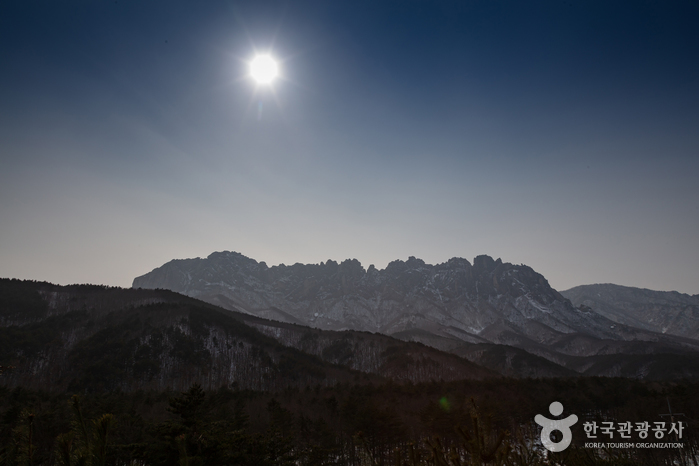
Ulsanbawi is a rock formation in Seoraksan Mountain that consists of six massive peaks, each reaching 900 meters above sea level. The name "Ulsanbawi" is derived from the shape of the peaks, which spread out like a fence, and it is located at the center of Seoraksan Mountain. This rock is celebrated for its unique shape, the scenic beauty surrounding it, and its hiking trails. It takes about three hours to reach the top of Ulsanbawi from Sogongwon Park.
Ulsanbawi Rock Milky Way Photo Spot on Old Misiryeong Trail (미시령옛길 울산바위 은하수)
9.4Km 2024-03-18
5110 Donghae-daero, Toseong-myeon, Goseong-gun, Gangwon-do
Misiryeong Pass, historically a pathway connecting Inje to Sokcho, also serves as an observation point for viewing Ulsanbawi Rock in Seoraksan Mountain. More recently, it has gained popularity as a photo spot for capturing the Milky Way. As a result, on clear nights, the parking lot is often filled with eager photographers.
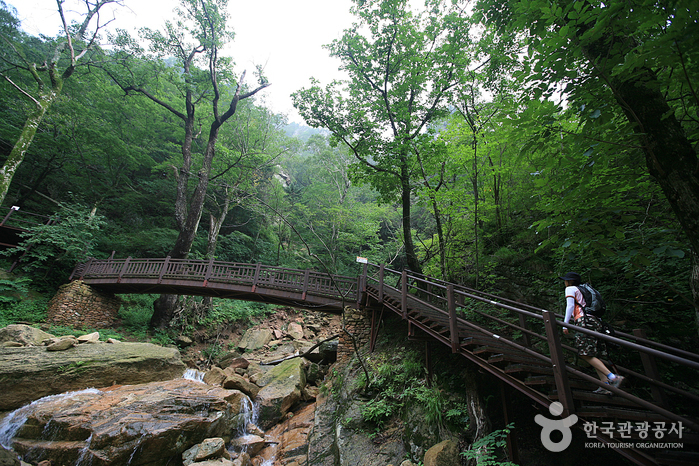
Seoraksan Heullimgol Valley (설악산 흘림골)
9.4Km 2024-02-16
San1-71, Osaek-ri, Seo-myeon, Yangyang-gun, Gangwon-do
Yangyang’s Heullimgol Valley, named for its cloud-like, foggy appearance due to the surrounding high mountains and deep valleys, offers a spectacular view and serves as the gateway to Deungseondae. This spot provides an expansive view of the southern side of Seoraksan Mountain. Notable sites near Heullimgol Valley include Yeosimpokpo Falls, Deungseondae, Deungseonpokpo Falls, Geumgangmun Gate, and Jujeongol Valley. Access to Heullimgol Valley is strictly limited to 5,000 visitors per day, with entry based on time reservations. Therefore, visitors must make a reservation through the Korea National Park Service's reservation system before visiting.
Sinheungsa Temple (Seoraksan Mountain) (신흥사(설악산))
9.8Km 2024-03-12
1137 Seoraksan-ro, Sokcho-si, Gangwon-do
Sinheungsa Temple is a temple located in Seoraksan Mountain near Sokcho. It belongs to the Jogye Order of Korean Buddhism. It was originally founded as Hyangseongsa Temple by the monk Jajang in the Shilla dynasty (A.D. 652). Within the temple grounds, cultural heritage sites such as Geungnakbojeon Hall, a wooden structure from the mid-Joseon period, and the Three-story Stone Pagoda at Hyangseongsa Temple Site. The temple offers a templestay program where visitors can experience temple life firsthand. Participants can engage in various activities such as Buddhist ceremonies, Buddhist prayer, 108 prostrations, and lotus lantern and rosary making.
Seoraksan Cable Car (설악산 케이블카)
10.2Km 2024-04-08
1085 Seoraksan-ro, Sokcho-si, Gangwon-do
A ride on the Seoraksan Cable Car is the best way to enjoy the unexplored regions of Seoraksan Mountain. The cable car station is located in Seoraksan National Park, and it takes about 10 minutes to reach Gwongeumseong Fortress, which is 700 meters above sea level. Since one-way tickets are not available, passengers must purchase a round-trip ticket. From the cable car window, passengers can see famous attractions like Ulsanbawi Peak and Manmulsang Rocks. From Gwongeumseong Fortress, passengers can take in a panoramic view of Seoraksan Mountain. Seoraksan Mountain, seen from the top of Gwongeumseong Fortress, is majestic and mysterious with unique rock formations. Upon reaching the top of the mountain, the entire scenery of Outer Seorak unfolds before one's eyes. Visitors will be amazed by the Allak Hermitage from the Silla dynasty and the Muhagsong Pine Tree, which has survived for hundreds of years just below Gwongeumseong Fortress. There are many tourists on weekends, public holidays, and fall foliage season, so visitors are advised to plan ahead.
 English
 한국어
한국어 日本語
日本語 中文(简体)
 Deutsch
 Français
 Español
 Русский


