
Gamaksan Wind Farm (감악산 풍력발전단지)
13.2Km 2024-02-23
San 57 Deoksan-ri, Sinwon-myeon, Geochang-gun, Gyeongsangnam-do
Gamaksan Wind Farm is a wind power complex located near the summit of Gamaksan Mountain in Geochang. The site, once a barren land, has been transformed into a flower garden with the planting of flowers such as Mother Chrysanthemum, Aster, Siberian Chrysanthemum, and Sliver Grass. It offers a panoramic view of Geochang-eup and Hapcheonho Lake. There are photo zones scattered throughout, providing excellent opportunities for photography. One of the main events is the Flower & Star Festival held in October. Visitors can enjoy vibrant purple asters and participate in programs like forest ecology experience and aromatherapy.
![Namgyeseowon Confucian Academy [UNESCO World Heritage] (남계서원 [유네스코 세계문화유산])](http://tong.visitkorea.or.kr/cms/resource/63/2996963_image2_1.jpg)
Namgyeseowon Confucian Academy [UNESCO World Heritage] (남계서원 [유네스코 세계문화유산])
17.4Km 2024-01-08
8-11 Namgyeseowon-gil, Sudong-myeon, Hamyang-gun, Gyeongsangnam-do
Namgyeseowon Confucian Academy was established in 1552 as the second Confucian academy in Korea after the Sosuseowon Confucian Academy located in Yeongju, Gyeongsangbuk-do. Seowon refers to a private educational institution of the Joseon period founded to perform Confucian rituals and nurture talent. “Namgye” is named after the Namgyecheon Stream flowing in its front. It was destroyed by in 1597 during the Imjin War (1592-1598) and rebuilt in 1612. Located on a low hill, it provides an open view of Gaepyeong Hanok Village beyond the field and the stream.
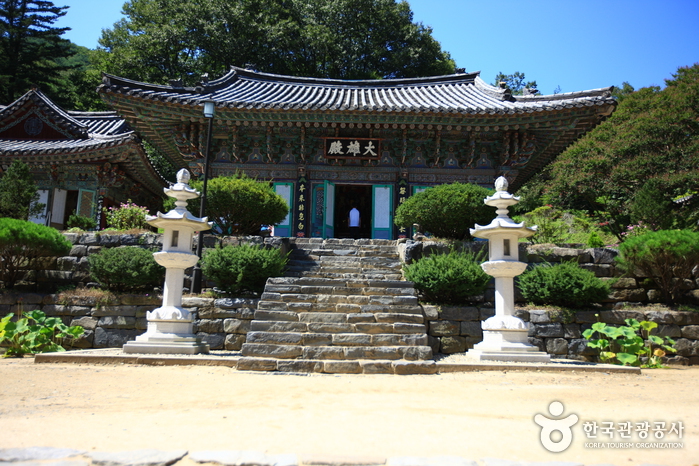
Sancheong Daewonsa Temple (대원사(산청))
19.1Km 2021-08-13
453, Pyeongchonyupyeong-ro, Sancheong-gun, Gyeongsangnam-do
+82-55-972-8068
Located at the eastern foot of Jirisan Mountain, Daewonsa Temple was first built in 548 during the Silla dynasty, but it remained closed for over thousand years until it was renovated and made bigger with the name Daewon. Unfortunately, the entire premises were lost to a big fire during the night of January 12, 1914, and all the halls and pavilions, including Yosachae, totaling 184 rooms in 12 buildings, were rebuilt in 1917. However, they were damaged once again during the Korean War and were abandoned until the war ended where the temple was rejuvenated and made even bigger. Located nearby are Geoyeonjeong and Gunjajeong Halls that are believed to have been the studying venue of scholars.
* Daewonsa Valley
The two-kilometer-long valley that stretches from the parking lot at the entrance to Daewon Temple to the temple itself is surrounded by high hills and curious-looking rocks. The clean water that oozes out through craters between the rocks generates unusual scenery. Associated with Yongso Pond is the legend that a dragon lived in it for hundreds of years before it finally flew away. Somakgol Valley is known to be the place where the last king of Garak Kingdom came to feed his cows and horses.
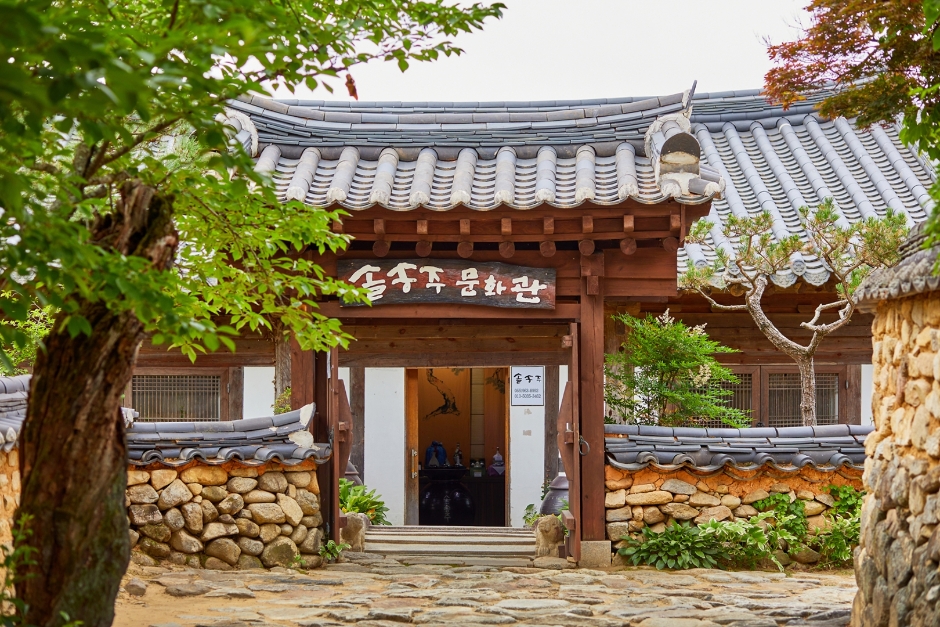
Solsongju Cultural Center (솔송주문화관)
19.5Km 2024-01-26
50-6 Gaepyeong-gil, Jigok-myeon, Hamyang-gun, Gyeongsangnam-do
Solsongju is a liquor distilled after steaming pine sprouts picked from the mountains around Gaepyeong Village from April to May and fermenting them with hard-boiled rice in the crude liquor. It has been introduced several times as a toast at summit dinners and international events. Solsongju Cultural Center, located at the entrance of Gaepyeong Hanok Village, is a space that informs the history and tradition of Solsongju. Park Hong-seon, an Intangible Cultural Property holder with the secret of Solsongju passed down for more than 500 years, has operated this cultural center with her husband for nearly 30 years. Visitors can experience a variety of traditional liquor, including Solsongju, made using traditional tools; Nokpaju, an herbal liquor of the Goryeo period; and Damsol, a rice soju, and you can also try tasting them. These can be consumed as is or as various cocktails. There are four types of cocktails in the cocktail-making experience: Damsol Julep, Solbaram, Damsol Tea, and Damkok.
Jirisan Taegojae (Jeongilpum Farm) (지리산태고재 (정일품농원))
19.6Km 2024-01-08
39-2 Gaepyeong-gil, Jigok-myeon, Hamyang-gun, Gyeongsangnam-do
Located on a hill overlooking Gaepyeong Hanok Village, this place is popular as it serves as a filming location for many movies and dramas, including "Mr. Sunshine (2018)." It is a unique traditional hanok (traditional Korean house) complex with tile-roofed houses and thatched houses, presenting guests with a quiet night stay at hanok. It consists of Jeongilpum, Traditional Room, Hakseondang, and Chwiundang, with a total of 10 rooms. In particular, thatched houses are a traditional architectural form that is difficult to find elsewhere, so staying over at least once is recommended. It is also famous for its Korean table d’hote restaurant. The traditional Korean food made with seasonal ingredients is served only to in-house guests.
Gaepyeong Hanok Village (개평한옥마을)
19.6Km 2024-01-31
59 Gaepyeong-gil, Jigok-myeon, Hamyang-gun, Gyeongsangnam-do
Gaepyeong Hanok Village is where more than 60 large and small hanok (traditional Korean house) buildings with over 100 years of history are located within a traditional atmosphere. The village was named Gaepyeong using the letter gae (meaning “stuck between") as it is situated between Deokgaecheon Stream and Silgaecheon Stream. Visitors can observe the typical form of Gyeongsang region's yangban (aristocrat) house in this village, known as the hometown of scholars and writers since ancient times. The historical House of Ildu, which stands out first when entering Jigok-myeon where Gaepyeong Hanok Village is located, was also used as a filming location for dramas such as "Mr. Sunshine (2018)" and "Toji, the Land (2004)." The scenery of the stone walls, in harmony with the antique hanok, offers a calming sensation. In addition, visitors can participate in various experience programs, such as pressed flower craft, dasik (tea confectionery) making, and walking on trails held throughout the village, as well as gochujang (red chili paste) making at Roh's Old House of Gaepyeong-ri, which has the oldest anchae (women’s quarters) in the village.
 English
 한국어
한국어 日本語
日本語 中文(简体)
 Deutsch
 Français
 Español
 Русский


