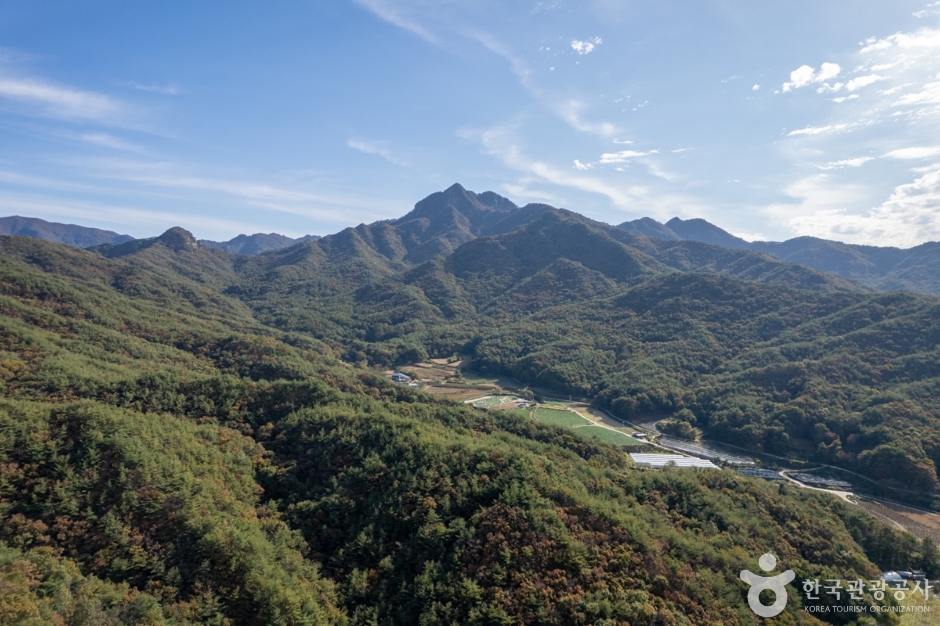
Daeyasan Mountain (대야산)
1.7Km 2024-02-22
Gaeun-eup, Mungyeong-si, Gyeongsangbuk-do
Daeyasan Mountain is a stunning peak standing at an elevation of 931 meters within the confines of Songnisan National Park. It boasts picturesque valleys, including Seonyudonggyegok Valley and Yongchugyegok Valley. Among the notable attractions within Yongchugyegok Valley is the Yongchupokpo Falls, characterized by its three-tiered cascades, with a unique heart-shaped pool formed amidst the milky-white granite. After a 20-minute ascent from Yongchu, visitors can experience the breathtaking sight of moonlight reflecting off the rocks and the valley, known as Woryeongdae.
Mungyeong Seonyudonggyegok Valley (선유동계곡(문경))
2.2Km 2025-10-23
Wanjang-ri, Mungyeong-si, Gyeongsangbuk-do
+82-54-550-6392
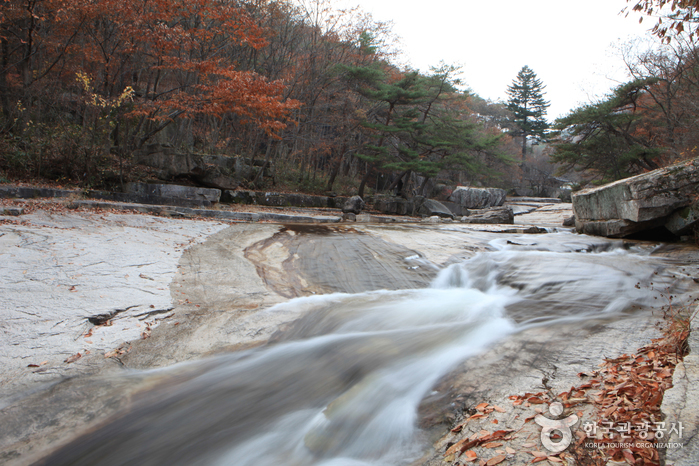
Seonyudonggyegok Valley in Mungyeong is longer and more beautiful than the valley of the same name in Goesan. Daeyasan Mountain (931 meters) runs across both valleys, which are 10 kilometers apart from each other. The valley is relatively untouched as it is not yet well known to the public. At the beginning and the end of the trail are Hakcheonjeong and Chirujeong Pavilions, respectively. Both sides of the valley are lined with thick forests of ancient pine trees. A number of stone carvings can be found in the forest, and the most famous one reads “Seonyugyegok.” It was written by Choi Chi-won, a leading scholar of the Silla kingdom.
Seonyudonggyegok Valley (선유구곡(선유동계곡))
6.9Km 2021-07-29
179, Seonyudong-gil, Goesan-gun, Chungcheongbuk-do
+82-43-832-4347
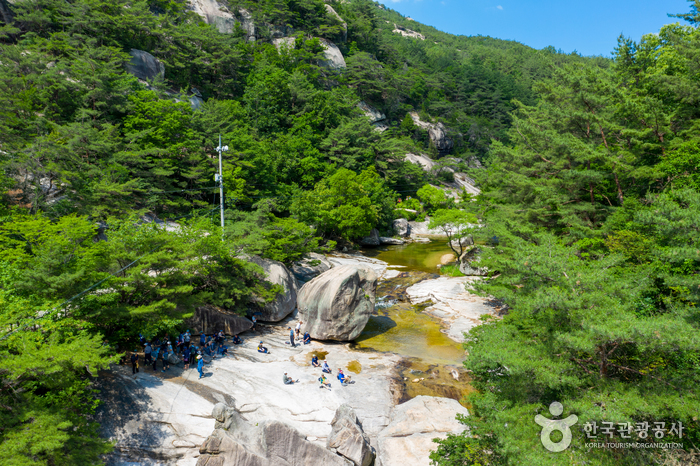
Seonyudonggyegok Valley is located in Goesan-gun, Chungcheongbuk-do Province. Including Seonyudongmun, the playground for the mountain gods, a total of nine valleys form the area: Gyeongcheonbyeok, Haksoam, Yeondallo, Waryongpok, Nangadae, Gigugam, Guam, and Eunseonam.
Seonnyudonggyegok Valley is famous for the legend that mountain gods came to savor fresh mountain spring water. A renowned geographical account, Taekriji, published in 1751, stated that Seonyudonggyegok Valley boasted some of the best scenery. One of the most eminent Confucian scholars of the Joseon dynasty, Lee Hwang spent nine months in this beautiful valley. He gave names to all his favorite places, which still remain to this day.
Ssanggok Valley (쌍곡구곡)
8.6Km 2022-08-31
242, Ssanggok-ro, Chilseong-myeon, Goesan-gun, Chungcheongbuk-do
+82-43-542-5267
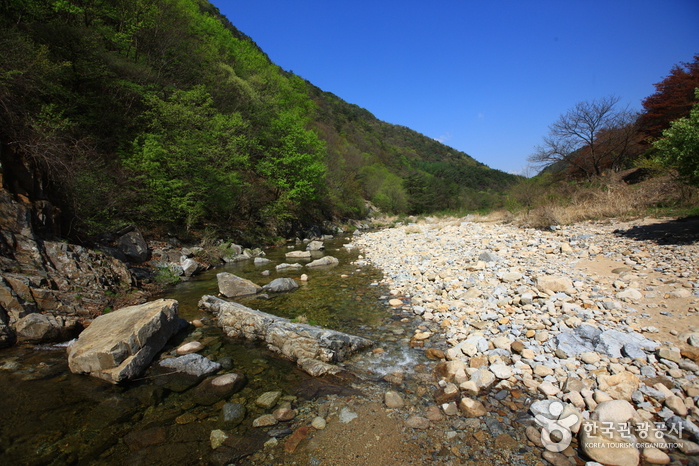
Ssanggok Valley, which is located in Chilseong-myeon, Goesan-gun, is 10.5km long stretching from Ssanggok village to Jesurijae.
The valley is surrounded by Bobaesan Mountain, Gunjasan Mountain and Bihaksan Mountain and clear water flows all year down the walls of a series of unique rock formations.
Thanks to its scenic beauty, many Confucian scholars used to visit here to enjoy literature and nature.
Ssanggok Valley is composed of nine valleys and each has its own unique atmosphere.
The first valley, Holongso, flows into a swamp area with many old pine trees nearby creating a picturesque view. The second valley is called Sogeumgang and it is said that its appearance changes with every season. Tteokbawi (rice cake rock) Valley gets its name from the shape it takes on, which is like a sliced rice cake. Similar to the first valley, Munsuam Valley, the fourth valley also has water flowing over uniquely shaped rocks with many old pine trees and flora. The fifth valley has quite a view of parallel rocks on both sides, while the sixth valley offers magnificent vistas of water flowing into a pool formed by the rocks. The water cascading down a huge boulder is said to look like the pleats of a woman’s skirt unfolding at the seventh valley. The eighth valley gathers water into a pond shape from the waterfall; legend says that fairies bathe here. The ninth valley is wide and refreshingly cool even during the hottest summer months.

Mungyeong Eco World (문경에코월드)
9.4Km 2025-10-24
114 Wangneung-gil, Gaeun-eup, Mungyeong-si, Gyeongsangbuk-do
◎ Travel information to meet Hallyu’s charm – TV series “Queen of Tears”
This is the amusement park Da-hye visited with her family before parting ways. This park is loved by many family visitors because of its various attractions. As you walk through the park and enjoy the sights, you will undoubtedly recall the emotional scene from the drama, where Da-hye hesitated to leave and Soo-cheol’s heartfelt plea to hold onto her brought tears to the audience.

Mungyeong, former Gaeun Station (문경 구 가은역)
9.7Km 2025-01-30
2441, Daeya-ro, Mungyeong-si, Gyeongsangbuk-do
+82-54-550-6401
Mungyeong, former Gaeun Station is a whistle stop in Wangneung-ri, Gaeun-eup, Mungeyong-si, Gyeongsangbuk-do. The station was designated as Registered Cultural Property No. 304 on December 4, 2006.
Gaeun Open Set (문경 가은오픈세트장)
9.9Km 2024-03-18
112 Wangneung-gil, Gaeun-eup, Mungyeong-si, Gyeongsangbuk-do
Gaeun Open Set is a filming site located within Mungyeong Ecoworld. Through in-depth historical research, it realistically recreates the city in the old days, making it an important location for TV series and history education. There are a total of three filming locations. The first filming location has palaces, including Goguryeo Palace, thatched-roof houses, inns, and a grand gate of actual size. It is known as the filming location for various dramas such as "The King of Legend (2010)," "Ja Myung Go (2009)," "Yeon Gaesomun (2006)," and "Strongest Chil Woo (2008)." It is still popular as a filming location for many other dramas. Also located within Mungyeong Ecoworld is the Coal Museum, so many tourists visit them together. It is possible to travel from the Coal Museum to the first filming location by riding the monorail, which runs every 15 minutes.
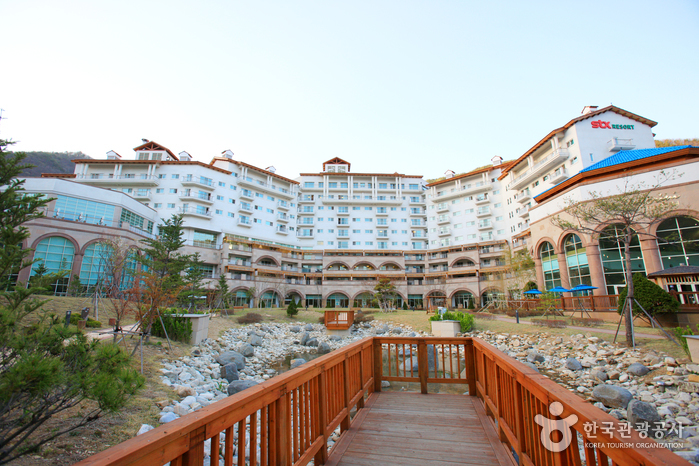
STX Resort (STX리조트)
10.1Km 2025-03-16
509, Cheonghwa-ro, Mungyeong-si, Gyeongsangbuk-do
+82-54-460-5000
STX Resort located near Ssangyonggyegok Valley in Mungyeong. The resort is well suited to guests looking to visit nearby attractions such as Songnisan National Park, Cheonghwasan, Yeonyeopsan, and Dojangsan Mountains, or simply looking to relax in nature. The resort is designed with a luxurious European style and features a variety of amenities, including a hot spring spa, live performance cafe, and both Korean and Western dining options.
Songnisan National Park (Gyeongbuk Section) (속리산국립공원(경북))
11.0Km 2021-05-14
Hwabuk-myeon, Sangju-si, Gyeongsangbuk-do
+82-43-542-5267
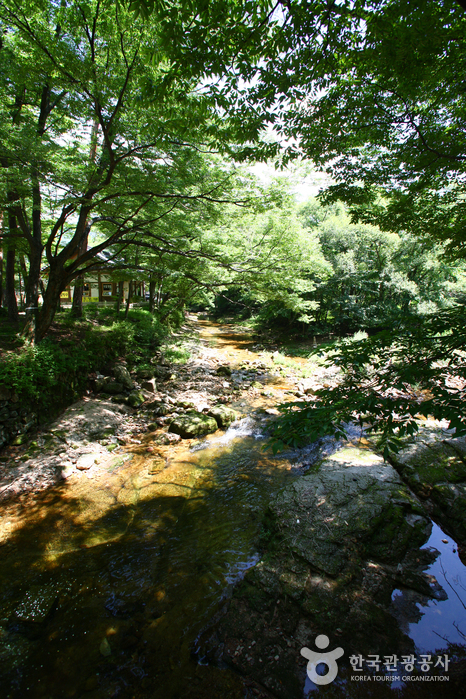
On Songnisan Mountain is a rock summit 1,054 meters above sea level called Munjangdae Peak. The peak is so broad that 50 adults can sit on it at the same time. Among the rocks there is Seokcheon Pond, which never dries up. The peak used to be called “Unjangdae” because the summit is always covered with clouds and mist. Legend says that King Sejo of Joseon dynasty supposedly recited a poem on the summit.
Munjangdae has a great view of Cheonhwangbong Peak, the highest peak of Songnisan Mountain. Visitors can also see Gwaneumbong, Chilseongbong, Sirubong, Tugubong, Munsubong, and Birobong peaks. In autumn, visitors can enjoy views of breathtaking fall foliage along the trail, which begins at Hwabuk-myeon, Sangju. There are also many cultural heritage sites including Janggakpokpo Falls, Seongbuksa Temple, Osongpokpo Falls and Gyeonhwonsanseong Fortress.
Gallongyegok Valley (갈론계곡)
12.1Km 2024-02-26
547, Chilseong-ro 10-gil, Chilseong-myeon, Goesan-gun, Chungcheongbuk-do
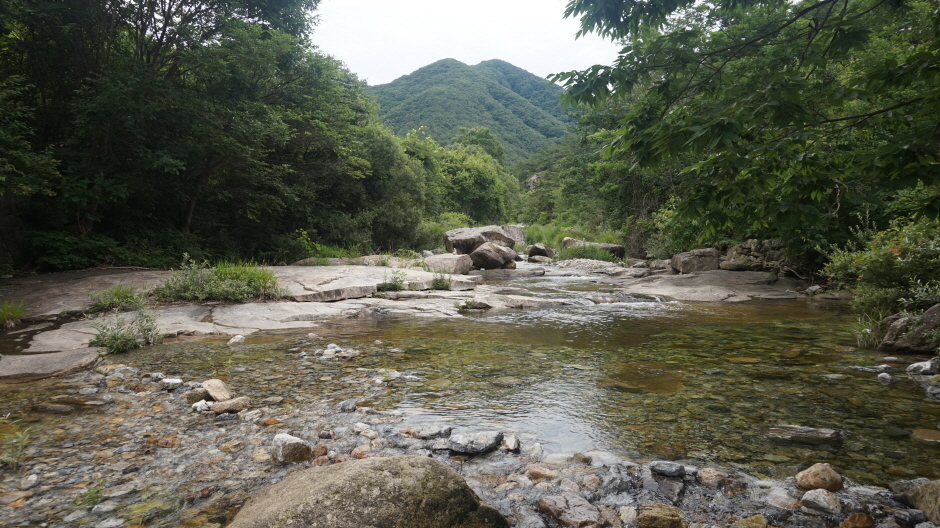
속리산국립공원 북부에 있는 깊은 계곡이다. 신선이 내려왔다는 전설과 7마리의 학이 산다는 전설의 바위가 있고, 숲이 우거져 있다. 유리알같이 맑은 계곡이 곳곳에 비경을 만들고 있으며 물놀이하기에도 좋은 곳이다. 입구에 있는 산촌체험관에서는 숙박이 가능하다.
 English
 한국어
한국어 日本語
日本語 中文(简体)
 Deutsch
 Français
 Español
 Русский


