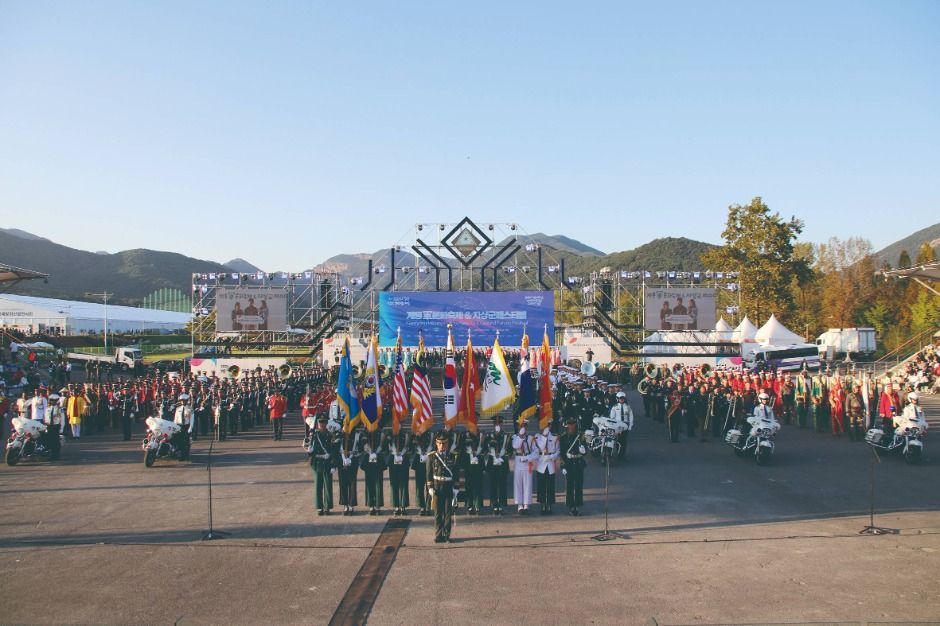
Gyeryong Military Culture Festival (계룡軍문화축제)
849.6M 2025-08-14
Jeongjang-ri, Sindoan-myeon, Gyeryong-si, Chungcheongnam-do
+82-42-840-2621
Gyeryong Military Culture Festival, one of Korea’s prestigious festivals, features various performances, including an opening act and military culture concert with rock, trot, and K-pop acts. In addition, military band performances, road parades, and various hands-on experience programs are held, offering diverse content that can be enjoyed by people of all ages.
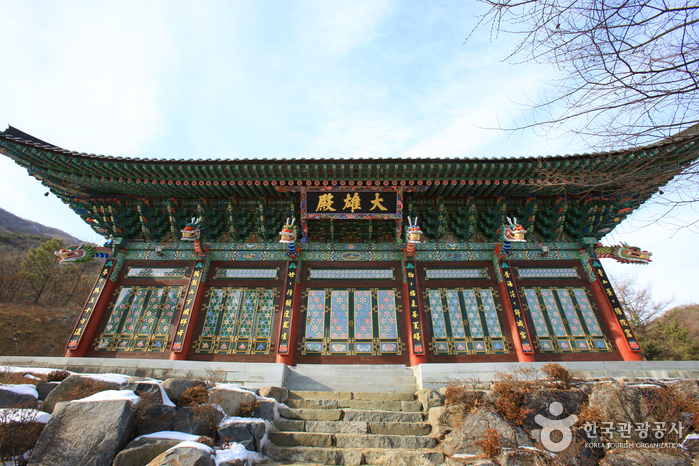
Gyeryong Musangsa Temple (무상사(계룡))
2.8Km 2023-04-13
129, Hyangjeoksan-gil, Gyeryong-si, Chungcheongnam-do
+82-42-841-6084
Musangsa Temple is an international Zen Temple exclusively for foreigners. The temple aims at promoting Korean Zen Buddhism among foreign monks and nuns while encouraging non-Buddhist priests and religious leaders to experience Zen. Twice a year (once in the summer and once in the winter) a 3-month program is held for foreign monks and nuns to come and practice Ganhwaseon, a type of Zen Buddhism. Travelers and other foreigners are also welcome to participate in shortened versions of the program, which are typically one week in length. During meditation/program periods, public visits are limited. The temple’s yearly schedule is divided into three sections with the last section providing various events and programs including weekend events and workshops. The temple also offers temple stay and other programs run in both Korean and English.

Homeplus - Gyeryong Branch [Tax Refund Shop] (홈플러스 계룡)
4.1Km 2024-04-27
304, Gyeryongdae-ro, Gyeryong-si, Chungcheongnam-do
-
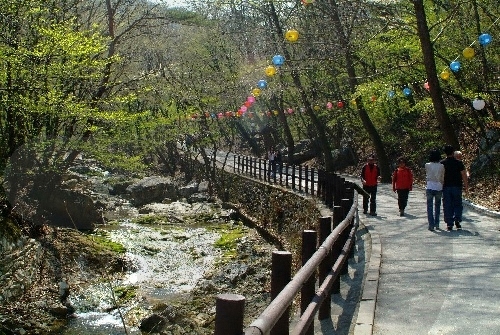
Donghaksagyegok Valley (동학사계곡)
5.4Km 2024-02-28
327-6 Donghaksa 1-ro, Banpo-myeon, Gongju-si, Chungcheongnam-do
Donghaksagyegok Valley is a 3.5km-long valley located near Donghaksa Temple within Gyeryongsan National Park in Gongju-si. It is surrounded by lush green forests where wildflowers bloom, and the sound of clear water and birds can always be heard. The valley features attractions such as Donghaksa Temple, Eunseonpokpo Falls, and wild birds. While beautiful in all seasons, it is most stunning during spring when everything is in vibrant green.
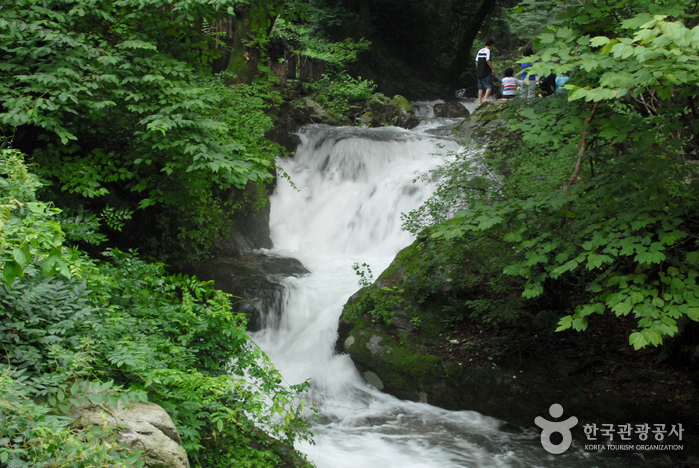
Gyeryongsan National Park (계룡산국립공원)
5.6Km 2021-09-06
327-6, Donghaksa 1-ro, Gongju-si, Chungcheongnam-do
+82-42-825-3002
Gyeryongsan National Park stretches across the cities of Daejeon, Gongju, and Nonsan in Chungcheongnam-do and was made a national park on December 31, 1968. The name of the mountain comes from the fact that the ridgeline looks like a dragon wearing a chicken's crest on its head. The topographical features are what make this mountain stand out and its mysterious folklore is what makes it so interesting. The park features many peaks, including the main peak Cheonhwangbong (alt. 845.1 m), as well as Sambulbong, Yeoncheonbong, and Gwaneumbong Peaks. This mountain is famous for its many interesting sites, with its fantastic rock structures and Yongmunpokpo Falls on the west, Eunseonpokpo Falls to the east, and Amyongchu and Sutyongchupokpo Falls in the south.
In spring, cherry blossoms bloom along the path to Donghaksa Temple, and during summer the lush green of the valley is very beautiful. During fall, the maple trees reveal their crimson colored leaves around Gapsa Temple and Yongmunpokpo Falls. The snowcapped peak of Sambulbong in winter is simply breathtaking. Gyeryongsan is full of rare animals and plants, beautiful waterfalls and a rich history with mysterious legends and cultural treasures. To the east is Donghaksa Temple; northwest, Gapsa Temple; southwest, Sinwonsa Temple; and southeast, Yonghwasa Temple.
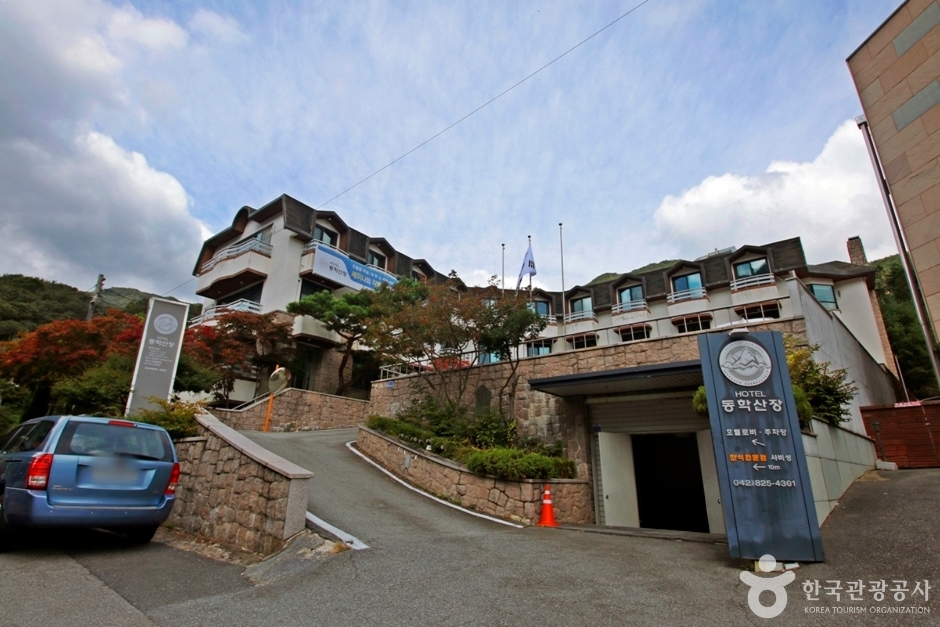
Sabiseong (Donghak Sanjang Hotel Korean restaurant) (사비성 (동학산장호텔 한식당))
5.9Km 2024-02-21
266-4 Donghaksa 1-ro, Banpo-myeon, Gongju-si, Chungcheongnam-do
042-825-4301
Sabiseong is a Korean restaurant operated by Donghak Sanjang Hotel, located on the eastern slope of Gyeryongsan Mountain. It offers a variety of traditional Korean dishes such as sagor ugeojiguk (kimchi cabbage soup), hwangtae kongnamulguk (dried pollack and bean sprout soup), yukgaejang (spicy beef soup), sanchae bibimbap (wild vegetable bibimbap), and grilled dishes like samgyeopsal (pork belly) and ori hunje (smoked duck). Nearby attractions include Gyeryongsan National Park, Donghaksa Temple, and the Korean Natural History Museum.
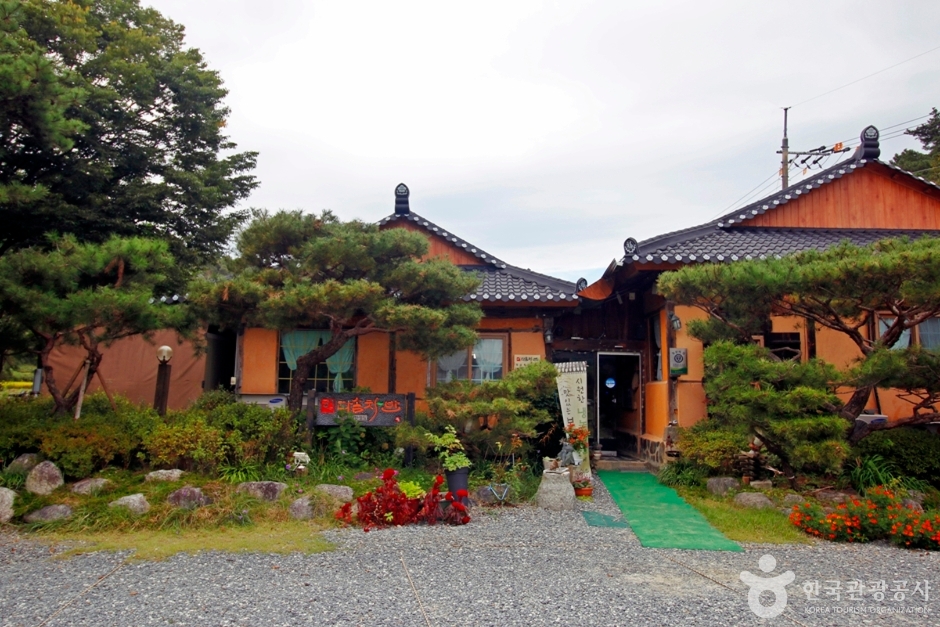
Dasom Chaban (다솜차반)
6.0Km 2024-02-13
29 Gyebaek-ro 421beon-gil, Yuseong-gu, Daejeon
Dasom Chaban is a Korean table d'hote restaurant celebrated for its picturesque garden setting. The restaurant presents a range of meticulously crafted full-course meals, distinguished by their tidy presentation and ample portions. The standout dish is the geongang borigulbi jeongsik (barley-aged dried yellow croaker set menu), featuring an appetizer, assorted side dishes, and over ten different delicacies, with bori gulbi as the main course. Nestled on the outskirts of Daejeon, it offers an ideal retreat for a leisurely drive and a delightful dining experience.
Gyeryongsan Sutonggol Valley (계룡산 수통골)
6.3Km 2023-02-09
47-3, Sutonggol-ro, Yuseong-gu, Daejeon
Gyeryongsan Sutonggol Valley is a popular course in the Sutonggol Valley District, located close to a city, in Gyeryongsan National Park featuring a mountain as beautiful as silk and gorgeous valleys where pure water greets visitors. Because of its close proximity to a large city and mild-sloped trail, many people visit throughout the year to enjoy the romantic, picturesque valley, the freshness of Sutongpokpo Falls, and the beautiful course leading to the gorgeous Geumsubong Peak.
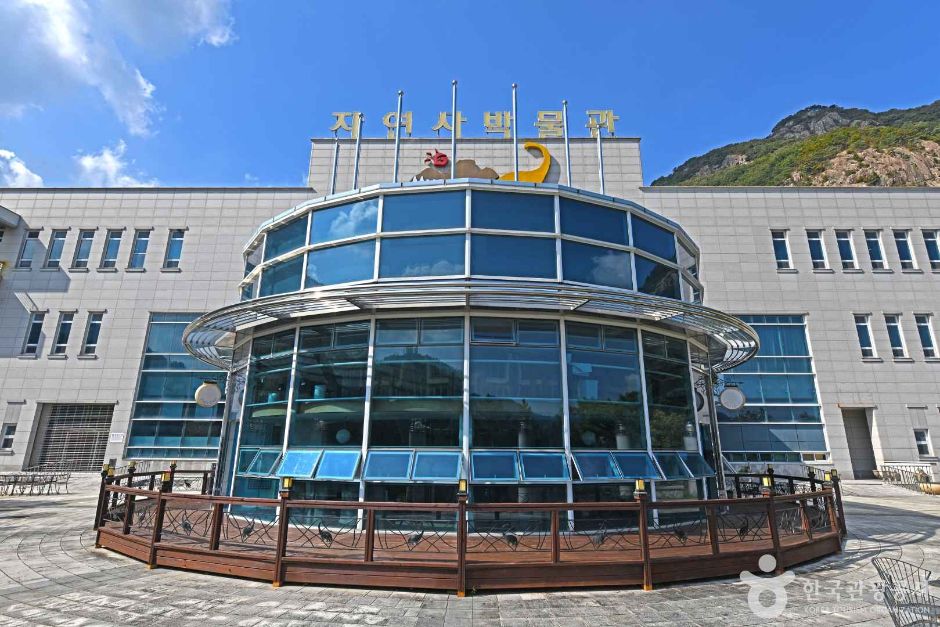
Korean Natural History Museum (한국자연사박물관)
6.7Km 2025-02-04
49-25 Imgeumbong-gil, Banpo-myeon, Gongju-si, Chungcheongnam-do
The Korean Natural History Museum showcases Korea's plants, animals, insects, and rocks. It includes exhibition halls, a café, and a theater. The main attractions are the massive dinosaur fossils and replicas. Visitors can also explore natural rocks, minerals, and gemstones from the Korean Peninsula, as well as various fossils and mummies from different eras. Hands-on activities include creating imaginary dinosaurs and making bracelets with gemstones.
Jinjamhyanggyo Confucian School (진잠향교)
7.0Km 2022-12-26
67, Gyochon-ro, Yuseong-gu, Daejeon
+82-42-543-1811
Jinjamhyanggyo Confucian School was established to enshrine and orient the ancestral tablet of excellent classical scholars in 1405 (the 5th year of King Taejong's reign) and to educate people. More detailed information is not available in the record. The remaining building is called Daeseongjeon, and the ancestral tablets are 5 Seong, Songju 6 hyeon, and Korean 18 hyeon. One instructor, who received a plot of land and slaves from the nation, taught 30 students during the Joseon period, but after the Gapo Reform, the educational function disappeared and Seokjeon, a religious ceremony, was served in summer and fall with offerings of incense on the first day of each month and at the half-moon instead. Daeseongjeon (Cheongju Daeseong High School (Former Main Building of Cheongju Commercial High School) is designated as a Registered Cultural Heritage.
 English
 한국어
한국어 日本語
日本語 中文(简体)
 Deutsch
 Français
 Español
 Русский


