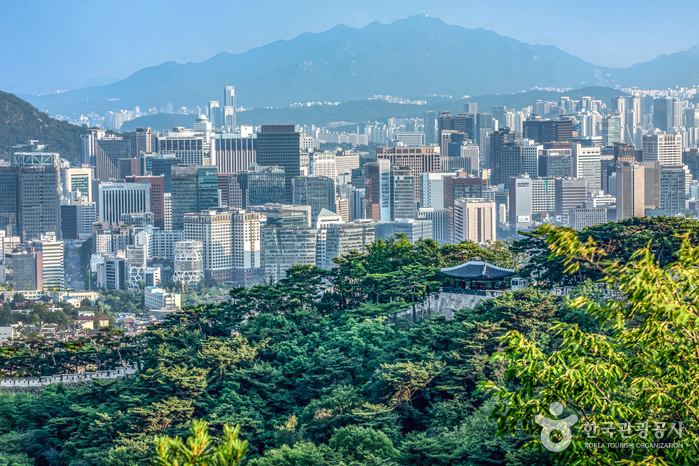
Bugak Skyway Palgakjeong Pavilion (북악스카이 팔각정)
17.3Km 2024-12-31
267 Bugaksan-ro, Jongno-gu, Seoul
Bugak Skyway Palgakjeong Pavilion exudes a tranquil, serene beauty regardless of the season. The pavilion, which sits on Bugaksan's 1,652,900 square meter summit at an altitude of 345 meters, was built in a traditional Korean-style and became a popular attraction within the city. There are also spaces for visitors to enjoy food and drinks.

National Memorial of Korean Provisional Government (국립대한민국임시정부기념관)
17.3Km 2023-01-16
279-24, Tongil-ro, Seodaemun-gu, Seoul
The National Memorial of Korean Provisional Government was established to shine a light on the proud history of the Korean Provisional Government's independence and the spirit of a democratic republic and to pass it on to future generations. The four-story memorial building with three underground floors houses three permanent exhibits, one special exhibit, Larchiveum, Symbol Plaza, storage, multi-purpose hall, and rooftop garden over a total area of 3,656 square meters, a total floor area of 9,703 square meters and a total exhibition space of 2,240 square meters. The permanent exhibits consist of a series of historic events from the March 1st Movement, which served as a turning point for the formation of the Provisional Government, to the foundation of the Korean Government that succeeded the mantle of the provisional government, while the special exhibit on the 1st floor currently hosts a special opening exhibition under the title of 『The Return of the Provisional Government of the Republic of Korea』. Moreover, a symbolic wall installation under the theme of "Waves of History" is displayed in the outdoor plaza on the 1st floor of the memorial expressing the Provisional Government’s desire for independence and the dynamics of the past, present, and future of Korea.
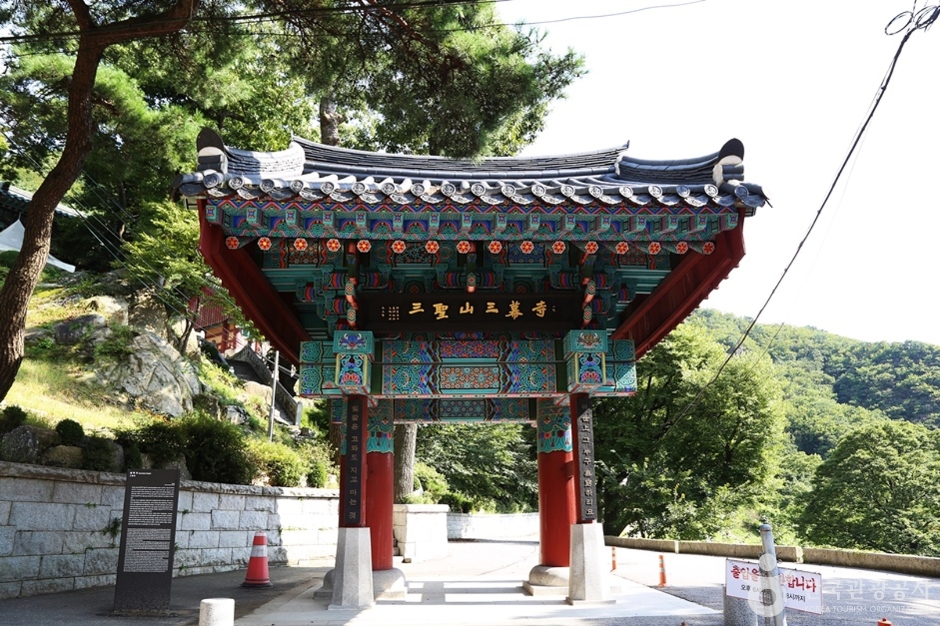
Sammaksa Temple (삼막사)
17.3Km 2024-02-07
478 Sammak-ro, Manan-gu, Anyang-si, Gyeonggi-do,
Sammaksa Temple is a Buddhist temple located in Samseongsan Mountain. Legend has it that the temple was established in 667 by Wonhyo, a Buddhist philosopher from the Silla era. Within the temple grounds are Cheonbuljeon Hall, Yukgwaneumjeon Hall, Myeongbujeon Hall, Manghaeru Pavilion, Chilbogak House, among others. The temple holds heritages like the Rock-carved Buddha Triad and the Fertility Stones. These artifacts, symbolizing the fusion of Buddhism and folk religion, highlights the ancient nature of the place.
Cheongun Literature Library (청운문학도서관)
17.4Km 2023-08-16
40 , Jahamun-ro 36-gil, Jongno-gu, Seoul
Cheongun Literature Library is located at the foot of Inwangsan Mountain and can be reached by following the mountain's walking trail starting from Changuimun Gate along the fortress wall. This public hanok library is designed in consideration of the sloped topography and the natural scenery of Inwangsan Mountain. The library consists of two floors: an underground floor and a ground floor. While the ground floor is designed as a traditional hanok, the underground floor is made of concrete to support the hanok building and the spacious outdoor yard. By implementing the natural slope in the library's design, the underground southern entrance is exposed, allowing sunlight to enter. The underground floor features a wide collection of books while the ground floor serves as a place for reading. The natural environment surrounding the library adds to the hanok building's traditional and peaceful charms.
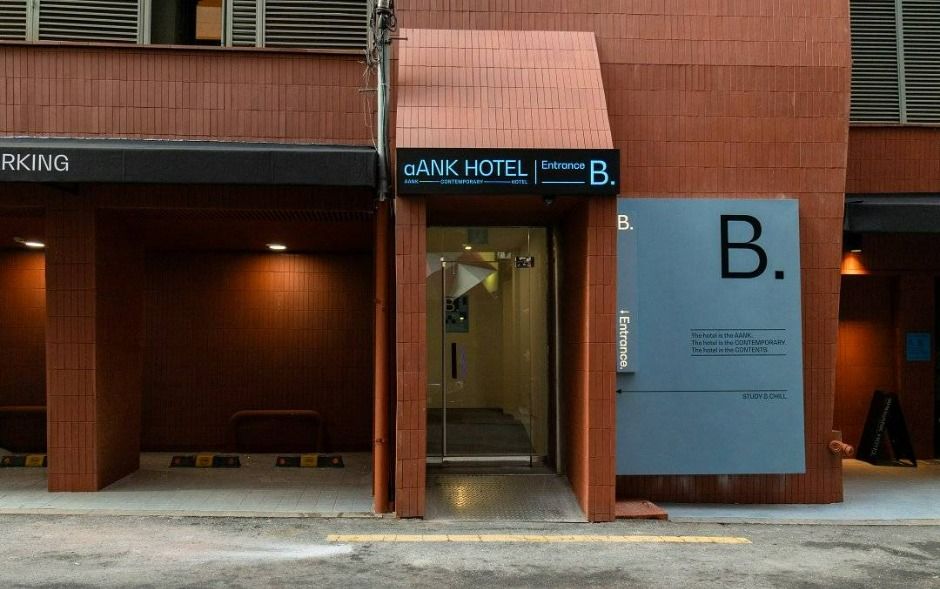
The Hyoosik Aank Hotel Sinchon (더휴식 아늑호텔 신촌점)
17.4Km 2025-04-09
49 Yonsei-ro 2-gil, Seodaemun-gu, Seoul
The Hyoosik Aank Hotel Sinchon welcomes guests with a neat and modern atmosphere. Each room is tailored to suit every guest's need with comfort as the main priority. The hotel's room types include a standard room, music room, multi-room equipped with Playstation 4, PC room, creative illust room equipped with a drawing tablet, creative piano room, and a business room. The hotel also has a parking lot, guest lounge, coin laundry, and a ping pong table.
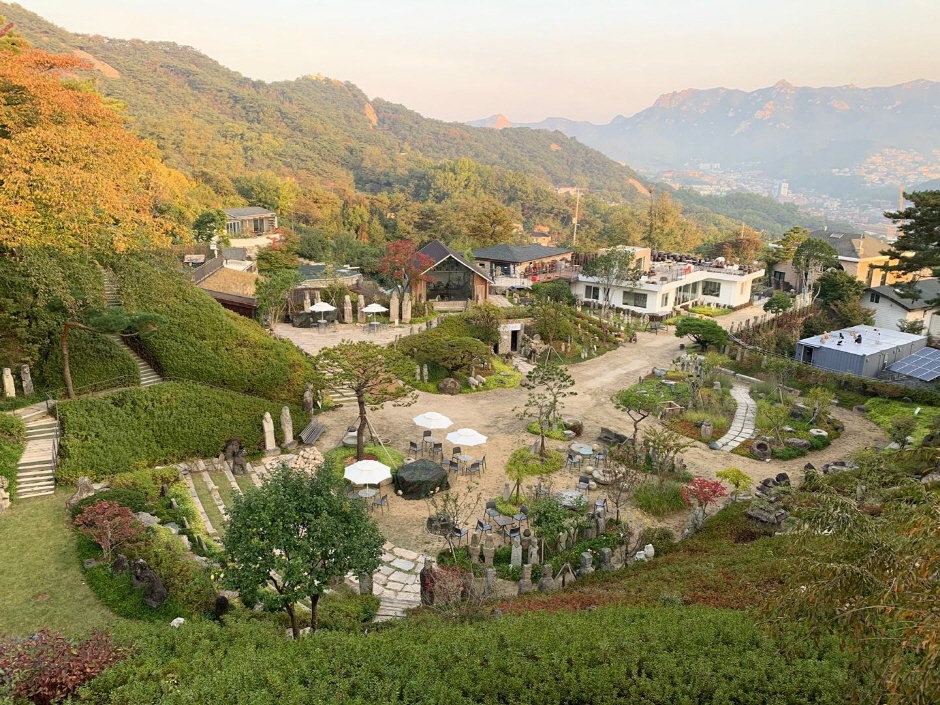
Mok In Museum Mok Seok Won (목인박물관 목석원)
17.5Km 2021-09-01
46-1, Changuimun-ro 5-gil, Jongno-gu, Seoul
+82-2-722-5066
Mok In Museum Mok Seok Won relocated in 2019 from Insa-dong to Buam-dong. Six exhibition halls offer visitors a look at wooden figures from around the world. Mokin refers to traditional wooden sculptures carved in shapes of human figures or various animals. The museum holds around 12,000 wooden folk sculptures including those used to decorate funeral carriages and temples mostly from the Joseon dynasty up to modern times. The museum also has an outdoor exhibition hall that harmonizes the sculptures with nature.
Conrad Seoul (콘래드 서울)
17.5Km 2025-01-07
10, Gukjegeumyung-ro, Yeongdeungpo-gu, Seoul
+82-2-6137-7000
The five-star Conrad Seoul, selected as one of the ‘Best New Hotels’ by Conde Nast Traveler, a world-renowned travel magazine, offers the top-class service and
for the best customer experience. Strategically located in a core business district of Yeouido, Conrad Seoul is one of the four pillar buildings of
the IFC (International Finance Center) Seoul. The building is directly accessible underground from Yeouido Subway Station.
Conrad Seoul has 434 guest rooms with an open, refreshing atmosphere, picturesque views, and
are equipped with Apple digital devices. The hotel also houses a Grand Ballroom, restaurants which offer diverse gourmet cuisines and
a top-notch wellness center.
Bugaksan Mountain (북악산)
17.5Km 2024-03-04
Cheongun-dong, Jongno-gu, Seoul
+82-2-765-0297
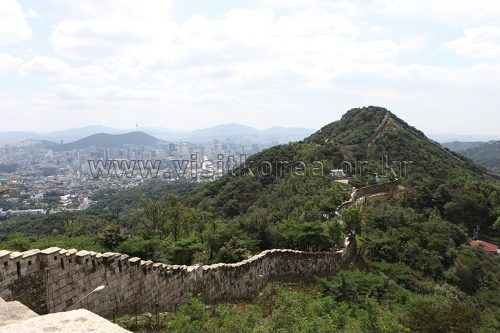
Bugaksan Mountain is the mountain that one can see behind the Gyeongbokgung Palace and the Cheong Wa Dae to the north. Hanyangdoseong, the city wall that surrounded the historic capital of Hanyang, was built by connecting the ridges of this mountain. These walls can still be found today, having been preserved quite well. Different trails weave through the area along the Hanyangdoseong, the Seoul City Wall, and one can visit these trails at night as well. Bugak Skyway is a road that connects Changuimun Gate to Jeongneung Royal Tomb, and one can get a great view of Seoul’s city center from the Palgakjeong Pavilion on Bugak Skyway.
Korea Medical Institute KMI Yeouido Clinic ((재)한국의학연구소 케이엠아이여의도의원)
17.5Km 2025-10-23
13F-15F & 17F-18F, 24 Gukjegeumyung-ro 2-gil, Yeongdeungpo-gu, Seoul
Korea Medical Institute (KMI), a leader in 'K-health checkups,' operates health checkup centers across eight locations nationwide, from Seoul to Jeju. KMI has been striving to prevent and detect diseases early. It has led the popularization of comprehensive medical examinations in Korea. Based on 39 years of accumulated data and expertise, KMI has enhanced its capabilities in health checkups, services, and brand value.
By utilizing its diagnostic data accumulated over the years, KMI provides accurate test results and follow-up care promptly.
KMI will stay committed to becoming a lifetime health management partner and 'K-health checkup' leader by leveraging its excellence in Korean medicine, beyond health checkups for foreign patients.
![Hongneung and Yureung Royal Tombs [UNESCO World Heritage] (남양주 홍릉(고종과 명성황후)과 유릉(순종과 순명,순정 황후) [유네스코 세계문화유산])](http://tong.visitkorea.or.kr/cms/resource/20/2005620_image2_1.jpg)
Hongneung and Yureung Royal Tombs [UNESCO World Heritage] (남양주 홍릉(고종과 명성황후)과 유릉(순종과 순명,순정 황후) [유네스코 세계문화유산])
17.5Km 2021-07-19
352-1, Hongyureung-ro, Namyangju-si, Gyeonggi-do
+82-31-591-7043
Hongneung and Yureung Royal Tombs is Historic Site No. 207. Hongneung Tomb is the resting place of Emperor Gojong and his wife Empress Myeongseong, while Yureung Tomb is the resting place of Emperor Sunjong, his first wife Empress Sunmyeonghyo, and his second wife, Empress Sunjeonghyo. Hongneung and Yureung look different from other royal tombs. When the name of the country changed from the Joseon dynasty to the Daehan Empire, the rulers of Korea were called emperors. Therefore, the tombs of the two emperors were modeled after the tomb of the Ming dynasty’s ruler, King Taizu (Zhu Yuanzhang). Surrounding Hongneung and Yureung are statues carved in the shape of animals such as giraffes, elephants, and lions, which can’t be seen at the other royal tombs of the Joseon dynasty. The stonework of Hongneung tomb was made in a traditional way, while the stonework of Yureung tomb shows a more realistic and advanced technique.
 English
 한국어
한국어 日本語
日本語 中文(简体)
 Deutsch
 Français
 Español
 Русский


