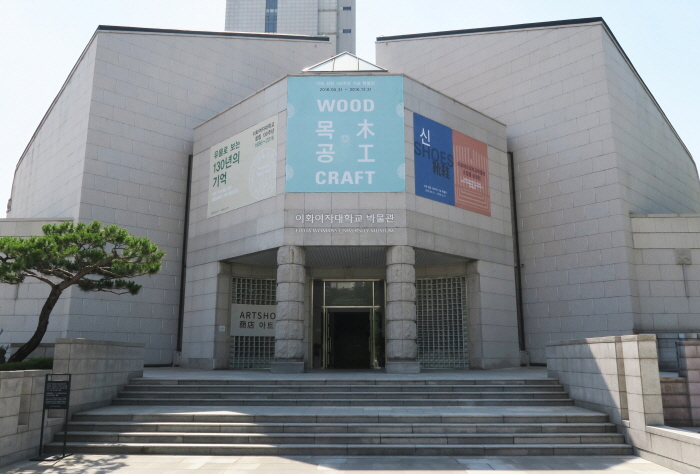
Ewha Womans University Museum (이화여자대학교박물관)
17.1Km 2022-09-14
52, Ewhayeodae-gil, Seodaemun-gu, Seoul
+82-2-3277-3152
The Ewha Womans University Museum was established in 1935 with the goal of preserving the cultural heritage of Korea. Originally, items related to folk art, traditional woodwork, and pottery were put on display in the hall of the main university to keep them from being confiscated during the Japanese occupation. This later led to the opening of the museum to display and store the growing collection.
Regular exhibitions of the museum’s collection have been taking place annually from 1972. Since 1996, the museum also held special exhibitions that focus on other themes related to cultural heritage. Additional small-scale exhibitions are also held frequently to promote Korea's traditional culture and art.
A ceramics research facility as well as a more traditional museum, a large portion of the museum’s efforts is focused on the research and excavation of kilns. To this aim, excavation teams from the museum have traveled to various parts of the country to conduct studies on historic sites and assess the value of artifacts. Through the publication of books and reports on its discoveries, the museum has contributed to raising knowledge and awareness of Korean cultural heritage in academia and among the public.

Ewha Welcome Center (이화웰컴센터)
17.1Km 2022-09-13
52, Ewhayeodae-gil, Seodaemun-gu, Seoul
+82-2-3277-3277
Ewha Welcome Center opened in 2013 as the first promotional center and visitor center of its kind on a university campus in Korea, comprised of an information desk, exhibition lounge, and gift shop. The information desk offers useful information to help visitors get the most out of their Ewha campus experience. The exhibition lounge introduces the history, traditions, and vision of the present-day and future of the university year-round. Visitors can purchase university gear at the gift shop. Furthermore, foreign visitors can take part in a range of campus tour programs in English and Chinese for an enriching experience.
Seodaemun Prison History Museum (서대문형무소역사관)
17.1Km 2024-12-02
251 Tongil-ro, Seodaemun-gu, Seoul
Seodaemun Prison was built under the Japanese administration to imprison independence movement activists. It first opened on October 21, 1908 under the name Gyeongseong Prison. Eventually, so many activists were imprisoned that the building had to be expanded. At that time, the name changed to Seodaemun Prison on September 3, 1912. Eighty years later, the prison was turned into Seodaemun Independence Park on August 15, 1992 to commemorate the Korean patriots who were tortured in prison, giving their lives for freedom. Of the many buildings, only seven were preserved for their historical significance, among which three prison buildings and the execution site were designated as a Historic Site. In 1998, the park underwent another transformation into today's Seodaemun Prison History Hall to educate the public on the importance of Korea's independence and the sacrifices of those who fought to achieve it.
Dongnimmun Gate (독립문)
17.1Km 2022-12-15
251, Tongil-ro, Seodaemun-gu, Seoul
Dongnimmun stands at the location originally known as Yeongeun, where envoys were once treated. When a Chinese envoy visited, the King would go out through this door to greet. In 1898, to announce the independence from Japan, Dongnimun was constructed with the fund collected by the citizens. The traces of the past still remain on Dongnimmun with two pillars in front of Dongnimmun being the remains of Yeongeunmun.
The Arc de Triomphe in France can be recalled in comparison to Dongnimmun. Dongnimmun was built using granite with a passageway x_height of 14.28 meters. On the top it is written ‘Dongnimmun’ in Korean with the national flag drawn on each side. On the inner-left side there are stone stairs leading to the attic. The national flower Mugunghwa are planted around Dongnimmun. Now it is surrounded by roads and it is eye-catching to view when passing by.
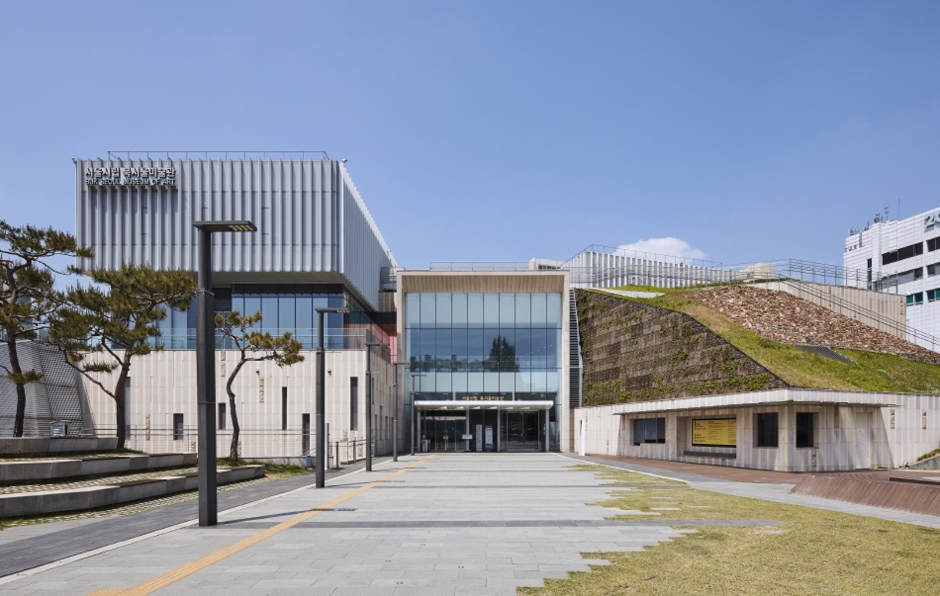
Seoul Museum of Art (SeMA) (서울시립 북서울미술관)
17.1Km 2024-03-18
1238, Dongil-ro, Nowon-gu, Seoul
The Seoul Museum of Art (SeMA) coexists with its local community. Located in Nowon-gu, an area name that is derived from the “Reed Hill” nearby, the museum is an open structure with its entrance connected to a park. In addition to outdoor sculpture exhibitions, it offers maze-like galleries, an art library, a cafe, and a multipurpose hall. These spaces host a variety of programs for families, which make up the majority of visitors to this museum.
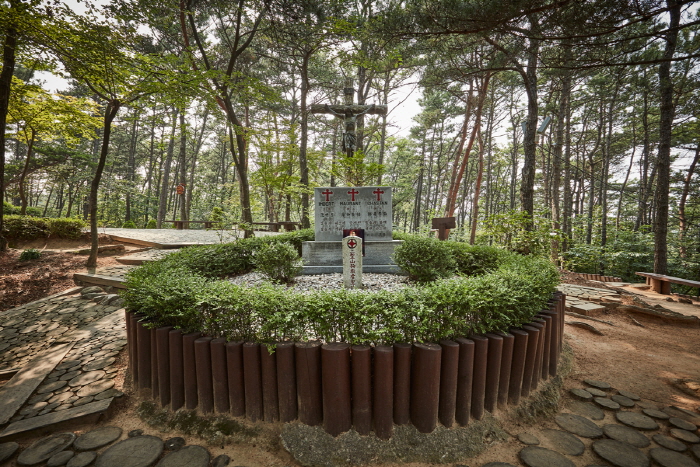
Samseongsan Holy Ground (삼성산성지)
17.2Km 2021-08-17
454-16, Hoam-ro, Gwanak-gu, Seoul
+82-2-875-2271
During the Gihae Persecution of 1839, three French Catholic priests were sentenced to death for spreading Catholicism in Korea. Saint Laurent Joseph Marius Imbert (Bishop), Saint Pierre Philibert Maubant (Priest), and Saint Jacques Honore Chastan (Priest) were beheaded on September 21, 1839 at Saenamteo, currently known as the Saenamteo Catholic Holy Place of the Martyrs, and their bodies were buried at Samseongsan Mountain and later transferred to the grotto of Myeondong Cathedral.
Seodaemun Independence Park (서대문독립공원)
17.2Km 2022-12-15
251, Tongil-ro, Seodaemun-gu, Seoul
+82-2-3140-8305
Seodaemun Independence Park was built on the former Seoul Detention Camp. It was used to imprison thousands of Korean independence activists until the liberation from the Japanese occupation on August 15, 1945, as well as the political prisoners during the political turmoil in the 1960s. When the prison was moved to Uiwang-si, Gyeonggi-do in November 1987, the area was restored and turned into a memorial park in August 15, 1992 to honor the sacrifices of the martyrs. The park preserves seven prison buildings, an execution ground, underground women’s prison, and the March 1st Movement Monument that has been moved from Tapgol Park in Jongno.
One of the most significant monuments of the Seodaemun Independence Park is Dongnimmun Gate (Independence Gate), which has been designated a Historic Site. Nearby is Dongnipgwan (Independence Hall), originally called Mohwagwan, which was used to greet Chinese envoys during the Joseon dynasty. Today, the hall enshrines 2,327 tablets inscribed with the names of Koreans who died for the cause of national independence. Standing right next to Dongnimmun Gate are the remnants of Yeongeunmun Gate, another Historic Site. Other sights inside the park include the Patriotic Martyr Monument, Declaration of Independence Monument, and Statue of Dr. Seo Jae-pil, who was an independence activist and publisher of Korea’s first independent newspaper. The main highlight of the park is the Seodaemun Prison History Hall, a former prison building that was renovated into a history museum.
Dongpyun Korean Medicine Clinic (동편부부한의원)
17.2Km 2025-11-28
#202, 2nd Floor, 188 Burim-ro, Dongan-gu, Anyang-si, Gyeonggi-do
Dongpyeon Korean Medicine Clinic focuses on restoring body balance through holistic treatments.
Specialized in detox care, weight control, skin improvement, and pre/postnatal therapy,
it helps the body recover naturally by addressing root causes, not just symptoms.

The Hyundai Seoul (더현대 서울)
17.3Km 2024-07-22
108 Yeoui-daero, Yeongdeungpo-gu, Seoul
The Hyundai Seoul, an ultra-modern flagship store, is located in the heart of Seoul, the center of globally trending K-content. Under the slogan of "Echoes for the Future," The Hyundai Seoul presents the vision for a happier tomorrow and standards for new life. Featuring an innovative design of spaces, global content curation, and, even, futuristic technologies, The Hyundai Seoul is the most prominent new global landmark in Seoul. At The Hyundai Seoul, the latest global trends in interior and architectural design can be witnessed from encounters with novel materials, the balance between planes and lines, and creative interior design filled with light. As soon as one steps into The Hyundai Seoul, the Sounds Forest and Waterfall Garden welcome them with open arms. This incredible piece of nature encountered in such a high-tech structure designed for the future is amazingly beautiful. A vast 3,306-square-meter indoor garden with natural grass and sunlight falling through the glass ceiling located some 20 meters high delivers echoes of a forest to all visitors. Art is a language in the broadest category that can be felt and empathized with without speaking. A large 595-square-meter three-dimensional exhibit instantaneously and overwhelmingly stimulates inspiration as soon as one enters. Inspiration for better lives and communication for culture start here. An artwork by Studio Swine designed with a message from nature - Unite & Shine, STUDIO SWINE - and appreciated by the audience that feels and enjoys it meets with high-end brands on the Exclusive Label (1F) floor.
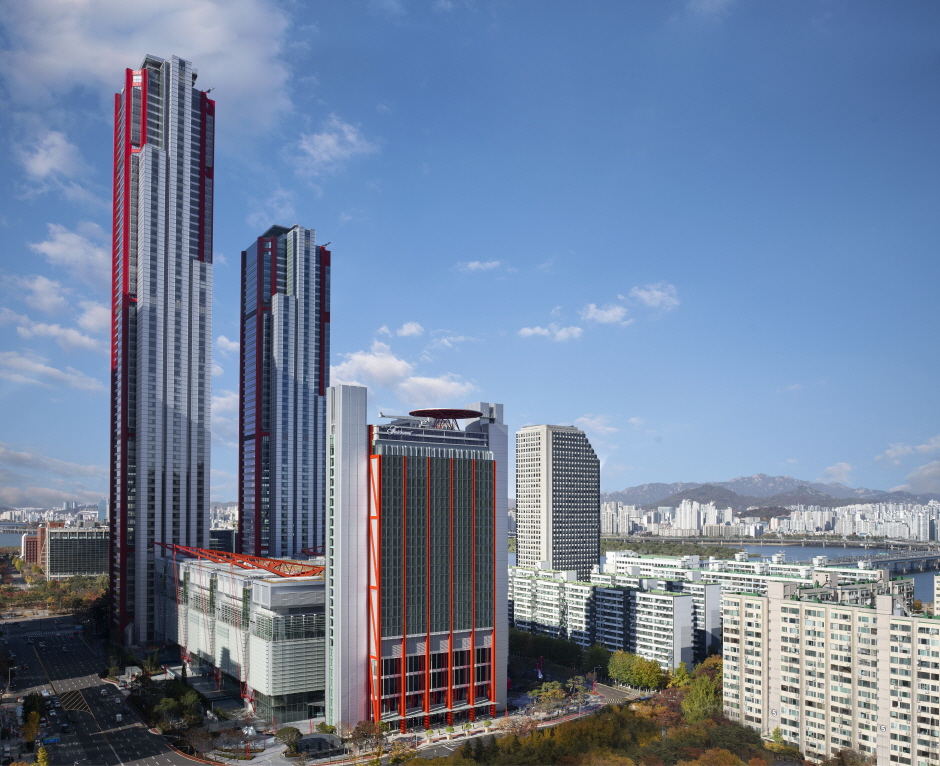
Fairmont Ambassador Seoul (페어몬트 앰배서더 서울 (Fairmont Ambassador Seoul))
17.3Km 2025-10-27
108 Yeoui-daero, Yeongdeungpo-gu, Seoul
◎ Travel information to meet Hallyu’s charm - "Strange Lawyer Woo Young-woo"
In the drama, an incident occurred during a wedding ceremony held at this hotel, and it is the place where Youngwoo visited to investigate. It is a 5-star luxury hotel with 308 rooms, and it is very impressive to see the skyline and view of Seoul. As it is close to Hangang Park as well as Hyundai Department Store and IFC Mall, it is the perfect place to stay, relax and enjoy shopping at the same time.
 English
 한국어
한국어 日本語
日本語 中文(简体)
 Deutsch
 Français
 Español
 Русский


