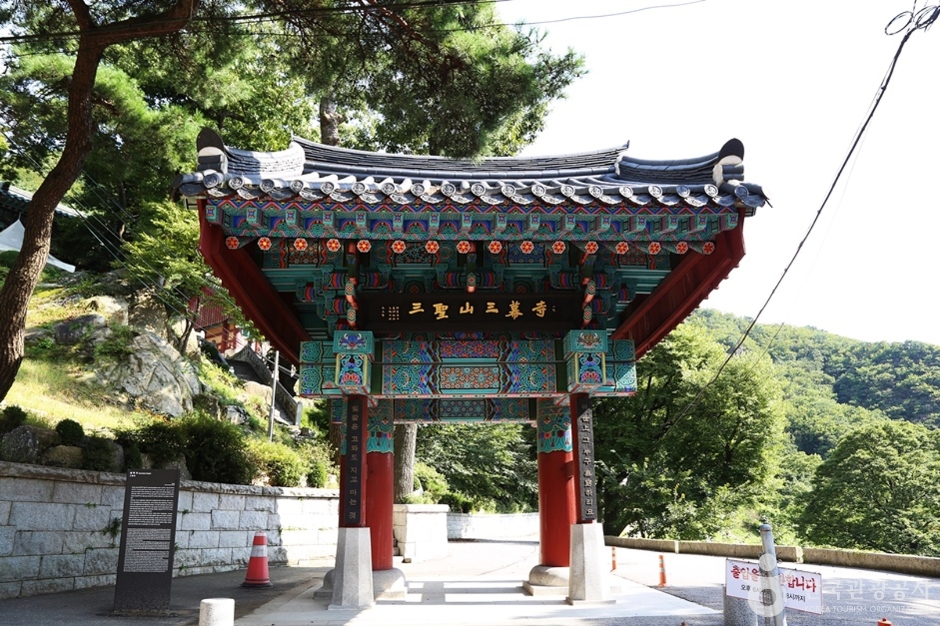
Sammaksa Temple (삼막사)
7.2Km 2024-02-07
478 Sammak-ro, Manan-gu, Anyang-si, Gyeonggi-do,
Sammaksa Temple is a Buddhist temple located in Samseongsan Mountain. Legend has it that the temple was established in 667 by Wonhyo, a Buddhist philosopher from the Silla era. Within the temple grounds are Cheonbuljeon Hall, Yukgwaneumjeon Hall, Myeongbujeon Hall, Manghaeru Pavilion, Chilbogak House, among others. The temple holds heritages like the Rock-carved Buddha Triad and the Fertility Stones. These artifacts, symbolizing the fusion of Buddhism and folk religion, highlights the ancient nature of the place.
![Heolleung and Illeung Royal Tombs [UNESCO World Heritage] (서울 헌릉(태종,원경왕후)과 인릉(순조,순원왕후) [유네스코 세계문화유산])](http://tong.visitkorea.or.kr/cms/resource/42/1985242_image2_1.jpg)
Heolleung and Illeung Royal Tombs [UNESCO World Heritage] (서울 헌릉(태종,원경왕후)과 인릉(순조,순원왕후) [유네스코 세계문화유산])
7.2Km 2021-07-24
36-10, Heonilleung-gil, Seocho-gu, Seoul
Heolleung and Illeung Royal Tombs house the mounds for two kings of the Joseon dynasty (1392-1910) and their wives: King Taejong (1401-1418) and Queen Wongyeong, along with King Sunjo (1800-1834) and Queen Sunwon. Together, the tombs are referred to as Heonilleung Royal Tomb. The site possesses numerous stone statues and vestiges, and is a good place to experience the culture of the Joseon dynasty.

365mc (365엠씨(mc)병원)
7.2Km 2025-11-26
126 Seochojungang-ro, Seocho-gu, Seoul
365mc is a medical institute specializing in liposuction and Local Anesthetic Minimal-Invasive Liposuction (LAMS) for 21 years.
It was established as a medical institution specialized for obesity treatment, a first in Korea. The clinic set a new record in terms of satisfaction with the liposuction procedure at 99.7%.
The clinic developed LAMS, a new liposuction technique, and presented it at various international academic conferences, including AACS and AAAM in the US. It has performed over six million obesity treatment cases.
To obtain optimized treatment results, 365mc has developed the Motion Capture and Artificial Intelligence assisted Liposuction (MAIL) system, and the Liposuction Efficacy Prediction Algorithm (LEPA), which is a big data-based AI system that predicts the result of liposuction.
201Company (이공일컴퍼니)
7.3Km 2025-10-23
2F, 151 Dogok-ro, Gangnam-gu, Seoul
201 Company runs a full-service travel agency called 201 Medi Tour, which supports medical tourism, including attracting foreign patients, in a more efficient package format.
Customers can select services they want such as the hospital, tours, meals, accommodations, vehicles, medical interpretation, and tour guides. 201 Company partners with approximately 200 hospitals in various disciplines, including critical patients, rehabilitation, physical check-ups, plastic surgery, dermatology, dentistry, ophthalmology, and traditional Korean medicine. Additionally, the company offers various products including wellness programs (relaxation, retreat, healing) along with medical services. The company recommends, provides, and operates customized medical tourism packages through communication with customers.
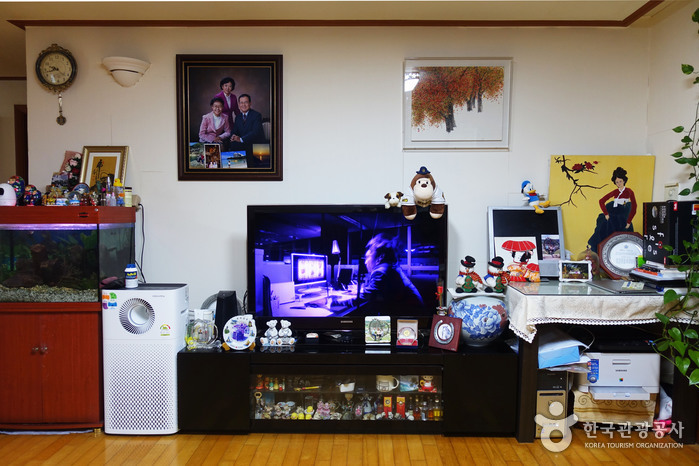
GyoDae GuestHouse (교대게스트하우스)
7.3Km 2024-12-23
116 , Saimdang-ro 17-gil, Seocho-gu, Seoul
Gyodae Guesthouse is located in Seocho Samsung Raemian Apartments, near Gyodae station, Seoul. Residents share the space in a typical Korean home, with two separate rooms - each equipped with a computer and desk - plus shared kitchen, bathroom, and living room with TV and sofa, Foreign students studying at nearby universities often stay here for extended periods. A laundry service is provided free of charge.
St. Mary's Jin Eye Center (성모 진 안과 의원)
7.3Km 2025-10-23
(1st,4th,5th Floors), 337 Gangnam-daero, Seocho-gu, Seoul
All of our doctors are former adjunct professors of ophthalmology at the Catholic University of Korea, Seoul St. Mary's Hospital. They have performed more than 5,000 two-day LASEK procedures using AMARIS RED 1050RS by SCHWIND in Germany, and more than 10,000 cataract surgeries using the most advanced multifocal intraocular lenses from overseas companies such as ALCON, JOHNSON & JOHNSON, ZEISS, and HOYA.
We operate the same glaucoma and retina screening equipment as the top five university hospitals and offer surgical and injection treatments for retinal diseases.
We also offer IPL laser or collagen plug treatments for dry eyes.
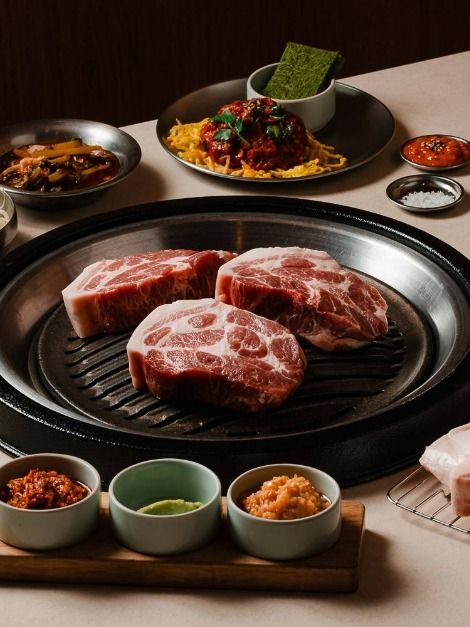
BBQ Yul (고깃집열)
7.4Km 2025-12-16
48 Seocho-daero 78-gil, Seocho-gu, Seoul
BBQ Yul, a Korean barbecue restaurant in Gangnam, boasts deep flavors of pork aged for 336 hours and charcoal. All meats are sourced domestically and cooked by the skilled staff to ensure optimal cooking and flavor. The interior is composed of warm lighting and wooden decor, and opening the folding door reveals an open space like a terrace.
ODE Clinic (오드의원)
7.4Km 2025-11-28
8th Floor, Gyeongwon Building, 340 Gangnam-daero, Gangnam-gu, Seoul
ODE Clinic is a dermatology and aesthetic medical institution with a high proportion of domestic patients, ensuring proven safety and trust. The clinic operates a designated doctor system, providing responsible 1:1 consultation and treatment. Its medical team consists of young specialists capable of offering the latest treatment trends. With this experience, ODE Clinic provides reliable medical services to international patients.
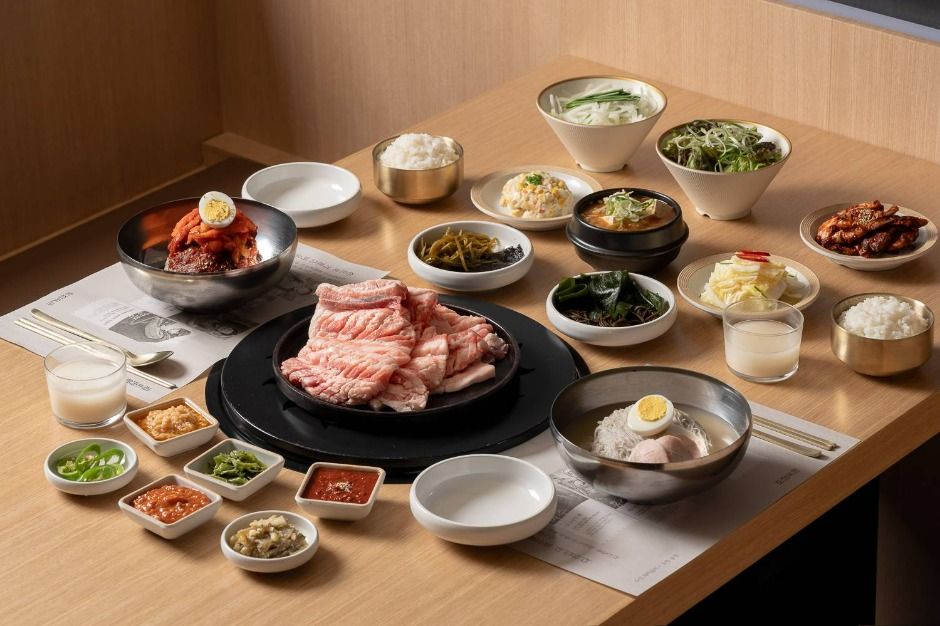
Dojeong Yukgwan (도정육관)
7.4Km 2025-10-27
42 Seocho-daero 78-gil, Seocho-gu, Seoul
Dojeong Yukgwan is a Korean BBQ restaurant in Gangnam. Every morning, fresh rice is milled on-site to cook the rice, and carefully aged meat is served alongside. The meat is aged at a consistent temperature and humidity, resulting in a tender texture and deep flavor. The meat is grilled over charcoal, with staff grilling the meat to serve it in optimal condition. A variety of side dishes are served alongside the food. The interior features warm lighting and wooden interiors, creating a relaxed yet sophisticated atmosphere.
Gangnam Grand Eye Clinic (강남그랜드안과의원)
7.5Km 2025-10-23
4F-5F, 363 Gangnam-daero, Seocho-gu, Seoul
Gangnam Grand Eye Clinic is one of Korea's leading ophthalmology clinics. It received the Minister of Health and Welfare Award and is ranked among the top 10 companies participating in the Korea Grand Sale event.
With the latest medical technology and highly skilled medical staff, the clinic specializes in providing customized services for international patients. It offers interpretation services in various languages, including English, Russian, Mongolian, and Chinese, ensuring a comfortable medical experience without language barriers.
With over 30,000 cases in vision correction, including LASIK and LASEK, presbyopia, and cataract surgery, the clinic's medical staff delivers satisfying outcomes without unnecessary procedures. The clinic also boasts outstanding accessibility, with its convenient location right in front of Exit 5 of Gangnam Station.
 English
 한국어
한국어 日本語
日本語 中文(简体)
 Deutsch
 Français
 Español
 Русский


