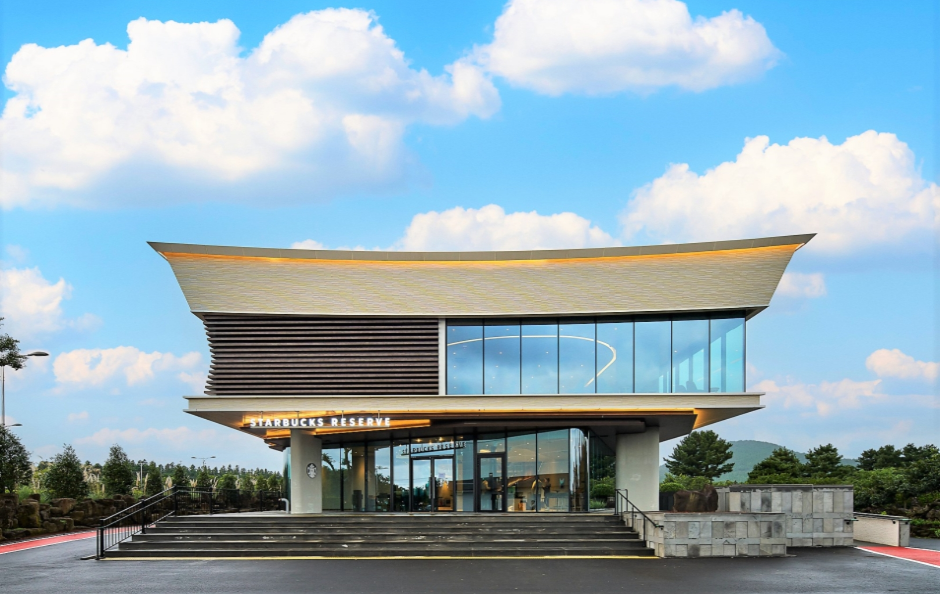
Starbucks Jeju Songdangpark R (스타벅스 더제주송당파크R)
13.0Km 2024-12-27
1189 Bijarim-ro Gujwa-eup, Jeju-si, Jeju-do
Korea's largest Starbucks Reserve exclusive store. Enjoy special coffee along with nature and culture
Starbucks Jeju Songdang R store is Korea’s largest Starbucks Reserve exclusive store. The store offers views of Hallasan Mountain and Jeju Stone Park, so you can leisurely enjoy the scenery of nature with various coffee beverages and foods in and out of the store. There are various specialty beverages, foods, and merchandise available only at the Jeju Songdang R store. As a Starbucks Reserve exclusive store, you can enjoy kinetic artwork representing coffee stories and an exhibition of photographer An Woong-chul's works in collaboration with the global camera manufacturer Leica.
![Seongsanpo Suhyup Market - Jeju Branch [Tax Refund Shop] (성산포수협직판장 제주)](http://tong.visitkorea.or.kr/cms/resource/41/2887741_image2_1.jpg)
Seongsanpo Suhyup Market - Jeju Branch [Tax Refund Shop] (성산포수협직판장 제주)
13.2Km 2024-04-17
130-19, Seongsandeungyong-ro, Seongsan-eup, Seogwipo-si, Jeju-do
-
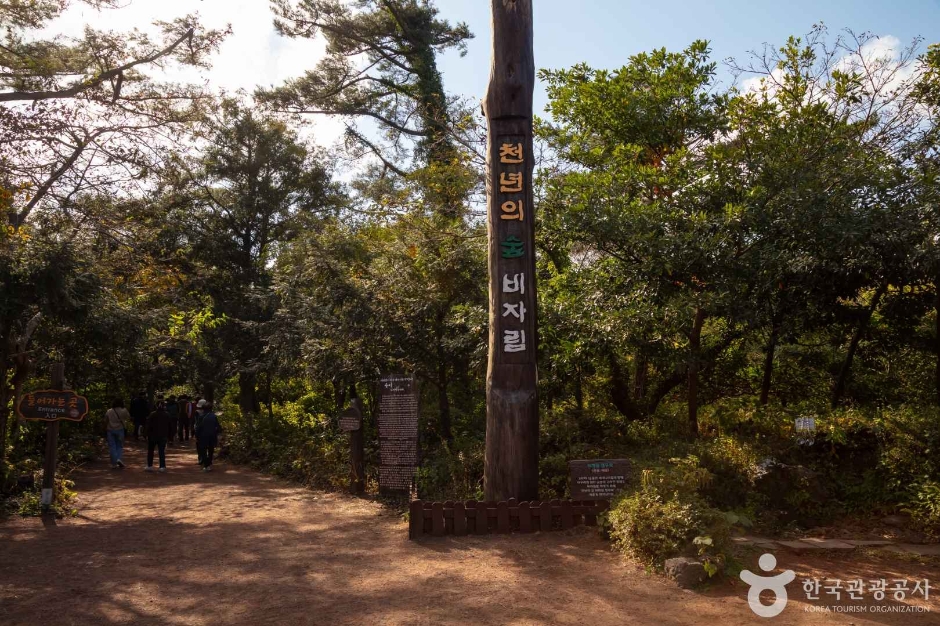
Bijarim Forest (비자림)
13.3Km 2025-04-01
55 Bijasup-gil, Jeju-si, Jeju-do
+82-64-710-7912
Designated and protected as a Natural Monument, Bijarim Forest is home to 2,800 bija trees, ranging from 500 to 800 years in age, spread over 448,165㎡ land area. These majestic trees range from 7-14 meters in x_height, 50-110 centimeters in diameter, and 10-15 meters in crown x_width, so this forest is quite a rare example of its kind in the world. The berries of bija trees were used widely as a medicine used to kill parasites, while the wood was used to make premium furniture and go boards. Forest bathing in a bija forest helps to combat arteriosclerosis, mitigate physical and psychological fatigue, and restore the body’s rhythm.

Maze Museum (메이즈랜드)
13.8Km 2025-10-23
2134-47 Bijarim-ro, Gujwa-eup, Jeju-si, Jeju-do
+82-64-784-3838
Maze Museum, a comprehensive theme park, features the world's longest stone maze, spanning 5.3 km and themed around Jeju’s Samda—the island’s iconic triad of stones, wind, and women. Proudly showcasing Korea’s natural beauty, the park also houses a museum where visitors can explore the history of mazes, view artifacts, and solve puzzles dating from the 14th century to modern times. Constructed from local stones known for their high far-infrared ray emission and the western arborvitae trees, which release beneficial phytoncides, Maze Museum is an eco-friendly park designed with health benefits in mind, offering more than just walking mazes. The site is enveloped by a variety of 40-year-old trees, providing an ideal environment for forest bathing and immersing in nature.
Haenyeo Kitchen (해녀의 부엌)
14.8Km 2025-10-31
2265 Haemajihaean-ro, Gujwa-eup, Jeju-si, Jeju-do
Haenyeo Kitchen is a local food dining space where visitors can enjoy dishes handmade by Jeju's haenyeo (female divers) and performances that unfold their stories. Housed in a renovated old warehouse by the sea, visitors can savor meals prepared by the haenyeo themselves, using Jeju's seafood and bountiful ingredients. The performances here showcase the talent and dedication of young artists working across diverse fields, from spatial design and story development to planning, lighting, music, choreography, and acting, allowing visitors to fully immerse in the world of haenyeo.
Bengdwigul Cave [UNESCO World Natural Heritage Site] (제주 선흘리 벵뒤굴 [유네스코 세계자연유산])
15.3Km 2022-12-27
Jocheon-eup, Jeju-si, Jeju-do
+82-1600-0064
With a total length of 4,481 meters, Bengdwigul Cave is shaped like a maze and has one of the most complex lava tube structures in the world. For geologists, this cave is invaluable since it demonstrates how lava continuously flowed over the surface of the ground and the complex route it took to eventually form a tube deep underground. Created particularly close to the earth’s surface, this cave has a number of entrance holes to the tunnel. Inside, the complex structure of the cave unfolds in the form of double-tiered or triple-tiered rooms. A range of lava formations such as lava columns and lava bridges have developed inside this mystical tube.
* The UNESCO World Heritage designated Geomunoreum Lava Tube System of Bengdwigul, Manjanggul Cave, Gimnyeonggul, Yongcheondonggul and Dangcheomuldonggul Caves.
Jeju World Natural Heritage Center (제주 세계자연유산센터)
15.6Km 2021-05-31
569-36, Seongyo-ro, Jeju-si, Jeju-do
+82-1800-2002
The Jeju World Natural Heritage Center was established to acknowledge Jeju Island’s value as the sole UNESCO World Natural Heritage in Korea. It is comprised of various facilities including a 4D video room, lava tunnel experience, origins of Jeju-do, and many other activities that visitors can experience first-hand. Jeju World Natural Heritage Center is located in the Geomunoreum Lava Tube System, which was designated as a UNESCO World Natural Heritage in 2007, one of the 20 ecological tourism spots selected by the Ministry of Environment of Korea in 2009, as well as a Korean-style ecological tourism model.
* Opening date: September 4, 2012
![Geomunoreum Lava Tube [UNESCO World Natural Heritage Site] (거문오름 [유네스코 세계자연유산])](http://tong.visitkorea.or.kr/cms/resource/61/2661661_image2_1.jpg)
Geomunoreum Lava Tube [UNESCO World Natural Heritage Site] (거문오름 [유네스코 세계자연유산])
15.6Km 2025-03-13
569-36 Seongyo-ro, Jocheon-eup, Jeju-si, Jeju-do
+82-64-710-8981
Geomunoreum Lava Tube stands out as one of the distinct oreum (the Jeju language term for parasitic cones) on Jeju Island, marked by its extensive network of around 20 lava tubes running through the volcanic structure. This site is not only a geological marvel but also a sanctuary for diverse biological species. Visitors begin their journey at the Jeju World Natural Heritage Center, from where a path leads directly to the Geomunoreum Lava Tube. It is important to note that prior reservations are required to visit. The significance of this location as a key geological feature was recognized when it was designated as a UNESCO World Natural Heritage Site in 2007. Additionally, an international trekking event is hosted annually to celebrate its global importance.
Cheonjin Port (천진항)
15.8Km 2023-02-16
1737-15, Yeonpyeong-ri, Jeju-si, Jeju-do
+82-64-740-6000
Udo Island is the largest of all the smaller islands near Jeju and where the sun rises before anywhere else. It is located at the eastern end of Jeju Island and a popular tourist spot that is always crowded with visitors as there are numerous things to see, eat and enjoy. The island is a bit too big to tour on foot so it is better to enter the island by car, rent an electric scooter or a small electric vehicle once on the island or travel by bus. Udo has two docks located at Cheonjin Port and Haumokdong Port. Cheonjin Port is the gate port into Udo with several electric scooter rental shops, so many tourists get off here. It takes about 10 to 15 minutes from Seongsan Port or Jongdal Port to Cheonjin Port.
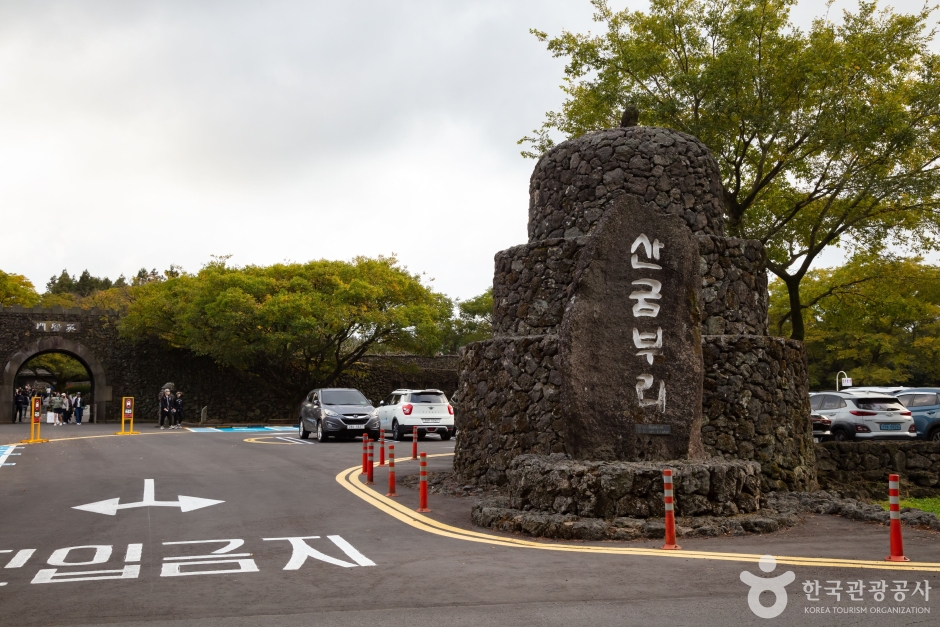
Sangumburi Crater (산굼부리)
15.8Km 2024-11-28
768 Bijarim-ro, Jeju-si, Jeju-do
+82-64-783-9900
Sangumburi Crater has been designated as a Natural Monument. It is located on the southeast side of Jeju, and is a flat crater, about 650 meters wide, 100 meters deep, and 2,070 meters in circumference. If you look at the crater from above up, it looks like a man-made circular stadium. There is a variety of plant-life in the crater. On the north side, Nandaeseong vegetation such as red-thorn trees, and magnolia trees grow, along with the rare winter strawberries. On the south side of the crater, Ondaerim vegetation such as evergreens, maples, and mountain strawberry trees cover the area. Because so many different kinds of trees and plants grow in such a limited space, it attracts the attention of researchers as well.
 English
 한국어
한국어 日本語
日本語 中文(简体)
 Deutsch
 Français
 Español
 Русский


