![Waac [Tax Refund Shop] (왁)](http://tong.visitkorea.or.kr/cms/resource/52/2880952_image2_1.jpg)
Waac [Tax Refund Shop] (왁)
12.0Km 2024-04-19
200, Pilseung-ro, Tanhyeon-myeon, Paju-si, Gyeonggi-do
-
![Munsingwear - Shinsegae Paju Branch [Tax Refund Shop] (먼싱웨어 신세계파주)](http://tong.visitkorea.or.kr/cms/resource/82/2880782_image2_1.jpg)
Munsingwear - Shinsegae Paju Branch [Tax Refund Shop] (먼싱웨어 신세계파주)
12.0Km 2024-04-17
#1432, 200, Pilseung-ro, Tanhyeon-myeon, Paju-si, Gyeonggi-do
-
![Duko Zadig&Voltaire - Shinsegae Paju Branch [Tax Refund Shop] (듀코 신세계(아)파주 쟈딕)](http://tong.visitkorea.or.kr/cms/resource/94/2887894_image2_1.jpg)
Duko Zadig&Voltaire - Shinsegae Paju Branch [Tax Refund Shop] (듀코 신세계(아)파주 쟈딕)
12.0Km 2024-04-16
2F, 200, Pilseung-ro, Tanhyeon-myeon, Paju-si, Gyeonggi-do
-
![Onitsuka Tiger - Shinsegae Paju Branch [Tax Refund Shop] (오니츠카타이거 신세계파주)](http://tong.visitkorea.or.kr/cms/resource/16/2880816_image2_1.jpg)
Onitsuka Tiger - Shinsegae Paju Branch [Tax Refund Shop] (오니츠카타이거 신세계파주)
12.0Km 2024-04-18
200, Pilseung-ro, Tanhyeon-myeon, Paju-si, Gyeonggi-do
-
![Kolon Marc Jacobs - Shinsegae Paju Branch [Tax Refund Shop] (코오롱 마크제이콥스 신세계파주)](http://tong.visitkorea.or.kr/cms/resource/19/2888119_image2_1.jpg)
Kolon Marc Jacobs - Shinsegae Paju Branch [Tax Refund Shop] (코오롱 마크제이콥스 신세계파주)
12.0Km 2024-04-22
200, Pilseung-ro, Tanhyeon-myeon, Paju-si, Gyeonggi-do
-
![SI Gap - Shinsegae Paju Branch [Tax Refund Shop] (SI 갭 신세계파주)](http://tong.visitkorea.or.kr/cms/resource/74/2880874_image2_1.jpg)
SI Gap - Shinsegae Paju Branch [Tax Refund Shop] (SI 갭 신세계파주)
12.0Km 2024-04-18
Chelsea #928, 200, Pilseung-ro, Tanhyeon-myeon, Paju-si, Gyeonggi-do
-
![Issey Miyake - Shinsegae Paju Branch [Tax Refund Shop] (이세이미야케 신세계 파주점)](http://tong.visitkorea.or.kr/cms/resource/14/2880914_image2_1.jpg)
Issey Miyake - Shinsegae Paju Branch [Tax Refund Shop] (이세이미야케 신세계 파주점)
12.0Km 2024-04-18
#551, 200, Pilseung-ro, Tanhyeon-myeon, Paju-si, Gyeonggi-do
-
![Vans - Shinsegae Paju Branch [Tax Refund Shop] (반스 신세계파주)](http://tong.visitkorea.or.kr/cms/resource/31/2889331_image2_1.jpg)
Vans - Shinsegae Paju Branch [Tax Refund Shop] (반스 신세계파주)
12.0Km 2024-04-22
200, Pilseung-ro, Tanhyeon-myeon, Paju-si, Gyeonggi-do
-
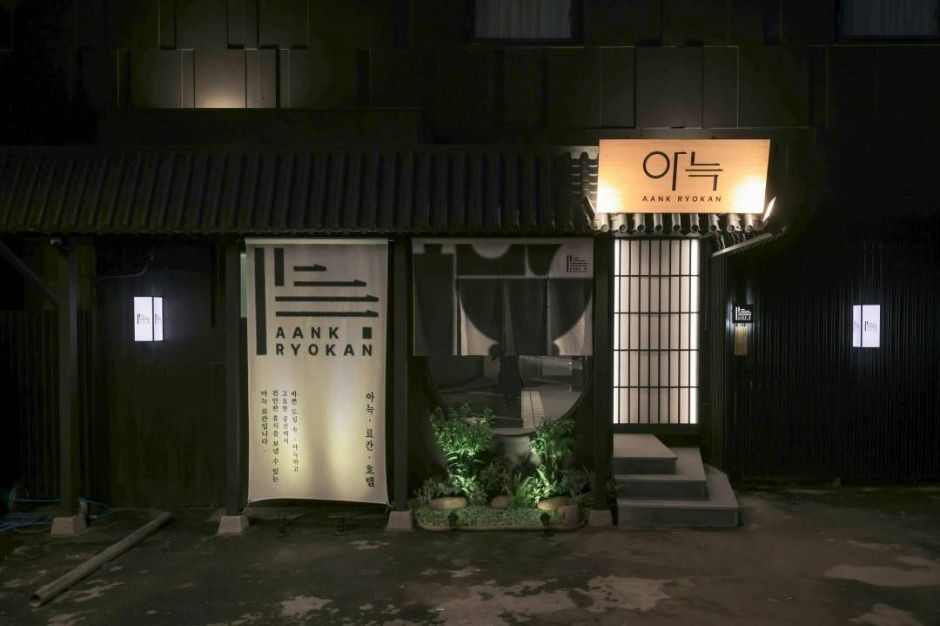
The Hyooshik Aank Ryokan Hotel Paju (더휴식 아늑료칸호텔 파주금촌점)
12.1Km 2025-04-24
41-13 Geumjeong 14-gil, Paju-si, Gyeonggi-do
The hotel offers a cozy stay with salt baths and a private sauna in the lobby, which can accommodate up to four people. Guests can unwind and release their fatigue as they take in the calm sound of water and the slow passing of time. Guests can also rent Yukata in the lobby to enjoy a truly Ryokan-like experience. The wooden signboard and small roof tiles further enhance the cozy atmosphere of the hotel.
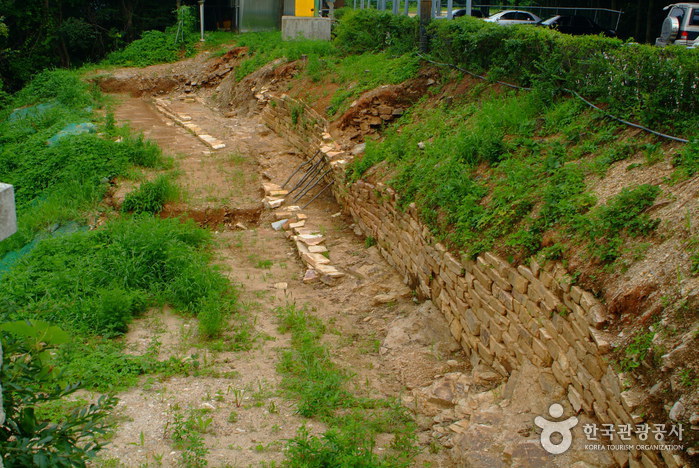
Odusanseong Fortress (파주 오두산성)
12.7Km 2024-12-03
Seongdong-ri, Paju-si, Gyeonggi-do
Odusanseong Fortress is built around the strategic summit of Odusasn Mountain. The walls stretch across roughly 620 meters and were built during the Baekje dynasty. The fortress is built on the intersection of the Imjingang River and the Hangang River on the summit of Odusan Mountain (119 meters). The mountain’s slope is steep and stones used in the construction of the fortress walls are scattered here and there at the summit. These scattered stones are evidence that the fortress underwent repairs several times during the Samguk (Three Kingdoms) era and the Joseon dynasty, as these stones were evidently quarried and used to mend the fortress walls. Excavations have discovered a great deal of earthenware, white porcelain, tile, and iron arrowheads. Topographically, the fortress sits on a prime strategic junction and the Unification Observatory has been situated there as well. The fortress stands as an important object of study concerning fortifications and structures from the Baekje dynasty. It has been recorded on the stele of King Gwanggaeto, Samguksagi (History of the Three Kingdoms), in the Naekjebongi (Baekje Annals) and on Daedongyeojido (Map of Korea) that the fortress was the Gwanmi Fortress of Baekje, attracting many scholars and researchers interested in this period.
 English
 한국어
한국어 日本語
日本語 中文(简体)
 Deutsch
 Français
 Español
 Русский


