
Gimpo Daemyeong Port (김포 대명항)
941.1M 2023-02-02
109, Daemyeonghang 1-ro, Daegot-myeon, Gimpo-si, Gyeonggi-do
The piercing smell of salt, the energy of freshly caught fish, fishing boats returning from far out at sea, and people walking in and out of the fish market and raw fish restaurants - these are the scenes of Daemyeong Port in Daegot-myeon, Gimpo where the fresh vigor of life is vividly alive. It is located just 30 minutes from Gimpo Airport by car so it is close to Seoul. Fishermen and owners of fishing boats personally run raw fish restaurants so the prices of raw fish are about 20% cheaper here than at other ports, according to the people of Daemyeong Port. Raw fish restaurants that you first encounter at the entrance of the port have tanks filled with freshly caught fish, and fishing nets spread out here and there vividly show the unique characteristics of a port. As it is the only port on the coast of Ganghwado Island, you are able to fully enjoy the beautiful seascape. The port is also receiving a great deal of attention both locally and nationwide thanks to the Daemyeong Type 2 Fishery Harbor project and the Pungeoje Festival. In 2001, Daemyeong Port was selected as one of the "7 Winter Seas recommended by the Korea Tourism Organization" for its beautiful seascape and flavors of a traditional port. Facing Ganghwado across Ganghwa Strait, Daemyeong Port is not as busy with tourists as Sorae Port or Yeonan Pier and boasts quiet and affectionate scenes of a fishing village. Nearby lies Deokpojin Fort, which is a historical site where our ancestors in the late Joseon Dynasty fought against foreign forces.
Gimpo Hamsang Park (김포함상공원)
1.1Km 2023-08-08
110-36, Daemyeonghang 1-ro, Gimpo-si, Gyeonggi-do
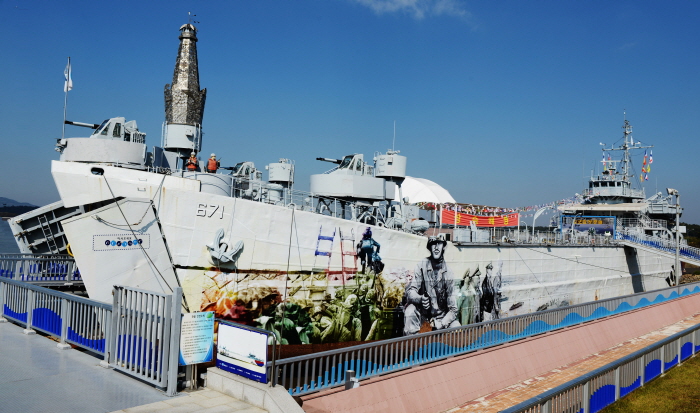
Gimpo Hamsang Park is the first battleship themed park in the Seoul metropolitan area. With LST battleship on display, there are many things to see and experience at the park. Visitors can learn various information about the lives and duties of naval officers as well as enjoy a panoramic view of the West Sea.
Ganghwa Haesoo Land (강화해수랜드)
2.2Km 2024-02-20
13-12 Haeannam-ro, Gilsang-myeon, Ganghwa-gun, Incheon
Ganghwa Haesoo Land, established in 1992, is a comprehensive leisure facility that integrates a sauna with seawater baths. The sauna encompasses various facilities, including red clay sauna, salt sauna, charcoal sauna, and steam sauna. The seawater baths utilize mineral-rich seawater sourced from 560 meters underground. Complementing these features, the facility offers additional amenities such as a swimming pool, outdoor concert hall, and a café.
Gwangseongbo Fortress (광성보)
3.4Km 2022-07-25
27, Haeandong-ro 466beon-gil, Ganghwa-gun, Incheon
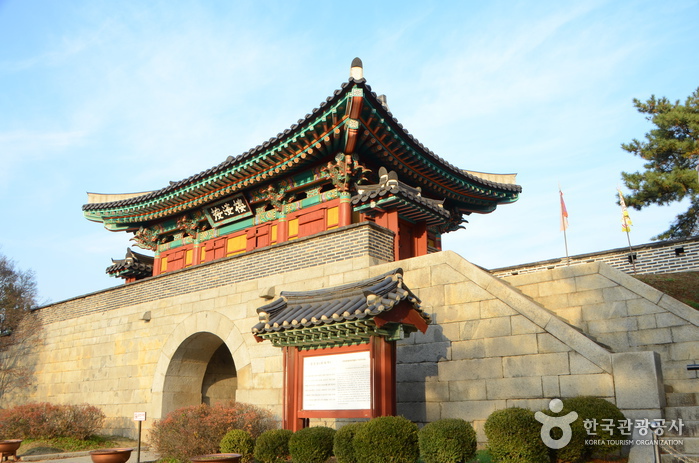
Gwangseongbo Fortress’s outer wall from the Goryeo era was mended in 1618. The fortress was built in 1656 and the outpost was constructed in 1679. It was completely remodeled into
a masonry castle with gates in 1745. During Sinmiyangyo (the American invasion in 1871), Gwangseongbo was the fiercest battle ground in Ganghwa. On April 24, 1871, a
fleet with 1,230 American naval forces led by Rear Admiral John Rodgers landed on Ganghwado Island to demand the
opening of Korea's ports and commerce. The armed forces attacked Chojijin Fortress
and Deokjinjin Camp, then marched to Gwangseongbo Fortress, where they engaged in close combat with the warriors of Joseon. Although General Eo Jae-yeon and the other warriors were poorly equipped with far inferior weapons, they bravely fought to the
death against the invading forces.
The battlefield ruins of the fortress and the gate towers such as Anhaeru, Gwangseongdon, Sondolmokdon, and Yongdudon were repaired
in 1977. The twin tombs of General Eo Jae-Yeon and his brother Eo Jae-seon, along with the anonymous tombs of warriors who died on the battlefield were
also honorably arranged at the same time. Furthermore, a stone monument commemorating the restoration of Ganghwa Battlefield was erected on Yongdudondae Post.
In 1988, an extensive rest area was created toward the shore for visitors’ convenience. Gwangseongbo Fortress is presently designated as Historical Relic No. 227. A religious service known as Gwangseongje is held annually to commemorate the patriotic spirits of General Eo Jae-yeon and other unnamed warriors. This service takes place at 11 a.m. on every April 24th of the lunar calendar.
Dosol Museum (Hanok Gallery Cafe) (한옥카페 갤러리도솔)
4.1Km 2025-10-23
52-71 Gilsang-ro 210beon-gil, Gilsang-myeon, Ganghwa-gun, Incheon
Located on Ganghwado Island, Incheon, the museum is housed in a traditional hanok building with a café. Adorned with pine trees, it offers a relaxing space where visitors can enjoy traditional Korean desserts and drinks on the menu. In addition, it also offers various hands-on experience programs, such as mug-making.
Haeden Museum (해든뮤지움)
4.8Km 2025-10-23
44 Jangheung-ro 101beon-gil, Gilsang-myeon, Ganghwa-gun, Incheon
Nestled amid the beautiful landscapes of Incheon, the Haeden Museum is a private art museum that opened in 2013. It showcases works by renowned Korean artists as well as international contemporary masters, including Chagall, Frank Stella, Roy Lichtenstein, Nam June Paik, Kim Whanki, and Lee Ufan. The museum not only hosts exhibitions but also offers educational programs. Its stunning architecture, which earned the Best 7 Architecture of the Year in Korea award in 2013, centers around the concept of harmony and communication with nature, making it a perfect getaway to connect with both art and nature.
Ganghwa Luge (Ganghwa Seaside Resort) (강화루지(강화씨사이드리조트))
5.4Km 2025-06-25
217 Jangheung-ro, Ganghwa-gun, Incheon
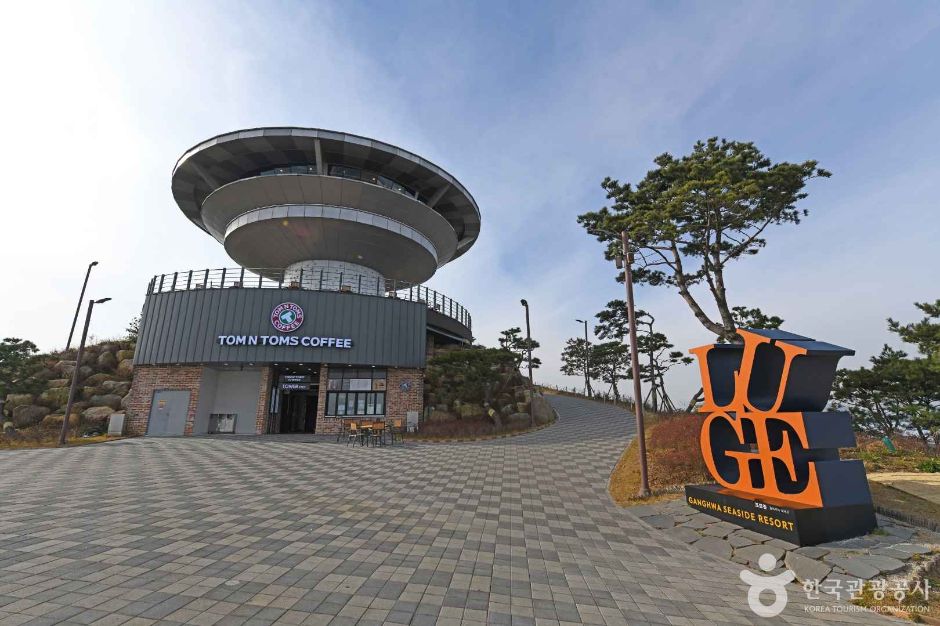
Ganghwa Seaside Resort delivers joy, happiness, and love with a gondola, food court, themed trails and the only luge track in the western part of the metropolitan area. It is a place where visitors can meet the mountains and the sea and feel the profoundness of nature without having to travel far way from the city. Visitors can take the gondola to reach the top, guided by the rich scent of the forest, and fully enjoy the atmosphere of Ganghwado Beach as well as the beautiful sunset from the observatory. The resort has a luge designed to descend dynamically through a 1.8-kilometer track, offering an excitement perfect for all members of the family.
Geumpung Brewery (금풍양조장)
5.4Km 2025-10-23
8 Samnangseong-gil, Gilsang-myeon, Ganghwa-gun, Incheon
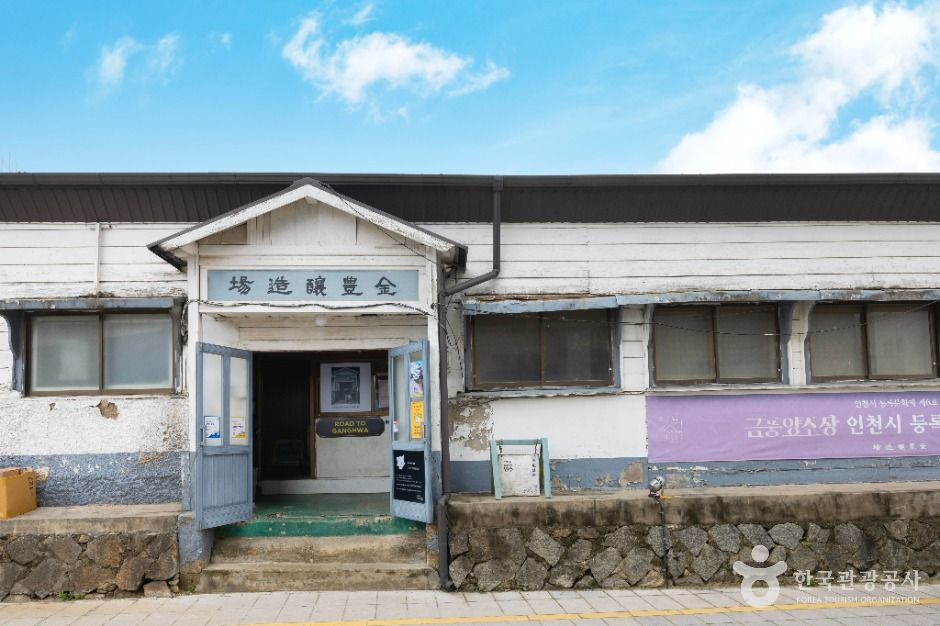
Operated by the same family for three generations, Geumpung Brewery preserves the history of traditional Korean wine-making on Ganghwado Island. Its makgeolli (unrefined rice wine), with a 100-year tradition, is made from top-quality eco-friendly rice grown on the island. The brewery is committed to making science-based premium rice wine. In 2021, the brewery was the first on the island to obtain a license for brewing local specialty wine (unrefined and refined rice wine) with the goal of promoting makgeolli globally, while using local ingredients. Notably, the brewery's packaging, made by upcycling rice sacks, has grabbed much attention.
Donggeomdo (Trail, Campground, Art Cinematheque) (동검도(나들길,캠핑,예술극장))
6.0Km 2024-02-20
60 Donggeom-gil 63beon-gil, Gilsang-myeon, Ganghwa-gun, Incheon
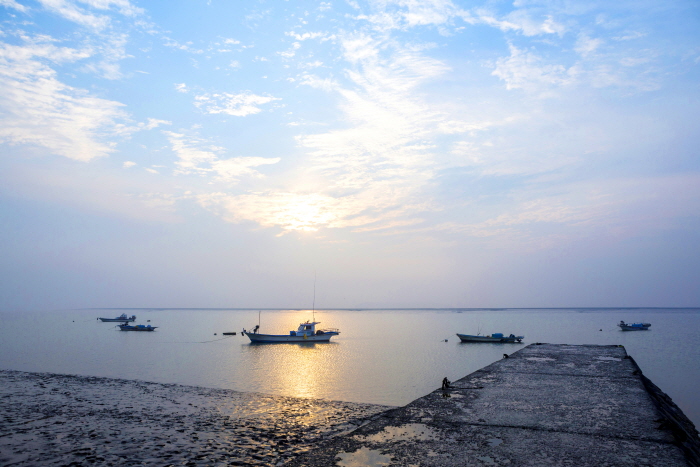
Donggeomdo Island is a petite island connected to the main island of Ganghwado Island, celebrated for its stunning tidal flats and coastal vistas. A stroll along the trail on the eastern coast of the island offers visitors a chance to savor diverse natural landscapes, while the scattered campgrounds provide a romantic setting for leisure activities. Notably, the DRFA365 Art Cinematheque, featuring art films, adds to the island's charm and attractions.
Ganghwa Jeondeungsa Temple (강화 전등사)
6.2Km 2025-10-23
37-41 Jeondeungsa-ro, Ganghwa-gun, Incheon
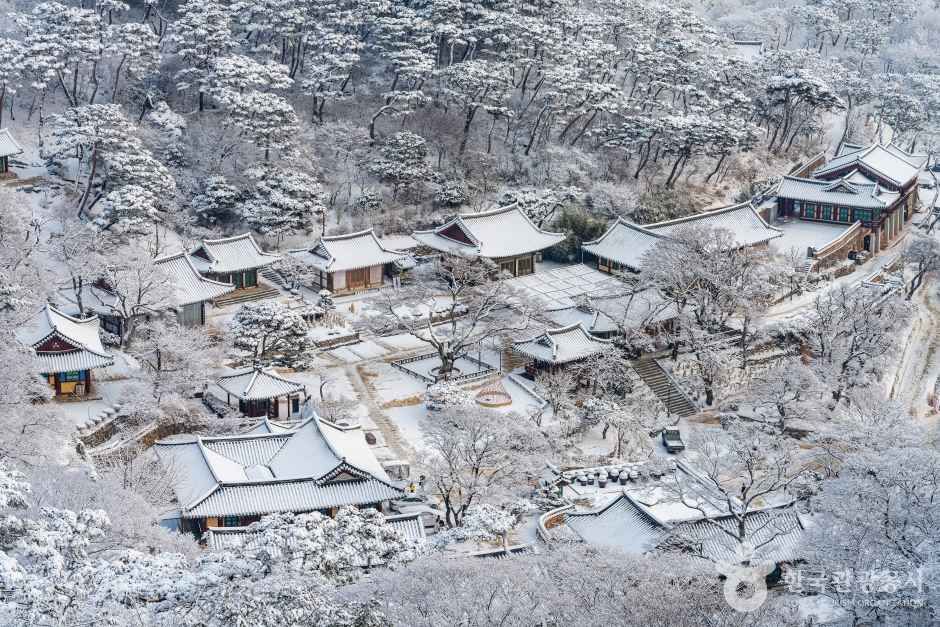
Jeondeungsa Temple is located in Samnangseong Fortress, which is said to have been built in 381 by the three sons of Dangun, the founder of Korea. The temple was originally called Jinjongsa Temple, but changed to the current Jeondeungsa Temple during the Goryeo period.
Jeondeungsa Temple contains significant architectural works. Decorated with delicate carvings, the temple buildings are superlative examples of the architecture of the mid-Joseon dynasty. Visitors can see names of soldiers written on the walls and columns of Daeungjeon Hall. These soldiers fought against the French Navy and wrote their names in Jeondeungsa to pray to Buddha for good luck in war.
There are ten other structures of historical significance at the temple including Yaksajeon Hall, Beomjong Bell, and Yangheonsu Victory Monument. The compound is also home to many ancient trees.
 English
 한국어
한국어 日本語
日本語 中文(简体)
 Deutsch
 Français
 Español
 Русский


