
Oktokki Space Center (옥토끼우주센터)
17.7M 2025-07-01
403 Ganghwadong-ro, Ganghwa-gun, Incheon
+82-32-937-6917
Oktokki Space Center is Korea's first aerosepace theme park. The center collects, preserves, and exhibits materials related to aerospace engineering to educate and promote to the public. It is open to visitors all year round, offering diverse activity programs and experience rides that can be enjoyed by people of all ages. The center is especially well equipped with fun learning materials as well as educational programs to spark children's insterest in the field.
Lotus Lantern International Meditation Center (연등국제선원)
476.2M 2025-10-23
349-60 Ganghwadong-ro, Ganghwa-gun, Incheon
+82-32-937-7033
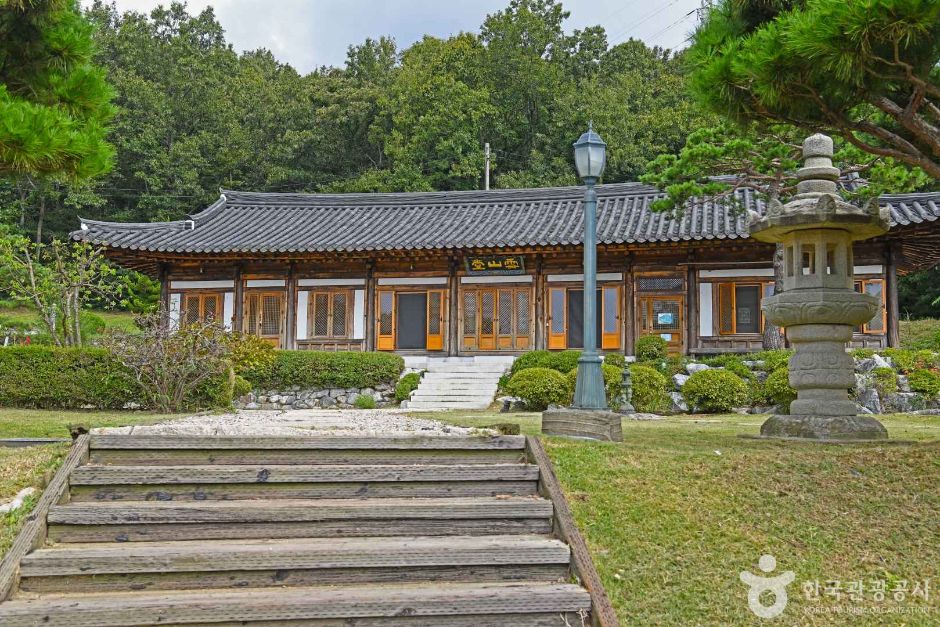
The Lotus Lantern International Meditation Center was founded in 1997 by Monk Wonmyoung as a site for foreigners to practice seon meditation.The center features five main buildings and a large garden area. The center is serviced by monks from various countries, including America, Switzerland, Russia, and other Asian countries. Foreigners can easily learn the practice of seon meditation by participating in the English lectures and short-term programs.
ARTFACTORY CHARMGIROOM (아트팩토리 참기름)
899.1M 2025-11-11
109 Kkachigol-gil, Gilsang-myeon, Ganghwa-gun, Incheon
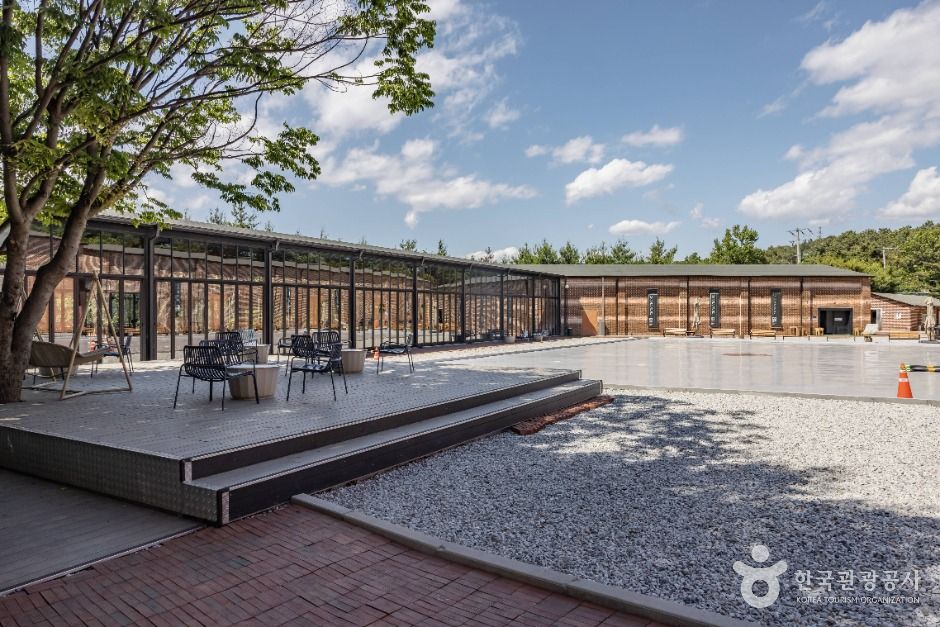
RTFACTORY CHARMGIREUM, renovated from a former sesame oil factory, is a cultural complex on Ganghwado Island, Incheon, offering various media art exhibitions as well as food and beverage options. Combining art and technology, the venue provides a spacious area for relaxation and cultural immersion, making it a new trending attraction that offers visitors a unique experience.
Dosol Museum (Hanok Gallery Cafe) (한옥카페 갤러리도솔)
4.0Km 2025-10-23
52-71 Gilsang-ro 210beon-gil, Gilsang-myeon, Ganghwa-gun, Incheon
Located on Ganghwado Island, Incheon, the museum is housed in a traditional hanok building with a café. Adorned with pine trees, it offers a relaxing space where visitors can enjoy traditional Korean desserts and drinks on the menu. In addition, it also offers various hands-on experience programs, such as mug-making.
Geumpung Brewery (금풍양조장)
4.0Km 2025-10-23
8 Samnangseong-gil, Gilsang-myeon, Ganghwa-gun, Incheon
+82-70-4400-1931
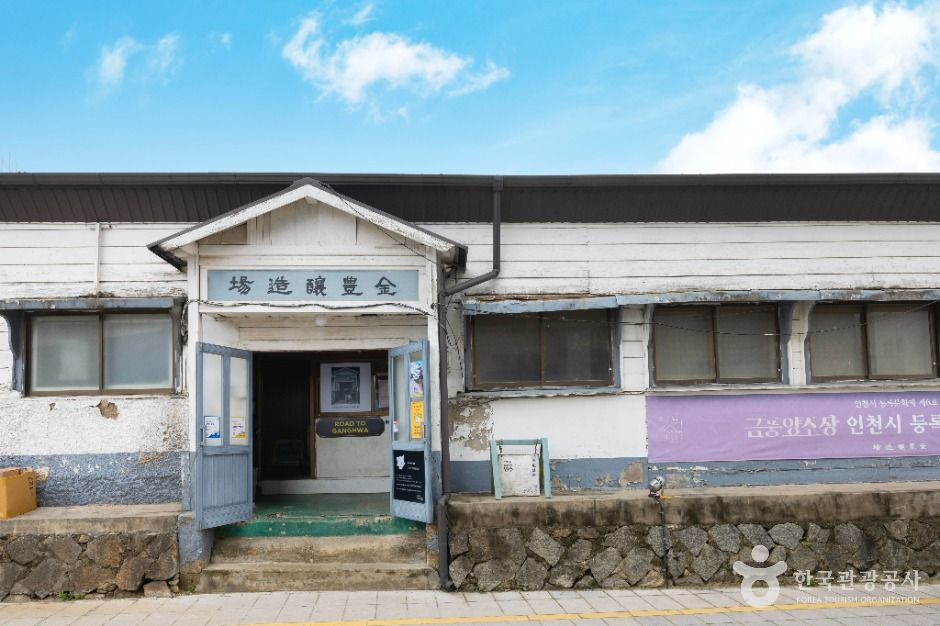
Operated by the same family for three generations, Geumpung Brewery preserves the history of traditional Korean wine-making on Ganghwado Island. Its makgeolli (unrefined rice wine), with a 100-year tradition, is made from top-quality eco-friendly rice grown on the island. The brewery is committed to making science-based premium rice wine. In 2021, the brewery was the first on the island to obtain a license for brewing local specialty wine (unrefined and refined rice wine) with the goal of promoting makgeolli globally, while using local ingredients. Notably, the brewery's packaging, made by upcycling rice sacks, has grabbed much attention.
Gwangseongbo Fortress (광성보)
4.0Km 2022-07-25
27, Haeandong-ro 466beon-gil, Ganghwa-gun, Incheon
+82-32-930-7070
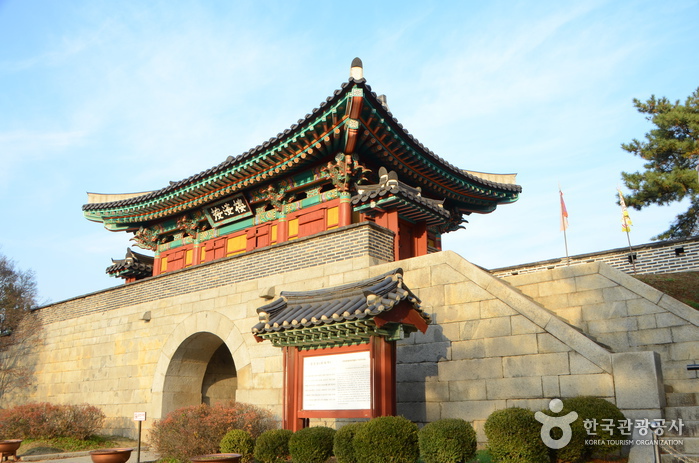
Gwangseongbo Fortress’s outer wall from the Goryeo era was mended in 1618. The fortress was built in 1656 and the outpost was constructed in 1679. It was completely remodeled into
a masonry castle with gates in 1745. During Sinmiyangyo (the American invasion in 1871), Gwangseongbo was the fiercest battle ground in Ganghwa. On April 24, 1871, a
fleet with 1,230 American naval forces led by Rear Admiral John Rodgers landed on Ganghwado Island to demand the
opening of Korea's ports and commerce. The armed forces attacked Chojijin Fortress
and Deokjinjin Camp, then marched to Gwangseongbo Fortress, where they engaged in close combat with the warriors of Joseon. Although General Eo Jae-yeon and the other warriors were poorly equipped with far inferior weapons, they bravely fought to the
death against the invading forces.
The battlefield ruins of the fortress and the gate towers such as Anhaeru, Gwangseongdon, Sondolmokdon, and Yongdudon were repaired
in 1977. The twin tombs of General Eo Jae-Yeon and his brother Eo Jae-seon, along with the anonymous tombs of warriors who died on the battlefield were
also honorably arranged at the same time. Furthermore, a stone monument commemorating the restoration of Ganghwa Battlefield was erected on Yongdudondae Post.
In 1988, an extensive rest area was created toward the shore for visitors’ convenience. Gwangseongbo Fortress is presently designated as Historical Relic No. 227. A religious service known as Gwangseongje is held annually to commemorate the patriotic spirits of General Eo Jae-yeon and other unnamed warriors. This service takes place at 11 a.m. on every April 24th of the lunar calendar.
Wondumak Garden (원두막가든)
4.5Km 2024-02-27
60 Jeondeungsa-ro, Gilsang-myeon, Ganghwa-gun, Incheon
Wondumak Garden is a local cuisine restaurant in Ganghwa that has been delighting visitors since its establishment in 1990. Among its signature dishes are jeotguk galbi (salted shrimp and galbi soup) and sotbap (pot rice). Jeotguk galbi resembles a hot pot, incorporating pork galbi, pork bones, vegetables, and a salted shrimp-based broth. It is renowned for its non-spicy and clean-tasting broth, offering a distinctive and flavorful dining experience.
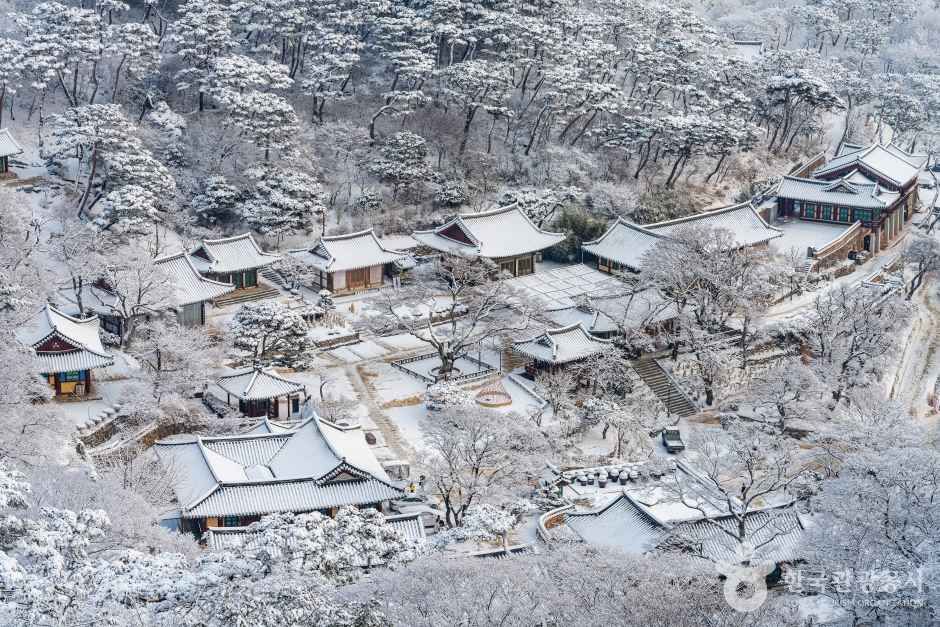
Ganghwa Jeondeungsa Temple (강화 전등사)
4.7Km 2025-10-23
37-41 Jeondeungsa-ro, Ganghwa-gun, Incheon
+82-32-937-0125
Jeondeungsa Temple is located in Samnangseong Fortress, which is said to have been built in 381 by the three sons of Dangun, the founder of Korea. The temple was originally called Jinjongsa Temple, but changed to the current Jeondeungsa Temple during the Goryeo period.
Jeondeungsa Temple contains significant architectural works. Decorated with delicate carvings, the temple buildings are superlative examples of the architecture of the mid-Joseon dynasty. Visitors can see names of soldiers written on the walls and columns of Daeungjeon Hall. These soldiers fought against the French Navy and wrote their names in Jeondeungsa to pray to Buddha for good luck in war.
There are ten other structures of historical significance at the temple including Yaksajeon Hall, Beomjong Bell, and Yangheonsu Victory Monument. The compound is also home to many ancient trees.
Yackseokwon (약석원)
4.8Km 2025-10-23
56-53, Jungang-ro 787beon-gil, Yangdo-myeon, Ganghwa-gun, Incheon
Ganghwa Sajabalssuk, a type of mugwort native to Ganghwado Island, is known for its rich aroma and high vitamin A content. Yackseokwon offers immunity-strengthening programs using this special herb believed to help prevent chronic illnesses. “Raise Your Body Temperature by 1°C Project” is a signature course, which involves yoni steaming (mugwort steam sitting bath) and thermal moxibustion to gradually warm the body. Just an increase of 1 degree in body temperature is said to boost immune function, increase basal metabolism, and improve blood circulation. The program is offered by reservation only and accommodates up to 25 people per session. The 100-minute experience begins with 40 minutes of yoni steaming, followed by 30 minutes of abdominal heat therapy and 30 minutes of lower back heat therapy. Participants are also served a rich herbal tea brewed with Ganghwa Sajabalssuk.
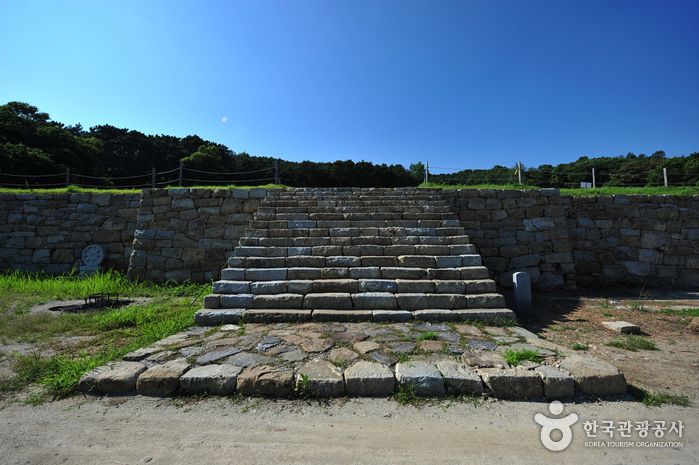
Ganghwa Seonwonsa Temple Site (강화 선원사지)
5.0Km 2022-09-19
222, Seonwonsaji-ro, Ganghwa-gun, Incheon
+82-32-933-8234
Ganghwa Seonwonsa Temple Site was first discovered in 1976 during a surface examination around Ganghwado Island undertaken by the Ganghwado Island Academic Research Team of Dongguk University. The site was designated as Historic Site No. 259 in 1977. Seonwonsa Temple was built by General Choi Wu in 1245 (the 32nd year of King Gojong’s reign during the Goryeo dynasty), which was right after the transfer of the capital to Ganghwado during resistance against the Mongolian invasion.
The temple was meant to be a spiritual mainstay in fighting against Mongolia. It used to be one of the two largest temples in Korea along with Songgwangsa Temple. However, the temple was completely destroyed during the early Joseon era, leaving only the site itself. The famous wood blocks of Palman Daejanggyeong (the Tripitaka Koreana), currently housed in Haeinsa Temple at Hapcheon, are said to have been originally stored in Seonwonsa Temple. It is believed that the carved wood blocks were taken from Seonwonsa to Heungcheonsa Temple during the Joseon era and again moved to Haeinsa Temple during the reign of Sejo.
Located on a mountain slope, the presumed location of the building site extends 250 meters from south to north and 170 meters from east to west.
 English
 한국어
한국어 日本語
日本語 中文(简体)
 Deutsch
 Français
 Español
 Русский


