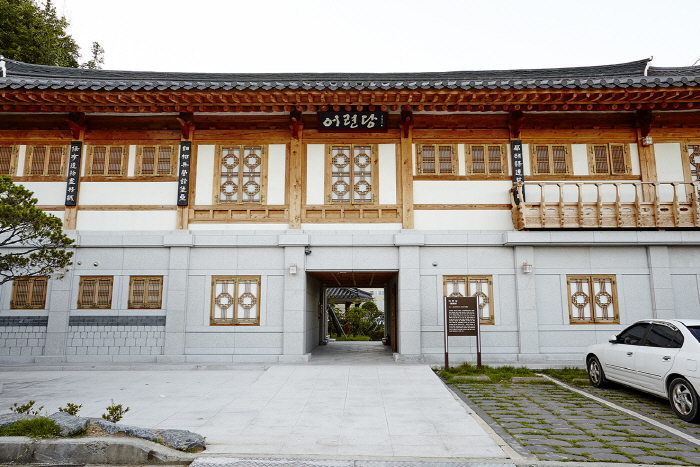
Eoryeondang (어련당)
8.2Km 2024-08-05
61 , Sanjeon-gil, Jung-gu, Ulsan
+82-52-297-5796
Eoryeondang in Jung-gu, Ulsan, is a hanok stay built and operated by Ulsan Jung-gu Office. It has 7 guestrooms, some with kitchen sinks, one with a wooden floor suitable for families, and all with toilet facilities. Dongcheon Stream flows nearby and there is a trail leading to Byeongyeongseong, a Joseon fortress and excellent spot for contemplating Korean history. Hanok stay visitors can sample folk games such as Yutnori, Tuho, and Jegichagi.
![Lotte Mart - Jinjang Branch [Tax Refund Shop] (롯데마트 진장점)](http://tong.visitkorea.or.kr/cms/resource/74/2884174_image2_1.jpg)
Lotte Mart - Jinjang Branch [Tax Refund Shop] (롯데마트 진장점)
9.0Km 2024-04-22
64, Jinjangyutong-ro, Buk-gu, Ulsan
-
![Lotte Himart - Jinjang Lotte Mart Branch [Tax Refund Shop] (롯데하이마트 진장롯데마트점)](http://tong.visitkorea.or.kr/cms/resource/79/2884179_image2_1.jpg)
Lotte Himart - Jinjang Lotte Mart Branch [Tax Refund Shop] (롯데하이마트 진장롯데마트점)
9.0Km 2024-04-22
64, Jinjangyutong-ro, Buk-gu, Ulsan
-
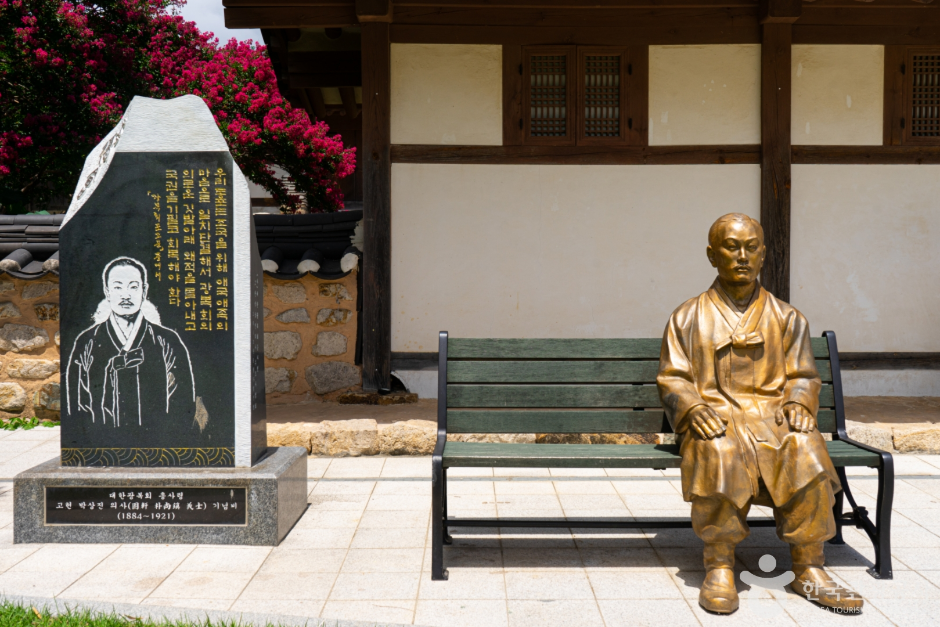
Birth Home of Park Sang-jin (박상진의사 생가)
10.4Km 2024-02-20
10 Baksangjin 5-ro, Buk-gu, Ulsan
Birth Home of Park Sang-jin is the residence where Park Sang-jin (1884-1921), an independence activist during the Japanese colonial period, once resided. He devoted all his assets to the independence movement, which led to the decline of his family and the eventual loss of this house to others. However, the government later acquired it, restoring and preserving the property. Comprising six buildings, including sarangchae and anchae, the tiled-roof house represents a yangban's residence built in the 19th century in Korea.
![Petroglyphs of Cheonjeon-ri [UNESCO World Heritage] (울주 천전리 명문과 암각화 [유네스코 세계유산])](http://tong.visitkorea.or.kr/cms/resource/14/3335114_image2_1.jpg)
Petroglyphs of Cheonjeon-ri [UNESCO World Heritage] (울주 천전리 명문과 암각화 [유네스코 세계유산])
10.4Km 2025-07-18
Cheonjeon-ri, Dudong-myeon, Ulju-gun, Ulsan
The petroglyphs (figures, pictures, and letters were made on the rocks along the mid-stream area of Naegokcheon Stream, which is a tributary of Taehwagang River. The upper and lower sides of the rocks contain petroglyphs that differ in the content and techniques used. The upper side contains petroglyphs made by means of chiseling. The inscriptions include geometric patterns, animals, and abstract human figures. There are concentric circles, with a round figure looking like the sun at the center, four running deer next to them, and several semi-human animals. The figures with simplistic expression and symbolism appear to have been made during the Bronze Age.
The lower side contains line-drawn picture mixed with Chinese characters. They include a procession of horse riders, animals including dragons, and boats. In particular, the procession of horse riders appears in three different places. The boats provide researchers with important information on the offshore activities carried out by people of the Silla dynasty. The 800-plus written characters are about the King and Queen’s visit to the place. They were presumed to have been inscribed on two occasions during the reign of King Beopheung (r. 514-540) of the Silla dynasty. The content on the official positions and the government system makes it a precious material for those studying Silla during or around the 6th Century. The petroglyphs were made by many people over an extended period of time, providing vivid information on the life and thoughts of people from prehistoric times to the Silla dynasty.
The petroglyphs in Cheonjeon-ri and petroglyphs on the Bangudae Terrace, spanning three kilometers altogether along the Bangucheon Stream, have been inscribed on the UNESCO World Heritage List on July 12, 2025.
(Source: Korea Heritage Service)
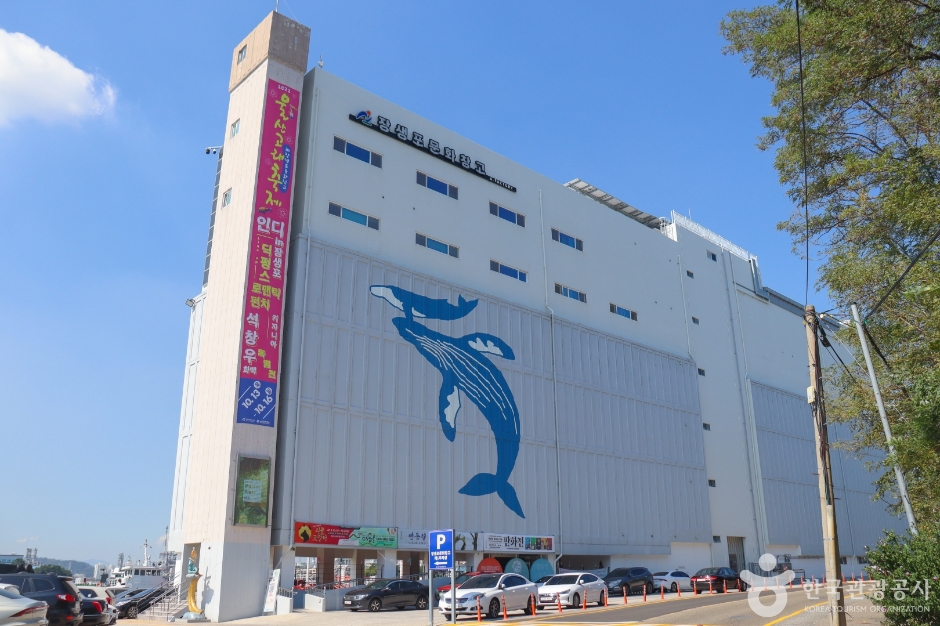
Jangsaengpo Culture Warehouse (장생포 문화창고)
10.7Km 2025-12-18
110 Jangsaengpogorae-ro, Nam-gu, Ulsan
The Jangsaengpo Culture Warehouse was originally a cold storage facility that was renovated into a cultural complex in 2021. Spanning six floors, the complex features various galleries, a book café, interactive spaces, a communal workspace, and a rooftop garden offering panoramic views of the surrounding area.

Ulsan Daegok Museum (울산대곡박물관)
11.3Km 2021-05-18
257, Seohacheonjeon-ro, Ulju-gun, Ulsan
+82-52-229-4787
Ulsan Daegok Museum displays artifacts that were uncovered from the area of Daegok-ri during the construction of Daegok Dam. Approximately 13,000 relics were excavated during land inspection prior to the dam construction, including Hasamjeong Ancient Tomb. These findings were collected and became available for public display when the museum opened on June 24, 2009.
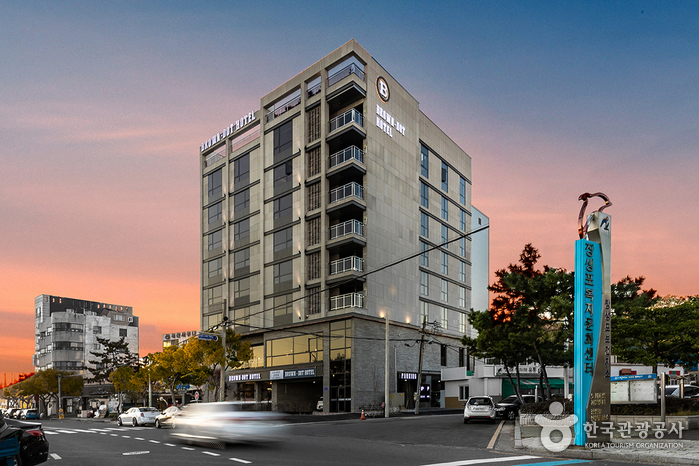
Brown Dot Hotel (Jangsaengpo)(브라운도트호텔 (장생포점))
11.5Km 2024-12-23
211 , Jangsaengpogorae-ro, Nam-gu, Ulsan
+82-503-5052-0693
Brown Dot Hotel is a boutique hotel in Jangsaengpo Whale Street, Nam-gu, Ulsan, Gyeongsangnam-do. The bustling East Sea port of Jansaengpo is just across the street, providing great views from the guestrooms. The hotel has a variety of rooms, but all except for the Standard Double are equipped with a bathtub and a clothing styler; while Terrace rooms have balconies overlooking the port. A five to ten minutes’ walk will take guests to the Jangsaengpo Whale Museum, the Jangsaengpo Culture Warehouse, or the Jangsaengpo Whale Culture Village.
Hyundai Motors Ulsan Plant (현대자동차 울산공장)
11.5Km 2025-07-17
700, Yangjeong-dong, Buk-gu, Ulsan-si
Hyundai Motors Ulsan Plant is the world's largest single plant. It is made up of five independent factories, with approximately 32,000 personnel producing an average of 1,520,000 vehicles per year. The complex is 1.5 times bigger than the area of Yeouido, and owns a port where they ship out maximum of 4,500 vehicles per day.
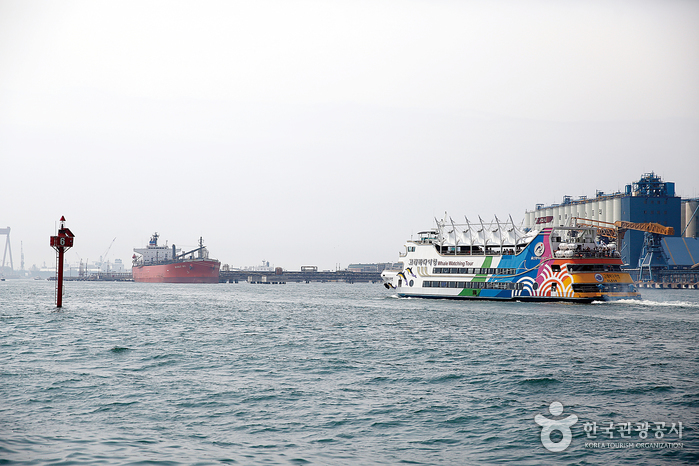
Jangsaengpo Whale Watching Cruise (장생포 고래바다여행선)
11.8Km 2024-03-06
244 Jangsaengpogorae-ro, Nam-gu, Ulsan
+82-52-226-1900
Jangsaengpo Whale Watching Cruise is a whale tour boat operating from Jangsaengpo, Ulsan, once Korea's largest whaling port. The vessel features cabins, a performance stage, a convenience store, and a restaurant. There are courses available for whale exploration and coastal tours. Passengers can observe whales swimming along the coast of Jangsaengpo or visit attractions such as the Ulsandaegyo Bridge and the Ulsan Petrochemical Complex along the coast. Valid identification is required for boarding.
 English
 한국어
한국어 日本語
日本語 中文(简体)
 Deutsch
 Français
 Español
 Русский


