Gyeongju Hwangnyongsa Temple Site (경주 황룡사지)
8.8Km 2021-01-29
64-19, Imhae-ro, Gyeongju-si, Gyeongsangbuk-do
+82-54-779-6100
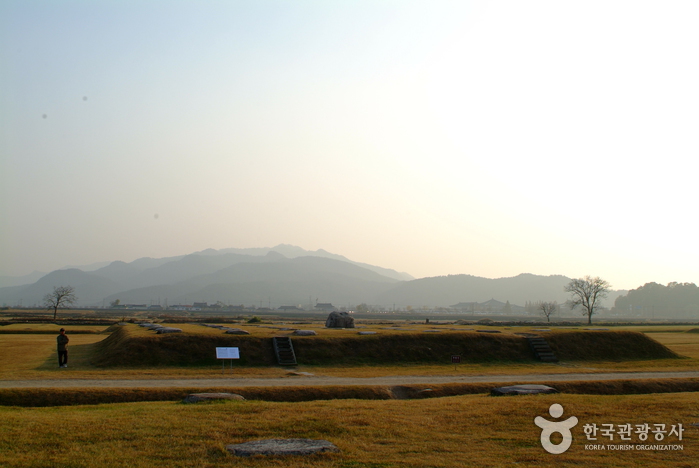
Hwangnyongsa Temple Site is located in front of Bunhwangsa Temple in Guhang-dong, Gyeongju. During the Silla Era, the Hwangnyongsa Temple was the nation’s largest temple and housed the bulk of the country’s major Buddhist treasures.
Construction of the temple began in 553 on a field east of the royal compound under the commission of King Jinheung. The king originally planned to build a palace, but decided to build a temple instead, after receiving reports that a yellow dragon had been spotted on the building site. The temple was thus named Hwangnyongsa (Temple of Yellow Dragon) and was completed in 569, seventeen years after construction began. The temple murals featured an old pine tree drawn by Artist Solgeo. During the Silla Era, the temple was the center of state-sanctioned Buddhism.
Later, when monk Jajang was studying in China during the Tang dynasty, he came across a god as he was passing by Taihe Pond. The god said to him, “The yellow dragon, which is my eldest son, is guarding Hwangnyongsa Temple upon orders of Brahma, the Creator. If you build a nine-story pagoda upon your return to Silla, the neighboring states will surrender and pay tribute, and the royal cause will be stronger. Once the construction of the pagoda is complete, prepare a memorial service for the local gods and pardon any of the country's criminals. If you follow all I have told you, no other state will dare invade Silla.”
After this encounter, Jajang returned to Silla and convinced Queen Seondeok to build the nine-story pagoda. Master architect Abiji of the neighboring state Baekje designed the pagoda and the project was built by Yongchun and 200 men using wood and stone. The night before the columns were to be erected, Architect Abiji of Baekje dreamed of the fall of Baekje and refused to complete the project. With a peal of thunder, an old monk and a man of great strength suddenly appeared from the temple's main hall, erected the columns, and magically disappeared. Abiji was so shocked at the sight that he accepted his country’s future demise as the fate of the gods and once again restarted work on the temple. (From Samgungnyusa, the Memorabilia of the Three Kingdoms)
In the twenty-three years following the completion of the pagoda, Queen Seondeok unified the Three Kingdoms; later, numerous scholars pointed to the pagoda as a contributing factor in the unification. Of the three treasures of Silla, two were located at Hwangnyongsa Temple. The largest bell of Silla was also in the temple, but was taken away during the Mongol invasion. The highest monks of Silla preached at the temple, and many kings came to listen to the Buddhist teachings.
During excavation work in July 1969, the massive foundation stones of the sermon hall, auditorium, and pagoda were found. Eight years of archaeological excavations and studies revealed the unique layout of the temple grounds, which consisted of one pagoda and three halls; also found were 40,000 or so ancient artifacts. Though foundation stones and other structures from the bottom of the temple were identified through excavation, there are no historical clues about the temple’s upper design, making the restoration of the temple in its entirety practically impossible. The size of the temple, based on archeological findings, was about 70 acres, roughly eight times larger than that of Bulguksa Temple.
Hwangnambbang (황남빵)
8.8Km 2025-03-24
783 Taejong-ro, Gyeongju-si, Gyeongsangbuk-do
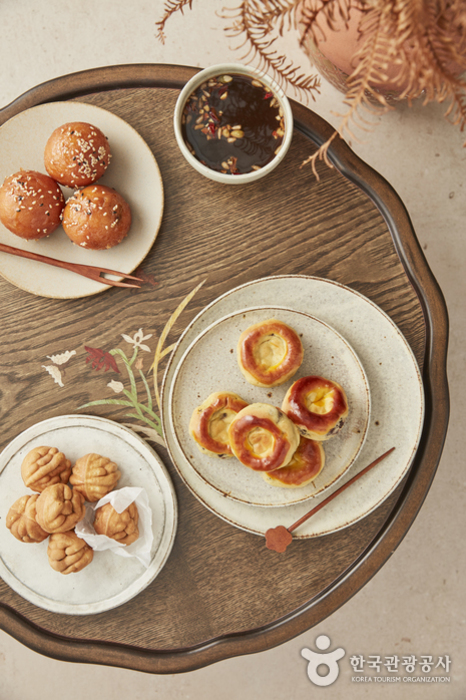
Hwangnamppang, which literally means Hwangnam bread, was created in Hwangnam-dong, Gyeongju, in 1939, and the name was popularized among people who came to Gyeongju to buy this bread. Now branded as "Hwangnambbang," the late Choi Yeong-hwa, the founder of Hwangnam Bread, was a scion of the Gyeongju Choi family who came up with this masterpiece when he was 21 years old after much trial and error. Choi’s creation is based on the tradition of rice cakes and bread made with sweet red beans, passed down throughout the generations in his family. Even today, 80 years after the creation of the bread, it is only flavored with red beans. Another defining feature of Hwangnambbang is the delicate comb pattern inspired by the aesthetics of the Silla period.

Bomun Korean Food Restaurant (보문민속식당)
8.9Km 2024-02-23
435 Bomun-ro, Gyeongju-si, Gyeongsangbuk-do
054-748-3200
Bomun Korean Food Restaurant is located near the Bomun Tourist Complex in Gyeongju and is known for its delicious samgyeopsal (pork belly). The signature dish is saengsamgyeopsal (grilled pork belly), and they only use domestic pork. The meat is sliced immediately after your order, so it is fresh. Grilled on a hot caldron lid, it is characterized by its low fat and chewy texture. In addition to this, gopchang jeongol (small intestine hot pot) made with Korean beef intestines is also popular.
![Gyeongju Yangdong Village [UNESCO World Heritage] (경주 양동마을 [유네스코 세계유산])](http://tong.visitkorea.or.kr/cms/resource/44/2654744_image2_1.jpg)
Gyeongju Yangdong Village [UNESCO World Heritage] (경주 양동마을 [유네스코 세계유산])
8.9Km 2025-03-24
134 Yangdongmaeul-gil, Gyeongju-si, Gyeongsangbuk-do
+82-54-762-2630
Gyeongju Yangdong Village is Korea’s largest traditional village, showcasing the traditional culture of the Joseon dynasty and the beautiful natural surroundings. Thanks to its many cultural heritages, including treasures, national treasures, and folklore materials, the entire village has been designated as a cultural heritage site. Many people have visited this village to see its wealth of cultural heritages and scenic surroundings, including King Charles III, who visited this village in 1993.
Seolchangsan Mountain and its four spines of mountains can be seen beyond the village. Approximately 160 old houses and 500-year-old thatched-roof cottages are nestled within the valley. Fifty-four of these homes are over 200 years old and have been excellently preserved in their original state, offering the opportunity to view a variety of unique traditional Korean houses in person.
2025 APEC Summit Special (2025년 APEC 정상회의 기념공연 <서라벌 풍류>)
8.9Km 2025-10-23
446 Bomun-ro, Gyeongju-si, Gyeongsangbuk-do
+82-2-580-3276
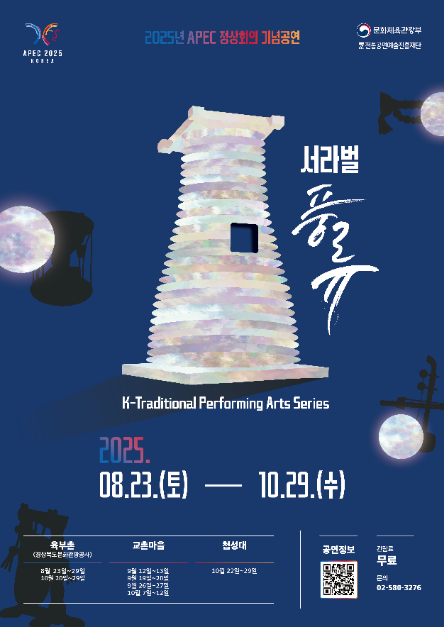
"Seorabeol Spirit" is a special performance that showcases traditional Korean performing arts in honor of the 2025 APEC Summit held from August 23 to October 29 in Gyeongju. A the commemorative performance consists of a variety of performing arts presented by troupes from Yukbuchon Village, Gyochon Village, National Gugak Center, Gyeonggi Sinawi Orchestra, and more.
Bomun Tourist Complex (경주 보문관광단지)
8.9Km 2025-09-24
Sinpyeong-dong, Gyeongju-si, Gyeongsangbuk-do
+82-54-745-7601
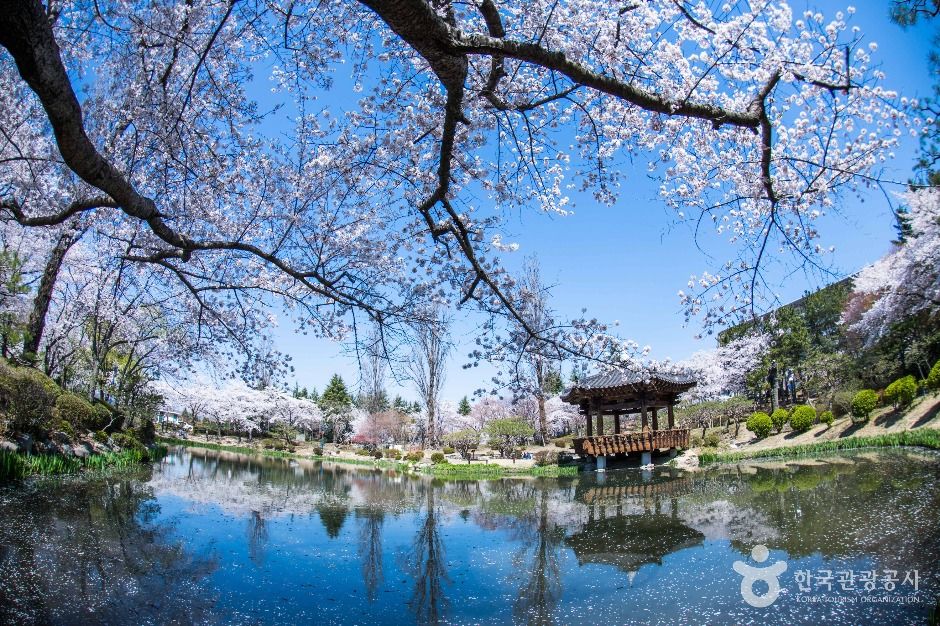
Bomun Tourist Complex is the international tourist district of Gyeongju. This tourist district is formed with Bomunho Lake at its center, located about 10 kilometers east of downtown Gyeongju. The area spans approximately 8,000 km², and contains an international-scale luxurious hotel, family-friendly condos, golf range, and pleasant walking passages that are designed to suit the diverse needs of tourists. The tourist complex attracts crowds of visitors in April, when cherry blossoms are in full bloom. The sight of cherry blossoms around Bomunho Lake and Bulguksa Temple are popular even among domestic travelers.
![Blau [Korea Quality]블라우[한국관광 품질인증]](http://tong.visitkorea.or.kr/cms/resource/10/2949210_image2_1.jpg)
Blau [Korea Quality]블라우[한국관광 품질인증]
9.0Km 2023-05-23
31 , Taejong-ro 699beon-gil, Gyeongju-si, Gyeongsangbuk-do
+82-10-8590-5808
Blau is a stylish guest house on Hwangnidan-gil, Gyeongju, Gyeongsangbuk-do, whose wooden furniture and signature blue coloring inside and out (‘blau’ is German for ‘blue’) give it a strong European vibe. The first floor lounge has the feel of a spacious cafe. Blau is 5 minutes’ walk from Gyeongju Express Bus Terminal. Luggage storage and a free breakfast can be provided, but guests should ask in advance.
Gyeongju National Park (경주국립공원)
9.1Km 2024-02-27
12 Cheonbungnam-ro, Gyeongju-si, Gyeongsangbuk-do
+82-54-778-4100
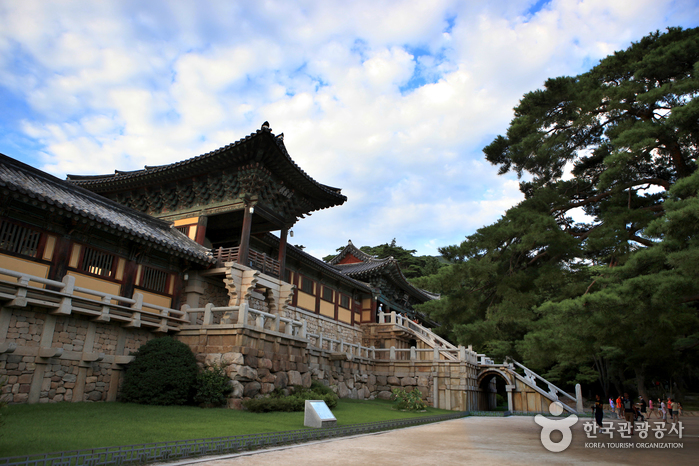
Gyeongju National Park, designated as a national park in 1968, holds a special status as Korea's only historical national park. The park spans 136.55㎢ across eight districts, including Tohamsan Mountain, home to the exquisite Buddhist treasures of Bulguksa Temple and Seokguram Grotto, as well as Namsan Mountain, known as the "Buddhist Museum," showcasing the pinnacle of Buddhist culture. The park boasts significant relics from the Silla dynasty alongside breathtaking natural landscapes. Recognized by UNESCO in 1979 as one of the top ten historic sites globally, it stands as a world-renowned cultural heritage site.
Gyeongju Ssambap Street (경주 쌈밥거리)
9.1Km 2025-06-13
9 Gyerim-ro, Gyeongju-si, Gyeongsangbuk-do
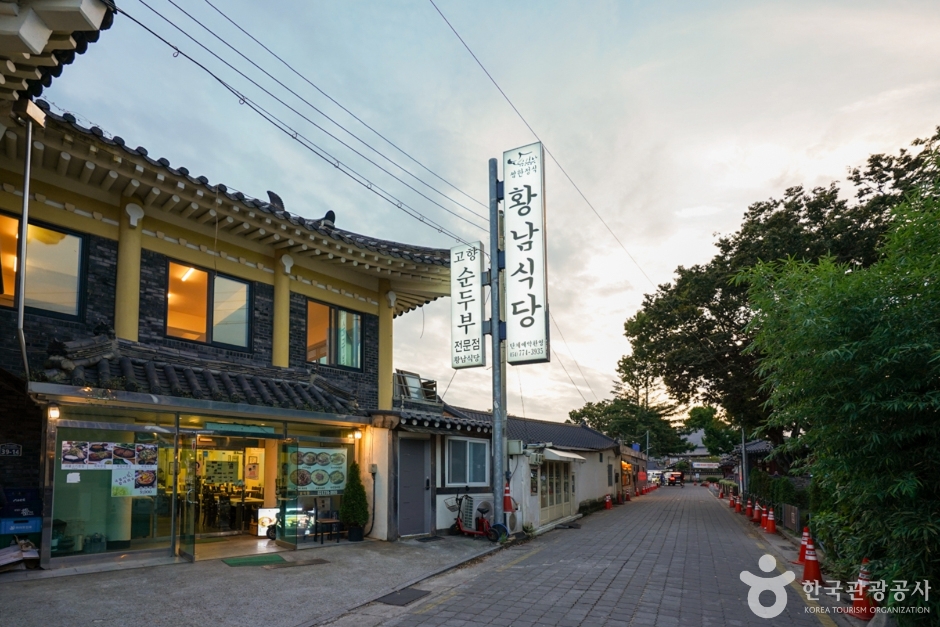
Gyeongju Ssambap Street, developed around the Daereungwon Ancient Tomb Complex in Gyeongju, offers a diverse culinary experience. A highlight is ssambap (leaf wraps and rice), a dish featuring fresh vegetables accompanied by substantial side dishes like fish, meat, and doenjang jjigae (soybean paste jjigae) made from homemade soybean paste. Additionally, this street presents a variety of snacks, including Hwangnam ppang (Hwangnam bread) prepared with red beans and flour, and jjondeugi, a traditional chewy snack made from cornmeal and sugar. Nearby attractions include the Cheomseongdae Observatory, Donggung Palace and Wolji Pond, Woljeonggyo Bridge, and the Gyeongju National Museum.
Gyeongju Daereungwon Ancient Tomb Complex (경주 대릉원 일원)
9.1Km 2025-10-23
9 Gyerim-ro, Gyeonju-si, Gyeongsangbuk-do
+82-54-750-8650
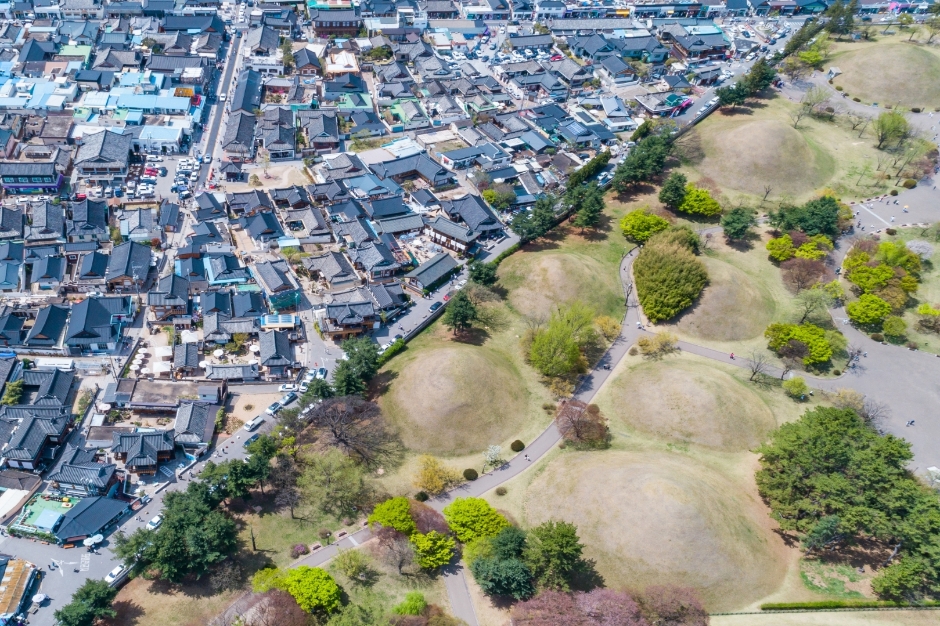
Gyeongju Daereungwon Tomb Complex consists of five tombs, Ancient Tombs of Gyeongju Nodong-ri, Noseo-ri, Hwangnam-ri, Hwango-ri, and Inwang-ri. The tombs are distributed in Hwangnam-dong, Gyeongju-si, and are located in the Daereungwon area. Within Daereungwon Tomb Complex is Cheonmachong Tomb, which was excavated in 1973. Furthermore, Hwangnamdaechong Tomb was excavated between 1973 and 1975, and is a set of twin tombs belonging to a presumed married couple.
 English
 한국어
한국어 日本語
日本語 中文(简体)
 Deutsch
 Français
 Español
 Русский


