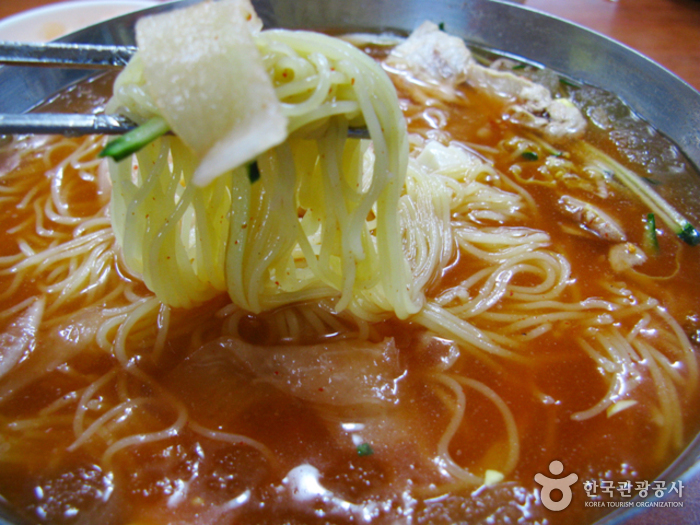
Halmae Gaya Milmyeon (할매가야밀면)
13.2Km 2024-03-20
56-14, Gwangbok-ro, Jung-gu, Busan
+82-51-246-3314
Halmae Gaya Milmyeon is a restaurant near BIFF Square that serves milmyeon (wheat noodles). Milmyeon (wheat noodles), a folk dish of Busan, refers to noodles made with starch and flour. The yellowish noodles are chewy and plain in taste, perfect as accompaniments to the chilled clear soup with a sheet of ice on top. Nearby tourist sites include Gukje Market and Jagalchi Market.
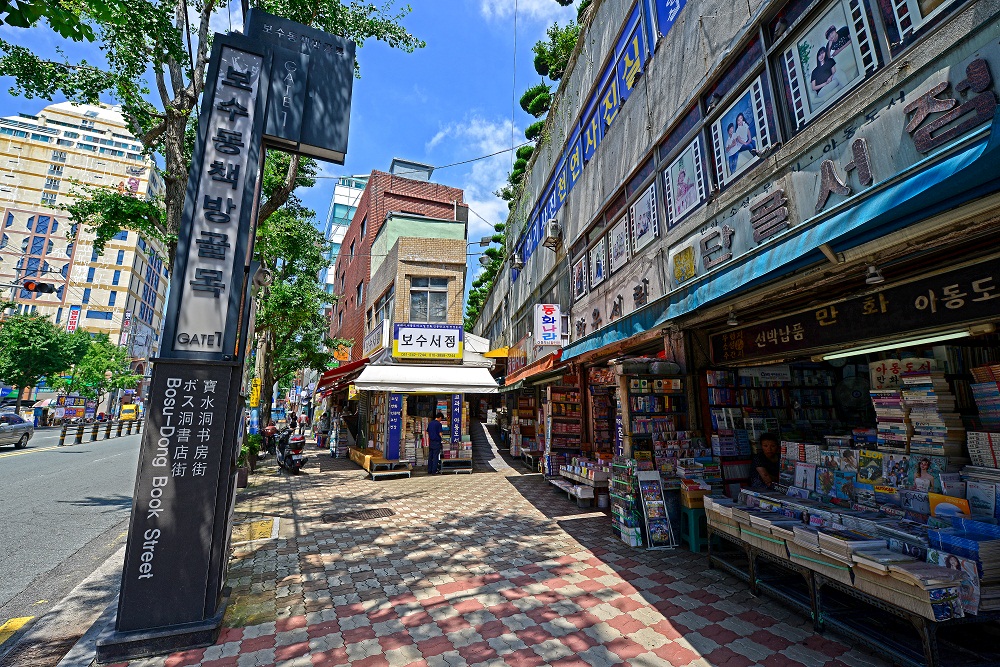
Bosu-dong Book Street Cultural Center(보수동 책방골목 문화관)
13.2Km 2023-01-09
8, Chaekbanggolmok-gil, Jung-gu, Busan
+82-51-743-7650
[The used bookstore that sells memories]
Bosu-dong Book Street has a unique background. It was formed after the independence of Korea (August 15) as a residential area in the empty place where the previous Gukje Market was demolished. Book stores began opening one-by-one and soon the street became known as Bosu-dong Book Street. The street is popular amongst booklovers for their used books as well as new books, and amongst travelers for the street’s unique atmosphere. Many young adults also frequent the street because there are many specialty shops for comic books. Every year, the Bosu-dong Culture Festival takes place and visitors can participate in events such as, make-your-own book cover, make-your-own book, and so on. The festival not only gives an opportunity to learn about the history of Bosu-dong Book Street, but have a good time as well.

Yeongdo Lighthouse (영도 등대)
13.2Km 2024-03-06
181, Jeonmang-ro, Yeongdo-gu, Busan
+82-51-405-1201
Yeongdo Lighthouse, first lit in 1906, stands at Taejongdae Park. It houses a maritime library, galleries, an observatory, and a café. From the observatory, on clear days, you can even see as far as the Japanese island of Tsushima Island. At the base of the lighthouse, there's a sculpture of a woman turned into stone, waiting for her husband who went out to sea. You can reach it by walking from Taejongdae Park or taking the Taejongdae Danubi Train.
![Ai Hasi - Busan Gukje Market Branch [Tax Refund Shop] (아이하시 부산국제시장)](http://tong.visitkorea.or.kr/cms/resource/11/2889711_image2_1.jpg)
Ai Hasi - Busan Gukje Market Branch [Tax Refund Shop] (아이하시 부산국제시장)
13.2Km 2024-04-18
1F, Bldg. A of Ihasi, 33, Gukjesijang 2-gil, Jung-gu, Busan
-
![Daiso - Busan Nampo Branch [Tax Refund Shop] (다이소 부산남포)](http://tong.visitkorea.or.kr/cms/resource/66/2885866_image2_1.jpg)
Daiso - Busan Nampo Branch [Tax Refund Shop] (다이소 부산남포)
13.3Km 2024-04-23
2F, 10, Docheong-ro, Yeongtong-gu, Suwon-si, Gyeonggi-do
-
Nampo Samgyetang (남포삼계탕)
13.3Km 2024-03-15
16-1, Nampo-gil, Jung-gu, Busan
+82-51-245-5075
Nampo Samgyetang serves samgyetang (ginseng chicken soup), a popular pick-me-up food in Korea. The restaurant's history goes back to 1962, so it has developed a loyal following. The samgyetang (ginseng chicken soup) served in the restaurant features Korean chicken boiled down with vegetables and medicinal herbs, resulting in a nutritious bowl of soup. Other menu items include jeonbok samgyetang (abalone and ginseng chicken soup) and dak jeongi gui (roasted chicken).
Gukje Market (국제시장)
13.3Km 2025-10-23
Area of Sinchang-ro 4-ga, Jung-gu, Busan
+82-51-245-7389
The current marketplace of Gukje Market first formed after the liberation of Korea from the Japanese administration when people gathered to trade overseas products left by the Japanese and brought in by Koreans who came back from abroad. Following the Korean War, refugees who fled to Busan set up stalls in order to make a living by selling smuggled or imported products, which developed into Gukje Market (gukje meaning "international" in Korean) of today. Gukje Market is one of Korea’s largest markets and a testament to Korea's modern history. The market is divided into two wings, and first-timers to the market are advised to be careful not to get lost in the maze-like alleys and halls.
Samsong Chobap (삼송초밥)
13.3Km 2025-01-23
13 Gwangbok-ro 55beon-gil, Jung-gu, Busan
This is a Japanese restaurant that began in the early 1960s in Nampo-dong. While it is well-known for its Japanese-style gimbap called “gimchobap,” regular patrons consistently order its pufferfish dishes. The bokjiri (malgeuntang) is noted for its rich flavor, achieved by combining seasonal vegetables and pufferfish. The boksashimi (sliced raw pufferfish) menu offers a variety of options, including outer skin, inner skin, and shabu-shabu.
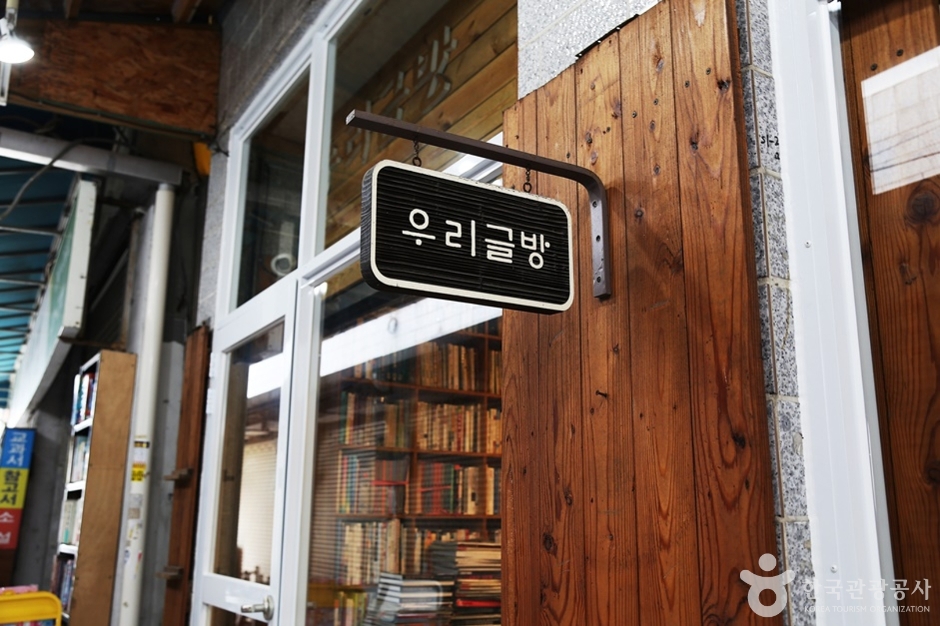
Urigeulbang (우리글방)
13.3Km 2024-02-13
63 Daecheong-ro, Jung-gu, Busan
Urigeulbang, a venerable bookstore located in the renowned Bosu-dong Book Street in Busan, is celebrated for its trade in used books. This bookstore doubles as a book café, allowing visitors the unique experience of reading from its extensive collection while enjoying a cup of coffee or other beverages, without the obligation to purchase a book. The owner, an enthusiastic collector of used books, has amassed a vast array of old and rare editions, making it a treasure trove for bibliophiles. Adjacent to Urigeulbang is the Bosu-dong Book Street Cultural Center, where visitors have the opportunity to delve into the rich history of this unique bookstore alley.
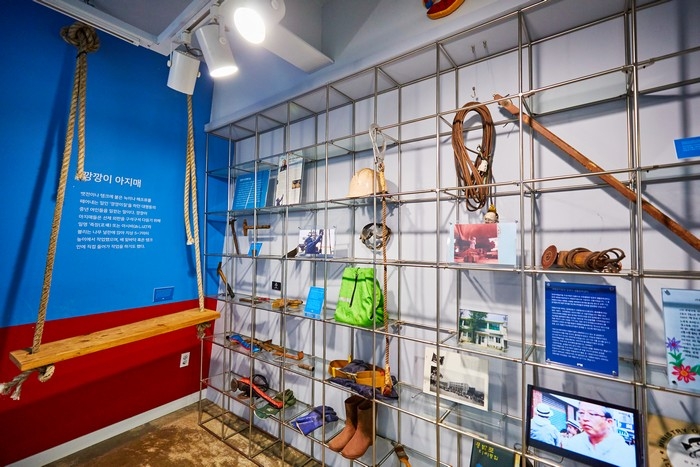
KANGKANGEE Arts Village (깡깡이 예술마을)
13.3Km 2025-10-24
36 Daepyeongbuk-ro, Yeongdo-gu, Busan
0507-1307-3339
In the late 19th century, Korea's first modern shipyard was established, and there are still more than a dozen repair shipyards and about 200 industrial companies in the area. It is said that the name of the village was born from the sound of a hammer hitting the surface of a rusty boat. In "My Name," it appeared as Inchang-si, the main stage of gangsters, and the unique atmosphere harmonized well with the content, adding to the dramatic fun. There are also many cute cafes to explore, and it is fun to experience a tour program that runs three times a day on weekends.
 English
 한국어
한국어 日本語
日本語 中文(简体)
 Deutsch
 Français
 Español
 Русский


