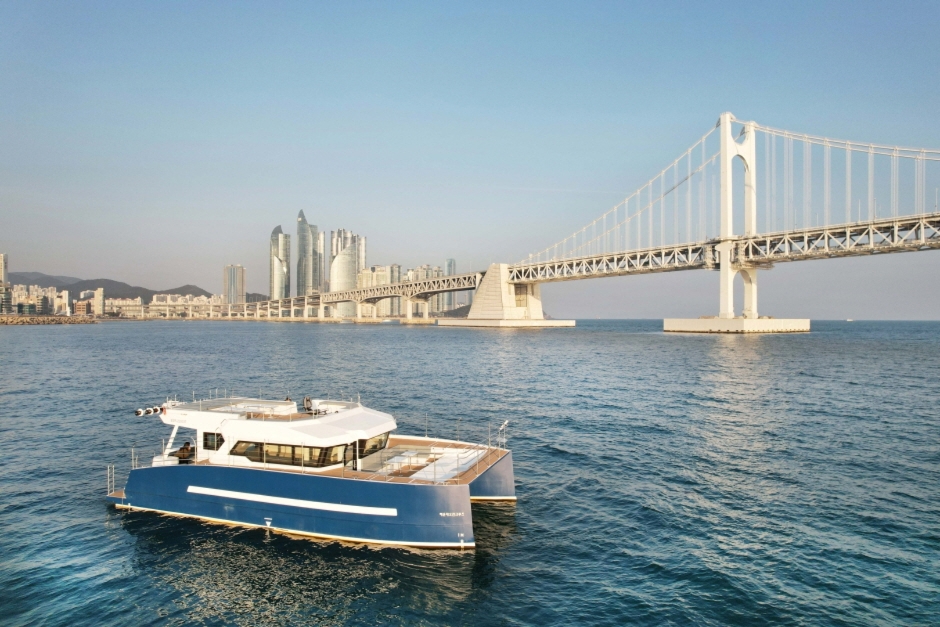
Haeundae River Cruise (해운대리버크루즈)
6.5Km 2024-03-29
85 Suyeonggangbyeon-daero, Haeundae-gu, Busan
Haeundae River Cruise is the first urban cruise ship in Busan that allows passengers to see both rivers and the sea from APEC Naru Park to Marine City and Gwangandaegyo Bridge. Cruises run weekdays, sunset and night time, and late-night, so you passengers can enjoy the the view of Suyeonggang River, Haeundae, and Gwangallihaebyeon Beach both day and night. There is a cafe where passengers in queue can relax before boarding, a kiosk photo print, and a gift shop. The cruise takes about an hour, and indoor shoes, blankets, cell phone charging cables, water, tea, beverages, and snacks are available for passengers.

Gukje Market (국제시장)
6.5Km 2025-10-23
Area of Sinchang-ro 4-ga, Jung-gu, Busan
+82-51-245-7389
The current marketplace of Gukje Market first formed after the liberation of Korea from the Japanese administration when people gathered to trade overseas products left by the Japanese and brought in by Koreans who came back from abroad. Following the Korean War, refugees who fled to Busan set up stalls in order to make a living by selling smuggled or imported products, which developed into Gukje Market (gukje meaning "international" in Korean) of today. Gukje Market is one of Korea’s largest markets and a testament to Korea's modern history. The market is divided into two wings, and first-timers to the market are advised to be careful not to get lost in the maze-like alleys and halls.
Yangsanjip (양산집)
6.5Km 2024-12-26
부산광역시 중구 중구로47번길 30
A long-standing dwaeji gukbap restaurant beloved by both vendors and visitors of the Kkangtong Market. The restaurant is small, so it’s often necessary to wait for a seat. Despite this, it remains popular among regulars, who are more than willing to wait. The popular menu item is the suyuk baekban (boiled pork slices set menu), which includes soup, rice, and separately served boiled pork.
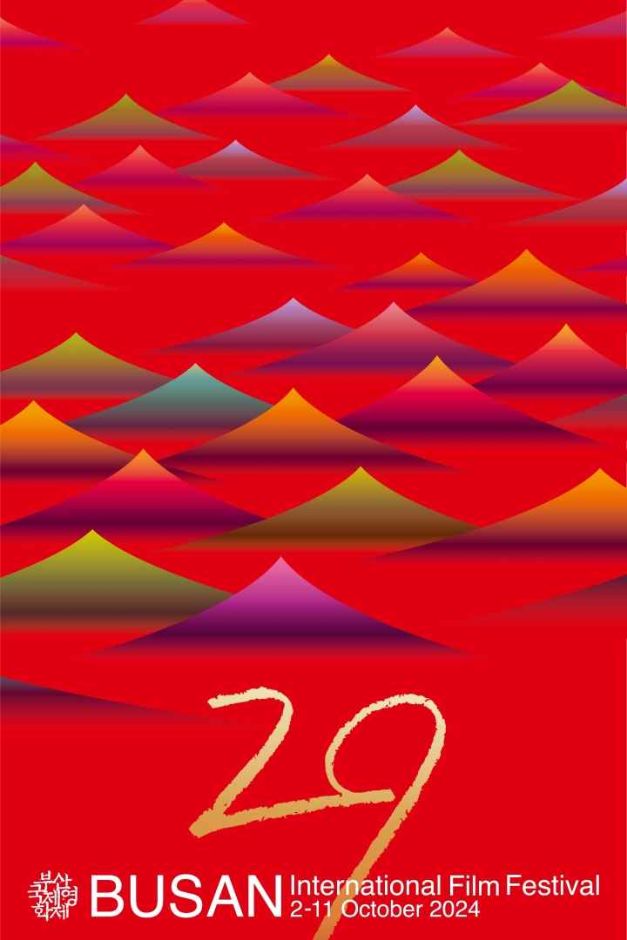
Busan International Film Festival (BIFF) (부산국제영화제)
6.5Km 2025-08-08
120 Suyeonggangbyeon-daero, Haeundae-gu, Busan
+82- 688-3010
Busan International Film Festival (BIFF) was the first international film festival in Korea that is now considered one of the biggest in Asia.
The festival boosted Busan as a city of culture and art, while helping the Korean film industry by improving production and distribution. The festival also helps search for talented movie directors and unknown movies through previewing various film genres.
The festival plans to continue its work of making Busan the heart of the film industry, increasing the market and investment to improve the film industry.
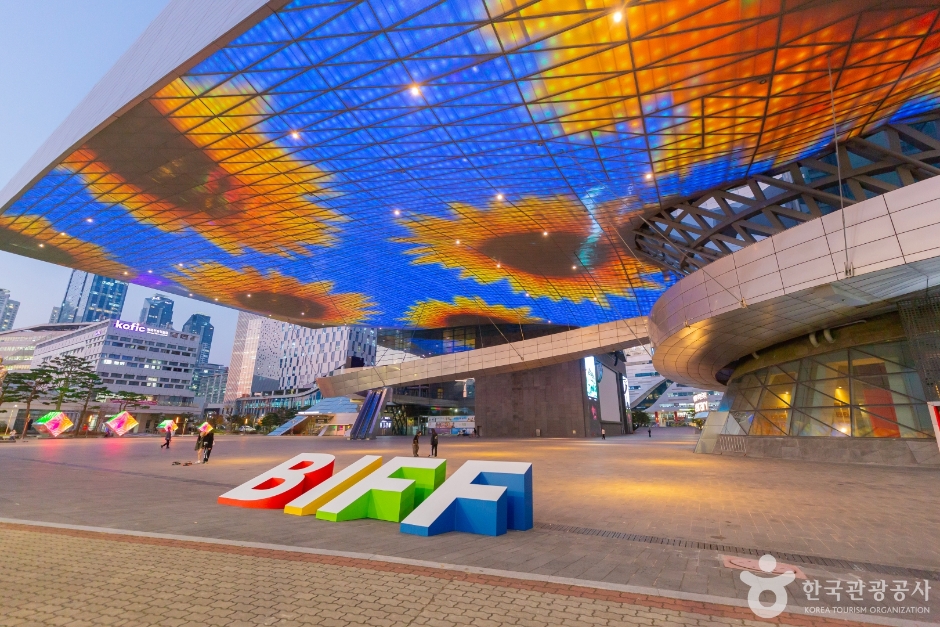
Busan Cinema Center (부산 영화의 전당)
6.5Km 2025-10-23
120 Suyeonggangbyeon-daero, Haeundae-gu, Busan
+82-51-780-6000
Busan Cinema Center serves as both the venue of the Busan International Film Festival (BIFF) and a cultural space hosting film screenings, performances, and exhibitions. It has BIFF Theater with nearly 4,000 seats, Cinema I, Cinema II, Cinematheque, Haneulyeon Theater, Indieplus, and Library.
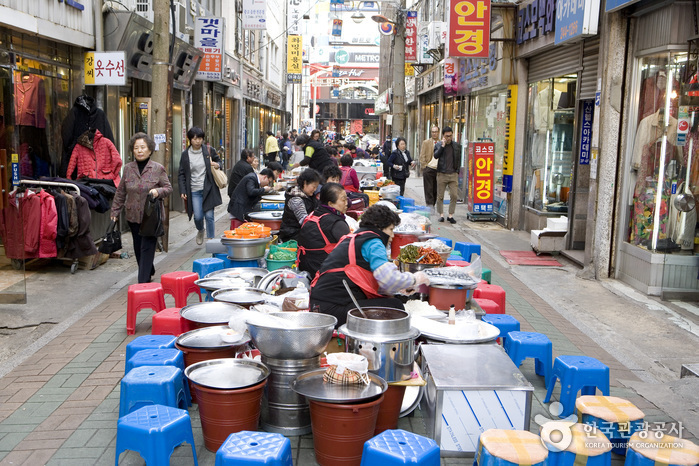
Gukje Market Food Street (국제시장 먹자골목)
6.5Km 2024-03-06
36, Junggu-ro, Jung-gu, Busan
+82-51-245-7389
Gukje Market Food Street has more than 60 years of history as one of Busan's traditional markets' most famous food streets. It is known for a number of dishes, such as Chungmu gimbap served with sweet and sour squid salad, sweet-and-spicy tteokbokki, milmyeon (wheat noodles), dwaeji gukbap (pork and rice soup), sundae, patbingsu (shaved ice with red beans), and Busan’s iconic bibim dangmyeon (spicy glass noodles). These dishes are enjoyed on small stools next to the street stalls. The sight of the diners lining the stall is one of the defining views of traditional markets in Korea. Visitors can also find suitable clothing, shoes, and accessories here.
Bupyeong (Kkangtong) Market (부평시장(깡통시장))
6.6Km 2025-10-23
48 Bupyeong 1-gil, Jung-gu, Busan
+82-51-243-1128
Busan's Bupyeong Market is also known as Kkangtong (tin can) Market. It earned that funny name when it had a variety of imported canned goods from the United States for the US forces stationed in Korea during the Korean War. It was also known as "Dottegi (bustling plea) Market." All foreign products found in the country at that time were supplied from this market. Due to its vast property and many rare goods that were hard to find anywhere else during the time, it was also referred as "Gukje (International) Market." Nowadays, the market has reduced in size as many foreign products are freely imported, but the reputation and potential still remain. Some imported goods including liquor, clothes, ornaments, accessories, fashion items and electronic goods are still sold here.
A night market opens from 19:30-23:30 at the public parking lot and at Arcade 2 of the market . Along the 110m-long street market are 11 kiosks selling Korean food, 6 kiosks selling international food such as Japanese and Filipino foods, and 13 vendors selling clothes and accessories. The entrance of the market greets visitors with bright LED lights and fun performances. A magic show and a guitar performance take place twice a day by the entrance of the market and the at the four-way intersection inside the market.
Human Care Service ((주)휴먼케어서비스)
6.6Km 2025-10-23
#1012, 10F, 1-dong, 99 Centum dong-ro, Haeundae-gu, Busan
Human Care Service is a service-centered company specializing in medical tourism. It has approximately 20 employees, including those working for its subsidiaries such as Human Total and Doyoon Rent-a-Car. The company has offices in Seoul, Ulsan, Gyeongju, Busan (3 offices), and Geojedo Island, providing foreign patients convenient access wherever they land in Korea. The company provides housing and all other services in locations customers prefer. Human Care Service has over 20 years of experience in providing professional care to foreigners, with staff members who all speak English and other foreign languages.
Human Care Service offers healing moments by combining medical services with post-treatment tourism experiences. The company offers a one-stop service, with everything foreign patients may need.
Samsong Chobap (삼송초밥)
6.6Km 2025-01-23
13 Gwangbok-ro 55beon-gil, Jung-gu, Busan
This is a Japanese restaurant that began in the early 1960s in Nampo-dong. While it is well-known for its Japanese-style gimbap called “gimchobap,” regular patrons consistently order its pufferfish dishes. The bokjiri (malgeuntang) is noted for its rich flavor, achieved by combining seasonal vegetables and pufferfish. The boksashimi (sliced raw pufferfish) menu offers a variety of options, including outer skin, inner skin, and shabu-shabu.
Spaland Centum City (스파랜드 센텀시티)
6.6Km 2025-10-23
35 Centum nam-daero, Haeundae-gu, Busan
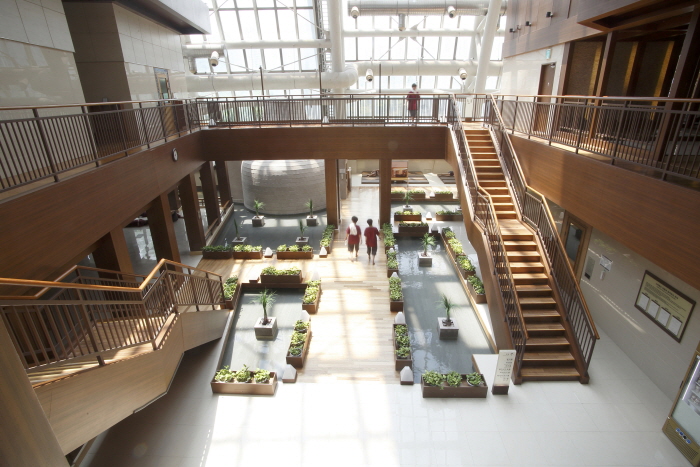
Spaland Centum City has the merit of being both a traditional Korean-style public bath and an urban Japanese-style public bath. Spaland offers services tailored to customer's preferences by using carbonated and saline hot springs drawn from 1,000 meters underground. The facility consists of two floors and an outdoor spa. There are 22 baths including a kid's bath, 13 jjimjilbang facilities (Korean sauna), saunas, and an open-air foot bath. Noteworthy facilities include Roman Sauna, which is a recreation of an ancient Roman bath; a dry sauna where visitors can experience traditional Finnish-style saunas; and the Salt Room made with Himalayan salt. As such, Spaland features well-known sauna styles from different countries.
Spaland enhances the effect of the hot springs by providing 100% natural hot spring water at varying temperatures. Its high-temperature bath rapidly increases one's body temperature, and the medium-temperature bath is good for a leisurely soak. The large public bath hall has windows allowing natural light, and the HVAC system is of hotel grade or higher. Visitors can relieve their stress while enjoying a healthy bath in a large-scale bath pool surrounded by nature.
 English
 한국어
한국어 日本語
日本語 中文(简体)
 Deutsch
 Français
 Español
 Русский


