
Naewonsa Temple (Yangsan) (내원사(양산))
15.3Km 2024-02-23
207 Naewon-ro, Habuk-myeon, Yangsan-si, Gyeongsangnam-do
Naewonsa Temple, situated in Cheonseongsan National Park, is home to a monumental Buddha statue standing at 5.5 meters, crafted during the Silla dynasty. The temple complex features various structures, including Bogwangjeon and Geungnakjeon Halls, showcasing its captivating architectural style. Renowned for its picturesque mountain landscapes and as a popular destination for autumn foliage, the temple attracts numerous visitors every year.
Yeongchuksan Mountain (영축산)
15.5Km 2021-06-14
Jisan-ri, Yangsan-si, Gyeongsangnam-do
+82-55-382-4112
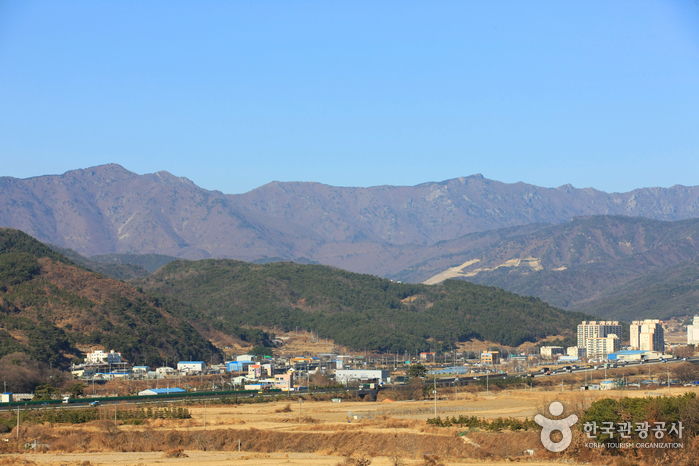
Located in Gajisan Provincial Park, Yeongchuksan Mountain has an elevation of 1,059 meters. The name of the mountain “Yeongchuk” is known to have originated from the name of a mountain in the ancient kingdom of Magadha in central India. The mountain is also called Chwiseosan and has such beautiful scenery that it is often referred to as the Alps of Yeongnam. The broad valley that extends at the foot of Yeongchuksan Mountain provides a great walk to the hermitages scattered around the famous Tongdosa Temple.
Yeongchuksan Mountain is considered the best of the eight beautiful places in Yangsan City. The other seven places are Cheonseogsan Mountain, Naewonsagyegok Valley, Hongnyongpokpo Falls, Baenaegol Valley, Cheontaesan Mountain, Imgyeongdae Terrace on Obongsan Mountain, and Tapgol Recreational Forest on Daeunsan Mountain.
Gimhae Gujibong Peak (김해 구지봉)
15.8Km 2021-07-13
Gusan-dong, Gimhae-si, Gyeongsangnam-do
+82-055-331-0086
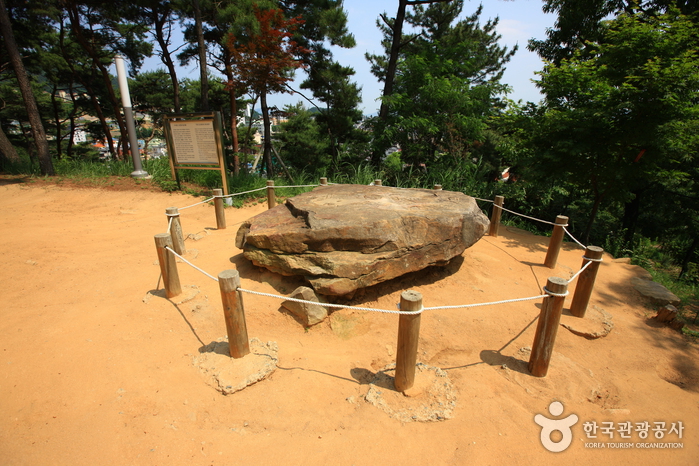
Gujibong Peak in Gusan-dong, Gimhae in Gyeongsangnam-do is believed to be the birthplace of King Suro, the founder of the Gaya kingdom. The peak was originally named Gusubong (“gu” meaning “turtle,” “su” meaning “head”) after its resemblance to the head of a turtle. The flat part of the peak (the turtle’s “head”) is home to the Tomb of King Suro. On the summit is a southern-style dolmen dating back to the 4th century BC that consists of 5 or 6 support stones and a large cover stone measuring 2.5m in diameter. The cover stone bears the inscription “Gujibongseok,” said to be written by Han Ho.
Gujibong Peak is considered a sacred place by the local people because, according to legend, it is the place where the creation of the Gaya Kingdom took place. During the Japanese colonial rule, the “neck” of the turtle was destroyed by the construction of a mountain road. Years later, a pedestrian road was built to rejoin the neck and restore the feng shui of the mountain.
Sinbulsan Falls National Recreational Forest (국립 신불산폭포자연휴양림)
16.2Km 2021-06-03
200-78, Eoksaebeol-gil, Ulju-gun, Ulsan
+82-52-254-2123
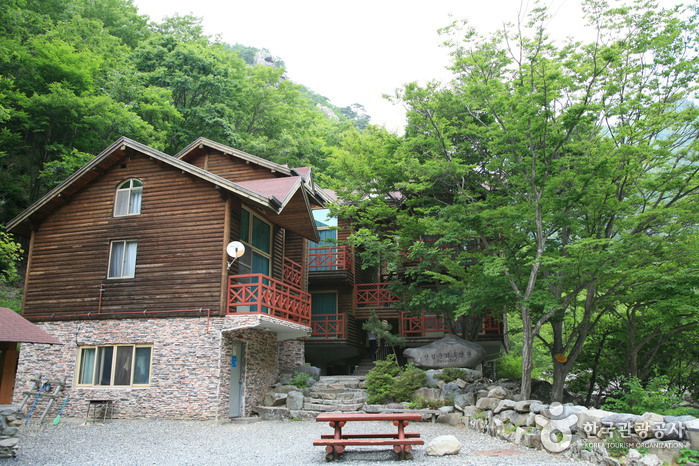
Sinbulsan Falls National Recreational Forest, located at the foot of Sinbulsan Mountain, is noted for the Yeongnam Alps and the beautiful surrounding valleys. Famous forest attractions in particular are the mountain's valleys and waterfalls. The Parasopokpo Falls are a picturesque series of cascading falls. Near the falls are old Buddhist temples and the silver grass field of Sinbulsan Mountain. The forest houses a walking path, health training facility, forest exhibition hall, and accommodation facilities such as the Cabin House, Forest Recreation Center, a camping deck and a camping site.
Gimhae Gaya History Park (김해가야테마파크)
16.7Km 2025-10-23
161 Gaya thema-gil, Gimhae-si, Gyeongsangnam-do
+82-55-340-7900
Gimhae Gaya History Park is a resting area that provides comfortable relaxation in the daily lives of the busy people and also a cultural complex where you can experience various cultures with your family, lover and friends.
Interactive theme park combining Education + Entertainment Edutainment park where you can see, hear, touch and learn about the history of Gaya and the brilliant heritage of its people through plays, experiences and exhibits.
Gimhae Astronomical Observatory (김해천문대)
16.8Km 2022-12-29
254, Gaya thema-gil, Gimhae-si, Gyeongsangnam-do
+82-55-337-3785
Gimhae Astronomical Observatory opened on February 1, 2002 as part of the Millennium Commemorative Project that started in December 1998. It was built to satisfy the general public’s curiosity about the universe and celestial bodies, inspire young people, and give everyone a unique, memorable experience. The observatory is shaped like an egg, in memory of the legend of King Kim Suro, the founder of the Garak Kingdom, according to which the king was born from an egg.
It is said that the queen of King Suro, Heo Hwang-ok, was a princess from the Indian country of Ayuta. Since sophisticated navigation equipment had yet to be invented, it can be assumed that she found her way to the Garak Kingdom by following the stars. It is also said that a prince of the Garak Kingdom built an observatory on the highest point of a mud fortress in Jinrye in order to make astronomical observations. The place is still referred to as Bibidan, which means a place to watch the stars.
These historical facts indicate the stars were very important to the Gaya, an ancient kingdom established mainly in the Gimhae area. The peak of Bunseongsan Mountain, where the observatory is located, offers sweeping views of the entire area of Gimhae. The night sky of Gimhae offers a breathtaking sight.
Tongdo Fantasia (통도환타지아)
17.2Km 2022-09-26
68, Tongdo 7-gil, Yangsan-si, Gyeongsangnam-do
+82-55-379-7000
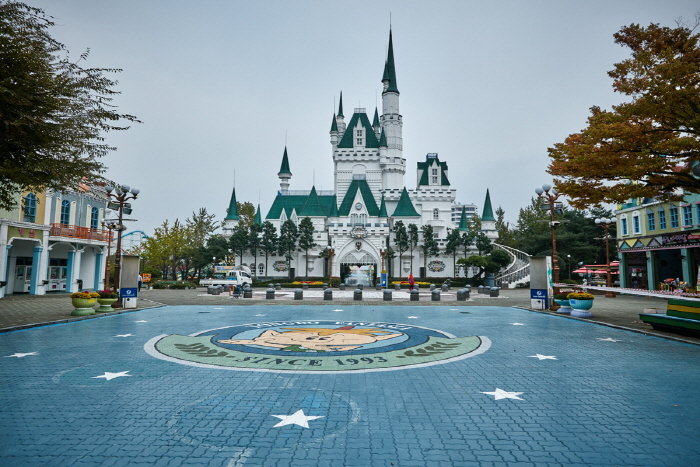
Tongdo Fantasia is located in Yangsan, Gyeongsangnam-do, which shares borders with Milyang, Ulsan and Busan. This makes the amusement park very accessible by any means of transportation. Tongdo Fantasia operates Tongdo Country Club as well, and nearby Tongdosa Temple is also available for visitors who want to look around the local historic sites. The amusement park, the biggest theme park in Gyeongsangnam-do sits at the foot of Yeongchwisan Mountain, has over 30 amusement facilities, a large-scale swimming pool, a natural lake, a plaza for various events and a large-scale outdoor theatre, all offering various activities and events.
Birthplace of the16th President of Korea, Roh Moo-hyun (진영 봉하마을과 노무현 대통령 생가)
17.3Km 2022-12-29
129, Bongha-ro, Gimhae-si, Gyeongsangnam-do
+82-1688-0523
Bongha Village is located 4.5km to the east of Jinyeong-eup, on the foot-slopes of Bonghwasan mountain. It is a typical farming village, and its major produce is Jinyeong sweet persimmons and rice. Its name comes from the mound above it on Bonghwasan mountain, where in the past beacons were lit as a method of communication. Bonghwasan mountain is home to Bonghwasa temple and two famous valleys: Doduk (thief) valley on the east side, named because of the many thieves that used to operate in the area, and Yasi (fox) valley on the west side, which looks like a fox lying on its front, looking back at its tail.
Birthplace of the former President of Korea, Roh Moo-hyun
The birthplace of the former President of Korea, Roh Moo-hyun, is a brick house with a slate roof that consists of two small rooms and a kitchen. Although it is a shabby house, everything in it seems rare and precious to visitors. The earth, stones, and water, as well as household items, are popular with visitors. Some visitors even take stones and soil from the garden home with them in plastic bags, and some take water, believing that water from the ex-president’s birthplace is almost sacred.
Bunsanseong Fortress (김해 분산성)
17.3Km 2023-01-18
210-162, Gaya-ro 405beon-gil, Gimhae-si, Gyeongsangnam-do
+82-55-330-3925
Bunsanseong Fortress was constructed in the 3rd year of the reign of Goryeo's King U (1377) by Magistrate Park Wi to defend against foreign enemies, but it was destroyed during the Japanese invasion of 1592. The fortress we see today was reconstructed by Magistrate Jeong Hyeon-seok in the 8th year of the reign of Joseon's King Gojong (1871). However, it is estimated that it was first built during the days of Gaya. It is a temoe-style fortress with rocks piled up like a long band at the peak of Bunsan from which downtown Gimhae, Gimhae Plains, the Nakdonggang River and the South Sea are all in a single, panoramic view. Today, fortress walls remain stretching for some 900 meters on the slope towards the city and, inside the fortress, there are two gate sites in the south and north, an auxiliary gate on the west, a well site and several other building sites. The exact length of the remaining fortress walls is 929 meters and the average x_width is about 8 meters.
Inside the fortress lies Haeeunsa Temple, which was built to pay respects to Queen Heo of Garak who had come from the sea, according to stories. The temple also enshrines portraits of King Suro and Queen Heo that were painted during the Joseon dynasty. During the Japanese invasion of 1592, monk soldiers were stationed at this temple.
The fortress is more popularly called "Manjangdae" by Gimhae locals, and this name originated from the description, "A tall tower 10,000 (man) gil in x_height," granted by Daewongun in the Joseon dynasty for this advanced base that defeats Japanese invaders. A writing of "Manjangdae" written by Daewongun himself as well as his stamp are engraved on a rock behind a beacon that was restored in 1999.
Busan Beomeosa Temple (범어사(부산))
17.4Km 2025-03-13
250 Beomeosa-ro, Geumjeong-gu, Busan
+82-51-508-3122
Beomeosa Temple, built in the Silla dynasty in 678, stands as a historic site known for producing outstanding monks. Situated amidst the splendid landscape of Geumjeongsan Mountain, it boasts a long tradition and rich history, housing numerous cultural relics. Visitors can experience the daily life of monk through templestay.
 English
 한국어
한국어 日本語
日本語 中文(简体)
 Deutsch
 Français
 Español
 Русский


