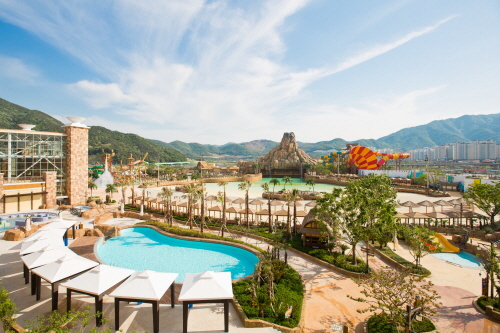
Gimhae Lotte Water Park (김해 롯데워터파크)
10.7Km 2025-05-19
555 Jangyu-ro, Gimhae-si, Gyeongsangnam-do
Gimhae Lotte Water Park is the largest water park in Korea, featuring a Polynesian theme with 17 types and 43 water attractions. It includes a giant volcano-shaped structure called Giant Volcano, along with indoor and outdoor water parks that can be enjoyed year-round, as well as Rapids River Zone and Torrent River Zone. Facilities include wave pool, lazy river pool, spa pool, swing slide, and more, making it a must-visit leisure destination in Busan.
![Lotte Mart - Jinhae Branch [Tax Refund Shop] (롯데마트 진해점)](http://tong.visitkorea.or.kr/cms/resource/89/2886289_image2_1.jpg)
Lotte Mart - Jinhae Branch [Tax Refund Shop] (롯데마트 진해점)
10.9Km 2024-04-22
762, Jinhae-daero, Jinhae-gu, Changwon-si, Gyeongsangnam-do
-
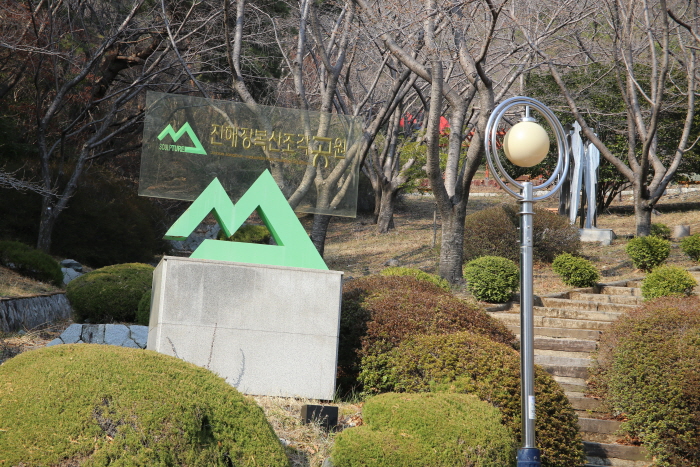
Jangboksan Sculpture Park (장복산조각공원)
11.1Km 2025-03-22
56-42, Jangboksan-gil, Jinhae-gu, Changwon-si, Gyeongsangnam-do
+82-55-225-7024
Jangboksan Sculpture Park stands as the unofficial gateway to Jinhae at the end of Jangbok-ro Road between Masan and Jinhae. Built in 1979 in the wake of a mountain landslide, the park offers a panoramic view of Jinhae and its quiet waters. In spring, more than ten thousand cherry trees interspersed throughout the pines come to full bloom, permeating the air with their sweet fragrance.
Nearby attractions include Daegwangsa and Jinheungsa Temples, the Citizens’ Hall, the Gyeongnam Literary Hall, and Jinhae Park Land, located halfway up Jangboksan Mountain. To visit these attractions and explore the beauty of the forest, simply follow the walking trail from Jinhae Girls’ High School to the park (1.5 kilometers) and continue walking along the path from the Jangboksan Rest Area to Gumajin Tunnel (1 kilometer).
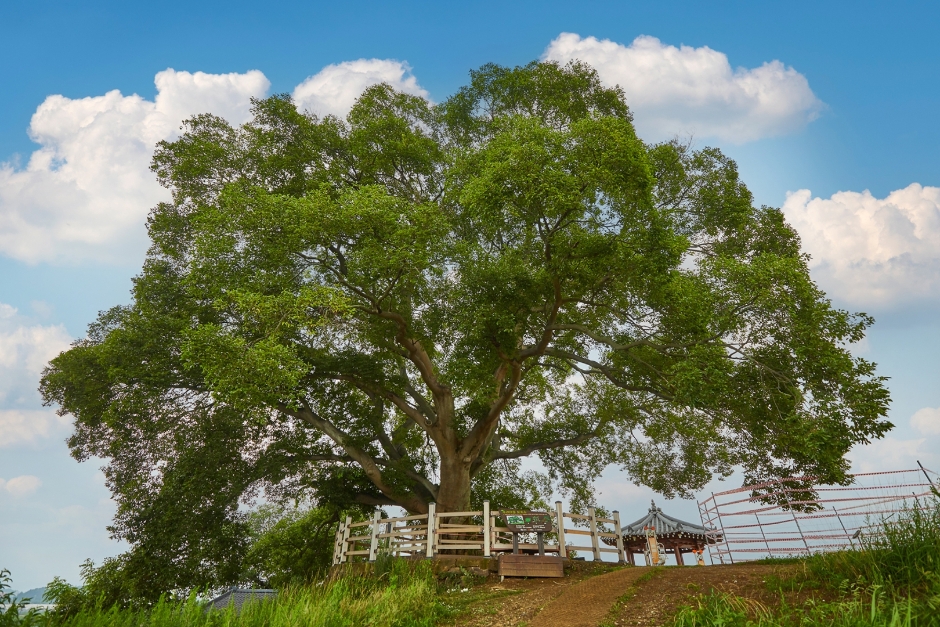
Hackberry Tree in Bukbu-ri (창원북부리팽나무)
11.1Km 2024-02-15
102-1 Bukbu-ri, Uichang-gu, Changwon-si, Gyeongsangnam-do
Hackberry Tree in Bukbu-ri is the most famous “celebrity tree” in Changwon. It became famous after appearing in episodes 7 and 8 of the popular drama “Extraordinary Attorney Woo (2022).” The tree sits on a hilltop, allowing visitors to enjoy the cool breeze and the panoramic view of Changwon's old neighborhood. Bukbu-ri village entrance has signposts leading to the hackberry here and there with drawings of dolphins symbolizing the drama (the drama protagonist’s favorite animal), making it convenient for tourists to reach the tree. The hackberry tree is estimated to be over 500 years old, and its size and scale cannot be captured with a camera in one frame. It is a protected tree designated by the state, visitors are advised to refrain from touching or getting close to the tree.

Gimhae Arts and Sports Center (김해문화의전당)
11.1Km 2022-12-29
2060, Gimhae-daero, Gimhae-si, Gyeongsangnam-do
+82-55-320-1234
The Gimhae Arts and Sports Center is a performance hall for high-class performances. Maru Hall is a multi-purpose theater that also contains a moving orchestra shell with a sound reflection board for a smaller concert hall inside the theater. Nuri Hall is an experimental theater for performances in a variety of themes. The center also features the outdoor theater Aedureum Madang, Yunseul Art Gallery, Media Center, Sports Center, and Aram Learning Center, as well as a café and restaurants.
![Mh Modern House - Homeplus Gimhae Branch [Tax Refund Shop] (MH 모던하우스 홈플러스김해)](http://tong.visitkorea.or.kr/cms/resource/56/2885956_image2_1.jpg)
Mh Modern House - Homeplus Gimhae Branch [Tax Refund Shop] (MH 모던하우스 홈플러스김해)
11.3Km 2024-04-23
2078, Gimhae-daero, Gimhae-si, Gyeongsangnam-do
-
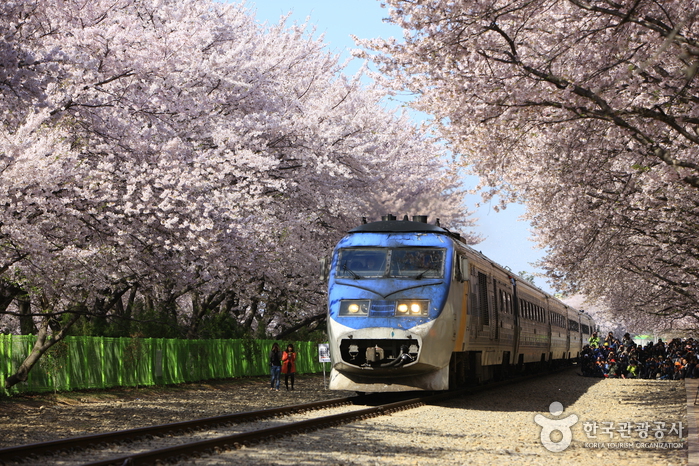
Gyeonghwa Station Cherry Blossom Street (경화역 벚꽃길)
11.3Km 2024-02-27
649 Jinhae-daero, Jinhae-gu, Changwon-si, Gyeongsangnam-do
Gyeonghwa Station Cherry Blossom Street, located in Jinhae, Changwon, is now a railway station where trains no longer stop, famous for its cherry blossoms in spring. Cherry trees line the railway, creating a spectacular cherry blossom road during springtime. The station operates a Jinhae Publicity Center, exhibiting trains that used to run on the tracks.
Gimhae National Museum (국립김해박물관)
11.5Km 2024-01-23
190 Gayaui-gil, Gimhae-si, Gyeongsangnam-do
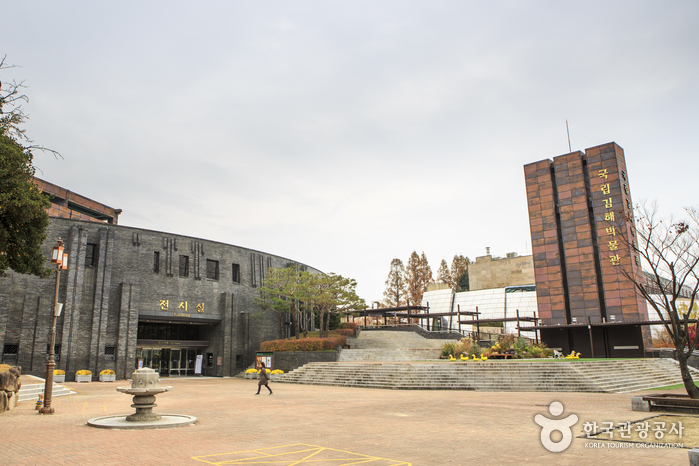
The Gimhae National Museum was opened on July 29, 1998, in order to research and preserve the cultural heritage of the ancient kingdom of Gaya. The museum is at the foot of Gujibong Peak in Gimhae-si, the spot where the kingdom is believed to have been founded. The museum exhibits the cultural assets of Gaya, as well as cultural relics from the prehistoric age in the Busan and Gyeongsangnam-do areas, and the cultural heritage of Byeonhan, which was the foundation for the growth of Gaya.
The exterior of the museum is made using black bricks representing iron ore and charcoal famous during the Gaya Kingdom. There are two exhibition halls, while the walkway to the halls have approximately 1,300 artifacts in display.
Museum of the ancient tombs in Daseong-dong (대성동고분박물관)
11.6Km 2023-01-02
126, Gayaui-gil, Gimhae-si, Gyeongsangnam-do
+82-55-350-0401
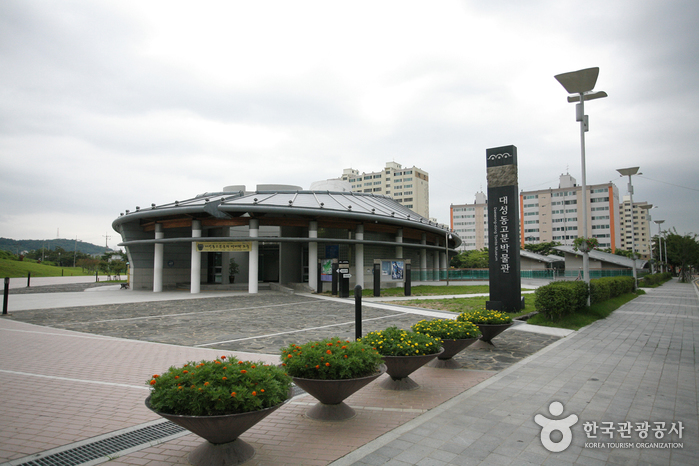
The Museum of the ancient tombs in Daseong-dong displays artifacts unearthed from the four excavations of the Daeseongdong Tumuli. Highlighting often overlooked relics of the Geumgwan Gaya, the museum has three ground-floor exhibit halls and several underground auxiliary facilities. The main exhibits include a life-sized statue of a mounted soldier and a warrior statue, both recreated based on bones excavated from the tumuli of Yean-ri. The museum relies heavily on videos and dioramas to help visitors explore all the museum has to offer.
Gimhae Gujibong Peak (김해 구지봉)
11.8Km 2021-07-13
Gusan-dong, Gimhae-si, Gyeongsangnam-do
+82-055-331-0086
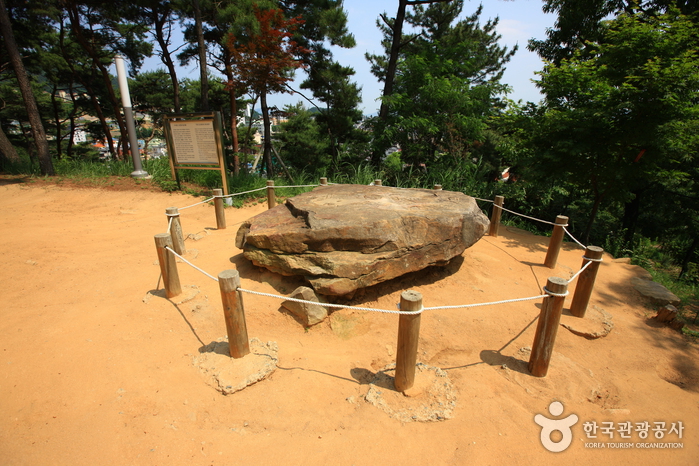
Gujibong Peak in Gusan-dong, Gimhae in Gyeongsangnam-do is believed to be the birthplace of King Suro, the founder of the Gaya kingdom. The peak was originally named Gusubong (“gu” meaning “turtle,” “su” meaning “head”) after its resemblance to the head of a turtle. The flat part of the peak (the turtle’s “head”) is home to the Tomb of King Suro. On the summit is a southern-style dolmen dating back to the 4th century BC that consists of 5 or 6 support stones and a large cover stone measuring 2.5m in diameter. The cover stone bears the inscription “Gujibongseok,” said to be written by Han Ho.
Gujibong Peak is considered a sacred place by the local people because, according to legend, it is the place where the creation of the Gaya Kingdom took place. During the Japanese colonial rule, the “neck” of the turtle was destroyed by the construction of a mountain road. Years later, a pedestrian road was built to rejoin the neck and restore the feng shui of the mountain.
 English
 한국어
한국어 日本語
日本語 中文(简体)
 Deutsch
 Français
 Español
 Русский


