
Sureungwon Garden (수릉원)
17.3Km 2024-01-23
35 Bunseong-ro 261beon-gil, Gimhae-si, Gyeongsangnam-do
Sureungwon Garden is a place themed around the meeting between King Suro, the founder of Gaya, and Queen Heo, who was the princess of Ayuta Kingdom, known as India. The name Sureungwon Garden also contains the meaning of an elegant forest where King Suro and Queen Heo walked together. An ecological park measuring 39,600 m2 has been created along a low ridge that connects the Tomb of King Suro, an important cultural heritage of the Gaya period; the Ancient Tombs in Daeseong-dong, the tombs of the Gaya kings; and the Bonghwang-dong Historic Site. It was created by representing the maritime kingdom of Gaya, imagining a pond of the garden where King Suro and Queen Heo used to walk, and planting prickly waterlilies and yellow floating hearts that are believed to have inhabited wetlands in the Gaya period. Trails along the cozy forest and pond make it easy to look around comfortably.
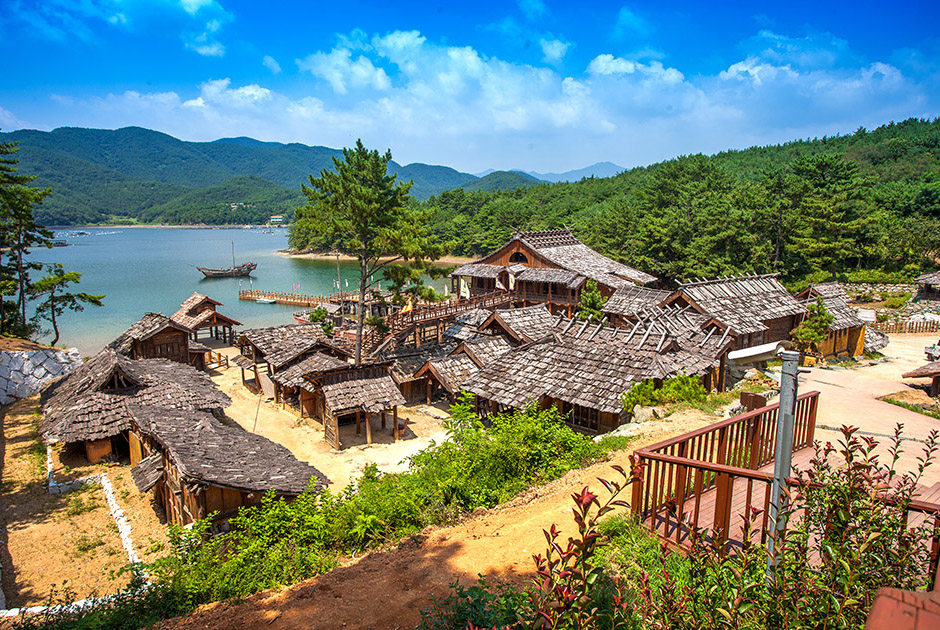
Maritime Filming Location ('역적'촬영지 해양드라마세트장)
17.3Km 2024-02-28
876-2 Haeyanggwangwang-ro, Gusan-myeon, Masanhappo-gu, Changwon-si, Gyeongsangnam-do
Maritime Filming Location is a film set that offers a glimpse into the lifestyle and culture of the Gaya, a Korean dynastic state. Set against a coastal backdrop, the site features an ironworks, illustrating the historic process of refining iron ore for weaponry, a quay, a market street, twenty-five wooden buildings, and three ships. It is known as the filming location for Korean TV dramas such as "The Rebel," "Kim Suro," and "Six Flying Dragons."
![Gimhae Korean-style house [Korea Quality] / 김해한옥체험관 [한국관광 품질인증]](http://tong.visitkorea.or.kr/cms/resource/81/3016981_image2_1.jpg)
Gimhae Korean-style house [Korea Quality] / 김해한옥체험관 [한국관광 품질인증]
17.3Km 2023-10-25
40 , Wangneung-gil, Gimhae-si, Gyeongsangnam-do
+82-55-322-4735~6
The Hanok Experience Center in Gimhae, Gyeongsangnam-do, offers guests a taste of old-time hanok life. Rooms are furnished with traditional items, while the spacious wooden floor can be used as a meeting room. Rooms in the sarangchae are on the small side but have an upper floor with scenic views. The room in the annexe building has a traditional sleeping mat surrounded by a large folding screen, and feels like a scene from a historical drama. Each room has a modern bathroom, There is a traditional experience program, and information services in English and Japanese.
Tomb of King Suro (수로왕릉)
17.3Km 2024-01-23
26 Garak-ro 93beon-gil, Gimhae-si, Gyeongsangnam-do
+82-55-332-1094
King Suro founded the Garak Kingdom in AD 42 and married Heo Hwang-ok, a princess from the Indian country of Ayuta, in AD 48. He was the founder of the Gimhae Kim family. Heo Yeop, a Yeongnam governor, gave the tomb its current look in the 13th year of the reign of King Seonjo (1580). The tomb compound includes various buildings, including the Sungseonjeon (where the ancestral tablets of King Suro and his queen are kept), Anhyanggak, Jeonsacheong, and Jegigo, as well as stone structures, such as a sindobi (tombstone) and gongjeokbi (monument established to pay homage the deceased). The tombstone in front of the royal tomb was built in the 25th year of the reign of King Injo (1647) of the Joseon dynasty. The name Sungseonjeon was bestowed on the tomb by King Gojong in the 21st year of his reign (1884).
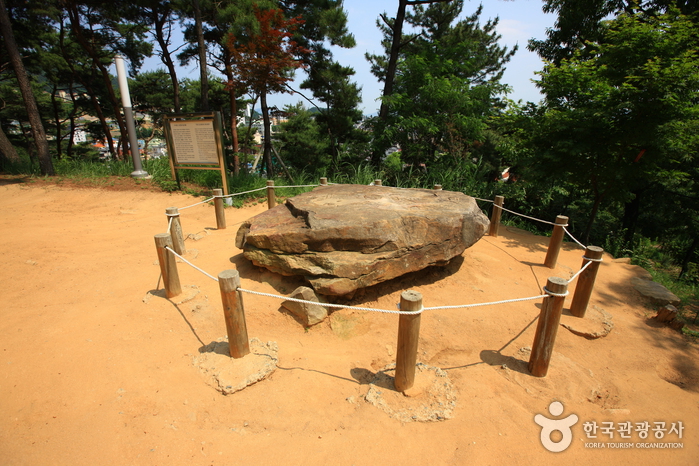
Gimhae Gujibong Peak (김해 구지봉)
17.8Km 2021-07-13
Gusan-dong, Gimhae-si, Gyeongsangnam-do
+82-055-331-0086
Gujibong Peak in Gusan-dong, Gimhae in Gyeongsangnam-do is believed to be the birthplace of King Suro, the founder of the Gaya kingdom. The peak was originally named Gusubong (“gu” meaning “turtle,” “su” meaning “head”) after its resemblance to the head of a turtle. The flat part of the peak (the turtle’s “head”) is home to the Tomb of King Suro. On the summit is a southern-style dolmen dating back to the 4th century BC that consists of 5 or 6 support stones and a large cover stone measuring 2.5m in diameter. The cover stone bears the inscription “Gujibongseok,” said to be written by Han Ho.
Gujibong Peak is considered a sacred place by the local people because, according to legend, it is the place where the creation of the Gaya Kingdom took place. During the Japanese colonial rule, the “neck” of the turtle was destroyed by the construction of a mountain road. Years later, a pedestrian road was built to rejoin the neck and restore the feng shui of the mountain.
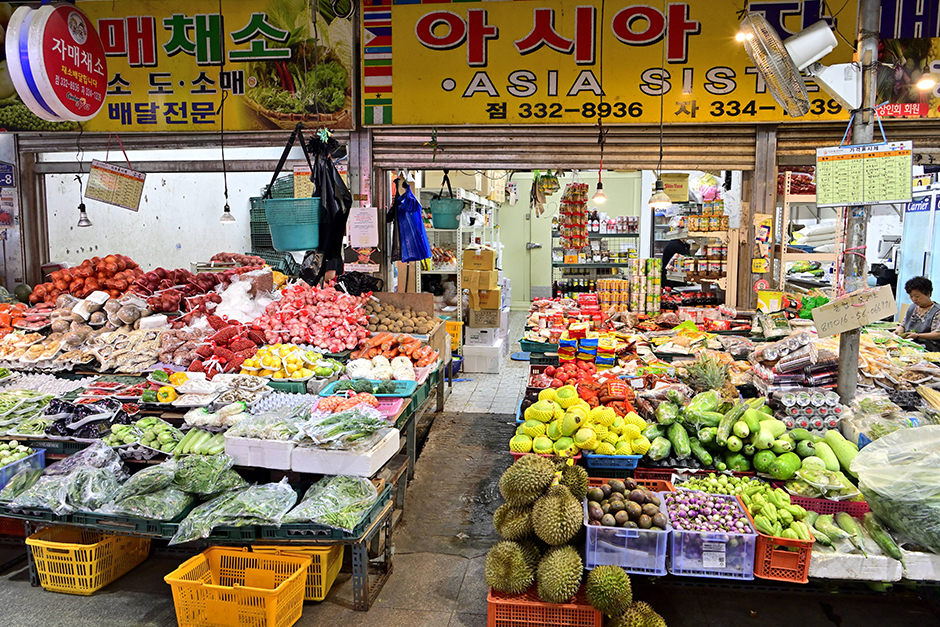
Dongsang Market (동상시장)
17.9Km 2025-10-23
25 Guji-ro 180beon-gil, Gimhae-si, Gyeongsangnam-do
Formed in 1945, Dongsang Market is a lifestyle-centric traditional market that offers a slew of daily necessities like vegetables, fruits, rice cakes, fishery products, and side dishes, as well as a popular alley specializing in Kalguksu (noodle soup). Designated as a cultural tourism market in 2017, it has since evolved into a vibrant space where traditional Korean culture harmoniously coexists with diverse global cultures. As more foreign workers have begun frequenting the market in recent years, a number of Asian grocery stalls have opened. In particular, vegetables favored by Southeast Asian customers, ritual foods, and Kalguksu (noodle soup) have become local specialties.
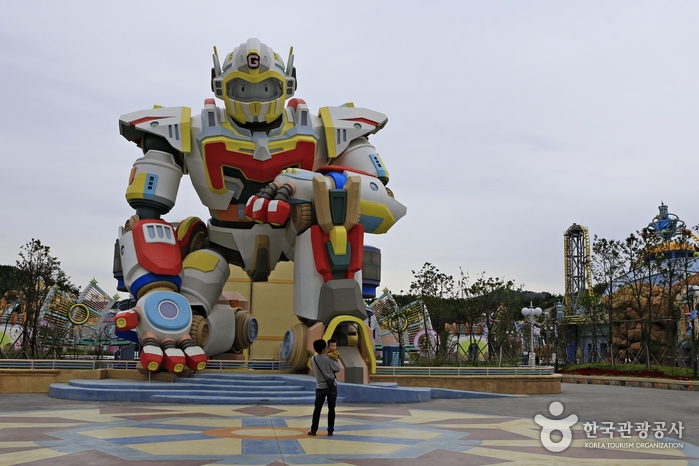
Masan Robot Land (마산로봇랜드)
18.0Km 2024-02-08
250 Robotland-ro, Gusan-myeon, Masanhappo-gu, Changwon-si, Gyeongsangnam-do
This theme park stands as the first of its kind in both Korea and the world, centering around the theme of robots. It showcases 256 robots, interactive play areas, and hands-on experience zones. The park is segmented into four distinct zones: the Adventure and Future Zones, both designed for thrill-seekers, and the Dream and Robotopia Zones, tailored to children and toddlers with a fascination for robots. For young enthusiasts, there’s a comprehensive program offering a deep dive into the world of robotics. Students can broaden their understanding through various exhibition halls like the Aerospace Robot Hall, Artificial Intelligence Robot Hall, Manufacturing Robot Hall, and Marine Robot Hall, unveiling the limitless potentials of robot. There are also seasonal discounts, holiday specials, and offers for foreigners (valid with appropriate identification). It’s recommended to check their website prior to one's visit for any promotions.
Mangsando Island, Yujuam, Yujubigak (망산도·유주암·유주비각)
18.3Km 2024-02-26
188 Songjeong-dong, Gangseo-gu, Busan
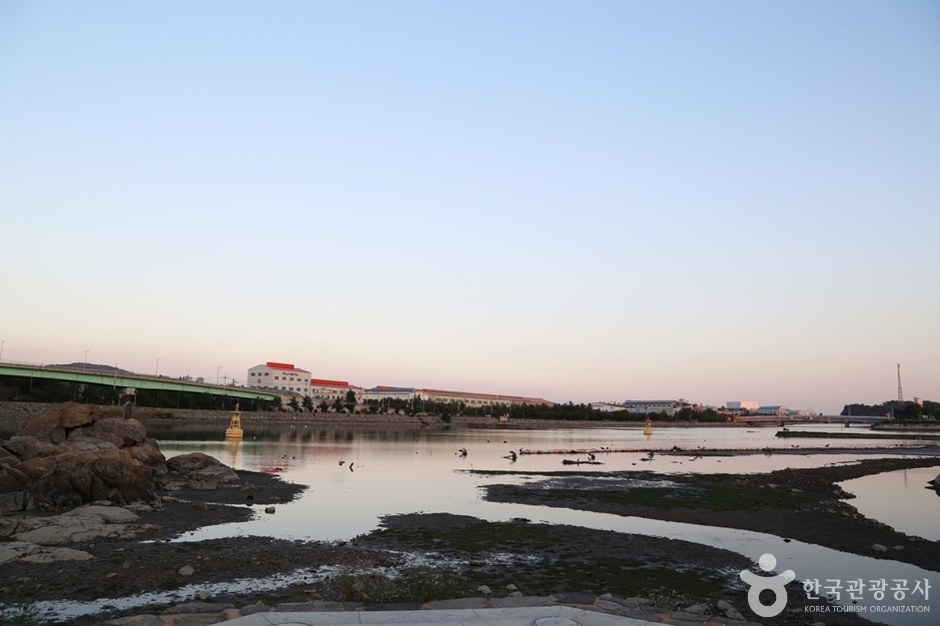
Mangsando Island, a small isle near Yongwon-dong, is noteworthy for its proximity to the rocky formation known as Yujuam, situated about 70 meters southeast. Approximately 1 kilometer from these locations is Yujubigak, a place rich with the legend of Heo Hwang-ok. She was the queen consort of King Kim Suro, who was born in 42 AD and ruled the ancient kingdom of Garakguk. According to legend, Heo Hwang-ok traveled from India and first set foot on Mangsando Island. The story goes on to tell that the stone vessel she was traveling in capsized at sea, resulting in the formation of Yujuam.
Gimhae Astronomical Observatory (김해천문대)
18.7Km 2022-12-29
254, Gaya thema-gil, Gimhae-si, Gyeongsangnam-do
+82-55-337-3785
Gimhae Astronomical Observatory opened on February 1, 2002 as part of the Millennium Commemorative Project that started in December 1998. It was built to satisfy the general public’s curiosity about the universe and celestial bodies, inspire young people, and give everyone a unique, memorable experience. The observatory is shaped like an egg, in memory of the legend of King Kim Suro, the founder of the Garak Kingdom, according to which the king was born from an egg.
It is said that the queen of King Suro, Heo Hwang-ok, was a princess from the Indian country of Ayuta. Since sophisticated navigation equipment had yet to be invented, it can be assumed that she found her way to the Garak Kingdom by following the stars. It is also said that a prince of the Garak Kingdom built an observatory on the highest point of a mud fortress in Jinrye in order to make astronomical observations. The place is still referred to as Bibidan, which means a place to watch the stars.
These historical facts indicate the stars were very important to the Gaya, an ancient kingdom established mainly in the Gimhae area. The peak of Bunseongsan Mountain, where the observatory is located, offers sweeping views of the entire area of Gimhae. The night sky of Gimhae offers a breathtaking sight.
Bunsanseong Fortress (김해 분산성)
18.8Km 2023-01-18
210-162, Gaya-ro 405beon-gil, Gimhae-si, Gyeongsangnam-do
+82-55-330-3925
Bunsanseong Fortress was constructed in the 3rd year of the reign of Goryeo's King U (1377) by Magistrate Park Wi to defend against foreign enemies, but it was destroyed during the Japanese invasion of 1592. The fortress we see today was reconstructed by Magistrate Jeong Hyeon-seok in the 8th year of the reign of Joseon's King Gojong (1871). However, it is estimated that it was first built during the days of Gaya. It is a temoe-style fortress with rocks piled up like a long band at the peak of Bunsan from which downtown Gimhae, Gimhae Plains, the Nakdonggang River and the South Sea are all in a single, panoramic view. Today, fortress walls remain stretching for some 900 meters on the slope towards the city and, inside the fortress, there are two gate sites in the south and north, an auxiliary gate on the west, a well site and several other building sites. The exact length of the remaining fortress walls is 929 meters and the average x_width is about 8 meters.
Inside the fortress lies Haeeunsa Temple, which was built to pay respects to Queen Heo of Garak who had come from the sea, according to stories. The temple also enshrines portraits of King Suro and Queen Heo that were painted during the Joseon dynasty. During the Japanese invasion of 1592, monk soldiers were stationed at this temple.
The fortress is more popularly called "Manjangdae" by Gimhae locals, and this name originated from the description, "A tall tower 10,000 (man) gil in x_height," granted by Daewongun in the Joseon dynasty for this advanced base that defeats Japanese invaders. A writing of "Manjangdae" written by Daewongun himself as well as his stamp are engraved on a rock behind a beacon that was restored in 1999.
 English
 한국어
한국어 日本語
日本語 中文(简体)
 Deutsch
 Français
 Español
 Русский


