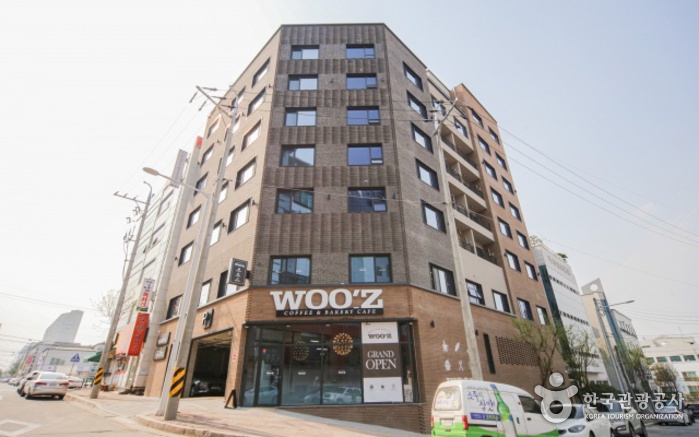
Kase Hotel (formerly Andong Kase) (케이스호텔((주)안동케이스))
13.4Km 2024-12-19
60-16 , Gangnam 2-gil, Andong-si, Gyeongsangbuk-do
+82-54-857-0007
The Kase Hotel is 15 minutes by car from both Andong Station and Andong Bus Terminal.The hotel, located inside the Nakdonggan River, offers guests an opportunity to take a walk along the river. All rooms have Netflix installed, and the Family Room, Suite Party Room, and Luxury Party Room all have kitchen facilities and mini swimming pools. A 10-minute drive away is the famous Imcheonggak House and Wolyeonggyo Bridge - not to mention Andong Braised Chicken Street!

Confucian Land (유교랜드)
14.3Km 2024-05-30
346-30 Gwangwangdanji-ro, Andong-si, Gyeongsangbuk-do
Confucian Land, located within Andong Culture & Tourism Resort, is a themed exhibition hall that focuses on Korea's Confucian culture. The facility uses the edu-tainment method to make a difficult subject matter easy to understand for young children. Exhibitions include the teachings of famous Confucian scholars like Toegye Yi Hwang and Yulgok Yi I, traditional musical instruments such as the gayageum and haegeum, as well as a video hall with 3D film capabilities and a children's game area with motion-tracking.
Yekki Village (예끼마을)
14.4Km 2024-05-30
14 Seonseong-gil, Dosan-myeon, Andong-si, Gyeongsangbuk-do
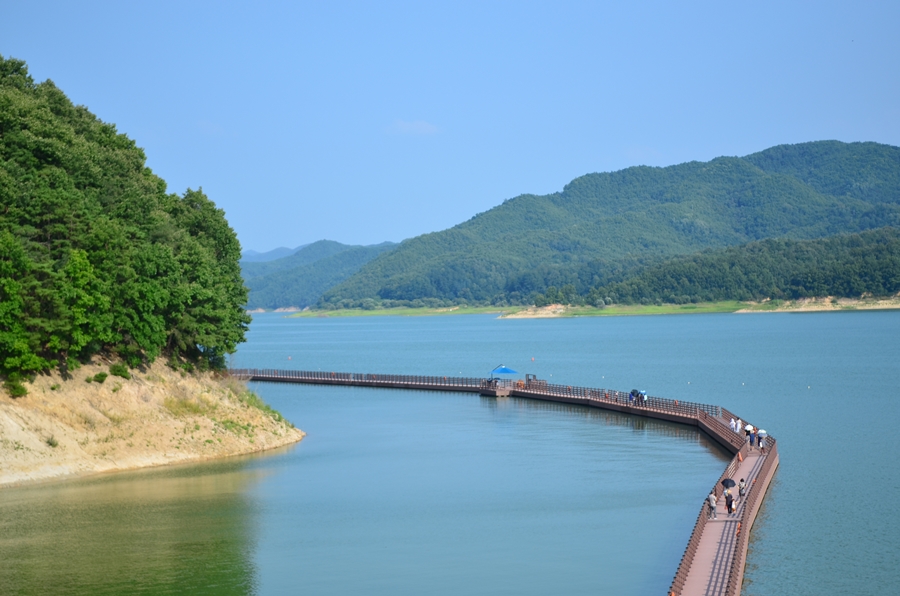
Yekki Village is an artistic village in Andong. The alleyways are decorated with colorful murals, the galleries feature work from local artists, and visitors can experience a hanok experience. The biggest charm of the village is the Sunseong Susang-gil Waterway, a floating path across the lake.
Sunseong Susang-gil Waterway (선성수상길)
14.4Km 2024-05-30
14 Seonseong-gil, Dosan-myeon, Andong-si, Gyeongsangbuk-do
Sunseong Susang-gil Waterway is a 1-kilometer-long floating pathway that connects Sunseonghyeon Culture Complex with Andong Lakeside Park. Because the pathway floats on the water, it rocks with each step one takes, creating the feeling of truly walking on water. At the halfway point of the waterway is an exhibition of black-and-white photos and materials from Yean Elementary School, lost to the formation of the lake following the construction of Andong Dam in 1974.
Zootopium (주토피움)
14.6Km 2024-05-29
346-95 Gwangwangdanji-ro, Andong-si, Gyeongsangbuk-do
Zootopium is the largest animal & plant themed park in Gyeongsangbuk-do, home to over 200 species. The park provides the perfect environment for children to learn more about nature and living organisms. The park features both indoor and outdoor sections, as well as amenities such as a restaurant and play areas for children.
Yecheon Astro-Space Center (예천천문우주센터)
14.6Km 2021-12-23
1078, Chunghyo-ro, Yecheon-gun, Gyeongsangbuk-do
+82-54-654-1710
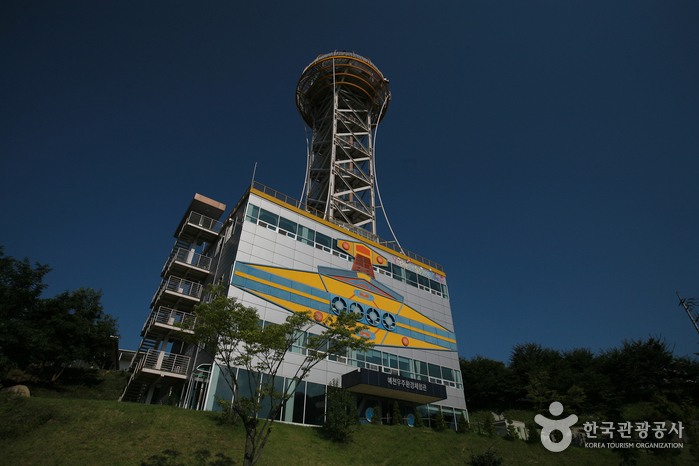
Yecheon Astro-Space Center is a theme park that opened in November 2004. The Yecheon Astronomical Science and Culture Center has built and operated the Yecheon Star Observatory. Visitors can stay in the accommodations in the park, observe the distant universe through a large telescope, and experience the space environment such as weightlessness.
In the observation room, visitors can observe the appearance of the universe with a 508 mm (20 inch) reflecting telescope that is automatically controlled by a computer. In the auxiliary observation room, visitors can observe sunspots and huge pillars of fire on the surface of the sun with a quadruple solar telescope. The astronomical projection room is a 'space theater' where a digital astronomical projector and video projector are installed, and images related to the astronomical universe, including seasonal constellations, are screened on a hemispherical dome screen on the ceiling.
At the Yecheon Star Observatory, visitors can observe the pillars of fire that soar through the sun during the day and sunspots that are larger than Earth. At night, visitors can observe the galaxy, the nebula, where stars born and die, as well as star clusters, and the moon, which is the closest celestial body to Earth, has large and small meteorite craterson the surface. There are many more fun experiences at the Yecheon Star Observatory.
Songgyehyeon (송계헌)
15.5Km 2024-12-19
332 , Byeongsan-gil, Andong-si, Gyeongsangbuk-do
+82-10-3522-1104
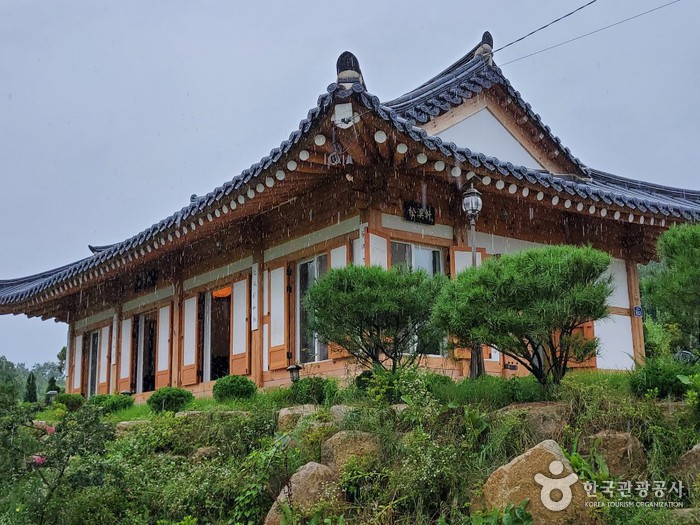
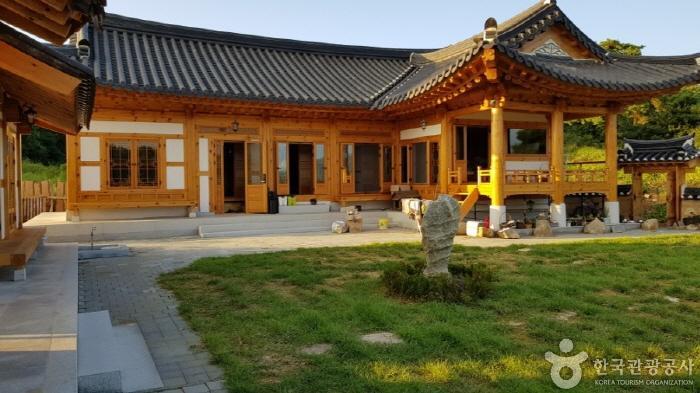
Song Gye-heon is a pinewood-built hanok in Andong, Gyeongsangbuk-do - not far from the famous Byeongsan Seowon Confucian school - which combines traditional hanok style with modern convenience. The hanok is rented out as a single unit, and is ideal for families or group travelers. There are 3 bedrooms, one with a bed and the other two Korean-style rooms, with ample living space. There’s a kitchen for guests’ use, and the owner is happy to guide you round the Andong area.
Pungsongjae (풍송재)
15.8Km 2024-12-13
53-4 , Hanongmaeul 1-gil, Andong-si, Gyeongsangbuk-do
+82-10-2389-1054
Pungsongjae is a Hanok stay made from high-quality Korean red pines from Bonghwa located in Andong, Gyeongsangbuk-do. While retaining the traditional elegance of Hanok, each room is equipped with a bathroom for added convenience. As soon as you enter the gate, you are greeted by a wide-open grassy lawn, and the numaru (balcony-style raised veranda), Punsongjae's central space, offers a panoramic view of the pine grove beyond the antique Hanok building and wall. There are three rooms, Sarangbang, Songsil, and Pungsil, in which cooking is allowed. Nearby tourist attractions include Hahoe Village and Byeongsan Seowon.
![Byeongsanseowon Confucian Academy [UNESCO World Heritage] (병산서원 [유네스코 세계유산])](http://tong.visitkorea.or.kr/cms/resource/63/2620863_image2_1.jpg)
Byeongsanseowon Confucian Academy [UNESCO World Heritage] (병산서원 [유네스코 세계유산])
15.9Km 2024-05-29
386 Byeongsan-gil, Andong-si, Gyeongsangbuk-do
82-54-858-5929
Before it became a Confucian academy, Byeongsanseowon Confucian Academy was originally located in Pungsang-hyeon under the name Pungakseodang School, which was used as a educational institution since the Goryeo dynasty by a political party known as the Sarim Party. It was moved to its current location in Byeongsan by a well-respected Confucian scholar named Yu Seong-nyong, penname Seoae, in 1572, and renamed to Byeongsanseowon in 1614.
In 1863, Byeongsanseowon was recognized by the king to receive support as a private Confucian academy. The lecture hall and shrine were reconstructed in 1921 and 1937 respectively as part of preservation efforts made during the Japanese occupation. This academy is designated as a Historic Site, housing a collection of 1,000 documents and 3,000 books, including works by Yu Seong-nyong.
![Andong Hahoe Village [UNESCO World Heritage] (안동 하회마을 [유네스코 세계유산])](http://tong.visitkorea.or.kr/cms/resource/38/3421438_image2_1.jpg)
Andong Hahoe Village [UNESCO World Heritage] (안동 하회마을 [유네스코 세계유산])
16.5Km 2025-10-23
186 Jeonseo-ro, Pungcheon-myeon, Andong-si, Gyeongsangbuk-do
+82-54-852-3588
Hahoe Village is one of the most famous folk villages in Korea. Surrounded by the Nakdonggang River, the village is home to descendants of the Ryu clan of Pungsan, which still makes up 70 percent of the villagers. The village became even more famous after Queen Elizabeth of England visited on April 21, 1999, and President George H. Bush of the U.S.A. in 2005.
The village has many cultural treasures and important cultural materials, earning the village the designation of National Folklore Cultural Heritage in 1984. Hahoe Masks, a National Treasure, is also an important feature of the village.
 English
 한국어
한국어 日本語
日本語 中文(简体)
 Deutsch
 Français
 Español
 Русский


