![Manjukjae House[Korea Quality] / 만죽재 고택[한국관광 품질인증]](http://tong.visitkorea.or.kr/cms/resource/55/3016955_image2_1.jpg)
Manjukjae House[Korea Quality] / 만죽재 고택[한국관광 품질인증]
.0M 2024-10-30
11-10 , Museom-ro 234beon-gil, Yeongju-si, Gyeongsangbuk-do
Manjukjae House is the oldest hanok in Museom Village, Yeongju, Gyeongsangbuk-do, with a history dating back 360 years. Originally built by Park Su to live the life of a reclusive gentleman after the Manchu Invasion of Korea, the house has been passed down from generation to generation through 13 generations. There are four guest rooms, Seomgye Chodang, Sarangchae (detached building), Anchae (main building), and Chaekbang (study), all of which can accommodate two people. Among them, Seomgye Chodang offers the best view, from where guests can enjoy the scenery of the log bridge in Museom Village, the Naeseongcheon Stream, and the white sandy beach. With the windows wide open, you can enjoy the cool breeze and the soothing sounds of nature.
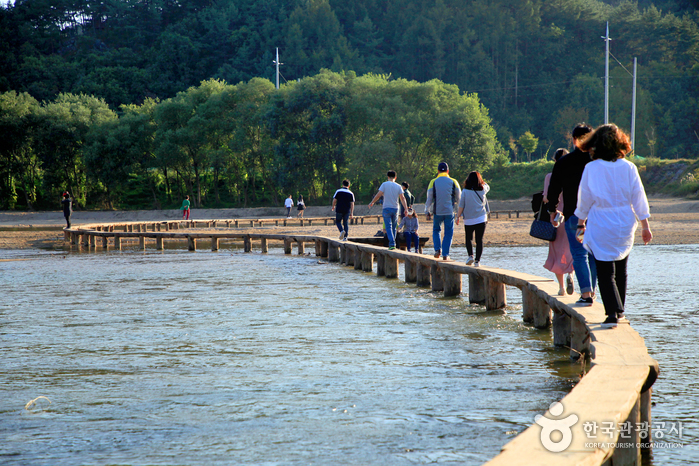
Yeongju Museom Village (영주 무섬마을)
67.1M 2021-08-24
31-12, Museom-ro 234beon-gil, Yeongju-si, Gyeongsangbuk-do
Located in Sudo-ri in Yeongju, Gyeongsangbuk-do, Museom Village is a charming hanok village surrounded by water. Flowing down from Sobaeksan Mountain and Taebaeksan Mountain, Naeseongcheon Stream and Yeongjucheon Stream converge and loop around Museom Village, surrounding the village on three sides with water. This peninsula-like village is not only the center of traditional Korean culture, but also has a gorgeous natural landscape complete with a wide sandy riverside and a lush inland forest.
Known for Haeudang and Manjukje Houses (two of the most historical hanok houses in the area), the village is also home to other outstanding traditional houses such as the Kim Gyu-jin House and the Kim Wi-jin House. Manjukje House is located at the heart of the village and the oldest traditional house in this hanok village. Manjukje was built in 1666 (7th year of King Heonjong's reign) by Bak Su (the father of the Bannam Bak Family).
Nearby Manjukje is Manun House, built in the early 19th century and named after Kim Hwi-geol (penname “Manun”). The house later became the home of the wife of the famous poet Jo Ji-hun, author of “Byeolli,” a poem expressing the beauty of Museom Village.
Other notable houses include the Kim Wi-jin House (a house belonging to aristocrats), the Kim Jeong-gyu House (a house without the traditional outer fencing), and the Bak Jae-yeon House, where the writings of Bak Gyu-su (a respected scholar during the Joseon period) still remain today.
Another famous attraction in the village is the Single Log Bridge, which was the village’s only connection to the outside world for over 350 years before the construction of Sudo Bridge in 1979. It is a tiny bridge in terms of x_width (30 cm), but it stretches for over 150 meters. It is said that the bridge was rebuilt annually after being destroyed each rainy season. With the construction of Sudo Bridge, the Single Log Bridge was no longer needed, but was rebuilt some time later in its original form. To celebrate the bridge’s impressive history, the village hosts the Single-Log Bridge Festival every October.

Hakgasan Recreational Forest (학가산자연휴양림)
6.6Km 2021-06-15
210, Hyuyangnim-gil, Yecheon-gun, Gyeongsangbuk-do
Hakgasan Recreational Forest is located in a valley on the northern side of Hakgasan Mountain, known for its clean air. The recreational forest has log cabins that harmonize with the nearby trees, creeks, and rocks, making visitors feel as if they are resting at a luxury villa. It is an ideal vacation destination for those who want to get closer to nature. There is a hiking path leading to the summit of Hakgasan Mountain from the forest, taking around 2 hours. Additional amenities within the forest include campfire pits, an outdoor stage, children's playground, exercise equipment, water play area, a lecture hall, and more.
![Bongjeongsa Temple [UNESCO World Heritage] (봉정사 [유네스코 세계문화유산])](http://tong.visitkorea.or.kr/cms/resource/16/2654216_image2_1.jpg)
Bongjeongsa Temple [UNESCO World Heritage] (봉정사 [유네스코 세계문화유산])
9.1Km 2023-05-18
222, Bongjeongsa-gil, Andong-si, Gyeongsangbuk-do
Bongjeongsa Temple is believed to have been built in 672 by the Great Buddist Monk Uisang. However, other documents seem to state that Neungin Daedeuk, a disciple of Monk Uisang, established the temple. During the Korean War, many documents related to the temple were destroyed, so much of the history has been lost. In 1972, while reconstruction work was being done on Geungnakjeon Hall, records were discovered stating the hall was repaired in 1363. This discovery gave concrete evidence that Geungnakjeon Hall is the oldest wooden building in the nation.
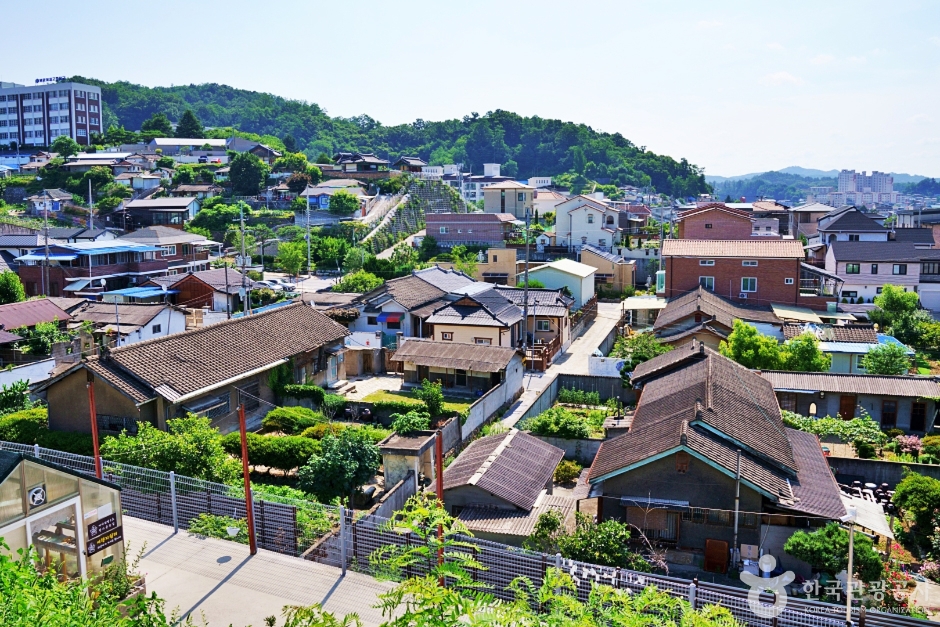
Yeongju Modern History & Culture Street (영주근대역사문화거리)
10.7Km 2024-02-23
Yeongju-dong, Yeongju-si, Gyeongsangbuk-do
Yeongju Modern History and Culture Street serves as a historical and cultural hub, encapsulating the life and times of early twentieth-century Yeongju. The street is dotted with cultural properties officially recognized by the Cultural Heritage Administration. Highlights include the preserved official residences No. 5 and No. 7 of Yeongju Station, once home to railway station employees. Additionally, visitors can explore the Pungguk Rice Mill, showcasing vintage rice milling machinery; Yeongju Jeil Church, a 1909-built structure exemplifying Gothic-style architecture; Yeongju-dong Modern Hanok, a subsidiary structure of an ancient residence; and the still-operating Yeonggwang Barber Shop, a testament to the area's enduring heritage.
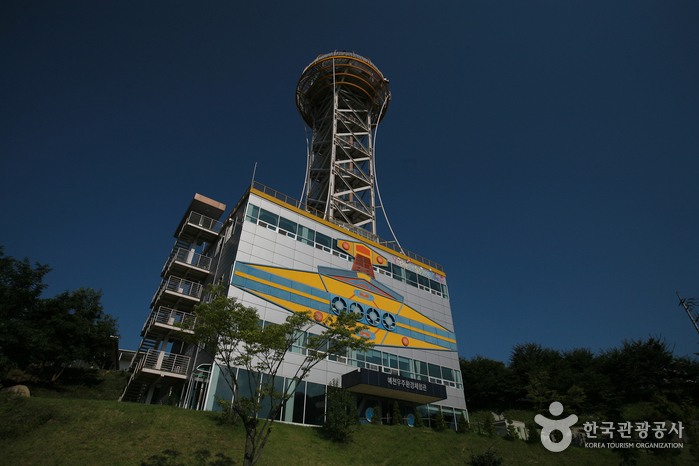
Yecheon Astro-Space Center (예천천문우주센터)
10.9Km 2021-12-23
1078, Chunghyo-ro, Yecheon-gun, Gyeongsangbuk-do
Yecheon Astro-Space Center is a theme park that opened in November 2004. The Yecheon Astronomical Science and Culture Center has built and operated the Yecheon Star Observatory. Visitors can stay in the accommodations in the park, observe the distant universe through a large telescope, and experience the space environment such as weightlessness.
In the observation room, visitors can observe the appearance of the universe with a 508 mm (20 inch) reflecting telescope that is automatically controlled by a computer. In the auxiliary observation room, visitors can observe sunspots and huge pillars of fire on the surface of the sun with a quadruple solar telescope. The astronomical projection room is a 'space theater' where a digital astronomical projector and video projector are installed, and images related to the astronomical universe, including seasonal constellations, are screened on a hemispherical dome screen on the ceiling.
At the Yecheon Star Observatory, visitors can observe the pillars of fire that soar through the sun during the day and sunspots that are larger than Earth. At night, visitors can observe the galaxy, the nebula, where stars born and die, as well as star clusters, and the moon, which is the closest celestial body to Earth, has large and small meteorite craterson the surface. There are many more fun experiences at the Yecheon Star Observatory.
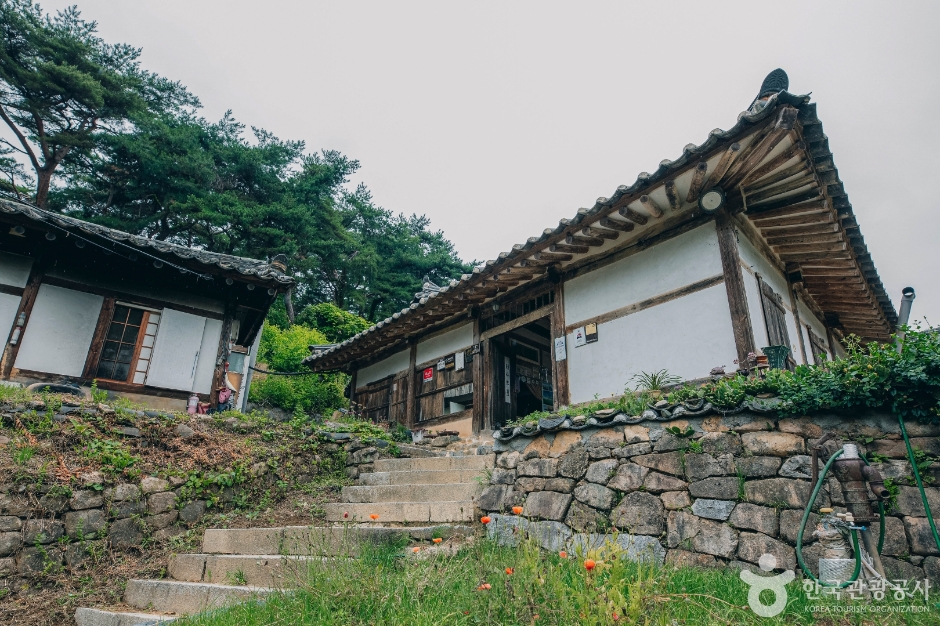
An dong gotak Esanru (안동고택 이상루)
11.9Km 2024-12-20
3193-6 , Pungsantaesa-ro, Andong-si, Gyeongsangbuk-do
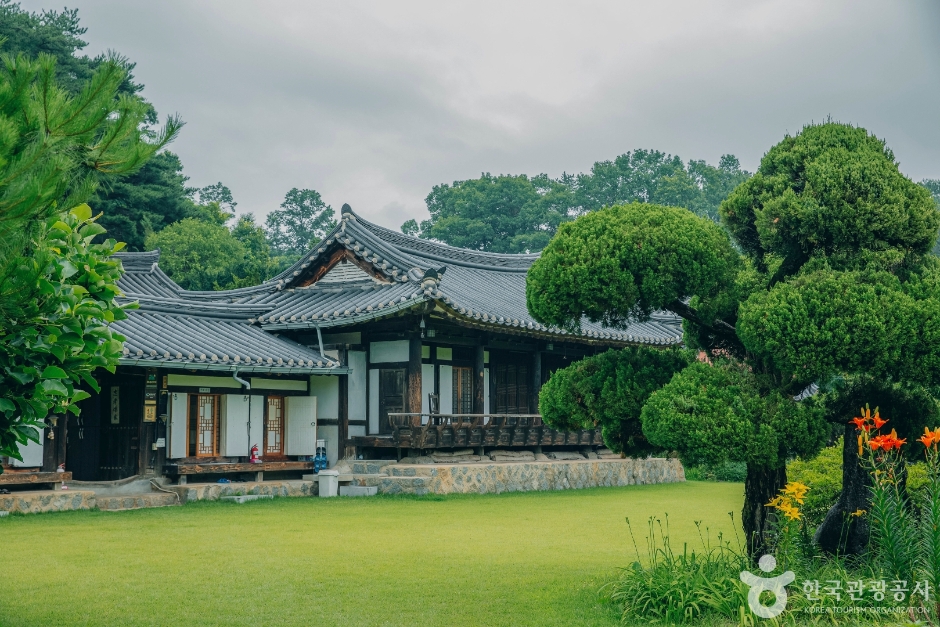
Andong Old House Lee Sangnu stands at the foot of Cheondeungsan Mountain in Andong, Gyeongsangbuk-do. The house has a 250-year history and is still used for family rituals commemorating the founder of the Andong Kim Clan. Lee Sangnu is a dignified two-story wooden pavilion with an attic, while at Yisangru visitors can set a fire in the fire pit in the winter or sleep in a tent or mosquito net in the summer. Cultural programs are available: tea ceremonies, knot craft, the mask dance, natural dyeing, Korean paper craft, and learning about filial piety. The Old House’s location between Andong Hahoe Village and Dosan Seowon makes it convenient for local site-seeing.
Hakbongjongtaek (학봉종택)
14.2Km 2024-12-20
2830-6 , Pungsantaesa-ro, Andong-si, Gyeongsangbuk-do
Hakbong Head House in Andong, Gyeongsangbuk-do, is the head house of the Uiseong Kim Clan. Originally built by Joseon scholar and educator Hakbong Kim Seong-il, it was moved to its present location in 1964. As a head house it has an unusually wide daecheong, as well as a large yard and garden with various trees and oddly shaped rocks. Concerts are regularly held at the old house. Hakbong’s descendants inherited not just this historic house, but also his patriotic spirit, many of them devoting themselves to the anti-Japanese independence movement.
Andong School of Korean Etiquette (안동예절학교)
15.6Km 2023-04-07
1333-5, Toegye-ro, Andong-si, Gyeongsangbuk-do
Andong School of Korean Etiquette, which is located in Andong, is a mecca of Korea's Confucian customs and provides an opportunity to experience traditional Korean etiquette.
In addition to Korean traditional etiquette, Andong School of Korean Etiquette also teaches tea etiquette and traditional Korean music using instruments such as janggu and gayageum. Students can also experience the joy of learning how to play folk games such as yunnori and kite-flying. The school offers a wide variety of hands-on programs related to Korea's traditions and customs such as mask dance, paper craft, cooking, wedding, and eco-rafting on Nakdonggang River.
There are other popular tourist attractions nearby such as Dosanseowon Confucian Academy, Forest Science Museum and Yi Yuk-sa Literary Hall.
Chunujae House / 춘우재고택
16.2Km 2025-03-05
101 , Matjil-gil, Yecheon-gun, Gyeongsangbuk-do
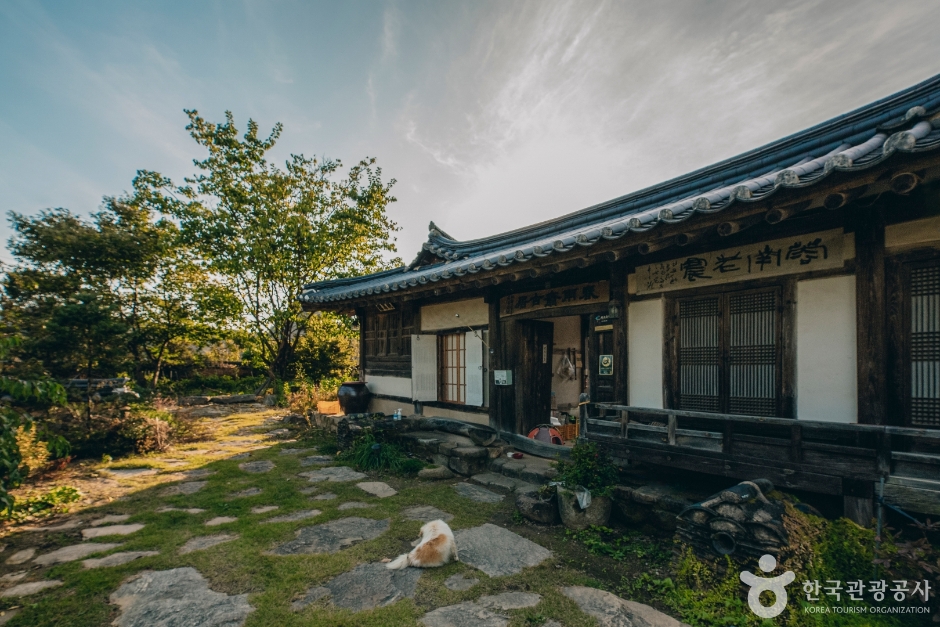
Chunoojae Old House in Jeogok-ri, Yecheon-gun, Gyeongsangbuk-do, is a late Joseon period hanok built by Kwon Jin, grandson of Kwon Eui. Gingko, peepal trees and chrysanthemums grow in its well-tended yard, and every year the petals are gathered for tea brewing, and the branches trimmed and soaked to make alcohol. There are seven guestrooms, and in the summer group visitors can make a bigger space by renting 2 or 3 together. Various traditional food experiences, such as soybean paste making, are offered. For groups of 10 or more, reservations should be made at least a week in advance.
 English
 한국어
한국어 日本語
日本語 中文(简体)
 Deutsch
 Français
 Español
 Русский


