18.1Km 2024-10-30
28 , Jangtaegol-gil, Andong-si, Gyeongsangbuk-do
+82-10-9005-0891, +82-10-5260-9565
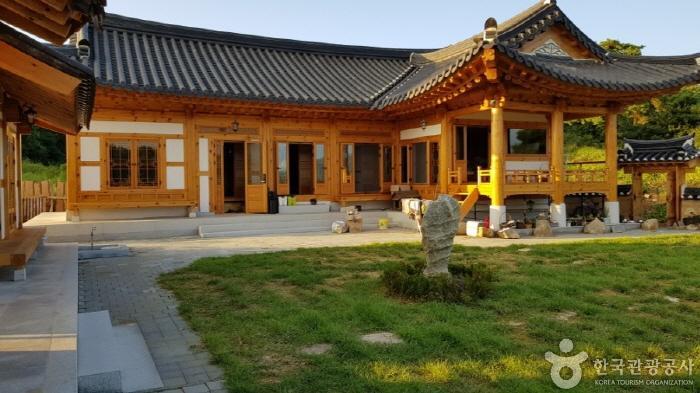
Yangsodang is the head house of the Andong Kim Clan, which dates back 230 years and is located in Sosan Village in Andong, Gyeongsangbuk-do. Being a true hanok built by joining wood without nails, this house is a perfect place to take in the beauty of traditional Korean architecture. There are five guest rooms, including the Anchae Anbang (main room in the main building), a large ondol (underfloor heated) room across from the Anchae (main building), and a large Sarangchae (detached building) that has two rooms with a maru (wide wooden floor area); all of the rooms, except the small room, have either a daecheong maru (wooden-floored living room) or toenmaru (narrow wooden porch). In the yard east of Yangjo-dang, you can experience what it is like to live in a hanok, as well as participate in craft activities using Hanji (Korean paper).
18.5Km 2024-12-13
46-5 , Onhyejungma-gil, Andong-si, Gyeongsangbuk-do
+82-54-856-1052
Nosongjeong Head House is located in Dosan-myeon, Andong, Gyeongsangbuk-do and is the birthplace of Toegye Yi Hwang. The room in which Toegye Yi Hwang was born is known as Toegye Taesil, and it is uniquely designed in the shape of a castle with banisters covering three sides of the center. There are seven guest rooms, including keun sarangchae (large detached building) and chaekbang (study), and a bathroom in anbang (main room). Nosongjeong Pavilion consists of two large rooms with a maru equivalent of a wide wooden-floored area, and the bathroom and shower are outside. Guests staying in the upper room, lower room, large room, and small room also have to use the outdoor bathroom. Nearby are historic sites such as the Dosanseowon Confucian Academy, Cheongnyangsa Temple, and Gukmangbong Peak.
18.7Km 2025-03-04
20 , Onhyejungma-gil, Andong-si, Gyeongsangbuk-do
+82-10-8704-3434, +82-10-2988-3435
Ongye Jongtaek Sambaekdang in Andong, Gyeongsangbuk-do, is a restored hanok and original home of Ongye Lee Hae, the older brother of the famous Toegye Lee Hwang. Right outside the hanok stands a 500-year-old chestnut tree, symbolic guardian of the village. Some guestrooms have bathrooms with toilet, while some have AC. The shower room, laundry room, kitchen, storage room, and wood-floor sitting room are shared. For groups of 10 or more, an outdoor barbecue can be arranged - but inquire ahead. Visitors who book in advance can take part in handicraft programs such as tea-bag making.
19.3Km 2024-02-23
54 Geumdangsil-gil, Yongmun-myeon, Yecheon-gun, Gyeongsangbuk-do
Yecheon Geumdangsil Village is celebrated for its cultural relics and traditional houses, earning its name for resembling a lotus flower afloat on water. Visitors can explore the remnants of Yi Yuin's expansive 99-room house, dating back to the late Joseon era. The village is also home to significant cultural landmarks such as Choganjeong Pavilion, Yongmunsa Temple, Geumgokseowon Confucian Academy, and Bansongjae Gotaek (Kim Bin's Old House). A standout feature of the village is the Geumdangsil Pine Forest, recognized as a natural monument. This impressive pine grove, comprising over 900 trees, spans 800 meters, stretching from the base of Omibong Peak in Geumdangsil to the vicinity of Yongmun Elementary School.
19.3Km 2025-10-23
209 Therapy-ro, Bonghyeon-myeon, Yeongju-si, Gyeongsangbuk-do
The National Center for Forest Therapy is a forest-themed well-being complex created to promote public health and quality of life by leveraging the abundant forest resources of the Baekdudaegan Mountain Range. Forests have transformed into a destination for healing one's mind and body, as well as a place for recreation. The National Center for Forest Therapy provides guidelines for proper exercise and daily habit improvements aimed at relieving stress and promoting mental and physical balance by utilizing the healing properties of the forest. Furthermore, visitors can experience the effects of forest therapy here. The center has healing forest trails, recreational facilities, accommodation facilities, and others.
19.4Km 2024-12-20
297-10 , Toegye-ro, Andong-si, Gyeongsangbuk-do
+82-54-858-4411, +82-10-3530-4413
Chiam Old House in Andong, Gyeongsangbuk-do, was the home of Chiam Lee Man-hyeon, a Joseon official in the time of King Gojong, and is now a Gyeongsangbuk-do cultural treasure. Five of the buildings - Anchae, Sarangchae, Daemunchae, Byeoldangchae, and Byeolchae - have guestrooms, and reserving two or three rooms together enables visitors to feel they’re staying in a Joseon yangban’s house. Daemunchae has the best views over the house and surrounding landscape. The flower garden is a nice place to stroll and ponder the beauty of nature.
19.7Km 2025-10-23
154 Dosanseowon-gil, Andong-si, Gyeongsangbuk-do
+82-54-856-1073
In terms of architecture, Dosanseowon Confucian Academy complex can largely be divided into Dosanseodang compound and Dosanseowon compound. Dosanseodang area consists of living quarters and lecture halls where Toegye Yi Hwang, an eminent Confucian scholar, lived and taught his students. Dosanseowon was built after Toegye Yi Hwang passed away by his followers' to honor the legacy of his teachings as well as to pay respects to the deceased.
Built in 1561, Dosanseodang lecture hall is the oldest building in the whole complex. It was personally designed by Yi Hwang, penname Toegye, to further his studies while educating future scholars after moving to the countryside. Living quarters used as a student dormitory were also built along with the lecture hall.
Dosanseowon compound was completed in 1576, six years after Yi Hwang's death. Yi Hwang's ancestral tablet was enshrined inside Sangdeoksa Shrine in 1572. Two years later, Jeongyodang Lecture Hall was built to relocate the tablet and with the addition of buildings to the hall's east and west, the area became a seowon. In 1575, the establishment was bestowed a royal charter and a plaque with the name Dosanseowon written by Han Seok-bong, and became the Confucian academy headquarters in the Yeongnam region.
◎ Travel information to meet Hallyu’s charm - variety show"I Am Solo"
This is where participants were dressed in hanbok and matched with a partner based solely on the color of their clothes, regardless of their will. Each time they were matched, viewers felt excitement and tension as if they were being matched themselves. Follow the hiking trails around the academy to see notable monuments like a massive willow tree, and Sisadan Stele.
19.7Km 2024-10-30
22, Baraemi-gil, Bonghwa-eup, Bonghwa-gun, Gyeongsangbuk-do
+82-10-9189-5578
Located in Baraemi Village, Bonghwa, Gyeongsangbuk-do, Sogang House is a hanok that is over 100 years old. Baraemi Village, the Uiseong Kim clan village, has lots of old houses remaining, but Sogang House has an outstanding history and ambiance. The house was built around 1910 by Namho Kim Roi-sik, a renowned wealthy patriot in Gyeongsang-do, for his second son, Sogang Kim Chang-gi when he was married. Kim Roi-sik is a figure who donated the money secured on his whole possession when the Provisional Government of Korea in Shanghai was raising contributions, and received the Order of Merit for National Foundation. Sogang House is a D-shaped hanok with the adjoining sarangchae and anchae. Even the door frame of the house is built with the chunyang pine, showing the elaboration put in its building. As it is not easily twisted or rotten, chunyang pine is the best pine for architecture that was used for building the palace, the temple, and houses of aristocrats in the Joseon period. There are six guest rooms, including Sarangbang and Eosabang. Sarangbang contains two rooms and veranda, Seonbibang is the room that sunshine comes in the earliest in the morning, and Doryeongbang is the only ondol (floor-heated) room that is built with red clay. Every room has an air-conditioner and the lovely garden with a flower tree is seen through the open window.
19.8Km 2024-12-19
21 , Baraemi-gil, Bonghwa-gun, Gyeongsangbuk-do
+82-54-673-2257, +82-10-2311-3488
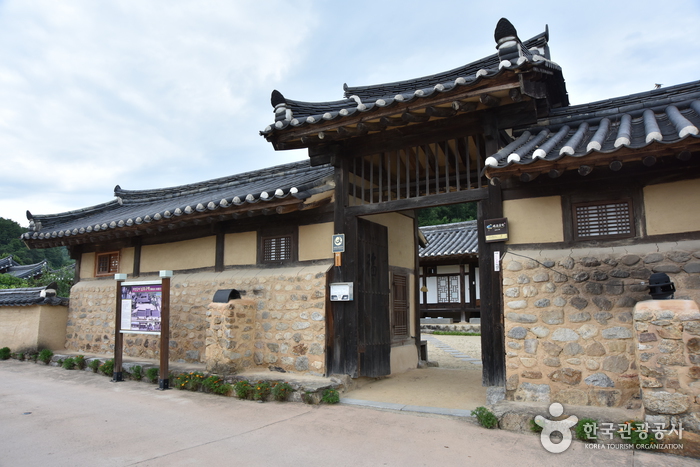
Bonghwa Namho Old House in Bonhwa-gun is a Gyeongsangbuk-do cultural treasure with a history going back 140 years - but the original materials were of such high-quality that the Old House has hardly detiorated at all. The toilet is shared, but has recently been renovated to a high standard. In the spacious yard you can enjoy traditional games such as Tuho, Neolttwigi, and Jegichagi. The house is convenient for transport, with Bonghwa Station (on the Yeongdong Line) just a 15-minute walk away, and a city bus stop in the village.
19.9Km 2024-10-15
42, Bokju-gil, Andong-si, Gyeongsangbuk-do
+82-54-841-8292
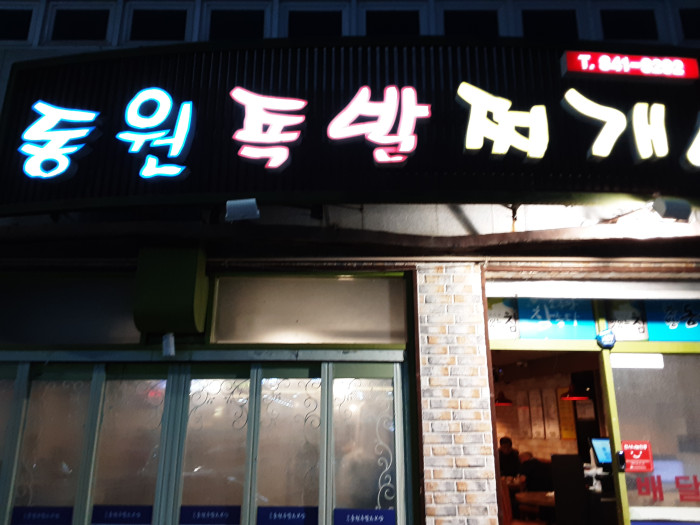
Jokbal (pig’s feet) is a representative food loved by Koreans. This restaurant's signature menu is braised pigs' feet. This Korean dishes restaurant is located in Andong-si, Gyeongsangbuk-do.