
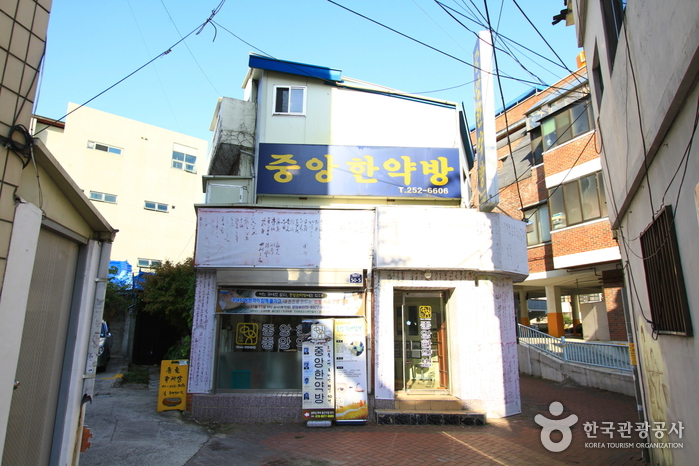
Petite Joongang Family Museum (작은 중앙가족박물관(한방개인박물관))
1.1Km 2021-12-20
50-5, Jungang-daero 77-gil, Jung-gu, Daegu
+82-53-252-6606
Petite Joongang Family Museum is a family-owned museum that showcases the antiquities of Oriental medicine, as practiced by a local family for three generations over 90 years in the city of Daegu, a city known for its 350-year-old medicinal herb market. The tools used by the family including scales, medicine bowls, prescriptions and manuscripts of traditional medicine tell the history of Oriental medicine in Korea as well as the family's dedication to treatment using the traditional herbal medicine practice. The museum serves its visitors with healthy Oriental medicine tea, while the living family members offer free medical consultation.
Korea Medical Institute Daegu Branch ((재)한국의학연구소 대구분사무소)
1.1Km 2025-10-23
B1-B2, 20 Jungang-daero 66-gil, Jung-gu, Daegu
Korea Medical Institute (KMI), a leader in 'K-health checkups,' operates health checkup centers across eight locations nationwide, from Seoul to Jeju. KMI has been striving to prevent and detect diseases early. It has led the popularization of comprehensive medical examinations in Korea. Based on 43 years of accumulated data and expertise, KMI has enhanced its capabilities in health checkups, services, and brand value.
By utilizing its diagnostic data accumulated over the years, KMI provides accurate test results and follow-up care promptly.
KMI will stay committed to becoming a lifetime health management partner and 'K-health checkup' leader by leveraging its excellence in Korean medicine, beyond health checkups for foreign patients.
Daegu Modern History Museum (대구근대역사관)
1.1Km 2025-08-11
67 Gyeongsanggamyeong-gil, Jung-gu, Daegu
+82-53-606-6430
Located in Pojeong-dong, Jung-gu, Daegu, the Daegu Modern History Museum was officially opened on January 24, 2011. The museum is housed in a building that is rich in history. First built by Japan in 1932 as a bank, the building was once a symbol of repression and exploitation during the Japanese colonial rule. Today, the building stands proudly as an educational site and bears the title of ‘Cultural Property No. 49’ in recognition of its historical and cultural significance.
The two-story museum (1,971 square meters) houses a permanent exhibition (1F), featured exhibition (2F), and a hands-on exhibition room and classroom for diverse cultural activities and lectures. The history exhibition features the lifestyle of Daegu citizens, local customs, and education of the late 19th century and the early 20th century.
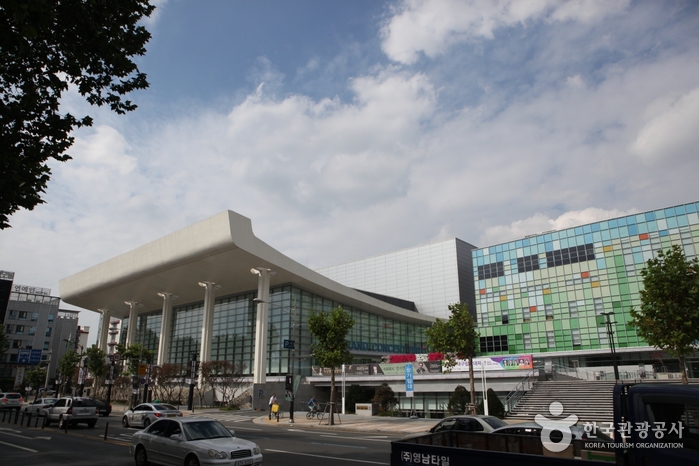
Daegu Concert House (Formerly Daegu Citizens' Hall) (대구콘서트하우스 (구.대구시민회관))
1.2Km 2022-10-26
141, Taepyeong-ro, Jung-gu, Daegu
+82-53-250-1400
Daegu Concert House, previously Daegu Citizen’s Hall, had undergone renovations from April 2011 to August 2013 to reconstruct eaves and columns of the large concert halls and to build a performance support hall perfect for international concerts. The hall is equipped with sound facilities matching international standards. Grand Hall has 1,284 seats, Chamber Hall (small concert hall) has 248 seats, and the parking lot can accommodate a total of 387 cars throughout 215 spaces in the basement level parking lot and 72 spaces in the parking tower. In addition, the concert hall houses an exhibition hall, practice room, and community facilities. In particular, the Grand Hall offers vivid, visible, and acoustic effect by shortening the distance between the performers and audience so that it fits the international standard for concert halls with the best sound facilities.
![Omega - Hyundai Daegu Branch [Tax Refund Shop] (오메가 현대 대구점)](http://tong.visitkorea.or.kr/cms/resource/02/2884002_image2_1.jpg)
Omega - Hyundai Daegu Branch [Tax Refund Shop] (오메가 현대 대구점)
1.2Km 2024-04-18
2F, 2077, Dalgubeol-daero, Jung-gu, Daegu
-
![Venus [Tax Refund Shop] (비너스)](http://tong.visitkorea.or.kr/cms/resource/07/2884007_image2_1.jpg)
Daegu Yangnyeongsi Museum of Oriental Medicine (대구약령시 한의약박물관)
1.2Km 2023-01-06
49, Dalgubeol-daero 415-gil, Jung-gu, Daegu
+82-53-253-3359
Yangnyeongsi Museum of Oriental Medicine continues to provide an opportunity to experience the 350-year-old traditions of Oriental medicine and medicine markets through multiple exhibitions and various hands-on experience programs. The museum provides graphics and animation shows in four languages as well as approximately 300 items on display. The first floor also houses the nation’s only wholesale market of traditional medicinal herbs.
Daegu Jeil Church (대구제일교회)
1.2Km 2024-10-11
50, Gukchaebosang-ro 102-gil, Jung-gu, Daegu
+82-53-253-2615
Daegu Jeil Church is the oldest Protestant Church in Gyeongsangbuk-do Province. Initially established in 1898 over four tile-roofed houses, Daegu Jeil Church was rebuilt in 1933 with traditional and Western architectural designs. Subsequently, Deacon Lee Ju-Yeol dedicated a 33m bell tower in 1937, whlie the church underwent an interior renovation in 1969, and an expansion in 1981.
In conjuction with its physical development, which was at the forefront of the nation's architectural modernization, the church contributed largely to modernization and expansion of Christianity in the region as well as in Korea. In addition, by introducing modern medicine and education to the citizens of Daegu, the founders of Daegu Jeil Church stimulated social development in the region.
Gyonam YMCA (교남YMCA)
1.3Km 2023-01-20
22, Namseong-ro, Jung-gu, Daegu
Established in December 1921, the Gyonam YMCA Hall served as a gateway to the modern movement in Daegu. During the Japanese colonial period, it was a meeting place and a base for Christian national movements such as the Product Promotion Movement, the Christian Rural Movement, and the Singanhoe Movement. This hall is a two-story red brick building built by the American missionary Blair in 1914. It retains the characteristics of the 1910s and '20s masonry construction, such as decorating the first and second floors with cornices and securing a square window with arches. In the early days, it was used as a place for students' education, evening classes, and lectures.
 English
 한국어
한국어 日本語
日本語 中文(简体)
 Deutsch
 Français
 Español
 Русский


