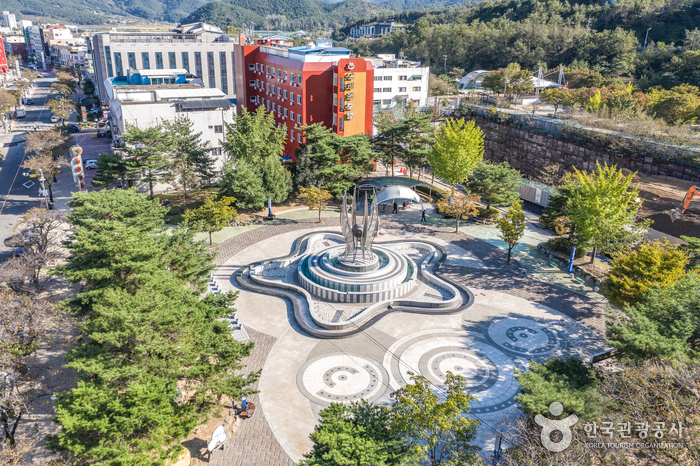
Bugok Hot Springs Special Tourist Zone (부곡온천 관광특구)
4.0M 2024-02-27
77 Oncheonjungang-ro, Bugok-myeon, Changnyeong-gun, Gyeongsangnam-do
Bugok, named after its cast-iron pot-like terrain, boasts the hottest spring in Korea with a temperature of 78°C. It features various attractions such as Hanol Park and fountain park for performances, a refreshing trail, golf courses, and foot baths. Bugok Hot Springs is believed to be effective for arthritis, skin diseases, and fatigue recovery. Nearby attractions include Uponeup Marsh, Hwawangsan Mountain, and the Gaya Tombs.

Mannyeongyo Bridge (만년교)
5.9Km 2023-06-27
42, Wondari-gil, Changnyeong-gun, Gyeongsangnam-do
+82-55-530-1471
Mannyeongyo Bridge in Yeongsan, Changnyeong is an arch-shaped stone bridge over the village creek. Because the creek flows from the south of the mountain, the bridge is also known as Namcheongyo Bridge. Natural rocks found on the sides of the creek are used as stone flooring, and well-polished granite stones are stacked on top of the rocks in the shape of an arch. The top of the bridge is layered with round natural stones and covered with soil as a pathway for people crossing the bridge. The road surface curves and stretches on both ends, making the atmosphere of the bridge more cozy. It was first built in the 4th year of King Jeongjo of the Joseon dynasty (1780) and rebuilt in the 29th year of King Gojong (1892). It is said that the bridge is still strong enough for villagers to pass, and flood-proof. (Source: Cultural Heritage Administration)
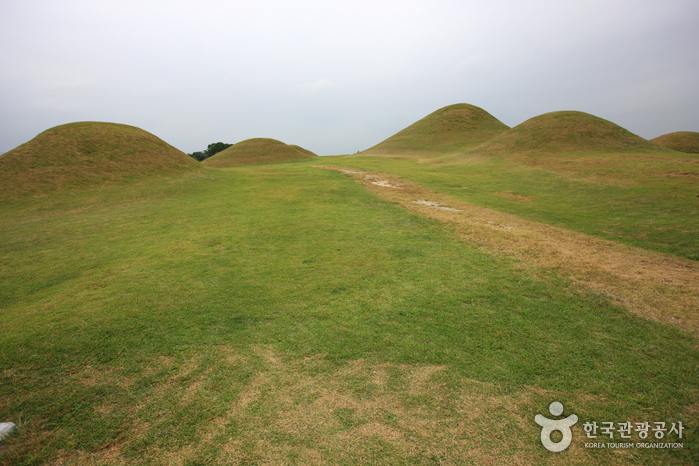
Ancient Tombs in Gyo-dong and Songhyeon-dong, Changnyeong (창녕 교동과 송현동 고분군)
13.9Km 2023-06-27
34, Changmil-ro, Changnyeong-gun, Gyeongsangnam-do
+82-55-530-1471
Songhyeon-dong Ancient Tombs, located under Mokmasanseong Fortress at the west foot of Hwawangsan Mountain, are large ancient tombs located in the southwest by the road leading to Hyeonpung. The Gyo-dong Ancient Tombs are dozens of ancient tombs that were once gathered around a large royal tomb, which among only eight tombs with damaged mounds now remain. Some of these ancient tombs were excavated by the Japanese between 1918 and 1919, and most of the relics were moved to Japan, and only some of them remain in Korea. According to the results of the investigation at the time, the large tombs were either built in a passageway form or an entry gate form.
It is said that a large number of relics such as jewelry made of various precious metals, including gold crowns, pure gold transplants, and copper, iron armour, and earthenware were excavated. The excavation report left by the Japanese is simple, so it is not possible to accurately grasp the structure of the Gyo-dong Ancient Tombs and the excavated relics. Twenty-one of the existing tombs have been restored so far, and only one of them has an accessible entrance.
The tombs in Songhyeon-dong are largely divided into two areas. Area 1 used to be large tombs with 80 tombs west of the foot of Mokmasan Mountain, but now only about 16 tombs remain. It is said that there were about 20 tombs in the second area near the stone Buddha in Songhyeon-dong, but now most of them have turned into rice paddies, and only a few tombs reveal their original appearance. Since the tombs are close to the Gyo-dong tombs, the structure of the tomb and the nature of the relics are believed to be almost the same. Along with the Gyo-dong tombs, a large number of relics were excavated in 1918, but the whereabouts of some of the relics are unknown.
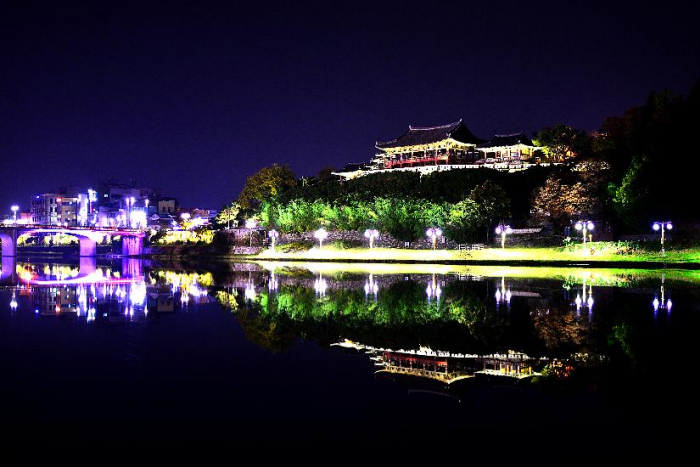
Miryang Yeongnamnu Pavilion (밀양 영남루)
15.1Km 2021-06-21
324, Jungang-ro, Miryang-si, Gyeongsangnam-do
+82-55-356-1355
Located within Adongsan Mountain next to the Namcheongang River in Miryang, Yeongnamnu Pavilion (National Treasure No. 147) is one of three great pavilions of Korea together with Choseongnu Pavilion of Jinju and Bubyeongnu Pavilion of Pyeongyang.
A two-story-pavilion with a hip-and-gable roof was constructed at the same site during the Silla period, as part of Yeongnamsa Temple, which was one of the five great temples at the time. The pavilion was torn down and re-constructed during the ruling of King Gongmin in Goryeo dynasty. The current structure was built in 1884 and designed by then-magistrate Yi In-jae.
The pavilion area consists of Neungpagak, Chimnyugak, Sajumum Gate, Iljumun Gate and Cheonjingung. Stone-carved calligraphy from the Joseon period abounds in the pavilion complex, drawing many visitors.
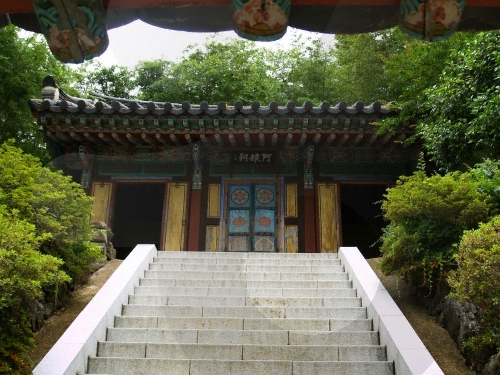
Aranggak Pavilion (아랑각)
15.2Km 2025-01-07
324, Jungang-ro, Miryang-si, Gyeongsangnam-do
+82-55-359-5788
Located in Naeil-dong in Miryang, Gyeongsangnam-do Province, Aranggak Pavilion sits in a bamboo forest. It is said to have been built to appease the spirit of a young woman named Arang, who met an unfortunate death.
According to the legend, Arang was mistakenly killed by a low-ranking officer who had loved her and tried to hug her. After her death, she becomes a ghost and appears to every district magistrate (highest-ranking officer in a region) to appeal for the investigation of her unfair death, but each district magistrate dies of a heart attack.
Then, a new district magistrate by the name Lee is dispatched to the area. Unlike his predecessors, Lee listens to the story of the ghost and finds the low-ranked officer who had killed her and punishes him. He found Arang’s body and holded a religious ceremony on her behalf. Aranggak was also built in her memory.
Every year, an event called Arangje is held on April 16 by the lunar calendar in Aranggak Pavilion. Young maidens dressed in white hanbok perform a religious ceremony to soothe the sorrow of Arang. There is also a saying that the spirit of Arang will preserve the love of those couples who visit the pavilion together.
Mubongsa Temple (무봉사)
15.3Km 2021-06-15
16-11, Yeongnamnu 1-gil, Miryang-si, Gyeongsangnam-do
+82-55-354-3296
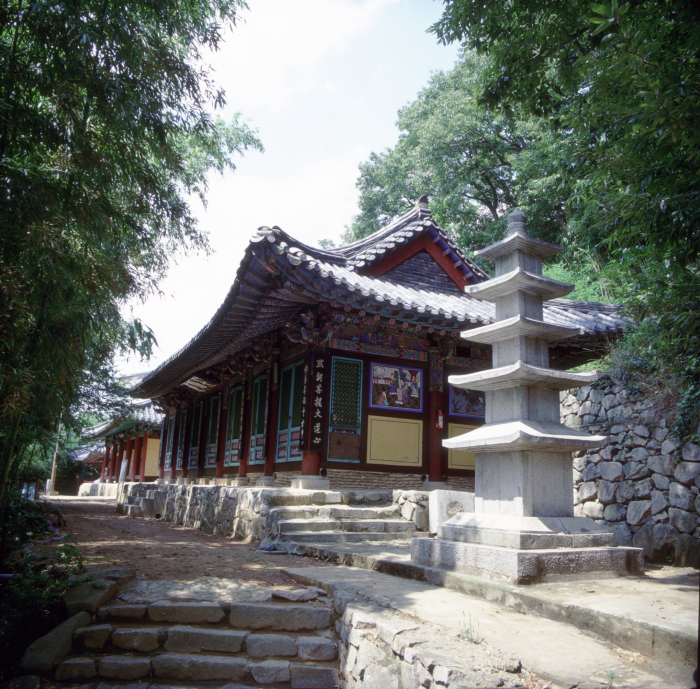
Mubongsa, meaning “a sacred place where phoenix used to dance,” is a small Buddhist temple. It is conveniently located near one of the Miryang’s top attractions, Yeongnamnu Pavilion. Perched high on the cliffs above the upper reaches of the river is Aranggak Pavilion. A flight of stairs from this pavilion lead to the famous Yeongnamnu Pavilion and Mubongsa Temple. Enshrining a stone seated Buddha statue designated as Treasure No. 493, the temple has long been a popular site among poets and painters for its picturesque landscape.
Hackberry Tree in Bukbu-ri (창원북부리팽나무)
15.8Km 2024-02-15
102-1 Bukbu-ri, Uichang-gu, Changwon-si, Gyeongsangnam-do
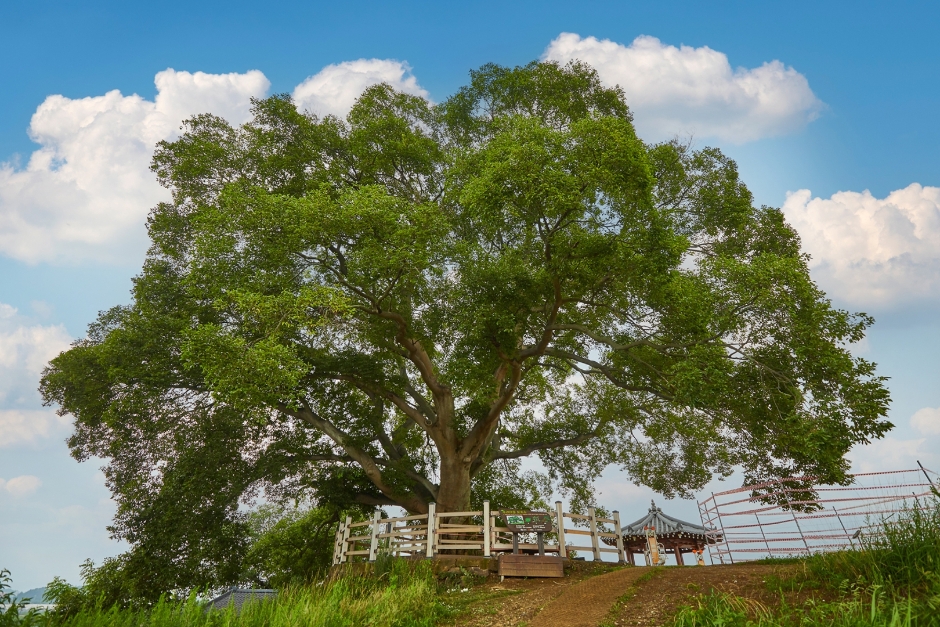
Hackberry Tree in Bukbu-ri is the most famous “celebrity tree” in Changwon. It became famous after appearing in episodes 7 and 8 of the popular drama “Extraordinary Attorney Woo (2022).” The tree sits on a hilltop, allowing visitors to enjoy the cool breeze and the panoramic view of Changwon's old neighborhood. Bukbu-ri village entrance has signposts leading to the hackberry here and there with drawings of dolphins symbolizing the drama (the drama protagonist’s favorite animal), making it convenient for tourists to reach the tree. The hackberry tree is estimated to be over 500 years old, and its size and scale cannot be captured with a camera in one frame. It is a protected tree designated by the state, visitors are advised to refrain from touching or getting close to the tree.
Miryang Museum (밀양시립박물관)
16.0Km 2021-07-20
100, Miryangdaegongwon-ro, Miryang-si, Gyeongsangnam-do
+82-55-359-5589
Miryang Museum features cultural items and materials of the Nakdonggang River area. The purpose of the museum is to effectively preserve, exhibit, and acknowledge the history and culture of the area
through collecting, researching, investigating and organizing the items on display. In addition, the museum was established to enhance cultural nostalgia and contribute to public education.
The museum is comprised of several halls, including a permanent exhibition hall and a temporary exhibition hall, showing the history of
Miryang during the Samhan era and the Joseon dynasty. Collections include various cultural assets designated by Gyeongsangnam-do, as well as an exhibit-style storage of literary works, and folk and daily relics.
Junam Eco-Learning Center (주남저수지 생태학습관)
16.8Km 2021-07-21
32, Junam-ro 101beon-gil, Uichang-gu, Changwon-si, Gyeongsangnam-do
+82-55-225-3499
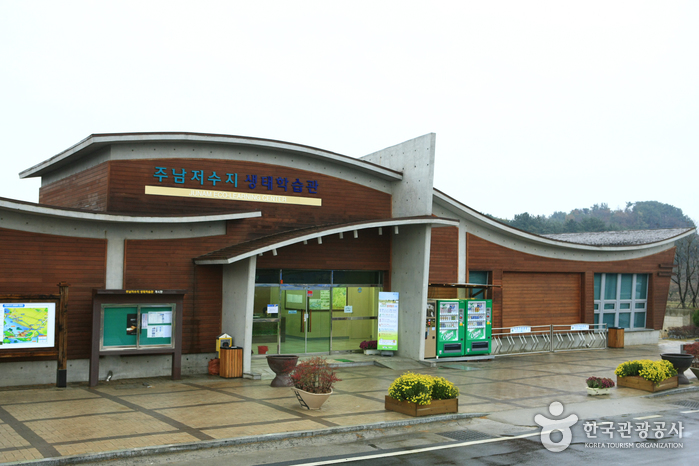
The Junam Eco-Learning Center consists of exhibition galleries, a main hall, and local produce store. Opened in 2004, the center introduces the birds, plants, and insects that are living in and around Junam Reservoir through framed and stuffed samples. In the theater, visitors can watch a video showing the intricate connection between humans and the birds of Junam. The monitors hanging on the outer walls of the galleries show the birds’ flying technique and their ecology. After exploring the center, visitors can take a free bicycle ride to the wetlands to observe the reservoir and migratory birds.
Dalcheongyegok Valley (Changwon) (달천계곡(창원))
17.8Km 2024-02-28
145 Dalcheon-gil, Buk-myeon, Uichang-gu, Changwon-si, Gyeongsangnam-do
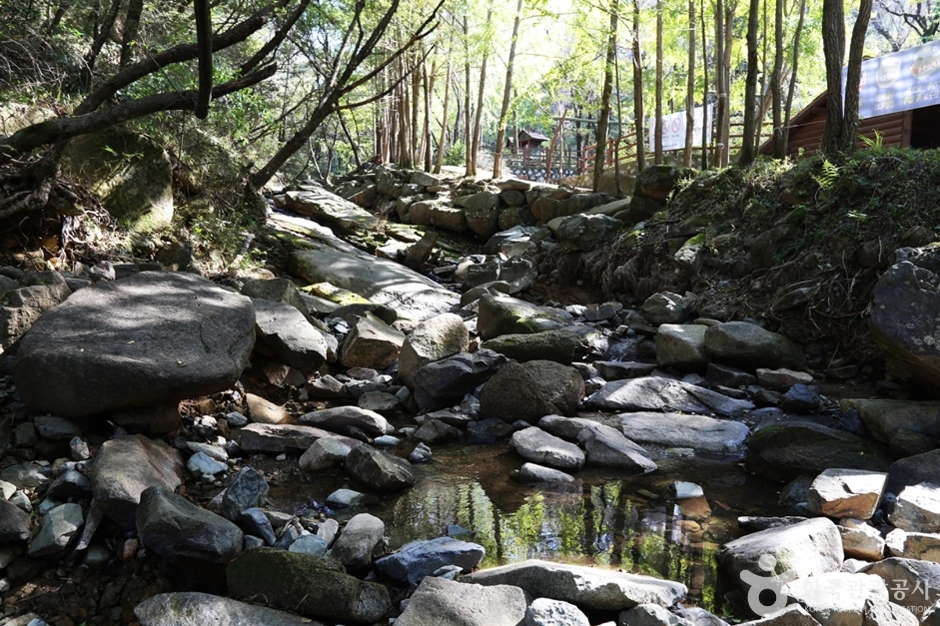
Dalcheongyegok Valley is a favored summer escape in Changwon, known for its clear valley waters flowing over wide rocks and dense surrounding foliage. A notable feature within the valley is a rock bearing the inscription "Dalcheon-dong" by Heo Mok, an official of the Joseon dynasty who chose this serene retreat for his retirement. During spring, the valley transforms into a renowned flower-viewing destination, adorned with the vibrant hues of azaleas in full bloom.
 English
 한국어
한국어 日本語
日本語 中文(简体)
 Deutsch
 Français
 Español
 Русский


