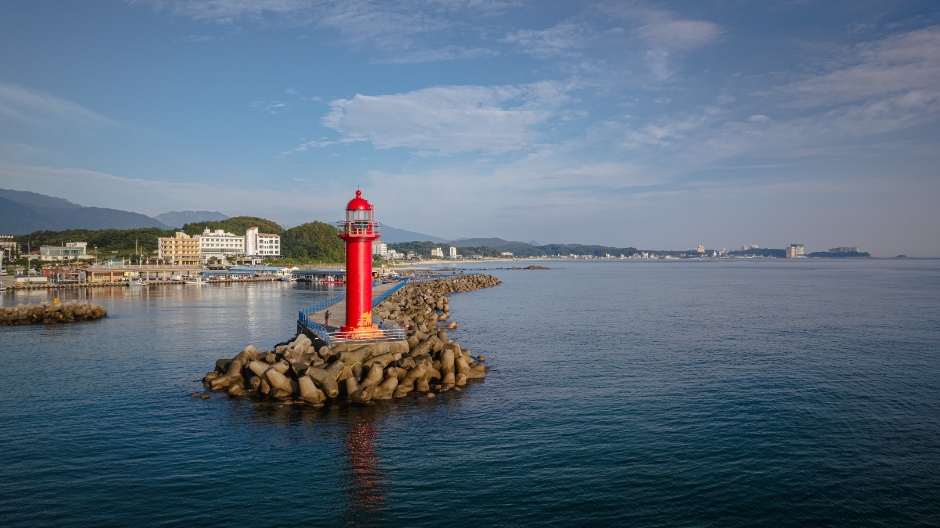
Hujin Harbor (후진항)
12.1Km 2025-10-28
4-13Yongho-ri, Ganghyeon-myeon, Yangyang-gun, Gangwon-do
The first attraction Lee Know strolled to after unpacking. It's charmingly picturesque with its quaint view of red lighthouse overlooking the sea, anchored small boats, and a line of fresh seafood centers. On the second and fourth weekends, Beach Market attracts many visitors. Try to find the red chair where Lee Know sat in his vlog.
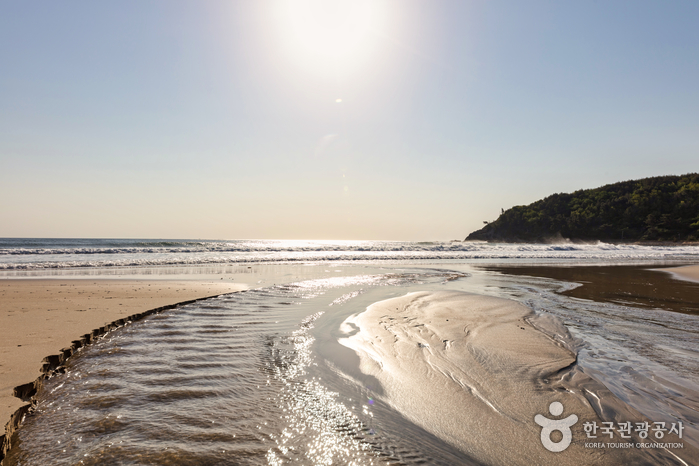
Seorak Beach (설악해수욕장)
12.2Km 2025-10-27
Dwinnaru 2-gil, Ganghyeon-myeon, Yangyang-gun, Gangwon-do
Known for its shallow waters and clean white sand, this beach is a sanctuary for surfers. It is conveniently located near famous tourist sites such as Seoraksan Mountain and Naksansa Temple, making it ideal for sightseeing. Just a five-minute walk from Hujin Harbor, go for a walk during sunset period like Lee Know and enjoy the beautiful sunset in the background.

Cheongganjeong Pavilion (청간정)
12.3Km 2024-03-18
5110 Donghae-daero, Toseong-myeon, Goseong-gun, Gangwon-do
Cheongganjeong Pavilion, located atop a cliff, was built during the mid-Joseon period. It is situated at the point where Cheonggancheon Stream, originating from Seoraksan and Cheonhusan Mountains, flows into the East Sea. The view of the pine forest and the East Sea draws many visitors. Nearby attractions include Cheongganhaebyeon Beach, Cheonjinhaebyeon Beach, Ayajinhaebyeon Beach, as well as Bongpo Port and Ayajin Port.
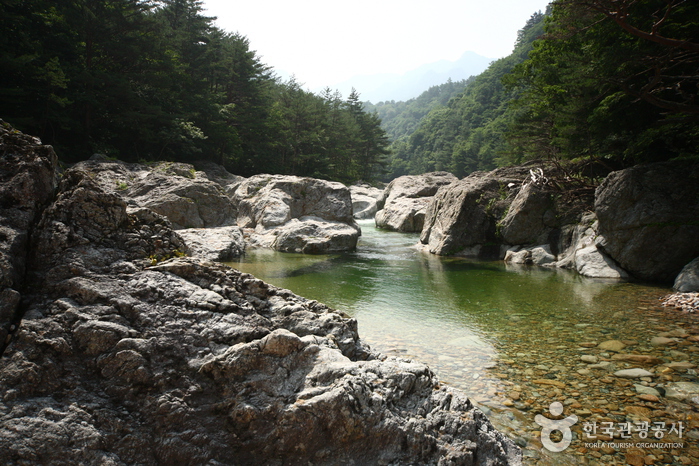
Baekdamgyegok Valley (백담계곡)
12.4Km 2021-06-25
150, Baekdam-ro, Inje-gun, Gangwon-do
+82-33-801-0977
Baekdamgyegok Valley stretches over an eight kilometer section from Baekdamsa Temple to Yongdae-ri in Inje-gun. The valley has a road, but it is closed to general traffic. The valley is located within Seoraksan National Park. The stream running through the valley is wide and deep. The name of the valley comes from the claim that there are one hundred ('baek' in Korea) pools ('dam') of water along the valley. Baekdamgyegok Valley features clean water and lush forests.
Naksansa Temple (낙산사)
12.8Km 2025-10-23
100 Naksansa-ro, Yangyang-gun, Gangwon-do
+82-33-672-2475
This ancient temple was built in the 11th year of King Munmu’s reign of Silla (671) by the Buddhist monk Uisang. Naksansa Temple is one of the foremost sights of Yangyang, and one of the most historic sites in the region. Along with Ganghwa’s Bomunsa Temple and Namhae’s Boriam Hermitage, it is said to be one of the three centers of the cult of Avalokitesvara in Korea. Its handsome view overlooking the East Sea has earned it a spot in the Eight Sights of Gwandong (eight famous sights in Yeongdong region of Gangwon-do), documented throughout the ages in many classic literature and poetry. Today’s Naksansa Temple is a product of many restorations and expansions, and has many examples of cultural heritage within its walls, including a 16 meter-tall statue of the Avalokitesvara Bodhisattva. A mountain fire in 2005 resulted in the loss of 20 buildings, including the building that housed its bronze bell. The temple also operates templestay programs available through its website.
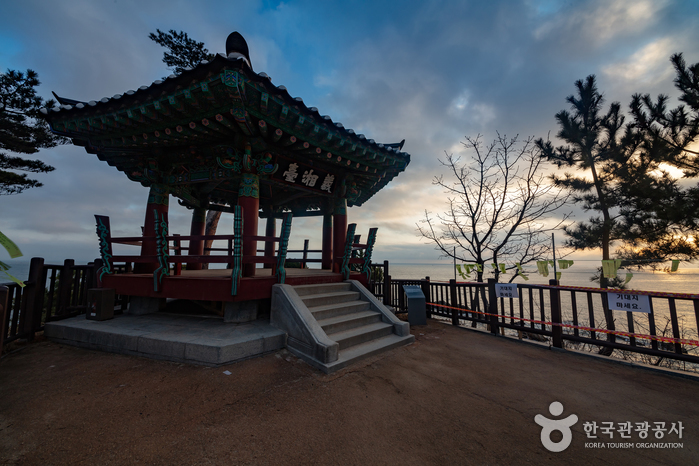
Uisangdae Pavilion (낙산사 의상대)
13.0Km 2024-12-26
100 Naksansa-ro, Yangyang-gun, Gangwon-do
+82-33-672-2447
This pavilion is located on a seaside cliff on the way from Yangyang’s Naksansa Temple to Gwaneumgul Cave of Hongnyeonam Hermitage. The word “dae” in Uisangdae refers to a building built at a vantage point for areas with beautiful scenery. Indeed, the view of the East Sea and the coast from Uisangdae Pavilion awarded its recognition as one of the Eight Sights of Yangyang, and a must-visit place for all visitors to Naksansa Temple. Jeong Cheol (pen-name: Songgang), a famed scholar and writer of the poem Song of Diamond Mountains, chose the pavilion as one of the Eight Sights of Gwandong, and the pavilion is today one of the popular sites for sunrise-viewing on the east coast of Korea. Together with Hongnyeonam Hermitage, it is designated as the Scenic Site No. 27 of Korea under the name “Uisangdae Pavilion and Hongnyeonam Hermitage of Naksansa Temple, Yangyang.” Uisangdae is named after Uisang, a respected Silla-era Buddhist monk who is said to have founded this temple in 671 (11th year of King Munmu’s reign of Silla), and many stories of his deeds can still be found in the temple. For instance, Uisangdae is said to be the site where he meditated before founding Naksansa Temple at its present site. Today’s pavilion was restored to its present hexagonal form in 1995.
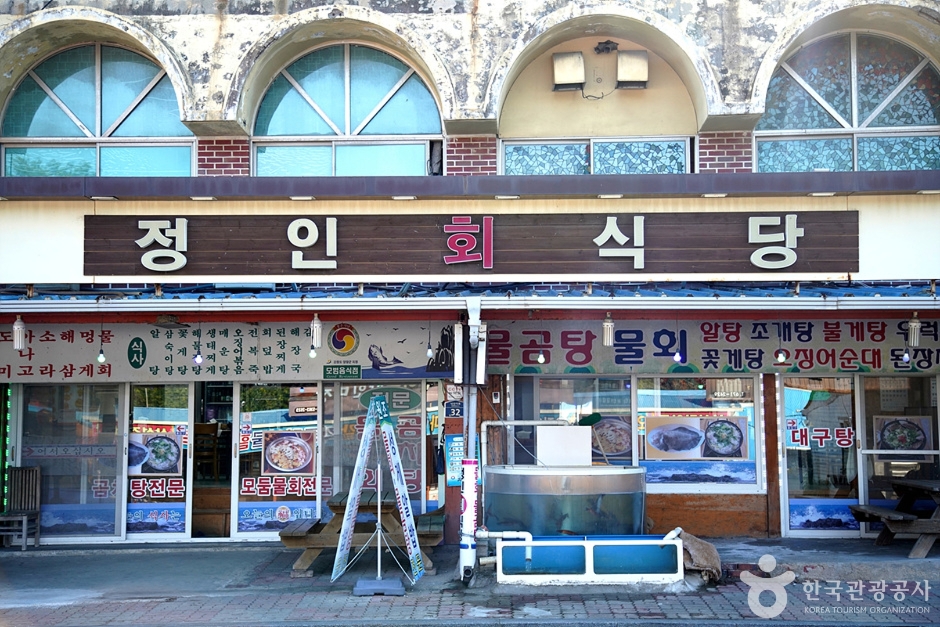
Jeongin Hoesikdang (정인회식당)
13.2Km 2024-02-16
32 Naksansa-ro, Ganghyeon-myeon, Yangyang-gun, Gangwon-do
Jeongin Hoesikdang, situated near Naksan Beach in Yangyang, specializes in mul hoe (cold raw fish soup) and saengseon jjigae (fish jjigae). It prides itself on using fresh fish, sourced from nearby ports and used within a day of purchase. The restaurant's signature dish is sanureok maeuntang (spicy rockfish stew). Other popular menu items include modeum mul hoe (assorted cold raw fish soup), seongge albap (sea urchin roe rice), and ojingeo hoe deopbap (raw squid bibimbap). Additionally, soups like gomchi tang (spicy moray eel stew) and haemul tang (spicy seafood stew) are also highly recommended. For guests interested in local attractions, the scenic Naksansa Temple and Naksanhaebyeon Beach are nearby.
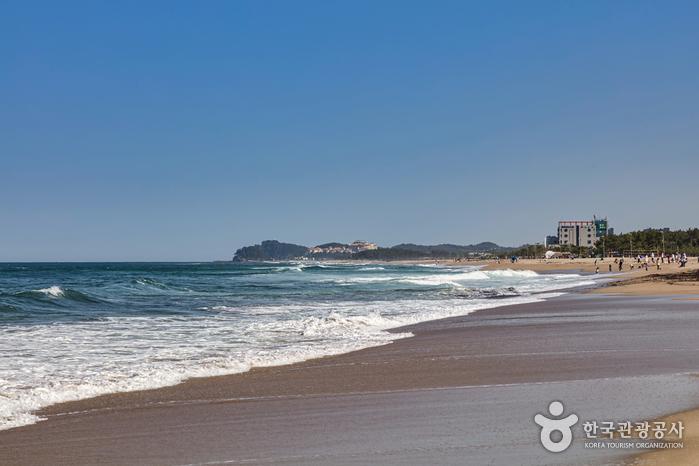
Naksan Beach (낙산해수욕장)
13.6Km 2024-12-27
59 Haemaji-gil, Yangyang-gun, Gangwon-do
+82-33-670-2518
Naksan Beach is one of the most famous beaches in Yangyang, located in Joseon-ri, Yangyang-eup, Yangyang-gun, Gangwon-do. Since its opening in 1963, it has attracted more than 1 million visitors each year, its reputation being rivaled only by the Gyeongpodae Beach on the east coast of Korea. The 4 kilometer-long sand beach contrasts magnificently with the lush pine trees of the area. The water is less than 1.5 meter deep, making it a good place for all ages. Naksanhang Port marks one end of the beach, behind which Naksan Mountain, the location of Naksansa Temple, can be found. The other end has a lake formed at the delta of Namdaecheon Stream, which originates from Seoraksan Mountain. Many cafes, convenience stores, restaurants, and accommodations cater to the needs of the visitors. The beach sees considerable traffic in winter as well, when it serves as a popular venue for sunrise-watching, particularly for the New Year’s Day festival.
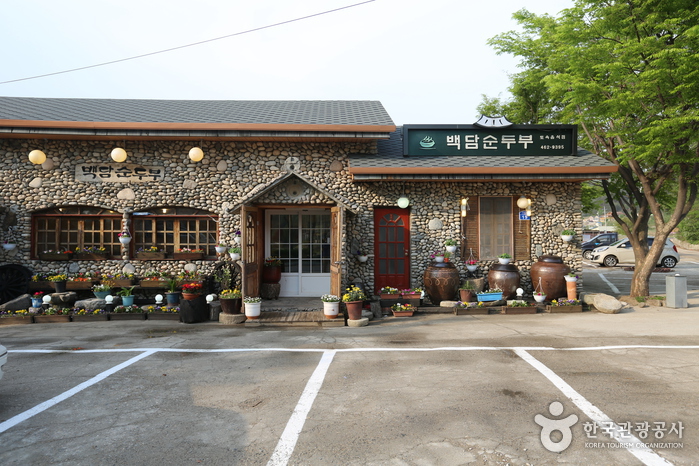
Baekdam Soft Bean Curd (백담순두부)
13.6Km 2024-03-15
19 Baekdam-ro, Buk-myeon, Inje-gun, Gangwon-do
This restaurant is a showcase for Inje’s celebrated culinary offering: Grilled Dried Pollack. The pollack is prepared through a natural drying process in the brisk winter winds, which gives it a salty flavor and a satisfying chewy texture. This makes it a popular choice as both an accompaniment to drinks and as a side dish on Korean dining tables. Here, it is grilled to perfection with a coating of red pepper paste, offering a flavorful experience with a reduced fishy smell and a delightful sweet and tangy taste. Also featured on the menu are the Soft Bean Curd Set Menu and the Wild Vegetable Bibimbap. The soft and warm bean curd, along with bibimbap—a harmonious mix of freshly-grown wild vegetables from Gangwon State topped with spicy red pepper paste—each provide a nutritious wholesome meal.
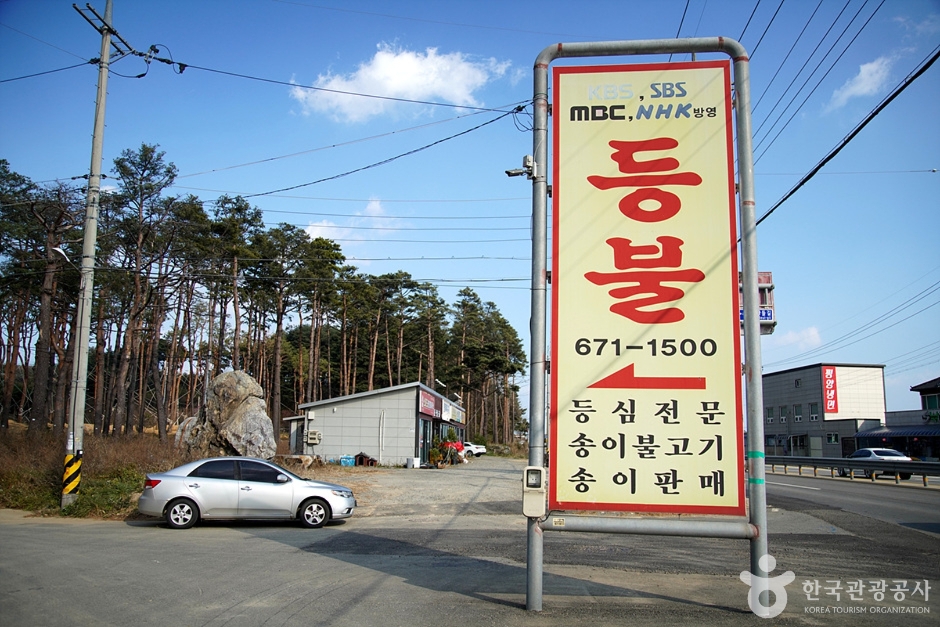
Deungbul Garden (등불가든)
14.0Km 2024-02-16
23 Powolladeul-gil, Yangyang-eup, Yangyang-gun, Gangwon-do
Located near Naksanhaebyeon Beach, Deungbul Garden specializes in Korean beef and pine mushroom dishes. Its signature dishes are hanu gui (grilled Korean beef) and songibeoseot jeongol (pine mushroom hot pot). The restaurant prides itself on serving tender and juicy Korean beef, which pairs exceptionally well with the pine mushrooms, a regional specialty known for their superior flavor, especially when grilled with the beef. Pine mushrooms, named for their growth under pine trees and their pinecone-like aroma, are celebrated for their fragrance, scent, and texture, making them a premier ingredient in Korean cuisine. The menu also features other delectable options like songibeoseot bulgogi (pine mushroom and bulgogi), yukhoe (beef tartare), and kongnamul doenjang jjigae (bean sprout soybean paste jjigae).
 English
 한국어
한국어 日本語
日本語 中文(简体)
 Deutsch
 Français
 Español
 Русский


