
Order of St. Benedict Waegwan Abbey (성베네딕도회 왜관수도원)
12.8Km 2024-02-13
61 Gwanmun-ro, Waegwan-eup, Chilgok-gun, Gyeongsangbuk-do
The Order of St. Benedict Waegwan Abbey, established by monks from the German Order of St. Benedict, serves as a sanctuary of peace and spirituality in South Korea. These monks sought refuge during the Korean War, fleeing religious persecution following the closure of the Abbey of the Holy Cross at Yenki in Manchuria and Tokwon Abbey in North Korea. In adherence to the teachings and spirit of St. Benedict, the monks at Waegwan Abbey dedicate themselves to a life of work and prayer, actively participating in Catholic evangelization and social work. Additionally, they contribute to the community through various initiatives, including publishing and printing at Bundo Book, managing farms, and running educational projects.
![Moda Outlet - Gimcheon Gumi Branch [Tax Refund Shop] (모다아울렛 김천구미점)](http://tong.visitkorea.or.kr/cms/resource/95/2883795_image2_1.jpg)
Moda Outlet - Gimcheon Gumi Branch [Tax Refund Shop] (모다아울렛 김천구미점)
13.9Km 2025-10-27
1417, Apo-daero, Apo-eup, Gimcheon-si, Gyeongsangbuk-do
-
![Columbia-Moda Outlet - Gimcheon Gumi Branch [Tax Refund Shop] (컬럼비아 모다아울렛 김천구미점)](http://tong.visitkorea.or.kr/cms/resource/97/2883797_image2_1.jpg)
Columbia-Moda Outlet - Gimcheon Gumi Branch [Tax Refund Shop] (컬럼비아 모다아울렛 김천구미점)
13.9Km 2025-10-27
1417, Apo-daero, Apo-eup, Gimcheon-si, Gyeongsangbuk-do
-
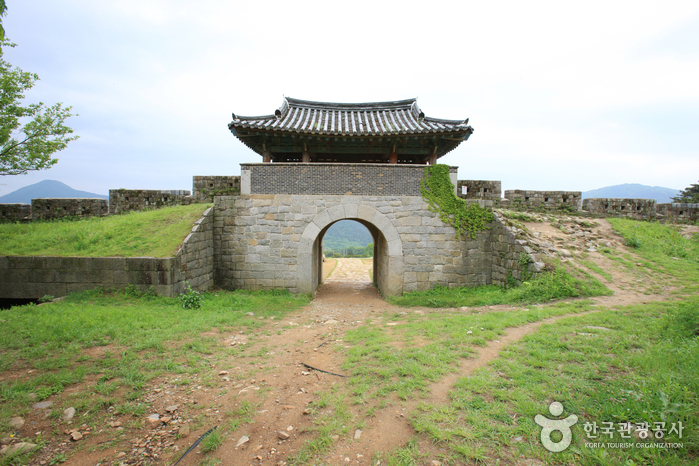
Chilgok Gasansanseong Fortress and Gasanbawi Rock (칠곡 가산산성 및 가산바위)
15.5Km 2025-01-08
Gasan-ri, Chilgok-gun, Gyeongsangbuk-do
+82-54-979-6452
Gasansanseong Fortress in Chilgok-gun, Gyeongsangbuk-do is located in the middle of Chilgok-gun, between Daegu Metropolitan City and Gumi. Gasansan Mountain (901m in elevation) is 10 kilometers west of Palgongsan Mountain. Because it boasts seven peaks, the mountain was called Chilbongsan Mountain. After enduring foreign invasions, including the Imjin War (1592-1598) and the Qing invasion of Joseon (1636), the Joseon rulers built a fortress over the course of 100 years to aid in Korea’s defense. It is Korea’s only three-layered fortress, consisting of inner, outer and central walls. The flat Gasanbawi Rock at the mountain’s peak, which is large enough to accommodate 100 people at a time, offers a great view of Daegu Metropolitan City.
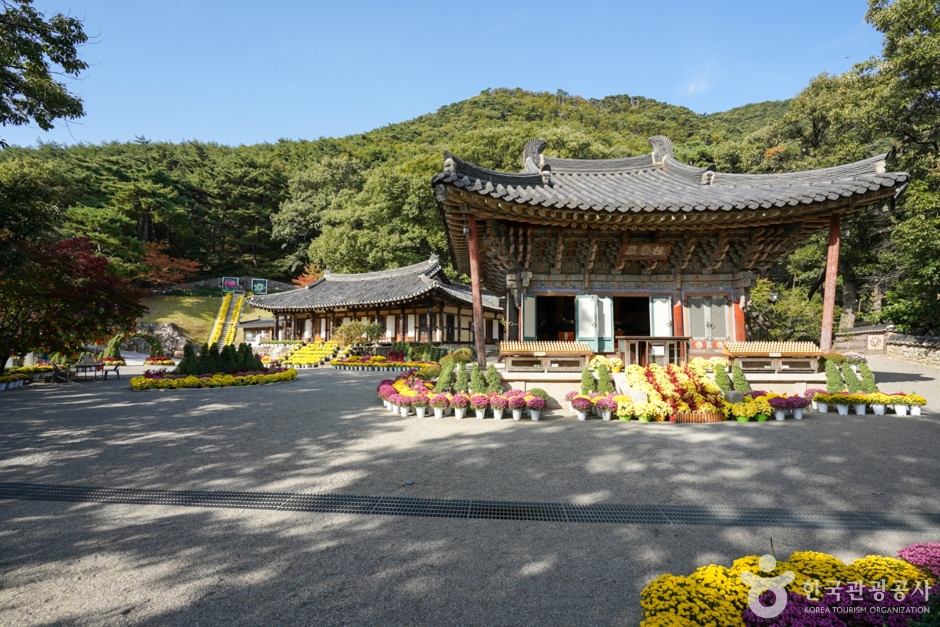
Dorisa Temple (Gumi) (도리사(구미))
17.1Km 2024-02-23
526 Dorisa-ro, Haepyeong-myeon, Gumi-si, Gyeongsangbuk-do
Dorisa Temple, established in 417 as the earliest temple of the Silla dynasty on Naengsan Mountain, is steeped in legend. It's said that even in winter, the peach and plum blossoms here were in full bloom, marking the site as auspicious for temple construction. Hence, the temple's name, Dorisa, derives from combining syllables of “peach” (do) and “plum” (ri). The temple is home to notable cultural assets such as Geungnakjeon Hall, a unique Stone Pagoda constructed from bricks, and the Wooden Seated Amitabha Buddha, crafted from juniper wood. For those seeking spiritual respite, the temple offers templestay programs in three distinct categories: one-day, experience, and relaxation.
 English
 한국어
한국어 日本語
日本語 中文(简体)
 Deutsch
 Français
 Español
 Русский


