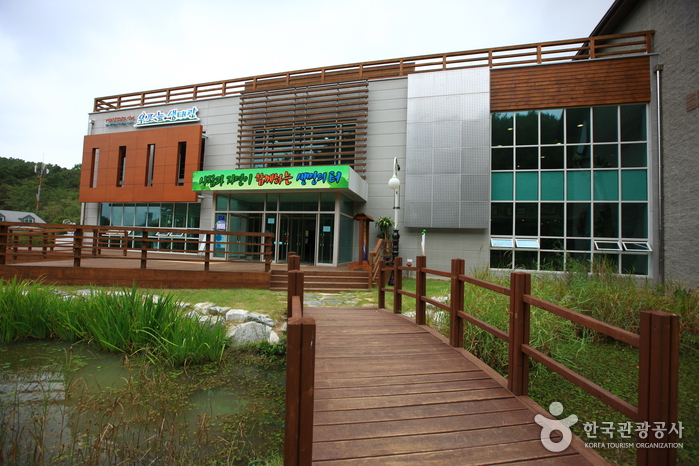
Upo Wetland Eco Center (우포늪생태관)
.0M 2021-08-23
220, Uponeup-gil, Changnyeong-gun, Gyeongsangnam-do
Upo Wetland Eco Center is a wetland education center at the largest wetland in Korea. The center collects data and conducts research on various wild wetland animals such as birds, fish, mammals, amphibians, and reptiles, and displays these to the public as well as promotes the message that humans are also part of nature and educates visitors on how humans can live in harmony with nature.
To help visitors learn more about the ecological environment, the center consists of various galleries: Understanding Upo Wetland, the Four Seasons of Upo Wetland, Living Upo Wetland, Families of Upo Wetland, and Understanding the Ecological Environment. Each gallery exhibits dynamic models and videos, as well as hands-on interactive programs.
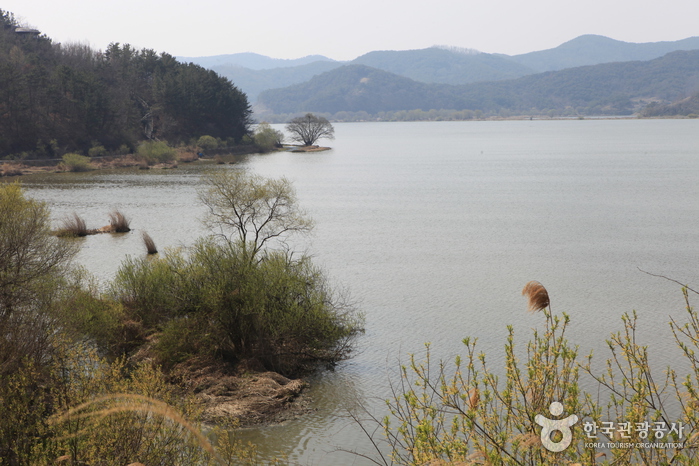
Changnyeong Upo Wetland (창녕 우포늪)
1.1Km 2023-02-13
220, Uponeup-gil, Changnyeong-gun, Gyeongsangnam-do
Upo Wetland is the largest natural wetland in Korea. The wetland takes up three different areas of Changnyeong-gun with a total size of 2,314,060 square meters. Created approximately 140 million years ago, the wetland was formed when the soft ground collapsed and water filled the area to form swamps and lakes, where dinosaurs played. Dinosaur footprints can be found at Sejin-ri near Upo Wetland.
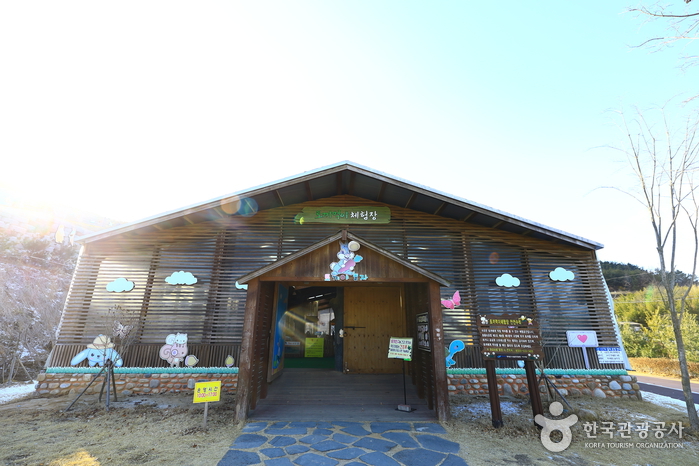
Santokki Park (산토끼 노래동산)
4.5Km 2023-06-27
623 , Ibang-ro, Changnyeong-gun, Gyeongsangnam-do
Santokki Park is a recreational space located behind Ibang Elementary School in Changnyeong-gun. The park was inspired by the children's song "Santokki," meaning mountain rabbit, composed and written by Lee Il-lae who was a staff at Ibang Elementary School. The park comprises a variety of things to do and see related to rabbits, including a rabbit village, rabbit cave, and rabbit feeding experience. There are also spaces dedicated to Lee Il-lae, his work, and small animals. The park is kids-friendly with recreational places where children can freely run around as well as other amenities that help visitors rest and relax.
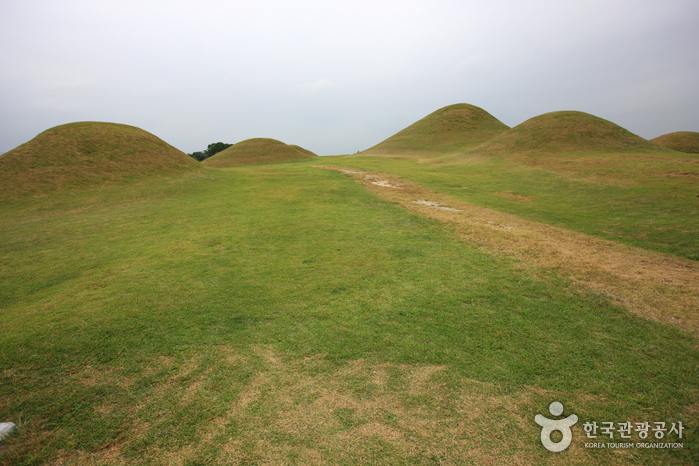
Ancient Tombs in Gyo-dong and Songhyeon-dong, Changnyeong (창녕 교동과 송현동 고분군)
7.7Km 2023-06-27
34, Changmil-ro, Changnyeong-gun, Gyeongsangnam-do
Songhyeon-dong Ancient Tombs, located under Mokmasanseong Fortress at the west foot of Hwawangsan Mountain, are large ancient tombs located in the southwest by the road leading to Hyeonpung. The Gyo-dong Ancient Tombs are dozens of ancient tombs that were once gathered around a large royal tomb, which among only eight tombs with damaged mounds now remain. Some of these ancient tombs were excavated by the Japanese between 1918 and 1919, and most of the relics were moved to Japan, and only some of them remain in Korea. According to the results of the investigation at the time, the large tombs were either built in a passageway form or an entry gate form.
It is said that a large number of relics such as jewelry made of various precious metals, including gold crowns, pure gold transplants, and copper, iron armour, and earthenware were excavated. The excavation report left by the Japanese is simple, so it is not possible to accurately grasp the structure of the Gyo-dong Ancient Tombs and the excavated relics. Twenty-one of the existing tombs have been restored so far, and only one of them has an accessible entrance.
The tombs in Songhyeon-dong are largely divided into two areas. Area 1 used to be large tombs with 80 tombs west of the foot of Mokmasan Mountain, but now only about 16 tombs remain. It is said that there were about 20 tombs in the second area near the stone Buddha in Songhyeon-dong, but now most of them have turned into rice paddies, and only a few tombs reveal their original appearance. Since the tombs are close to the Gyo-dong tombs, the structure of the tomb and the nature of the relics are believed to be almost the same. Along with the Gyo-dong tombs, a large number of relics were excavated in 1918, but the whereabouts of some of the relics are unknown.

Mannyeongyo Bridge (만년교)
14.2Km 2023-06-27
42, Wondari-gil, Changnyeong-gun, Gyeongsangnam-do
Mannyeongyo Bridge in Yeongsan, Changnyeong is an arch-shaped stone bridge over the village creek. Because the creek flows from the south of the mountain, the bridge is also known as Namcheongyo Bridge. Natural rocks found on the sides of the creek are used as stone flooring, and well-polished granite stones are stacked on top of the rocks in the shape of an arch. The top of the bridge is layered with round natural stones and covered with soil as a pathway for people crossing the bridge. The road surface curves and stretches on both ends, making the atmosphere of the bridge more cozy. It was first built in the 4th year of King Jeongjo of the Joseon dynasty (1780) and rebuilt in the 29th year of King Gojong (1892). It is said that the bridge is still strong enough for villagers to pass, and flood-proof. (Source: Cultural Heritage Administration)
Daegu National Science Museum (국립대구과학관)
16.3Km 2023-01-05
20, Techno-daero 6-gil, Dalseong-gun, Daegu
At Daegu National Science Museum, children can explore the world of science while they play and participate in diverse hands-on activities. Various science programs provide opportunities for children to use their imagination and creativity as they engage in learning.
Dodongseowon Confucian Academy [UNESCO World Heritage] (도동서원 [유네스코 세계문화유산])
17.8Km 2023-01-05
726, Gujiseo-ro, Dalseong-gun, Daegu
Dodongseowon Confucian Academy was first established by Confucian scholars in 1568 at the eastern base of Biseulsan Mountain, but was burnt down during the Imjin War (1592-1598). In 1605, the school was reconstructed on its current site and was renamed Borodongseowon. In 1607, the name was changed to Dongdoseowon. "Dongdo" means that the teachings ("do") of Confucianism come from the East (dong in Korean). Dodongseowon is one of the 47 major Confucian academies that was not affected by Heungseon Daewongun's order to eliminate Confucian academies.
Daegyeonsa Temple (대견사)
18.1Km 2024-02-15
232 Hyuyangnim-gil, Yuga-eup, Dalseong-gun, Daegu
Daegyeonsa Temple, with its rich history spanning a thousand years, is situated atop Biseul Mountain, over 1,000 meters above sea level. It is famed for housing the enshrined Buddha's sarira. Encircled by unusual rock formations, the temple appears almost sky-touching. The view from its three-story stone pagoda, perched on the edge of a cliff, is nothing short of breathtaking. Particularly in spring, when the azalea colonies of Biseulsan Mountain are in full bloom, the scenery transforms into something truly magical. Conveniently, the temple can be easily reached by electric vehicle from the Biseulsan Recreational Forest.
Biseulsan Recreational Forest (비슬산자연휴양림)
18.2Km 2024-02-07
99 Iryeonseonsa-gil, Yuga-eup, Dalseong-gun, Daegu
Biseulsan Recreational Forest is located near Daegyeonbong Peak, between Johwabong and Gwanggibong Peaks, and is beautiful all year round. The largest charm of this forest is the ability to enjoy the beautiful scenery in comfort thanks to the amenities. The valley features many uniquely shaped rocks. Every year in late spring, the field near the summit of Biseulsan Mountain blooms with wildflowers. The forest is a popular location for youth retreats during school vacations. Additional facilities include cabins, a campground, pond, and more.
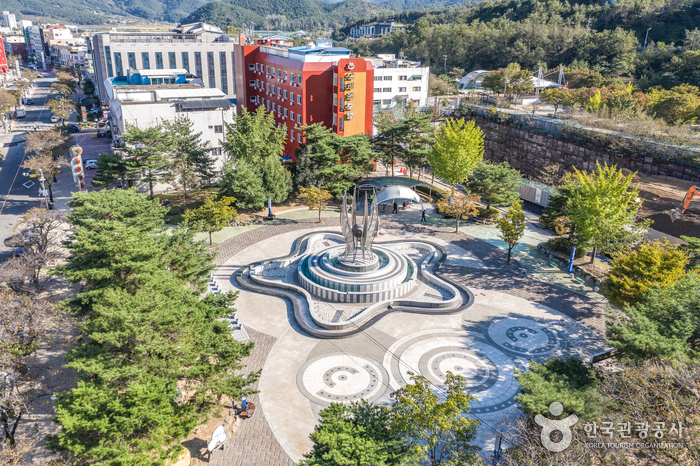
Bugok Hot Springs Special Tourist Zone (부곡온천 관광특구)
19.3Km 2024-02-27
77 Oncheonjungang-ro, Bugok-myeon, Changnyeong-gun, Gyeongsangnam-do
Bugok, named after its cast-iron pot-like terrain, boasts the hottest spring in Korea with a temperature of 78°C. It features various attractions such as Hanol Park and fountain park for performances, a refreshing trail, golf courses, and foot baths. Bugok Hot Springs is believed to be effective for arthritis, skin diseases, and fatigue recovery. Nearby attractions include Uponeup Marsh, Hwawangsan Mountain, and the Gaya Tombs.
 English
 한국어
한국어 日本語
日本語 中文(简体)
 Deutsch
 Français
 Español
 Русский


