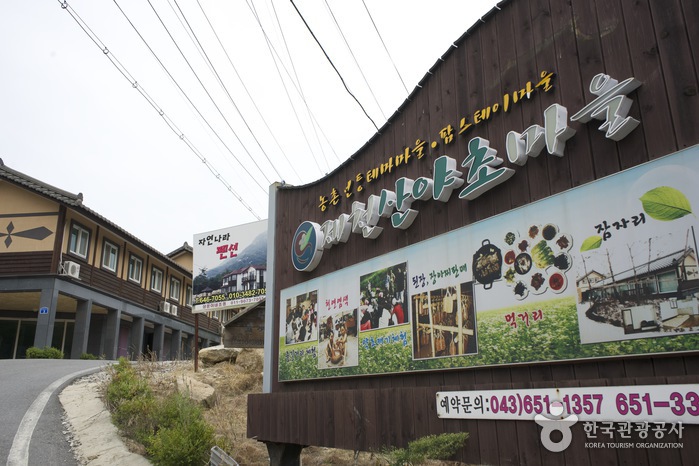
Jecheon Wild Herb Village (제천 산야초마을)
10.7Km 2024-02-26
3 Oksunbong-ro 6-gil, Susan-myeon, Jecheon-si, Chungcheongbuk-do
Jecheon Wild Herb Village, nestled between Geumsusan Mountain and Cheongpungho Lake, benefits from a pristine mountain environment that has supported the production of medicinal herbs and forest products for oriental medicine since ancient times. This village continues its agricultural practices to this day, offering visitors the opportunity to experience natural medicines, forest products, and agricultural goods. For those interested, there are options to stay in the village for a week or a month, allowing for an extended exploration of its natural bounty and traditions.

Jecheon Oksunbong Suspension Bridge (제천 옥순봉 출렁다리)
11.1Km 2022-04-08
342, Oksunbong-ro, Jecheon-si, Chungcheongbuk-do
+82-43-641-6738
Near one of Korea's Scenic Spot, Oksunbong Peak, Oksunbong Suspension Bridge provides visitors with a thrill stretching 222 meters long, 1.5 meters wide. The Deck Road and trekking trail made of palm tree mat completes the total length of 944 meters. Visitors can also easily get to Cheongpungho Lake and Oksunbong Peak.
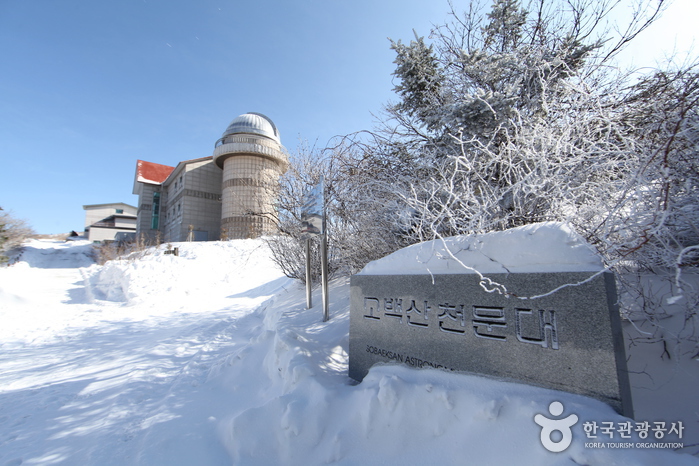
Sobaeksan Optical Astronomy Observatory (소백산천문대)
11.3Km 2024-02-28
639, Sobaeksan-gil, Danyang-eup, Danyang-gun, Chungcheongbuk-do
Located within the Sobaeksan National Park, the Sobaeksan Optical Astronomy Observatory (SOAO) was the first astronomy observatory in Korea to install a modern telescope. SOAO is in a great location to observe the stars because it is located on the highest point of southern Korea and far away from the light pollution of cities. To enter the observatory as a private visitor, one must climb the mountain from Jungnyeong Pass or Huibangsa Temple.
Huibangsa Temple (Yeongju) (희방사(영주))
12.2Km 2024-03-08
278 Jungnyeong-ro 1720beon-gil, Punggi-eup, Yeongju-si, Gyeongsangbuk-do
Huibangsa Temple is a temple located at an altitude of 850 meters in a valley south of Yeonhwabong Peak within Sobaeksan National Park. Founded in 643, it preserves the first Korean Buddhist scripture, the "Worinseokbo," and traditional Korean architectural styles. Surrounding areas are adorned with Sobaeksan Mountain's forests, offering opportunities for forest bathing and hiking. Flowing through the valley is a stream, adjacent to which stands the Huibangpokpo Falls, towering at 28 meters high.
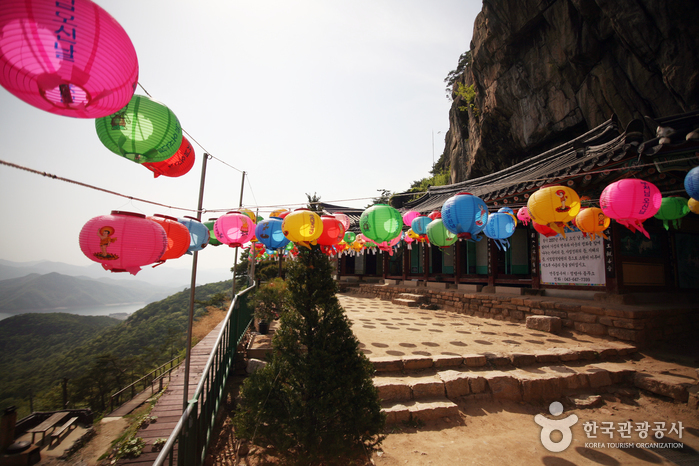
Jeongbangsa Temple (정방사)
12.5Km 2021-11-10
165, Oksunbong-ro 12-gil, Jecheon-si, Chungcheongbuk-do
+82-43-647-7399
Located on a ridge of Sinseonbong Peak (845 meters) nearby Geumsusan Mountain, Jeongbangsa Temple was founded by Buddhist Monk Uisang in the second year (662) of King Munmu’s reign during the Silla dynasty. Jeongbangsa Temple is a branch of Beopjusa Temple located on Songnisan Mountain and is a well known oratory amongst Buddhists. The temple offers fantastic views of Cheongpungho Lake that are said to calm and clear the mind. A unique feature of this temple is the mountain wall making up a portion of the temple roof.
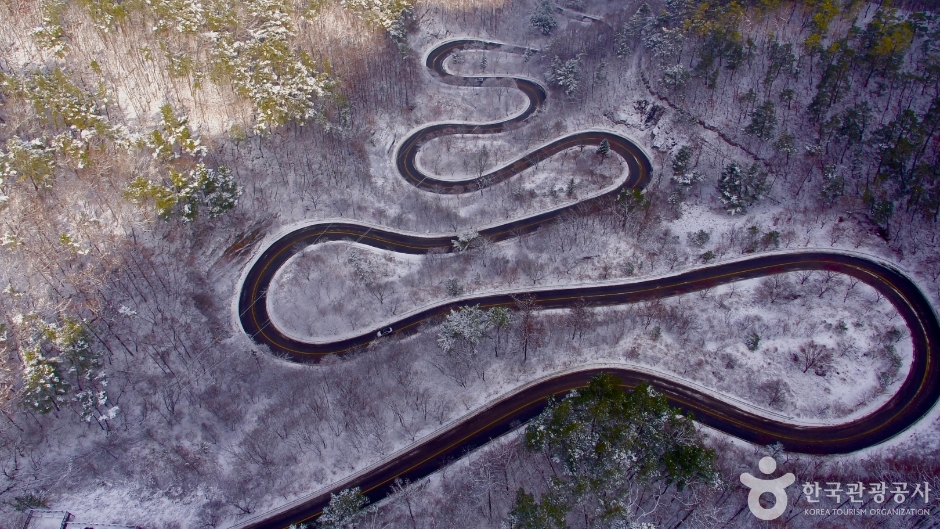
Danyang Bobaljae Pass (단양 보발재)
12.6Km 2024-02-26
San 26-7, Baekja-ri, Yeongchun-myeon, Danyang-gun, Chungcheongbuk-do
Bobaljae Pass is located 540 m above sea level on the northern side of Sobaeksan Mountain. It is also known as Godeuneomijae Pass. The S-shaped curve is known for wildflowers in spring and fall foliage in autumn, so one can either take a leisurely drive along the road or park one’s car at the observatory and get some pictures. Guinsa Temple and Ondal Tourist Area nearby are also good to visit.
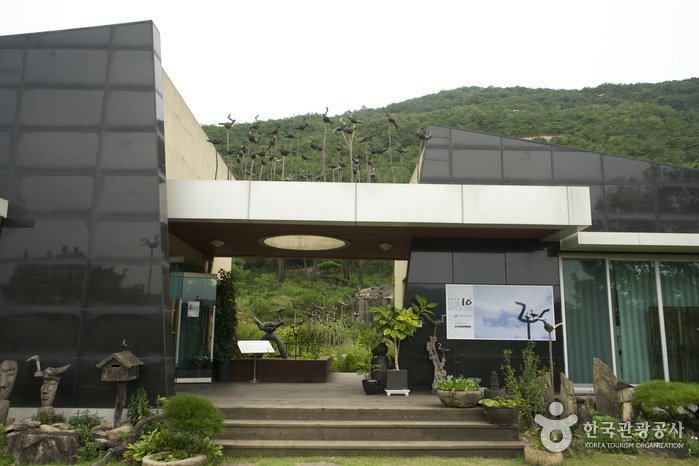
Neunggang Sotdae Art Museum (능강솟대문화공간)
12.9Km 2025-01-10
1100, Oksunbong-ro, Jecheon-si, Chungcheongbuk-do
+82-43-653-6160
Neunggang Sotdae Art Museum in Jecheon is a museum of sotdae, ancient prayer poles with a duck or bird-shaped figurine on top that were usually placed at the village entrance. Many of these artifacts can be found inside and outside of the museum, which is located near the vast Chungjuho Lake. Other nearby tourist attractions include Neunggang Valley, situated at the foot of Geumsusan Mountain and surrounded by lush pine forests, rocky cliffs, streams and waterfalls. There is also Jeongbangsa Temple, which is said to have been built by the renowned Buddhist Monk Uisang, during the Silla era.
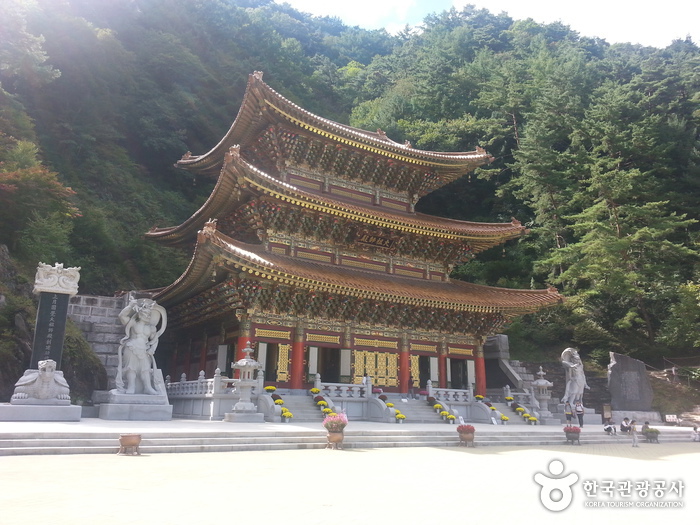
Guinsa Temple (Danyang) (구인사(단양))
13.2Km 2024-03-15
73 Guinsa-gil, Yeongchun-myeon, Danyang-gun, Chungcheongbuk-do
+82-43-423-7100
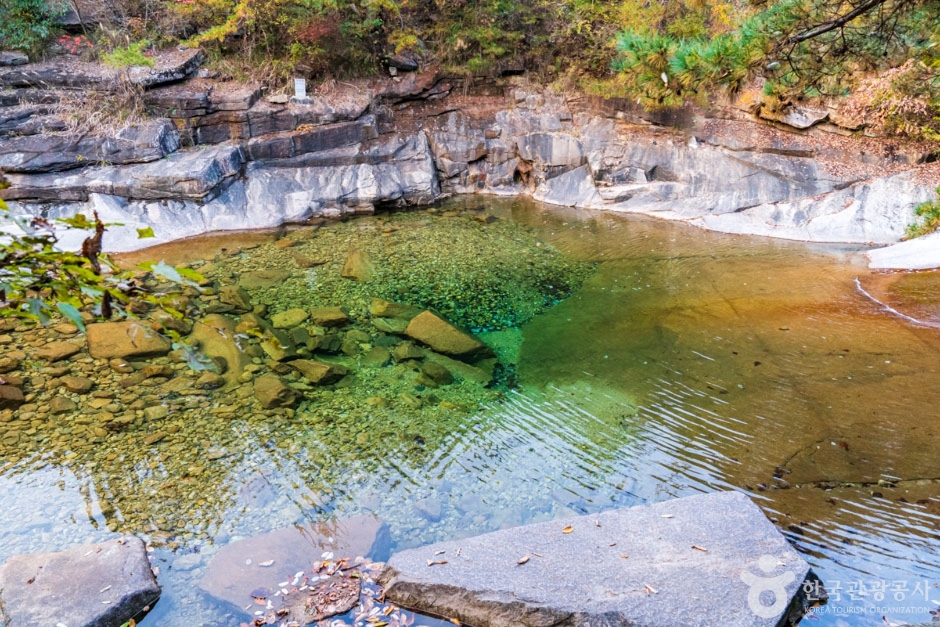
Neungganggyegok Valley, Eoreumgol Valley (능강계곡, 얼음골)
13.2Km 2024-02-26
San 30-4, Neunggang-ri, Susan-myeon, Jecheon-si, Chungcheongbuk-do
Neungganggyegok Valley (Eoreumgol Valley) is within the mountains near the Cheongpungho Lake. Located in a high area surrounded by mountains, the sun reaches the area far less than others. In fact, the name Eoreumgol Valley references how the lush forests and the area’s geographical features have made the summer here so cool that the ice (eoreum) is said to have been left frozen even in the x_height of summer. The water originating from Eoreumgol Valley flows into the Cheongpungho Lake through Neungganggyegok Valley.
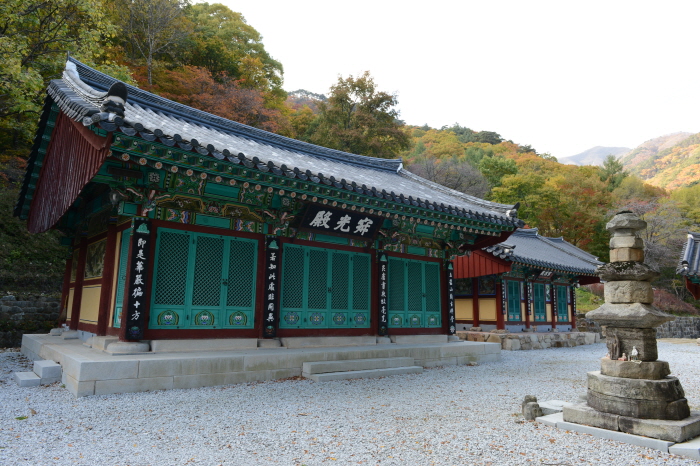
Yeongju Birosa Temple (비로사 (영주))
14.5Km 2021-06-11
661-29, Samga-ro, Yeongju-si, Gyeongsangbuk-do
+82-54-638-5033
Birosa Temple is located at the southern foot of Birobong, the highest
peak of Sobaeksan Mountain. It was founded by revered Buddhist monk Uisang Daesa in the 20th year of King Munmu’s reign (AD 680) during the Silla Kingdom. The temple’s Buddha statues and the flagpole supports reveal the long history of this ancient temple.
To the left of the entrance to Birosa Temple stand a pair of flagpole supports. The 4.8-meter-high flagpole supports facing each other have a meticulous structure. Inside the temple precincts is Jingongdaesa Bobeoptapbi, a stele with a stone turtle base erected in honor of the great monk Jingong Daesa.
The temple enshrines the Amitabha and Vairocana Buddha statues, which were created during the Silla Kingdom in the late 9th century. Both of these Buddha statues realistically depict the human form, and show similar characteristics, which reveal that they were crafted by the same artisan. Preserving such valuable cultural heritages, Birosa Temple also has a serene view of Birobong Peak on
Sobaeksan Mountain.
* Major cultural properties: Stone Seated Amitabha and Vairocana Buddha Statues (Treasure No. 996), Samgadong Stone Flagpole Supports (Provincial Tangible Cultural Property No. 7)
 English
 한국어
한국어 日本語
日本語 中文(简体)
 Deutsch
 Français
 Español
 Русский


