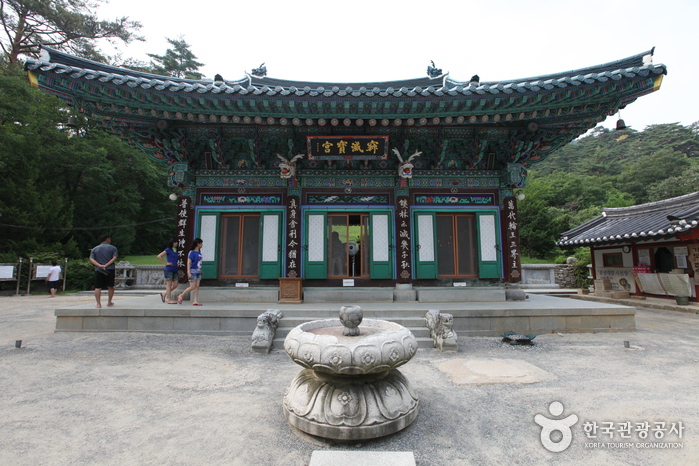
Yeongwol Beopheungsa Temple (법흥사(영월))
.0M 2021-09-29
1352, Mureungbeopheungn-ro, Yeongwol-gun, Gangwon-do
+82-33-374-9177
Beopheungsa Temple was created by Jajangyulsa in 647, called Heungnyeongsa Temple at the time, under the reign of King Jindeok of Silla to enshrine Jinsinsari of Buddha. At that time, Preceptor Jinghyo earned 100 Jinsinsari of Munsubosal and enshrined them at Yangsan Tongdosa Temple, Odaesan Sangwonsa Temple, Seoraksan Bongjeongam, Jeongseon Jeongamsa Temple and Beopheungsa Temple while establishing Jeongmyeolbogung, Hall of Buddha, at each of the places. Inside the Jeongmyeolbogung there is no statue of Buddha and only a wide open window. This is because it is believed that the mountain as a whole is the enshrined Jinsinsari of Buddha himself.
Beopheungsa was once a large temple where over 2,000 monks gathered. Today, most of the temple buildings were lost to a number of fires leaving only a few buildings. The pine wood path from Beopheungsa Temple to Jeongmyeolbogung is one of the most picturesque sites in the nation. The location was originally named Sajasansa but later changed to Sajasan Jeongmyeolbogung in 1939. In addition to the path, the nine peaks (Gubongdae) lined up one after another forms another charming view.
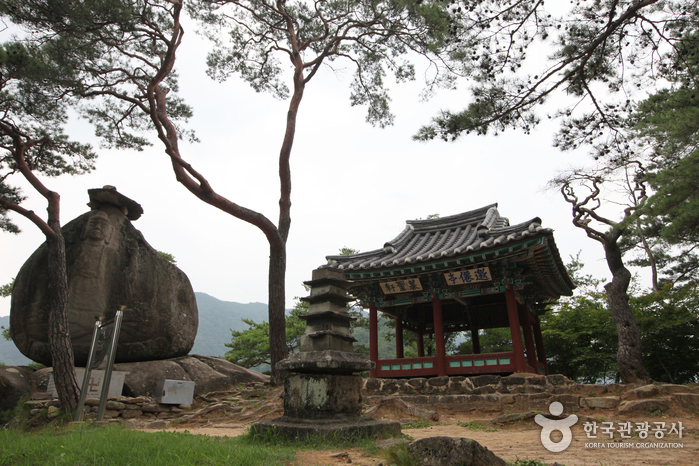
Yoseonjeong Pavilion & Yoseonam Rock (요선정·요선암)
8.2Km 2022-12-28
13-39, Dowonunhak-ro, Yeongwol-gun, Gangwon-do
+82-33-370-2140
Yoseonjeong Pavilion is located in a valley with a clear stream water flowing below. Next to the pavilion is a large rock with the word Yoseonnam inscribed on it. During the Unified Silla period, there was a small hermitage where Yoseongjeong Pavilion stands today. The hermitage was frequented by monks Doyun and Jinghyo, who had founded Heungnyeongseonwon Temple on a foothill of Sajasan Mountain to teach the values and principles of Buddhism. Today, next to the pavilion is a small stone pagoda and a statue of seated Buddha.
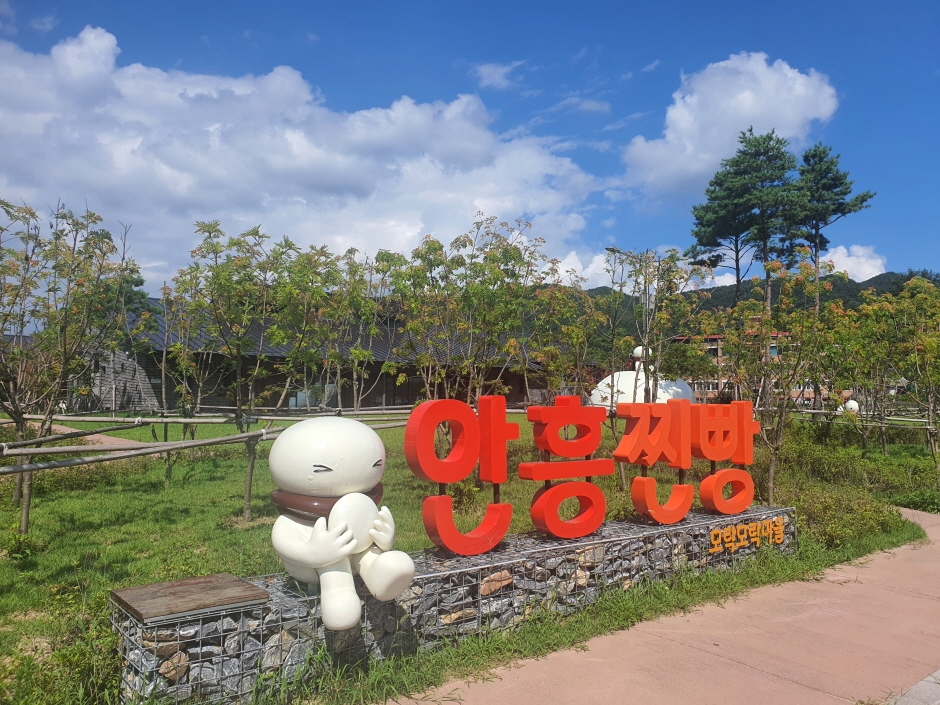
Anheung Jjinppang Morakmorak Village (안흥찐빵모락모락마을)
10.3Km 2023-07-24
1868 , Jucheongang-ro, Hoengseong-gun, Gangwon-do
Opened in 2022, Anheung Jjinppang Morakmorak Village is a complex cultural space filled with things to see and enjoy under the theme of Anheung Jjinppang, a representative product of Hoengseong. The village can be enjoyed by people of all ages, as it is full of interesting things such as the history and origin of Anheung Jjinppang, various experience programs such as making jjinppang and desserts, and VR experiences. "Morakmorak Jjinppang House" offers programs to experience making Anheung Jjinppang, "Morakmorak Lounge" promotes Anheung Jjinppang and has a ticket office, PR hall, media art and VR experience space that satisfies the five senses, "Morakmorak Workshop" has programs to experience making your own cup and red bean steamed pack, and a health playground, Morakmorak Square, and a pond. Those wishing to participate in cooking experience programs such as making jjinppang, will need to make a reservation in advance.
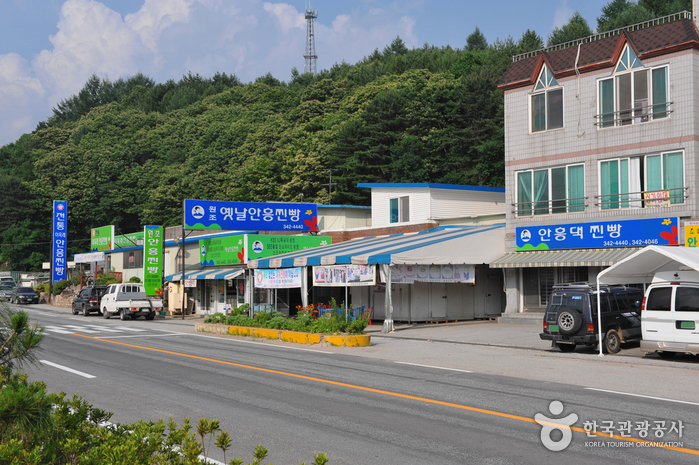
Anheung Jjinppang Village (안흥찐빵마을)
10.5Km 2023-12-27
1088 Seodong-ro, Anheung-myeon, Hoengseong-gun, Gangwon-do
Anheung Jjinppang Village is located along National Highway 42, connecting Seoul and Gangneung. Travelers passing Daegwallyeong on their way to Seoul from the Yeongdong area often stopped here to have a light lunch from old times. Anheung jjinppang (Anheung-style steamed bun) was enough to satisfy their hunger. Over time, Anheung jjinppang has become one of Korea's famous nostalgic snacks.
The Jucheongang River, beginning from Taegisan Mountain and flowing through Yeongwol, offers the proper humid condition perfect for the bun's aging process. As of now, there are over 10 shops dedicated to selling steamed buns in the village. Since the early 1990s, over one million people have come to Anheung Jjinppang Village to get these steamed buns which became popular through word-of-mouth.
Anheung jjinppang is made with high-quality red bean, using the traditional cooking process that creates the homemade flavor, which is immediatedly recognized by the mouth that has become used to instant foods. There are a variety of other traditional foods that are available other than jjinppang. VIsitors can also engage in hands-on progarms at Anheung Jjinppang Morak Morak Village, a cultural center dedicated to Anheung jjinppang.
Youngwol Y Park (젊은달와이파크)
10.9Km 2024-01-09
1467-9 Songhakjucheon-ro, Jucheon-myeon, Yeongwol-gun, Gangwon-do
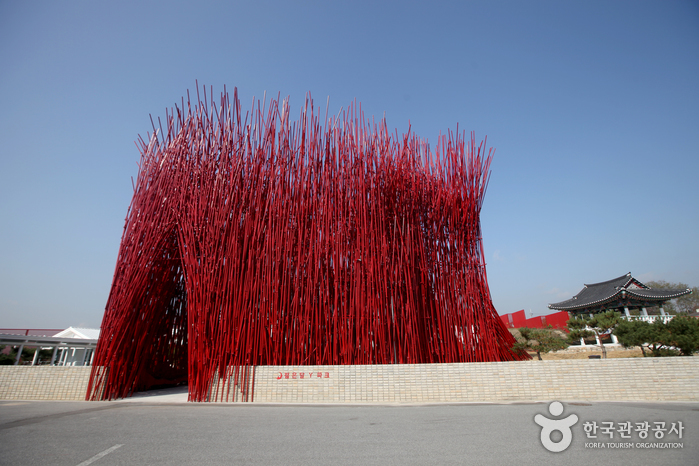
Youngwol Y Park is a complex art space that recreated the Sulsaem Museum, which opened in 2014, into a regeneration space that combines contemporary works of art, museums, and workshops. This newly created contemporary art space was planned by sculptor Choi Ok-yeung. Located in Jucheon-myeon’s untouched beautiful nature, the space is composed of Red Bamboo, Red Pavilion, and Jupiter, which are works using the signature red color of Choi Ok-yeung. The artist designed the space according to various themes, such as life, space, and regeneration, intending to evoking various feelings within visitors through viewing and experience. It is a huge art museum and land art space divided into 11 landscapes, and it's worth taking the time to look around slowly.
Jucheongang Recreational Forest (주천강자연휴양림)
11.0Km 2025-01-09
115, Gangbyeon-ro yeongnang 6-gil, Hoengseong-gun, Gangwon-do
+82-33-345-7575
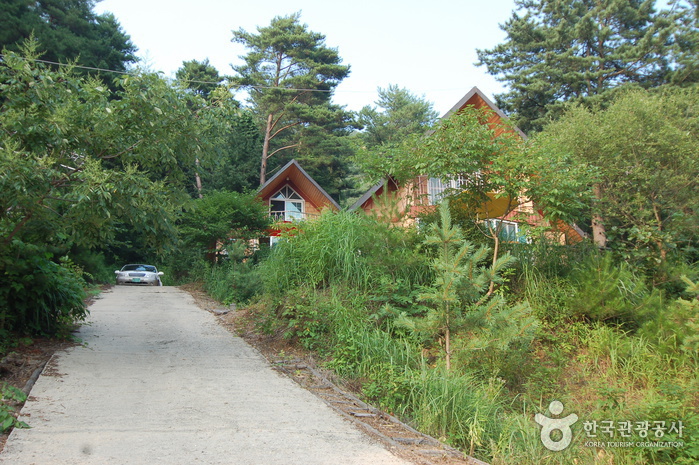
Jucheongang Recreational Forest encompasses a forested area of 2.3 million square meters near Jucheongang River in Hoengseong, Gangwon-do and is the nation’s first large-scale riverside forest. Located only 4 kilometers away from the Dunnaegyo Intersection of the Yeongdong Expressway, the recreational forest is easily accessible from Seoul. With Chiaksan National Park to the southwest and ski resorts to the northeast, the recreational forest is well-equipped with leisure facilities. It is the perfect place for large and small gatherings among family and friends. Facilities include the Forest School (workshop center), Forest House, Forest Classroom, water park, mini-soccer field, volleyball court, and work-out center.
Yeongwol Seopdari Village (영월섶다리마을)
11.1Km 2024-02-16
Panun-ri, Jucheon-myeon, Yeongwol-gun, Gangwon-do
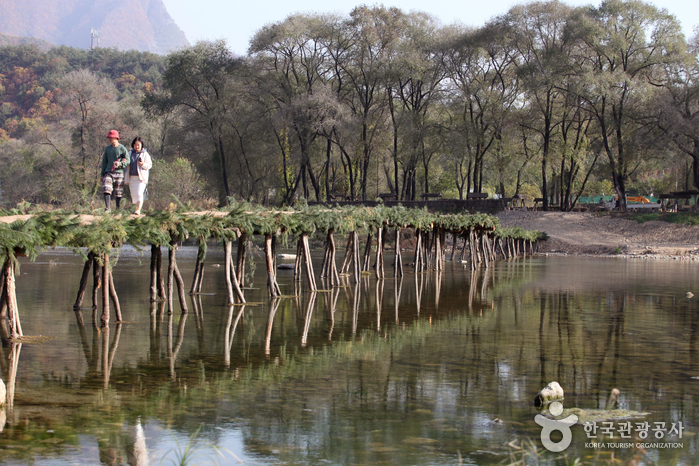
This village is renowned for its crystal-clear waters and vibrant greenery. Adding to its charm is the Seopdari Bridge, a unique structure crafted from wood and other plant materials, which becomes a highlight in wintertime. The bridge is installed in October when the river level decreases, and it remains in place until the onset of rainfall the following year. One of its most distinctive features is the Y-shaped pier, which, along with the bridge's unique design, creates a striking silhouette against the stunning natural backdrop of Yeongwol.
Welli Hilli Park Snow Park (웰리힐리파크 스노우파크)
12.9Km 2023-12-27
451, Gowon-ro, Hoengseong-gun, Gangwon-do
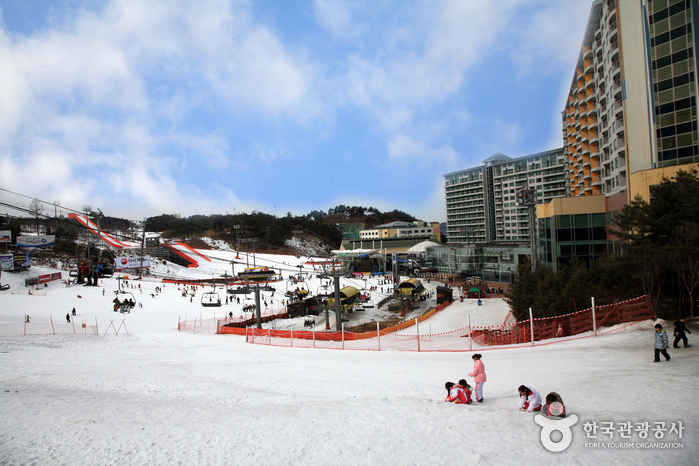
Opened in December 1995, Welli Hilli Park is a resort complex located over 48.6 million square meters around Sulibong Peak in Hoengseong-gun, Gangwon-do. The park is located in a region that often experiences heavy snow, providing the perfect skiing environment. Welli Hilli Park offers state-of-the-art facilities including gondolas that are able to transport 20,000 skiers per hour, and an automatic snow-management system. Guests are assured of a pleasant experience thanks to the efforts of the resort's customer satisfaction team.
Welli Hilli Snow Park offers a total of 20 slopes, including seven internationally certified slopes. The snow park is especially popular among snowboarders and was the first ski resort in Asia to host the World Snowboard Championships in 2009. Snowboarders can use the large-scale half-pipe and fun park, while skiiers enjoy the mogul course. Outside of the winter ski season, guests can enjoy golfing at the public greens.

Raonia Hanu Buffet (한우 무한리필 라오니아)
14.1Km 2024-12-03
강원특별자치도 횡성군 둔내면 고원로398번길 6
This restaurant serves lower-grade hanu (Korean Beef) as an all-you-can-eat buffet. Each serving includes various cuts of beef, allowing you to sample and compare different parts of the hanu as you dine.
Kook Soon Dang Juhyangro (국순당 횡성공장)
14.3Km 2022-12-26
975, Gangbyeon-ro, Hoengseong-gun, Gangwon-do
+82-33-340-4300
Juhyangro, meaning "a path of alcoholic flavor," is the name of the tour route around Kook Soon Dang's Hoengseong distillery. The traditional liquor produced by the distillery captures the clean air and water and the sincere devotion of its producers. The distillery offers tours as well as tasting programs, and product sales.
 English
 한국어
한국어 日本語
日本語 中文(简体)
 Deutsch
 Français
 Español
 Русский


