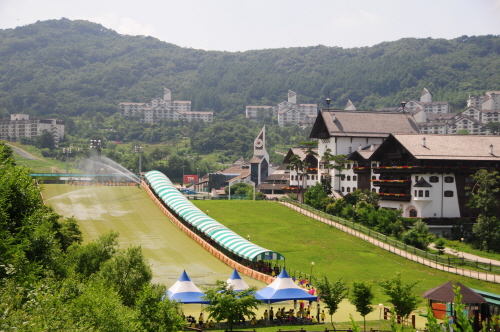
Deogyusan Resort Sledding Hills (무주덕유산리조트 썰매장)
7.0Km 2024-04-07
185, Manseon-ro, Muju-gun, Jeonbuk-do
+82-63-320-7336
Deogyusan Resort is a representative mountain resort in Korea, located within Deogyusan National Park. Blending harmoniously with nature, visitors can take in the nature as well as enjoy art and health. The resort is located on the foothill of Deogyusan Mountain, near the famous Gucheondong Valley.

Deogyusan Ski Resort (무주덕유산리조트 스키장)
7.0Km 2024-04-06
185, Manseon-ro, Muju-gun, Jeonbuk-do
+82-63-322-9000
Muju Deogyusan Resort is one of Korea’s most famous mountain peak ski resorts. Covering an area of over seven million square meters, the resort is located in the Gucheon-dong Valley, at the base of the famous Deogyusan Mountains. Nature lovers will particularly enjoy visiting the resort, since it is located in one of Korea’s beautiful national parks, and was specially designed to harmonize with its natural surroundings.
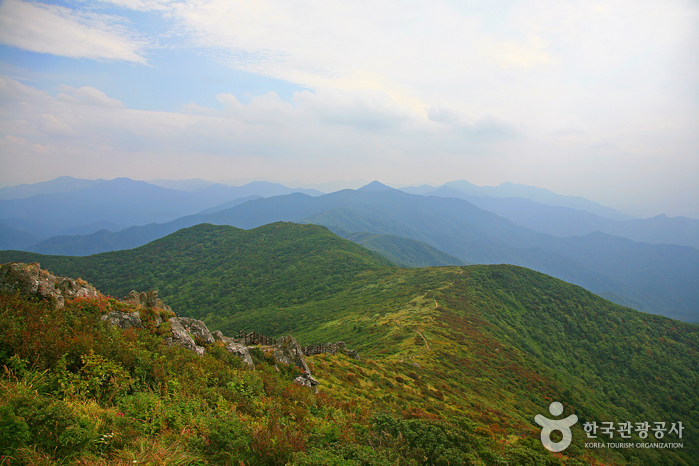
Hyangjeokbong Peak (Deogyusan Mountain) (향적봉(덕유산))
8.1Km 2024-04-07
1 Deoksan-ri, Anseong-myeon, Muju-gun, Jeonbuk-do
Hyangjeokbong Peak, standing at an elevation of 1,614 meters, is the highest peak of Deogyusan Mountain. It is an ideal destination for hiking year-round, but particularly renowned for its breathtaking winter scenery, earning a reputation as a popular spot for snow-covered mountain hikes. Visitors can reach the summit of Hyangjeokbong Peak by taking a gondola from the nearby Muju Resort to Seolcheonbong Peak, then embarking on a roughly 20-minute hike from Seolcheonbong Peak. Even beginners can enjoy the fantastic views of Deogyusan Mountain without much difficulty, contributing to its popularity.
Deogyusan National Park (Namdeogyu Section) (덕유산국립공원(남덕유분소))
8.5Km 2021-07-13
Sojeong-ri, Geochang-gun, Gyeongsangnam-do
+82-63-322-3174
Designated as a national park in 1975, Deogyusan National Park covers four counties. Besides Hyangjeokbong Peak, Deogyusan Mountain's highest peak in Muju, all the other peaks lie within Geochang. While the park features beautiful waters and rocks at Wolseonggyegok Valley in Buksang-myeon, Geochang, it also boast nature's beauty in Muju with creeks and valleys like Mahakdong Valley, Sangyeodeomgyegok Valley, and Songgyesa Valley.
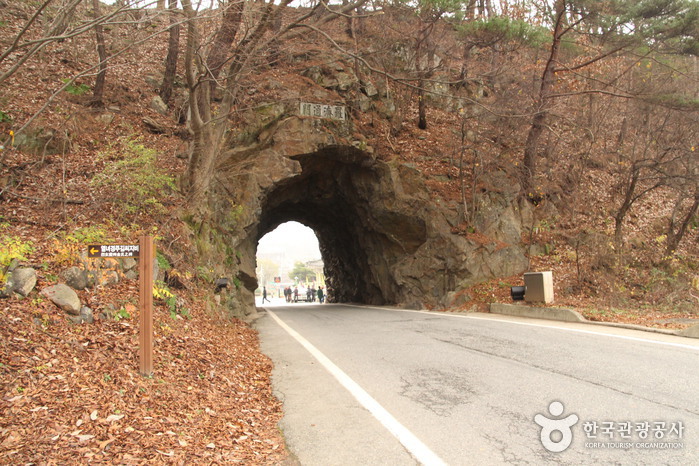
Rajetongmun Gate (라제통문)
9.9Km 2024-04-07
Rajetongmun-ro, Muju-gun, Jeonbuk-do
+82-63-322-2905
The historical border of the Silla and Baekje Kingdoms, Rajetongmun Gate of Seolcheon-myeon, Muju was formed from a rock cave in Seokgyeonsan Mountain. The tunnel is approximately 3 meters in x_height and 10 meters in length, and divides the villages of Sindu Maeul into Dugil-ri, Seolcheon-myeon and Inam Maeul in Socheon-ri. During the Three Kingdoms Period, the rocky ridges of Seokgyeonsan Mountain drew the boundary of Silla's Mupung in the east with Baekje's Seolcheo to the west.
Tracing the history from the Three Kingdoms Period to the Goryeo dynasty, the cultures and traditions of the two regions were markedly different. If curious about the difference, one could simply stop by Seolcheon on market day, where the Muju and Mupung local
dialects and customs can easily be distinguished.
People used to cross Seokgyeonsan Mountain by a footpath along the rocky ridge to travel between Seolcheon and Mupung. During the Japanese occupation, a new road was created by turning a cave into a tunnel through the mountain so cows and horse carts could freely pass from Muju to Gimcheon.
General Kim Yoo Shin from the Silla Kingdom, the hero of unification of the Three Kingdoms, often passed by the gate, later giving rise to the gate's nickname, Tongilmun (literally "Unification Gate"). The gate
is number one on the list of 33 scenic sites in Gucheon-dong.
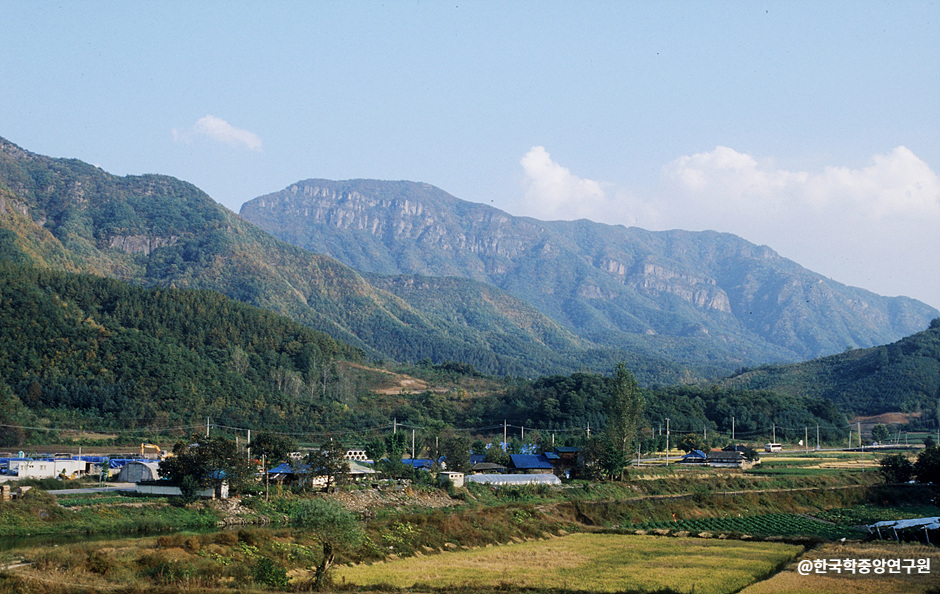
Jeoksangsan Mountain (적상산)
11.6Km 2024-04-07
Goemok-ri, Muju-gun, Jeonbuk-do
+82-63-322-4174
As one of the best scenic mountains in Korea, Jeoksangsan Mountain (1,030.6 meters) showcases imposing, steep rock walls. Jeoksangsan, also called Red Skirt Mountain, got its name from the view of red maple trees around cliffs in fall that makes the mountain look like a giant red skirt. The mountain boasts a variety of attractions from Hyangnobong Peak (1,029 meters), Cheonilpokpo Falls, Songdaepokpo Falls, Jangdobawi Rock, Janggunbawi Rock, and Allyeomdae Cliff.
The rugged shape of the mountain was considered ideal for building a fortress. And after Jeoksangsan became a designated site for storing Joseonwangjo Sillok (annals of the Joseon Dynasty), the fortress surrounding it was further rebuilt. The mountain is also home to Anguksa Temple, an ancient temple built in 1227 (during the 3rd year of King Chungryeol’s reign) by Monk Wolin. The mountain can easily be climbed by hiking or by vehicle; there is a paved road stretching over 15 kilometers that leads to the top of the mountain thanks to the construction of Muju Power Plant, letting tourists visit Sanjeong Lake and Anguksa Temple conveniently.
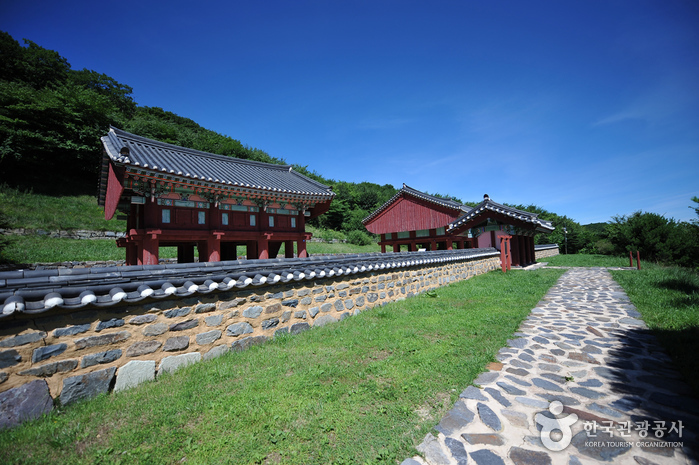
Jeoksangsan National History Archives Site (적상산사고지)
11.6Km 2024-04-07
960, Sanseong-ro, Muju-gun, Jeonbuk-do
+82-1899-8687
During the Imjin War (1592-1598), many of the National Archives in the capital and the surrounding area were burned down. After this, the archives were duplicated and stored in a variety of locations thoughout the county. The National Archives of Jeoksangsan Mountain was founded in 1614, when important national archives were moved from Myohyang Confucian Academy, with others being added in 1641. This national archives site served a very important role throughout over 300 years of Korea’s history, until it was closed by the Japanese during the Japanese occupation.
Muju Anguksa Temple (안국사 (무주))
11.7Km 2024-04-07
1050, Sanseong-ro, Muju-gun, Jeonbuk-do
+82-63-322-6162
As the only temple in Jeoksangsan Mountain, Anguksa Temple was built in 1227 (during the 3rd year of King Chungryeol’s reign) by Monk Wolin. A secret historical archives, called Sagak, was built to store Joseonwangjo Sillok (annals of the Joseon dynasty) in 1614 (during the 6th year of King Gwanghaegun’s reign) within the mountain, while Seonukgak was built in 1641 (during the 19th year of King Injo’s reign) to store Seonwonrok (royal genealogical records). The two sites were designated as Jeoksangsan Historical Archives during the Joseon dynasty. Hoguksa Temple was also built at that time to prevent accidents from affecting the archives. The temple, along with the existing Anguksa Temple, was used to house monk soldiers who protected the archives.
Because of the construction of Muju Power Plant, Anguksa Temple was relocated to the Hoguksa Temple site and rebuilt in 1995. Consisting of 15 buildings, the temple is surrounded by Sanjeong Lake. Boasting exquisite fall foliage, the temple can be easily reached by vehicle along a paved road. The nearby attractions include Muju Resort and Muju Gucheondong Valley.
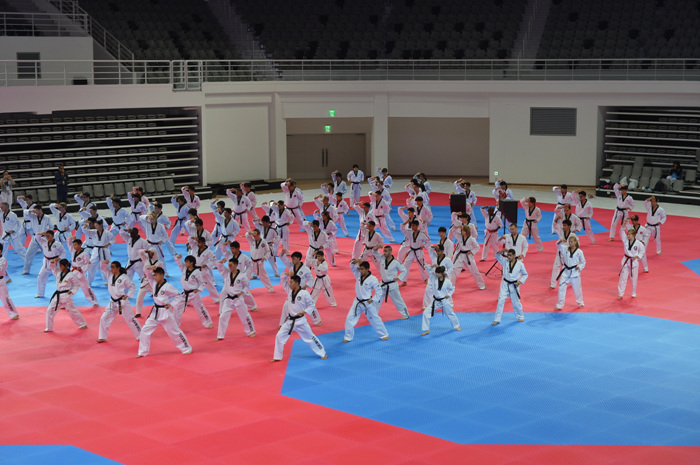
Taekwondowon Spirit Zone (태권도원 상징지구)
11.7Km 2025-10-23
1482 Museol-ro, Seolcheon-myeon, Muju-gun, Jeonbuk-do
+82-63-320-0114
Taekwondowon Spirit Zone is a space that implements three elements - physical strength, mental awareness, and higher wisdom -- which enable practitioners to become 'Taekwondo individuals' through endless physical training and martial arts exploration. There are forty-five programs themed around Taekwondo education and practices, as well as experience and cultural exchanges. The facility is open to anyone who has learned Taekwondo, both at home and abroad as well as those looking to discipline their minds and bodies through Taekwondo, including businesses, students, and the general public. The Pyeongwon Gwan at Taekwondowon is the national team’s comprehensive training facility, where the Taekwondo Poomsae national team members, junior national team members, the national reserve teams, and demonstration teams have their training sessions.
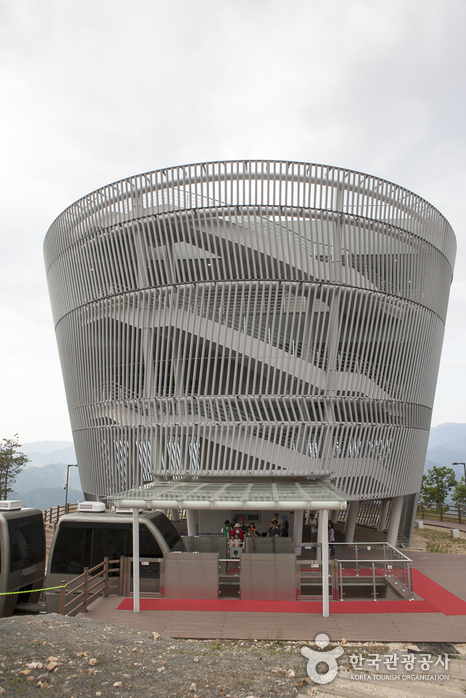
Taekwondowon Observatory (태권도공원 전망대)
11.7Km 2024-04-07
1482, Museol-ro, Muju-gun, Jeonbuk-do
+82-63-320-0114
Taekwondowon located in Muju-gun, Jeollabuk-do, serves as a main center for the 60 million taekwondo practitioners in 182 countries worldwide. Covering an area of 2.31 million square meters, the park combines the traditional and modern style in their buildings.
 English
 한국어
한국어 日本語
日本語 中文(简体)
 Deutsch
 Français
 Español
 Русский


