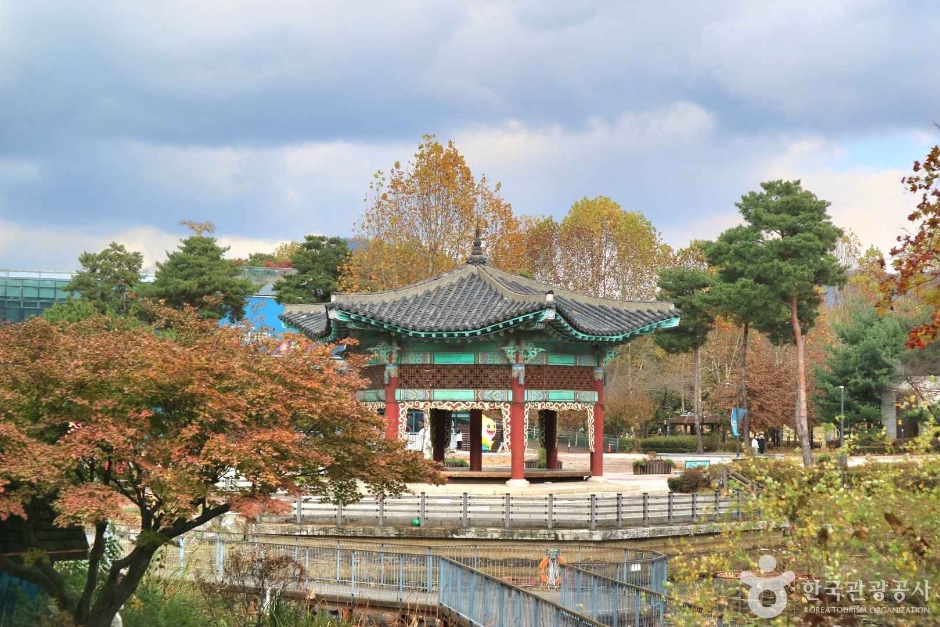
Seoul Children's Grand Park (서울어린이대공원)
10.6Km 2024-11-28
216 Neungdong-ro, Gwangjin-gu, Seoul
Opened in May 1973, Seoul Children’s Grand Park is a theme park situated among green forests and fields with a total area of 56,552㎡. It contains a zoo, arboretum, amusement park, and performance venues. Seoul Children’s Grand Park has been a beloved part of Seoul, a paradise for children and a living venue for education. For grown-ups, it functions as an area of refuge and culture within the city. The Grand Park offers facilities that everyone in the family can enjoy, so everyone can find their own fun in the Grand Park.

The Saem - ENTER 6 Gangbyeon Branch [Tax Refund Shop] (더샘엔터식스점)
10.6Km 2024-04-22
85, Gwangnaru-ro 56-gil, Gwangjin-gu, Seoul
-
ABC-Mart - Techno Mart Gangbyeon Branch [Tax Refund Shop] (ABC마트 테크노마트 강변점)
10.6Km 2024-04-18
85, Gwangnaru-ro 56-gil, Gwangjin-gu, Seoul
-
Lotte Mart - Gangbyeon Branch [Tax Refund Shop] (롯데마트 강변점)
10.6Km 2024-04-16
B2 of Techno Mart, 85, Gwangnaru-ro 56-gil, Gwangjin-gu, Seoul
-
Olive Young - Hanam Gamil Branch [Tax Refund Shop] (올리브영 하남감일점)
10.7Km 2024-06-26
#115~#117, 61, Sinusil-ro, Hanam-si, Gyeonggi-do
-
![Ave Sports - Dapsimni Branch [Tax Refund Shop] (아베스포츠 답십리)](http://tong.visitkorea.or.kr/cms/resource/11/2889011_image2_1.jpg)
Ave Sports - Dapsimni Branch [Tax Refund Shop] (아베스포츠 답십리)
10.7Km 2024-04-23
209, Dapsimni-ro, Dongdaemun-gu, Seoul
-

Olympic Park (올림픽공원)
10.7Km 2023-10-19
424 Olympic-ro, Songpa-gu, Seoul
+82-2-410-1114
Olympic Park is an impressive leisure facility in which historic remains from the Baekje era share space with modern, state-of-the-art sports stadiums, an eco-friendly forest, and spacious grass fields. The legacy of the 1988 Seoul Olympics, the park not only houses the country’s largest sports arena, but has also become a place where Seoul residents come to relax and unwind.
Spread across approximately 1.45 million square meters, Olympic Park encompasses the land that was once Mongchontoseong Fortress and Mongchonhaeja (manmade lake) from the early Baekje period. The park is divided into several zones, including a leisure sports park, a cultural art park, an eco-park, and the History Experience Park dedicated to the area’s rich historic heritage.
Because Olympic Park is so large and takes over three hours to explore, visitors are advised to familiarize themselves with entrances and exits and travel routes before they start. To further save time, visitors can ride the Road Train (“Hodori Train”) located next to Peace Square.
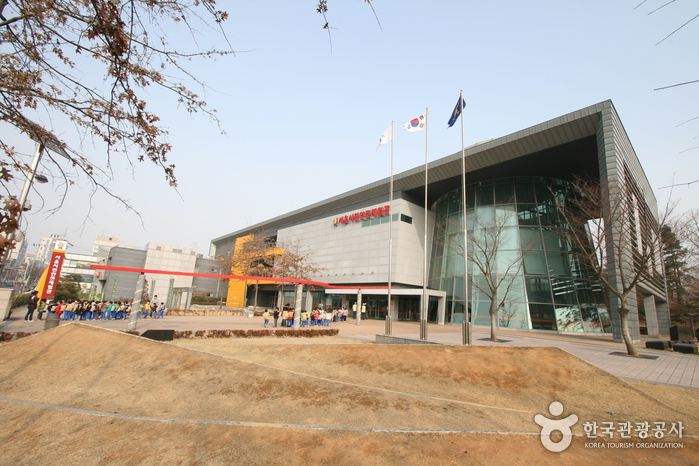
Gwangnaru Safety Experience Center (광나루안전체험관)
10.7Km 2025-03-29
238, Neungdong-ro, Gwangjin-gu, Seoul
+82-2-2049-4061
Gwangnaru Safety Experience Center was founded in 1999 after two fire accidents in which many children lost their lives. These tragedies emphasized the necessity of establishing a disaster training center for common citizens.
Gwangnaru Safety Experience Center is a three-story building with one basement floor, covering an area of more than 5,000 m². The basement floor includes a small theater. The first floor is set up for natural disaster training and consists of an orientation hall, storm simulation training room, earthquake simulation room, computer tests on fire safety knowledge and others. The second floor is a place for artificial catastrophe training. It consists of a smoke escape training room, fire extinguisher training room, first-aid (CPR) training room and practice place for calling 119. The third floor is used for rescue training and consists of a rescue training room, screening room, training for professionals and video examples of the five biggest disasters that have occurred in Seoul. Overall there are about 20 training areas established, so citizens can experience the imitation of a disaster by themselves and learn easily and in an interesting way how to cope with a disaster.
![Olive Young - Gangbyeon Station Branch [Tax Refund Shop] (올리브영 강변역)](http://tong.visitkorea.or.kr/cms/resource/57/2878857_image2_1.jpg)
Olive Young - Gangbyeon Station Branch [Tax Refund Shop] (올리브영 강변역)
10.7Km 2024-04-17
10, Gangbyeonyeok-ro 4-gil, Gwangjin-gu, Seoul
-
Asan Medical Center (서울아산병원)
10.8Km 2025-10-23
(Pungnap-dong), 88 Olympic-ro 43-gil, Songpa-gu, Seoul
Opened in June 1989, Asan Medical Center is the largest tertiary hospital in Korea with 2,764 beds. In 2023, we treated an average of 13,260 outpatients and 2,539 inpatients per day, and performed 70,892 surgeries throughout the year.
With three specialty hospitals–Cancer Institute, Heart Institute, and Children's Hospital–and more than 50 specialized centers, we lead the world in cancer, organ transplantation, and cardiac care. In recognition of our efforts, we have topped the list of Korea's Most Admired Hospitals for 18 consecutive years and ranked NO. 1 in Korea for six consecutive years in U.S. Newsweek's World's Best Hospitals.
As a "quarternary hospital" serving critically ill patients from Korea and abroad who come to us as their last hope, Asan Medical Center treats more than 20,000 international patients from around 100 countries, including the United States, United Arab Emirates, and Mongolia. Medical professionals from developed countries visit us to learn our advanced medicine. Over the past decade, more than 3,700 professionals from nearly 90 countries have visited us to learn the latest medical techniques.
 English
 한국어
한국어 日本語
日本語 中文(简体)
 Deutsch
 Français
 Español
 Русский


