![Artbox - Jamsilsaenae Branch [Tax Refund Shop] (아트박스 잠실새내점)](http://tong.visitkorea.or.kr/cms/resource/21/3314521_image2_1.jpg)
Artbox - Jamsilsaenae Branch [Tax Refund Shop] (아트박스 잠실새내점)
2.6Km 2024-06-27
88, Seokchonhosu-ro, Songpa-gu, Seoul
-

Samsung Medical Center (삼성서울병원)
2.7Km 2025-10-23
81 Irwon-ro, Gangnam-gu, Seoul
Samsung Medical Center (SMC) has been at the forefront of change in the Korean medical field since its foundation in 1994. Guided by its new vision, "We aspire to be the frontier of future medicine," SMC is committed to delivering excellent treatment results for patients with severe and complex diseases by using the latest medical technologies. SMC's International Healthcare Center (IHC) operates an outpatient clinic dedicated exclusively to foreign patients.
![Olive Young - Irwon Station Branch [Tax Refund Shop] (올리브영 일원역)](http://tong.visitkorea.or.kr/cms/resource/54/2889454_image2_1.jpg)
Olive Young - Irwon Station Branch [Tax Refund Shop] (올리브영 일원역)
2.7Km 2024-04-18
Store #114, 115, Irwon-ro, Gangnam-gu, Seoul
-
KSPO Dome (Olympic Gymnastics Arena) (올림픽공원체조경기장)
2.7Km 2025-06-30
424 Olympic-ro, Songpa-gu, Seoul
The KSPO Dome was the arena built for gymnastic events during the 1988 Seoul Summer Olympics, but has been remodeled to host concerts, including for many K-pop stars and international pop stars. The dome can also serve as venue to a range of other events, including showcases, exhibitions, and business events. It is accessible via public transit using Olympic Park Station on Seoul Subway Lines 5 and 9.
Woori Art Hall (우리금융아트홀)
2.7Km 2025-04-01
424 Olympic-ro, Songpa-gu, Seoul
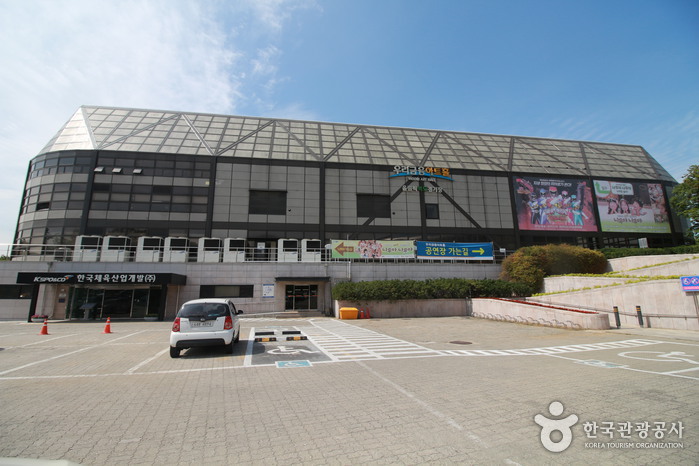
Woori Art Hall is a cultural art space located within Olympic Park, opened in November 2009 after a two-year renovation project from the previous Yeokdo Stadium. The 1,184-seat hall is primarily for musicals, but can also host a range of performances including plays, dance, classical, and modern music.
Ceramic Palace Hall (세라믹 팔레스 홀)
2.8Km 2024-03-04
90 Irwon-ro, Gangnam-gu, Seoul
Ceramic Palace Hall, situated on the second basement floor of the Milal Art Center, is adorned with aesthetically pleasing pastel-colored ceramic walls. Designed for acoustic excellence, it ensures that every instrument played is heard with clarity. Primarily, it serves as a venue for various concerts, with a particular emphasis on classical music, including piano recitals, chamber music festivals, and violin concerts. Additionally, it offers venue rental services, catering to a range of events.

Olympic Park (올림픽공원)
2.8Km 2023-10-19
424 Olympic-ro, Songpa-gu, Seoul
+82-2-410-1114
Olympic Park is an impressive leisure facility in which historic remains from the Baekje era share space with modern, state-of-the-art sports stadiums, an eco-friendly forest, and spacious grass fields. The legacy of the 1988 Seoul Olympics, the park not only houses the country’s largest sports arena, but has also become a place where Seoul residents come to relax and unwind.
Spread across approximately 1.45 million square meters, Olympic Park encompasses the land that was once Mongchontoseong Fortress and Mongchonhaeja (manmade lake) from the early Baekje period. The park is divided into several zones, including a leisure sports park, a cultural art park, an eco-park, and the History Experience Park dedicated to the area’s rich historic heritage.
Because Olympic Park is so large and takes over three hours to explore, visitors are advised to familiarize themselves with entrances and exits and travel routes before they start. To further save time, visitors can ride the Road Train (“Hodori Train”) located next to Peace Square.
Soma Museum of Art (소마미술관)
3.0Km 2023-04-13
424, Olympic-ro, Songpa-gu, Seoul
+82-2-425-1077
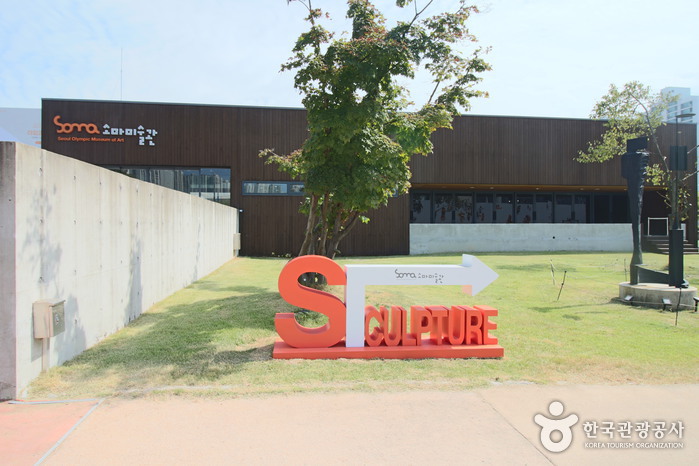
Soma Museum of Art was opened in September 2004 as a cultural space amid the nature of Seoul Olympic Park. The museum displays over 222 sculptures, and offers a variety of cultural and educational programs, including the nation's first drawing center and archive.
Olympic Park Stadium (올림픽공원 경기장)
3.0Km 2021-06-11
424, Olympic-ro, Songpa-gu, Seoul
+82-2-410-1114
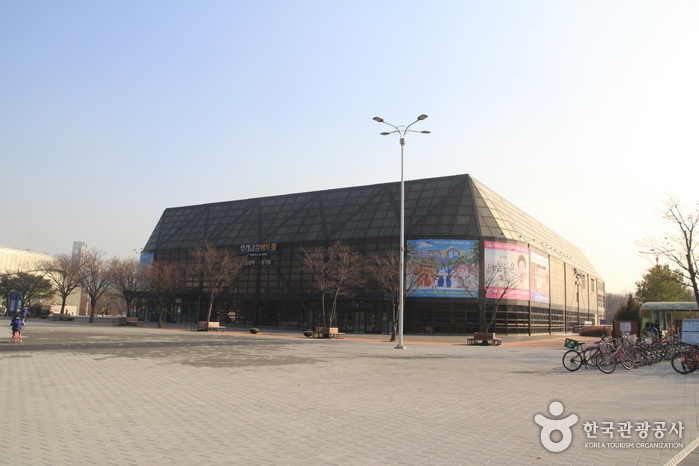
Olympic Park is an expansive outdoor area for Seoul residents to enjoy, offering facilities and venues for a range of events including athletic competitions, concerts and other performances. The park houses athletic facilities including the gymnasium of the ’88 Seoul Olympic Games, a fencing stadium, weightlifting stadium, swimming pool and tennis courts. Moreover, those venues are multi-purpose facilities that can host a wide range of events and performances.
Seoul Mongchontoseong Earthen Fortification (서울 몽촌토성)
3.0Km 2024-03-12
424, Olympic-ro, Songpa-gu, Seoul
+82-2-2147-2814
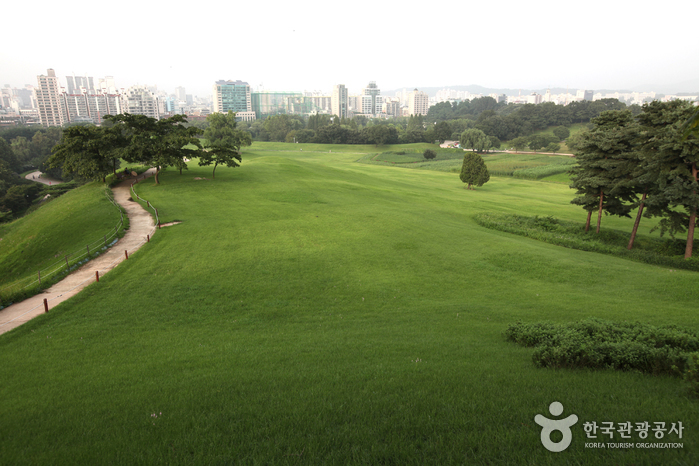
Mongchontoseong Earthen Fortification is an ancient earthen fortress built during the Hanseong period of the ancient Korean kingdom of Baekje (BC 18-AD 660). It is believed to have been constructed in the 3rd to 4th centuries. Utilizing the natural advantages of the Hangang River, it served defensive purposes with its trench and log barrier. Excavated relics from the Baekje era are on display at the Seoul Baekje Museum. The site is situated within the Olympic Park in Songpa, Seoul.
 English
 한국어
한국어 日本語
日本語 中文(简体)
 Deutsch
 Français
 Español
 Русский


