Pyunkang Yul Flagship & Tea house (편강 율 플래그십&티하우스)
8.7Km 2025-12-10
35-4 Bukchon-ro 5ga-gil, Jongno-gu, Seoul
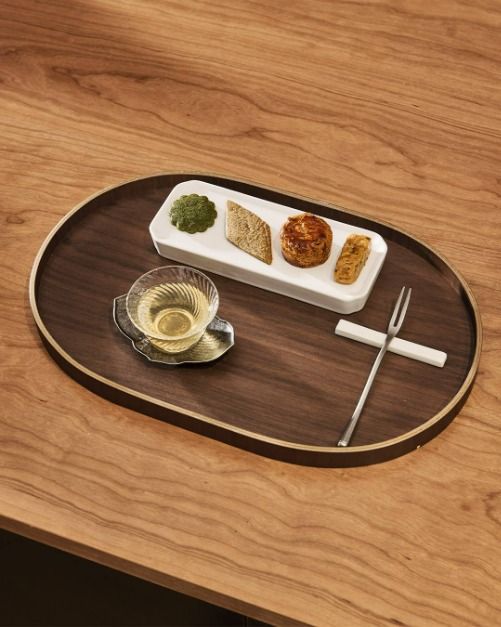
Pyunkang Yul Flagship & Tea house is a cafe in Bukchon Hanok Village near Gyeongbokgung Palace. The first floor is a teahouse where one can enjoy Korean tea infused with traditional ingredients and delightful desserts with a view of the cafe's serene garden, and the second floor is a flagship store of Pyeongang Yul, a K-beauty brand known for integrating hanbang (traditional Korean medicine) in their skincare products. The third floor features a rooftop that offers a sweeping view of the Bukchon Hanok Village and Gyeongbokgung Palace.
Sejong-ro Park (세종로공원)
8.7Km 2022-08-31
jiha 189, Sejong-daero, Jongno-gu, Seoul
+82-2-722-9598
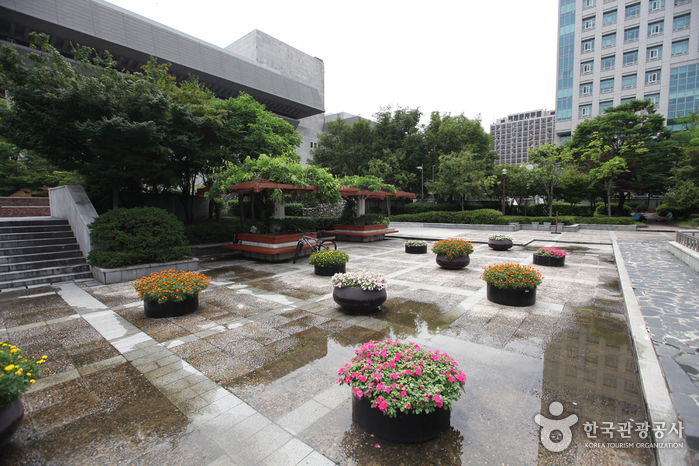
Sejong-ro Park is located next to Sejong Center for the Performing Arts in central Seoul. Inside the park, there are wooden benches and shaded areas where people can sit and relax. Also available are water fountains, a round outdoor stage, and various sculptures. The lunch crowd from the nearby office buildings often come to the park during weekdays. On the weekends, the park is also used as a venue for outdoor weddings.
Seoul's anthem and the poem "Bulnori" by Ju Yo-han are written on a memorial stone that can be found inside the park.
Amorepacific Museum of Art (아모레퍼시픽미술관)
8.7Km 2024-12-31
100 Hangang-daero, Yongsan-gu, Seoul
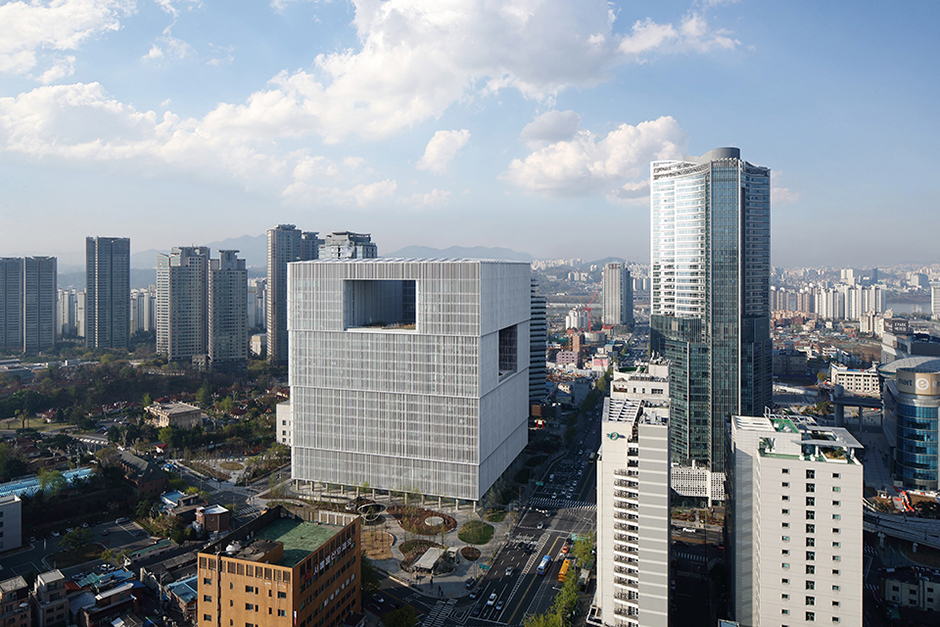
Amorepacific Museum of Art, located in Yongsan-gu, Seoul, was originally a museum exhibiting artworks collected by the late Seo Seong-hwan, the founder of Amorepacific, but later changed its name to Amorepacific Museum of Art, or APMA, in 2009 and has since been operating as an art exhibition hall. The mission upon its foundation was seeking to be "a space where beauty in the midst of daily lives is discovered" and communicating with the public. In accordance with this objective, the museum collects, researches, and exhibits Korean ancient art and both Korean and international contemporary art while, also, aiding researchers, scholars, and young artists. The underground exhibition hall hosts diverse exhibits encompassing ancient art, contemporary art, and Korean art. The 1st floor of the "Atrium," an enormous space that continues from the 1st to 3rd floors, features the museum lobby, a museum shop, an exhibition space called "APMA Cabinet" and apLAP, which is a library of art exhibition brochures from around the world. The art museum is located on the 1st floor of the new Amorepacific headquarters building, a famous work of architectural beauty of Yongsan designed after white porcelain.
Kukje Gallery (국제갤러리)
8.7Km 2021-07-29
54, Samcheong-ro, Jongno-gu, Seoul
+82-2-735-8449
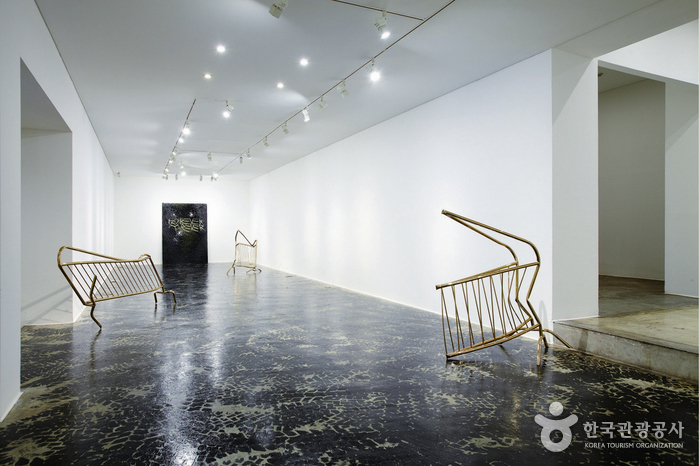
The Kukje Galley has been committed to presenting the work of significant Korean and international contemporary artists to the public since 1982. The gallery has established itself as a leading venue for international exhibits such as Helen Frankenthaler, Sam Francis, Jim Dine, Frank Stella, Robert Mangold, Anthony Caro, Cy Twombly, Edward Ruscha, Anselm Kiefer, Joseph Beuys, and Bill Viola, attracting enthusiastic responses from both the public and the media.
The gallery has placed emphasis on collaborations between artists, galleries, and art dealers around the world and nurturing upcoming artists by sponsoring their artwork and giving them international exposure.
Jungmyeongjeon Hall (중명전)
8.7Km 2025-01-09
41-11, Jeongdong-gil, Jung-gu, Seoul
+82-2-752-7525
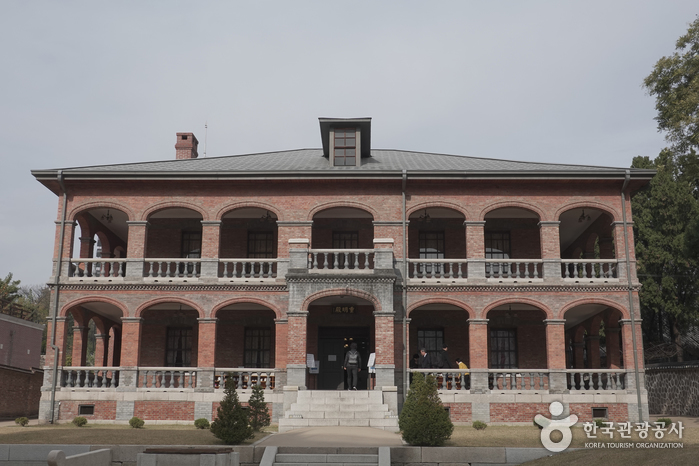
Located near Deoksugung Palace, Jungmyeongjeon Hall is a red-brick modern Western-style building. It was built in 1899 as the imperial library of the Korean Empire. After Deoksugung Palace caught on fire in 1904, the place became the temporary residence of Emperor Gojong. It also witnessed the tragic part of history in which the infamous Eulsa Treaty (Japan-Korea Protectorate Treaty), an illegal treaty forced by Japan, was signed in 1905. Its exhibition hall serves as a place for historical education.
Heoninneung Royal Tombs Ecological Preservation Area (Alder Tree Forests) (헌인릉 생태경관보전지역(오리나무림))
8.7Km 2021-12-11
34, Heonilleung-gil, Seocho-gu, Seoul
+82-2-445-0347
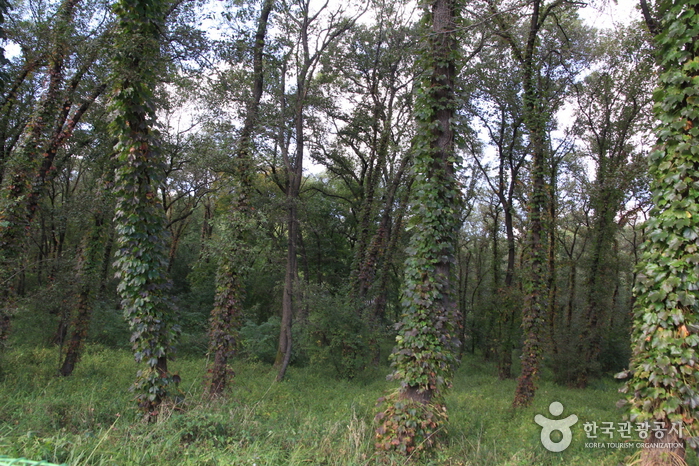
Heonninneung Royal Tombs Ecological Preservation Area is home to alder tree forests. It was officially designated as an ecological preservation area by the Seoul Metropolitan Government in 2005.

Bukjeong Village (북정마을)
8.7Km 2024-02-15
132-3 Seongbuk-ro 23-gil, Seongbuk-gu, Seoul
Bukjeong Village, situated along the slopes of Seongbuk-dong, offers a glimpse into Korea's old alleyways. The village expanded as refugees from the Korean War (1950–1953) and people from various regions settled, building houses under the collapsed walls of Hanyang doseong (Seoul City Wall). Presently, the village is home to young artists, and the broad street in front of the village bus stop hosts various community events.
Bukchon Museum (북촌생활사박물관)
8.7Km 2022-08-30
90, Bukchon-ro 5na-gil, Jongno-gu, Seoul
+82-2-736-3957
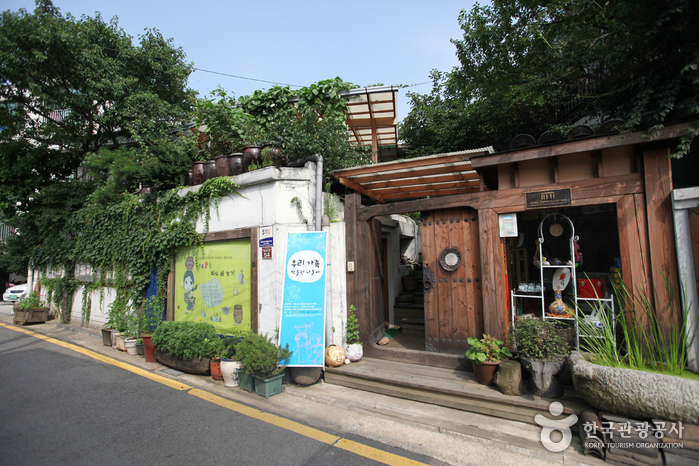
The Bukchon Museum displays items that have been collected from Bukchon, a historical village that was once home to the nation’s nobility. The museum was founded to observe urban development that took place in the recent decades through collected and preserved veryday household items that were used by Bukchon residents. Visitors are even allowed to touch items on display to better be able to imagine life in Korea before industrialization.
Seoul Hiking Tourism Center - Bugaksan Branch (서울도심등산관광센터(북악산))
8.7Km 2024-03-05
88 Samcheong-ro, Jongno-gu, Seoul
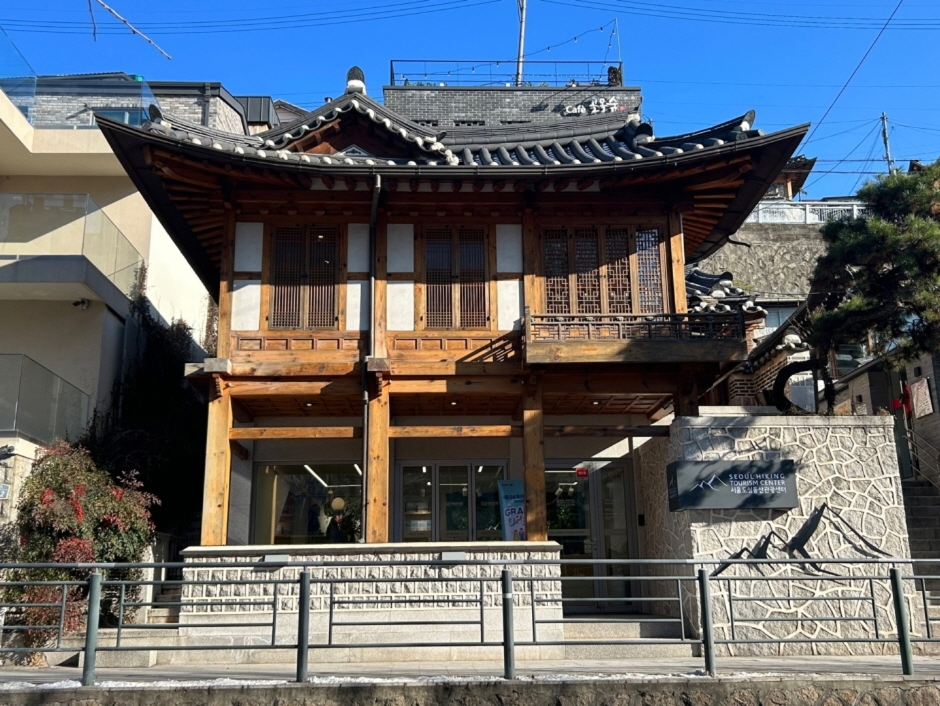
The Bugaksan branch of Seoul Hiking Tourism Center is located on Samcheong-dong Culture Street and provides various services to hikers. It provides hiking course guidance and information (available in Korean, English, Chinese, and Japanese) about the mountains of Seoul, including Bukhansan, Bugaksan, and Inwangsan Mountains, as well as promotional materials such as Seoul hiking tourism guidebooks and maps. Also, it operates hiking tour programs with various themes every week for foreigners and offers hiking gear rental services such as hiking boots, hiking attire, trekking poles, gloves, and crampons for foreigners. (Koreans accompanied by foreigners can also rent the gear.) In addition, there is a storage locker and lounge for visitors, so they can pack up and rest before hiking.
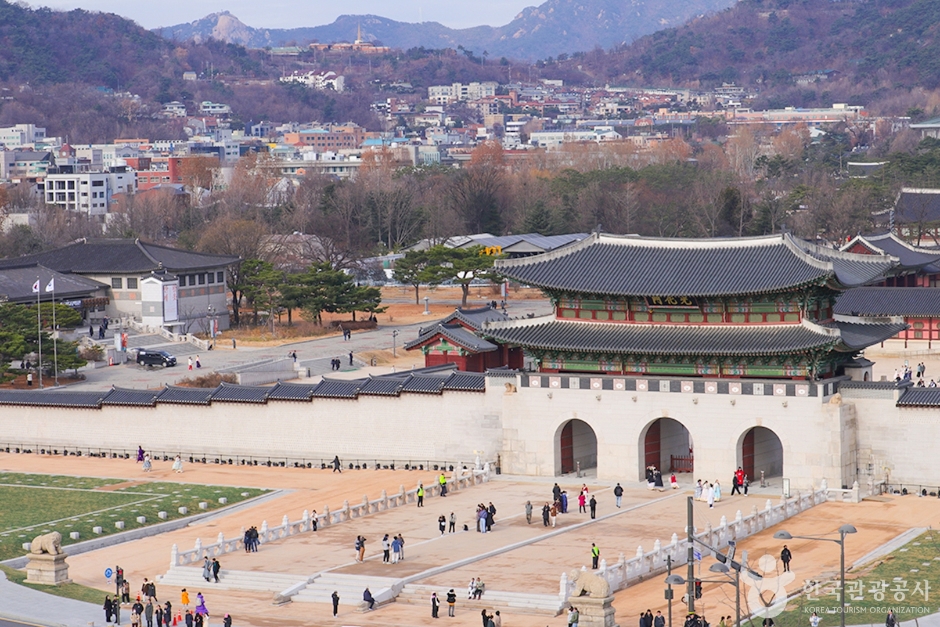
Gwanghwamun Gate (광화문)
8.7Km 2024-12-04
161 Sajik-ro, Jongno-gu, Seoul
+82-2-3700-3900
Built in 1395 under the reign of King Taejo, the first king of the Joseon dynasty, Gwanghwamun Gate is the southern gate of Gyeongbokgung Palace. It is also the main gate of the palace, therefore larger and fancier in comparison to the other gates. Gwanghwamun Gate consists of three arched gates; the center gate was used by the king, while the other two were used by the crown prince and royal officials. The tall granite walls of the gate serve as a platform for the wooden gate tower that watches over the city. The gate has a sign with its name written at the top center of the gate tower.
Gwanghwamun Gate went through several damages and restorations over the course of history. It was first severely damaged during the Imjin War (1592-1598) and was not restored until the reconstruction of Gyeongbokgung Palace in 1864. Under the Japanese administration, the gate was demolished and relocated to the north of the palace's eastern gate, followed by series of damages during the Korean War (1950-1953). In 1968, Gwanghwamun Gate was relocated back to the south of the palace and was rebuilt using concrete; however, the gate’s position was shifted a few meters away from its original location. In 2006, a major reconstruction project took place to restore Gwanghwamun Gate to its original state and location, disassembling the structure completely and replacing concrete with granite and wood. After three years and eight months of construction, Gwanghwamun Gate was fully restored to its original form and was open to the public on August 15, 2010.
 English
 한국어
한국어 日本語
日本語 中文(简体)
 Deutsch
 Français
 Español
 Русский


