![It Michaa - MODA Outlet Cheonan Asan Branch [Tax Refund Shop] (잇미샤 모다아울렛 천안아산)](http://tong.visitkorea.or.kr/cms/resource/38/3313638_image2_1.jpg)
It Michaa - MODA Outlet Cheonan Asan Branch [Tax Refund Shop] (잇미샤 모다아울렛 천안아산)
7.7Km 2024-06-27
1F, 196, Gongwon-ro, Seobuk-gu, Cheonan-si, Chungcheongnam-do
-
![Zishen - MODA Outlet Cheonan Asan Branch [Tax Refund Shop] (지센 모다아울렛 천안아산)](http://tong.visitkorea.or.kr/cms/resource/57/3313857_image2_1.jpg)
Zishen - MODA Outlet Cheonan Asan Branch [Tax Refund Shop] (지센 모다아울렛 천안아산)
7.7Km 2024-06-27
1F, 196, Gongwon-ro, Seobuk-gu, Cheonan-si, Chungcheongnam-do
-
![Izzat Baba - MODA Outlet Cheonan Asan Branch [Tax Refund Shop] (아이잗바바 모다아울렛 천안아산)](http://tong.visitkorea.or.kr/cms/resource/02/3314202_image2_1.jpg)
Izzat Baba - MODA Outlet Cheonan Asan Branch [Tax Refund Shop] (아이잗바바 모다아울렛 천안아산)
7.7Km 2024-06-27
196, Gongwon-ro, Seobuk-gu, Cheonan-si, Chungcheongnam-do
-
![LIST - MODA Outlet Cheonan Asan Branch [Tax Refund Shop] (리스트 모다아울렛 천안아산)](http://tong.visitkorea.or.kr/cms/resource/47/3313747_image2_1.jpg)
LIST - MODA Outlet Cheonan Asan Branch [Tax Refund Shop] (리스트 모다아울렛 천안아산)
7.7Km 2024-06-27
1F, 196, Gongwon-ro, Seobuk-gu, Cheonan-si, Chungcheongnam-do
-
![Châtelaine - MODA Outlet Cheonan Asan Branch [Tax Refund Shop] (샤트렌 천안아산 모다아울렛)](http://tong.visitkorea.or.kr/cms/resource/29/3313729_image2_1.jpg)
Châtelaine - MODA Outlet Cheonan Asan Branch [Tax Refund Shop] (샤트렌 천안아산 모다아울렛)
7.7Km 2024-06-27
1F, 196, Gongwon-ro, Seobuk-gu, Cheonan-si, Chungcheongnam-do
-
![Michaa - MODA Outlet Cheonan Asan Branch [Tax Refund Shop] (미샤 모다아울렛 천안아산)](http://tong.visitkorea.or.kr/cms/resource/13/3312913_image2_1.jpg)
Michaa - MODA Outlet Cheonan Asan Branch [Tax Refund Shop] (미샤 모다아울렛 천안아산)
7.7Km 2024-06-26
1F, 196, Gongwon-ro, Seobuk-gu, Cheonan-si, Chungcheongnam-do
-
![E-Mart Traders - Cheonan Asan Branch [Tax Refund Shop] (이마트트레이더스 천안아산)](http://tong.visitkorea.or.kr/cms/resource/76/2883276_image2_1.jpg)
E-Mart Traders - Cheonan Asan Branch [Tax Refund Shop] (이마트트레이더스 천안아산)
7.9Km 2024-04-22
133, Gosokcheol-daero, Baebang-eup, Asan-si, Chungcheongnam-do
-
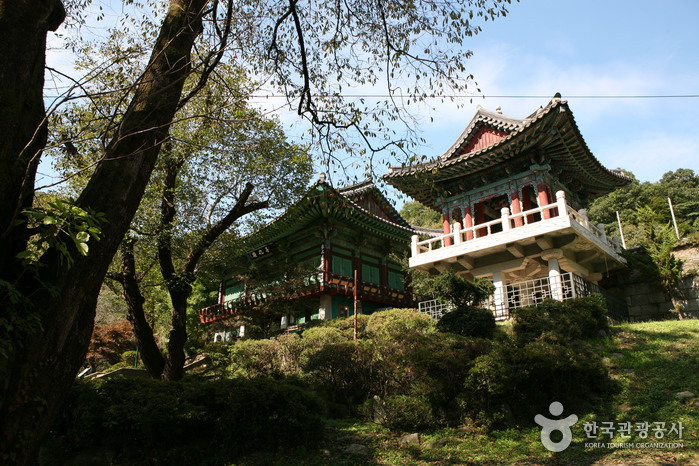
Cheonan Gwangdeoksa Temple (광덕사(천안))
7.9Km 2021-12-01
30, Gwangdeoksa-gil, Dongnam-gu, Cheonan-si, Chungcheongnam-do
+82-41-567-0050
Gwangdeoksa Temple is said to be established in 637 by Monk Jajang Yulsa during the Silla Kingdom and was refurbished during the reign of King Heungdeok (832). The temple sits in the southeast of Gwangdeoksan Mountain, which borders Asan-si and Cheonan-si, and the southwest of Taehwasan Mountain. It was the biggest temple within Chungcheong and Gyeonggi regions before the Japanese invasion. However, it was burnt down during the Japanese invasion and the main buildings such as Daeungjeon, Myeongbujeon and Cheonbuljeon Halls are relatively new compared to the other original facilities.
![Homeplus Stores - Cheonan Sinbang Branch [Tax Refund Shop] (홈플러스스토어즈 천안신방)](http://tong.visitkorea.or.kr/cms/resource/53/2883253_image2_1.jpg)
Homeplus Stores - Cheonan Sinbang Branch [Tax Refund Shop] (홈플러스스토어즈 천안신방)
8.2Km 2024-04-23
23, Sinchon 1-gil, Dongnam-gu, Cheonan-si, Chungcheongnam-do
-
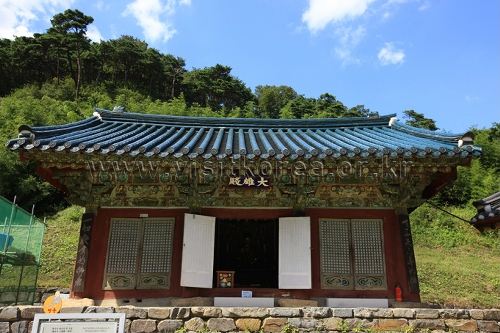
Bonggoksa Temple (봉곡사)
8.6Km 2021-05-15
138, Dosong-ro 632beon-gil, Asan-si, Chungcheongnam-do
+82-41-543-4004
Surrounded by lush wildlife Bonggoksa Temple is located alongside the northeast valley in Bongsusan Mountain in Namdan, Songak-myeon. Both Daeeungjeon and Hyanggakjeon sit facing east, and to the north, is the large Yosache (residence for Buddhist monks). Behind the residence, an area has been leveled down for a restroom and storehouse. And Samseongak (a building where three saints are worshipped) is situated on top of the mound to the south of the temple. Although Samseongak was constructed in recent years, both Daeungjeon and Yosache are identified in the restored record that was found by Buddhist monk, Seobong in 1891. The temple has gained renown for being the place where Saint Mangong attained his Buddhist awakening and recited Odoseong, the zen poetry in July, 1895.
 English
 한국어
한국어 日本語
日本語 中文(简体)
 Deutsch
 Français
 Español
 Русский


