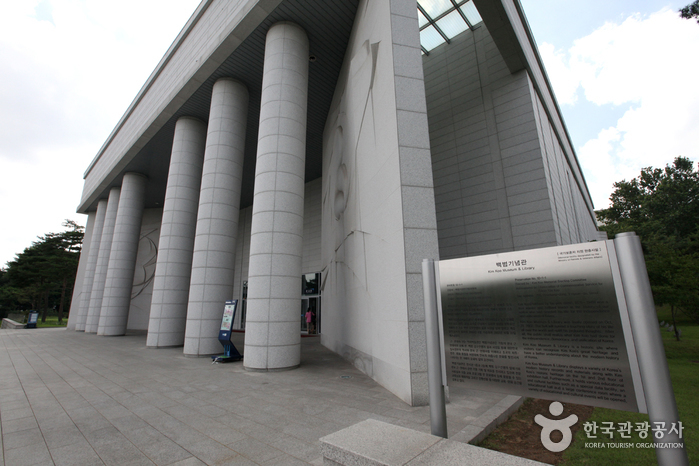
Kim Koo Museum & Library (백범김구기념관)
5.4Km 2022-08-30
26, Imjeong-ro, Yongsan-gu, Seoul
+82-2-799-3400
Kim Koo Museum & Library was built in Yongsan-gu, Seoul to commemorate Baekbeom Kim Koo (1876-1949), a highly respected Korean independence activist. It opened on October 22, 2002 to commemorate Kim Koo's efforts and achievements in Korean history. The main hall is comprised of two floors, exhibiting relics related to his entire life. A statue of a seated Kim Koo is situated in the central space of the first hall.

Soonplus Plastic Surgery · Dermatology (순플러스성형외과의원)
5.4Km 2026-01-02
(12th-13th Floors, Mulberry Hills Medical Building), 589 Gangnam-daero, Seocho-gu, Seoul
At Soonplus Plastic Surgery · Dermatology, we are dedicated to enhancing the unique beauty of each individual through meticulous diagnoses and ongoing research.
For 25 years, we have quietly pursued the path of true beauty, and now, we are reaffirming our commitment to the principles that have guided us since the beginning.
Our focus is on natural beauty, helping you discover and embrace your own distinctive charm—one that is authentic and not influenced by fleeting trends.
This unwavering dedication to preserving individuality has been our hallmark for over two decades.
At Soonplus Plastic Surgery · Dermatology, we are committed to continuing this journey with you, bringing out the pure beauty that is uniquely yours.
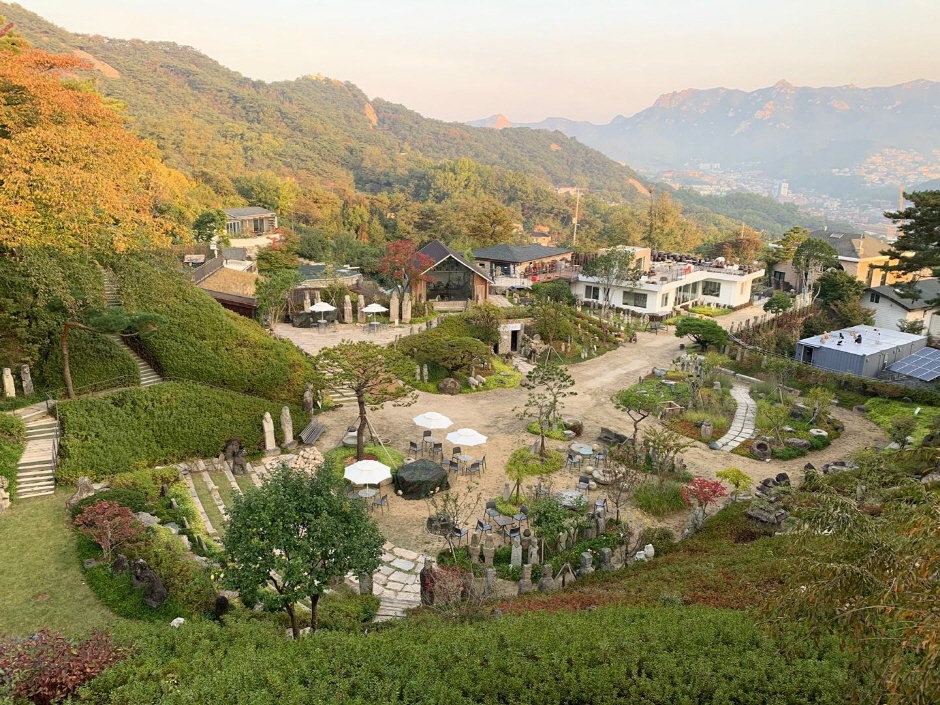
Mok In Museum Mok Seok Won (목인박물관 목석원)
5.4Km 2021-09-01
46-1, Changuimun-ro 5-gil, Jongno-gu, Seoul
+82-2-722-5066
Mok In Museum Mok Seok Won relocated in 2019 from Insa-dong to Buam-dong. Six exhibition halls offer visitors a look at wooden figures from around the world. Mokin refers to traditional wooden sculptures carved in shapes of human figures or various animals. The museum holds around 12,000 wooden folk sculptures including those used to decorate funeral carriages and temples mostly from the Joseon dynasty up to modern times. The museum also has an outdoor exhibition hall that harmonizes the sculptures with nature.
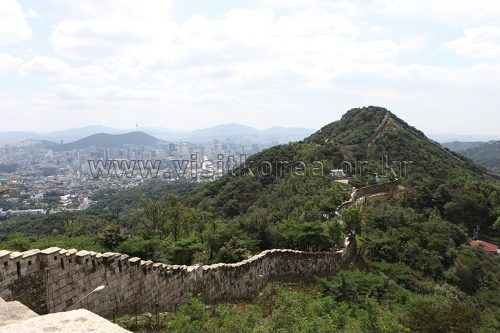
Bugaksan Mountain (북악산)
5.4Km 2024-03-04
Cheongun-dong, Jongno-gu, Seoul
+82-2-765-0297
Bugaksan Mountain is the mountain that one can see behind the Gyeongbokgung Palace and the Cheong Wa Dae to the north. Hanyangdoseong, the city wall that surrounded the historic capital of Hanyang, was built by connecting the ridges of this mountain. These walls can still be found today, having been preserved quite well. Different trails weave through the area along the Hanyangdoseong, the Seoul City Wall, and one can visit these trails at night as well. Bugak Skyway is a road that connects Changuimun Gate to Jeongneung Royal Tomb, and one can get a great view of Seoul’s city center from the Palgakjeong Pavilion on Bugak Skyway.
Dongnimmun Gate (독립문)
5.4Km 2022-12-15
251, Tongil-ro, Seodaemun-gu, Seoul
Dongnimmun stands at the location originally known as Yeongeun, where envoys were once treated. When a Chinese envoy visited, the King would go out through this door to greet. In 1898, to announce the independence from Japan, Dongnimun was constructed with the fund collected by the citizens. The traces of the past still remain on Dongnimmun with two pillars in front of Dongnimmun being the remains of Yeongeunmun.
The Arc de Triomphe in France can be recalled in comparison to Dongnimmun. Dongnimmun was built using granite with a passageway x_height of 14.28 meters. On the top it is written ‘Dongnimmun’ in Korean with the national flag drawn on each side. On the inner-left side there are stone stairs leading to the attic. The national flower Mugunghwa are planted around Dongnimmun. Now it is surrounded by roads and it is eye-catching to view when passing by.
Seodaemun Prison History Museum (서대문형무소역사관)
5.4Km 2024-12-02
251 Tongil-ro, Seodaemun-gu, Seoul
Seodaemun Prison was built under the Japanese administration to imprison independence movement activists. It first opened on October 21, 1908 under the name Gyeongseong Prison. Eventually, so many activists were imprisoned that the building had to be expanded. At that time, the name changed to Seodaemun Prison on September 3, 1912. Eighty years later, the prison was turned into Seodaemun Independence Park on August 15, 1992 to commemorate the Korean patriots who were tortured in prison, giving their lives for freedom. Of the many buildings, only seven were preserved for their historical significance, among which three prison buildings and the execution site were designated as a Historic Site. In 1998, the park underwent another transformation into today's Seodaemun Prison History Hall to educate the public on the importance of Korea's independence and the sacrifices of those who fought to achieve it.
Seodaemun Independence Park (서대문독립공원)
5.5Km 2022-12-15
251, Tongil-ro, Seodaemun-gu, Seoul
+82-2-3140-8305
Seodaemun Independence Park was built on the former Seoul Detention Camp. It was used to imprison thousands of Korean independence activists until the liberation from the Japanese occupation on August 15, 1945, as well as the political prisoners during the political turmoil in the 1960s. When the prison was moved to Uiwang-si, Gyeonggi-do in November 1987, the area was restored and turned into a memorial park in August 15, 1992 to honor the sacrifices of the martyrs. The park preserves seven prison buildings, an execution ground, underground women’s prison, and the March 1st Movement Monument that has been moved from Tapgol Park in Jongno.
One of the most significant monuments of the Seodaemun Independence Park is Dongnimmun Gate (Independence Gate), which has been designated a Historic Site. Nearby is Dongnipgwan (Independence Hall), originally called Mohwagwan, which was used to greet Chinese envoys during the Joseon dynasty. Today, the hall enshrines 2,327 tablets inscribed with the names of Koreans who died for the cause of national independence. Standing right next to Dongnimmun Gate are the remnants of Yeongeunmun Gate, another Historic Site. Other sights inside the park include the Patriotic Martyr Monument, Declaration of Independence Monument, and Statue of Dr. Seo Jae-pil, who was an independence activist and publisher of Korea’s first independent newspaper. The main highlight of the park is the Seodaemun Prison History Hall, a former prison building that was renovated into a history museum.

Mouse Rabbit (마우스래빗)
5.5Km 2025-10-30
10, Neungdong-ro 11-gil, Gwangjin-gu, Seoul
SUPER JUNIOR Yesung
SUPER JUNIOR’s Yesung, who loves coffee, opened this cafe with her younger brother. It is also called 'Yesung Cafe' and is visited by domestic fans as well as foreign customers. Yesung serves himself, and it is decorated like a hideout. The cafe building, which consists of the first basement floor and the second floor above ground, catches the eye with a different theme for each floor. Ssamanko Smoothie and Icy Blue Smoothie are popular menu items.
April 31 Plastic Surgery (4월31일성형외과)
5.5Km 2025-10-23
(April 31 Building), 707 Nonhyeon-ro, Gangnam-gu, Seoul
Established in 1999, April 31 Plastic Surgery boasts a long history and solid brand power.
A unique name, April 31 Plastic Surgery
April 31 doesn't exist, so we came up with a special day that doesn't exist anywhere else. Our motto is to be the hospital that gives patients a new birthday.
Our medical specialists and staff are committed to professionalism and patient satisfaction, continuously striving to meet patients' expectations.
Yongsan Family Park (용산가족공원)
5.5Km 2022-12-15
185, Seobinggo-ro, Yongsan-gu, Seoul
+82-2-792-5660
Visitors to Yongsan Family Park can enjoy a relaxing time at a big grassy field beside a refreshing pond and well-organized walking paths. Yongsan Family Park spans an area of roughly 89,256.20 ㎡ in what was a section of the former golf course of the Eighth US Army Division. The park is comprised of various facilities such as a 2km-walking path, a natural education site, and Taegeukgi Park. Visitors can watch and feed pigeons and wild pheasants living at the park.
 English
 한국어
한국어 日本語
日本語 中文(简体)
 Deutsch
 Français
 Español
 Русский


