
Vegetarian Restaurant Osegyehyang (채식요리전문점 오세계향)
259.7M 2024-03-18
14-5 Insadong 12-gil, Jongno-gu, Seoul
+82-2-735-7171
Osegyehyang is a vegetarian restaurant located in Insa-dong. It specializes in vegetarian cuisine, offering a variety of dishes including noodles, traditional Korean dishes, and specialty items. Some of its popular dishes include maesil tangsuchae (vegan deep-fried pork with sweet and sour sauce), pyogobeoseotmari (rolled shiitake mushrooms), vegan yangnyeom chicken (vegan seasoned fried chicken), tteokbokki, jjajangmyeon (black bean sauce noodles), jjamppong (spicy seafood noodle soup), vegan steak, and bulgui ttukbaegi (vegan bulgogi), all prepared without meat but still delicious.
Neulmajung (늘마중)
276.9M 2024-01-12
11-5 Insadong 10-gil, Jongno-gu, Seoul
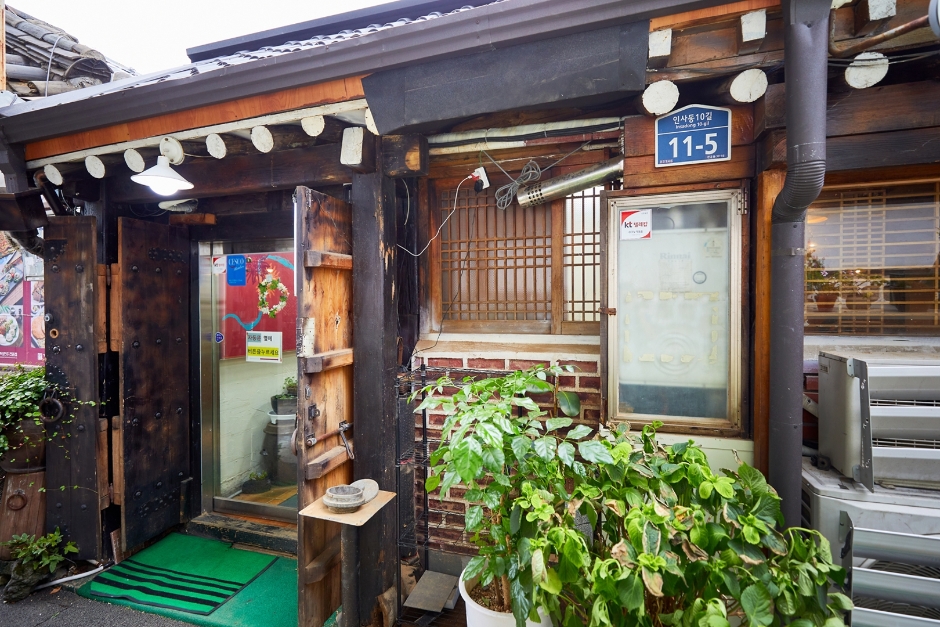
Makgeolli is a traditional liquor made from rice or wheat as a main ingredient and with yeast and various other ingredients. Its uniqueness lies in the main ingredient or yeast used, thus a variety of makgeolli made with local specialties can be found throughout Korea. Neulmajung is a pub restaurant that serves 34 types of makgeolli from all over the country, as well as many foods that go well with them. In addition, its soft wooden interior creates a comfortable atmosphere. Its representative dish is haemul pajeon (seafood and green onion pancake), made with plenty of ingredients. They also serve crispy pan-fried gamja jeon (potato pancake) and memil jeonbyeong (buckwheat crepe), rich in both flavor and taste as it is made with buckwheat from Bongpyeong, Gangwon-do, all of which are a perfect paring to makgeolli.
Insa-dong Maneul Bossam (인사동마늘보쌈)
281.8M 2024-03-18
12-5 Insadong 8-gil, Jongno-gu, Seoul
+82-2-735-7885
Insa-dong Maneul Bossam is a Korean restaurant nestled in the alleys of Insa-dong. Specializing in dishes like maneul bossam (kimchi cabbage wraps with pork and garlic), kimchi jjim (braised kimchi), nakji bokkeum (stir-fried octopus), buchujeon (chive pancake), kimchijeon (kimchi pancake), yeolmu naengmyeon (cold buckwheat noodles with young summer radish kimchi), and bam makgeolli (unrefined chestnut rice wine). Their signature dish, the bossam jeongsik (kimchi cabbage wraps with pork set menu), features pork belly boiled in a secret broth, served with a sweet garlic sauce for dipping, along with seaweed soup, fresh vegetables for wrapping, dried radish salad, and side dishes. They also offer set menus for two people, and neomu hansang set menu.
Choedaegamne (최대감네)
282.2M 2024-03-18
12-3 Insadong 8-gil, Jongno-gu, Seoul
+82-2-733-9355
Choedaegamne is a traditional Korean restaurant located in a hanok in Insa-dong, with a garden and a pond, and has been in operation for over 100 years. One of their popular dishes is the sangchu shabu jeongsik (shabu with rice in a cabbage set menu), where vegetables and meat are cooked in a broth and then enjoyed with noodles, served with a small rice ball on lettuce. They also offer a so galbijjim jeongsik (steamed beef ribs set menu) and bulgogi jeongsik (bulgogi set menu), served with lotus leaf rice and soybean paste jjigae. After the meal, guests can enjoy tea in the garden.
Public Hanok Night Out (공공한옥 밤마실)
290.5M 2025-06-10
37 Gyedong-gil, Jongno-gu, Seoul
+82-2-741-1033
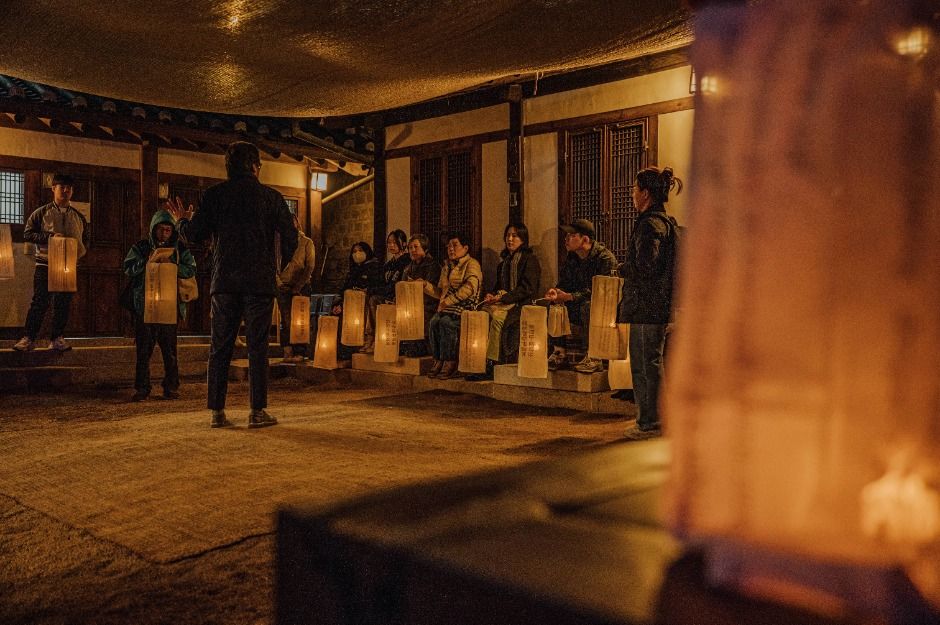
Public Hanok Night Out is a special evening event that allows limited access to the nine public hanok buildings, including the Bukchon Culture Center, after sundown. The event is carefully prepared to make the hanok buildings accessible as much as possible. In addition, the event also offers a variety of programs to entertain the visitors. The event aims to raise awareness about embracing differences and diverse values during this time of ever-changing global society, as well as expand the the cultural values of hanok as something more unique.
Sieunjae (시은재)
300.0M 2024-12-23
439 , Samil-daero, Jongno-gu, Seoul
+82-10-5355-3029
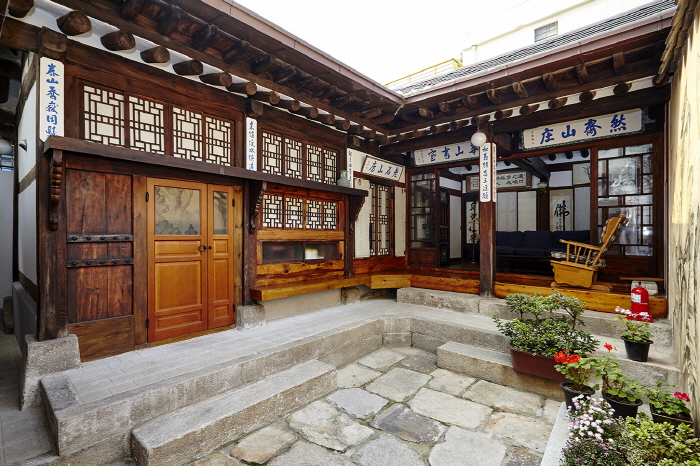
Sieunjae is a hanok stay that has stood in the midst of busy Gyeongun-dong, Jongno-gu, Seoul, for generations. The guestrooms comprise an anbang (bedroom plus living room), three smaller rooms, and a byeolchae or detached house. All rooms have a toilet, and there’s a well-equipped shared kitchen and a washing machine. Guests can either rent individual rooms or the whole hanok. Jongno is convenient for travel to all the historic sites of Seoul, and there’s a public carpark nearby.
GONGGAM HL MANAGEMENT Co., Ltd. ((주)공감에이치엘 매니지먼트)
300.2M 2025-11-06
#B119, 59 Donhwamun-ro 11ga-gil, Jongno-gu, Seoul
JDI International is a company engaged in international patient attraction business.
We welcome patients from the United States, Europe, China, Russia, and Southeast Asia.
We provide foreign patients with reliable medical care in Korea and provide information on medical products that combine personalized care and tourism.
We specialize in providing customized medical services to foreign patients through partnership with various hospitals in Korea.
Bukchon Cultural Center (북촌문화센터)
301.4M 2025-06-19
37 Gyedong-gil, Jongno-gu, Seoul
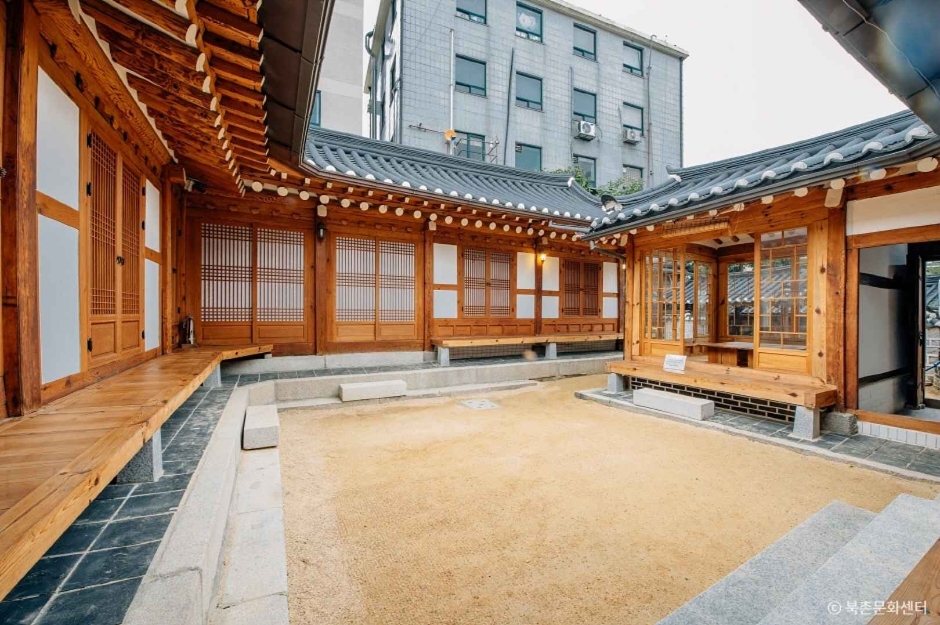
Bukchon Cultural Center, located in a hanok, was established to offer traditional cultural experience opportunities for visitors to the area. The programs include tea ceremony, handicraft, and gugak as well as a Public Relations Exhibition Hall introducing Bukchon culture and hanok. Also, the center houses a space and a pavilion for visitors to relax while traveling.
Eight Scenic Views of Bukchon (북촌 8경)
301.4M 2024-03-18
37, Gyedong-gil, Jongno-gu, Seoul
+82-2-2148-4161
The Eight Scenic Views of Bukchon can be found at the Bukchon Hanok Village between Gyeongbokgung Palace and Changdeokgung Palace. Bukchon was historically a district where the aristocracy of Joseon had resided in, so it is still home to a large number of traditional dwellings, called hanok in Korean. The eight views are as follows: No. 1, view of Chengdeokgung Palace; No. 2, view of Wonseo-dong Handicraft Road; No. 3, view of the Gahoe-dong area; No. 4, view from the hill at Gahoe-dong (Bukchon Observatory); No. 5, the view of the road uphill at Gahoe-dong; No. 6, the view of the road downhill at Gahoe-dong; No. 7, the view at house number (beonji) 31, Gahoe-dong; No. 8, the view of the stone stairway at Samcheong-dong.
Bukchon Hanok Village (북촌한옥마을)
306.7M 2025-06-19
37 Gyedong-gil, Jongno-gu, Seoul
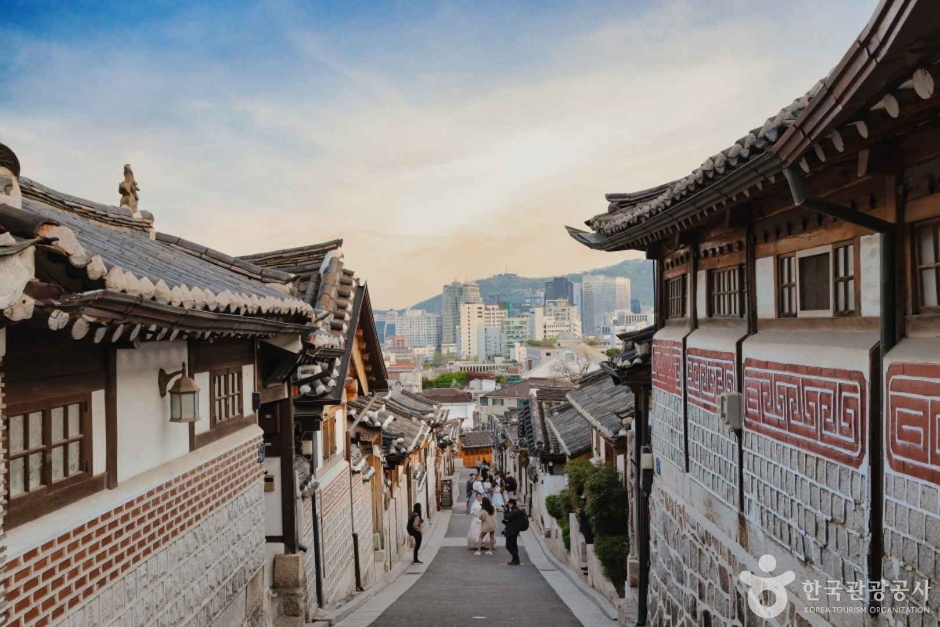
Surrounded by Gyeongbokgung Palace, Changdeokgung Palace and Jongmyo Shrine, Bukchon Hanok Village is home to hundreds of traditional houses, called hanok, that date back to the Joseon dynasty. The name Bukchon, which literally translates to "northern village," came about as the neighborhood lies north of two significant Seoul landmarks, Cheonggyecheon Stream and Jongno. Today, many of these hanoks operate as cultural centers, guesthouses, restaurants and tea houses, providing visitors with an opportunity to experience, learn and immerse themselves in traditional Korean culture. As Bukchon Hanok Village is an actual neighborhood with people's homes, visitors are advised to be respectful at all times while looking around.
 English
 한국어
한국어 日本語
日本語 中文(简体)
 Deutsch
 Français
 Español
 Русский


