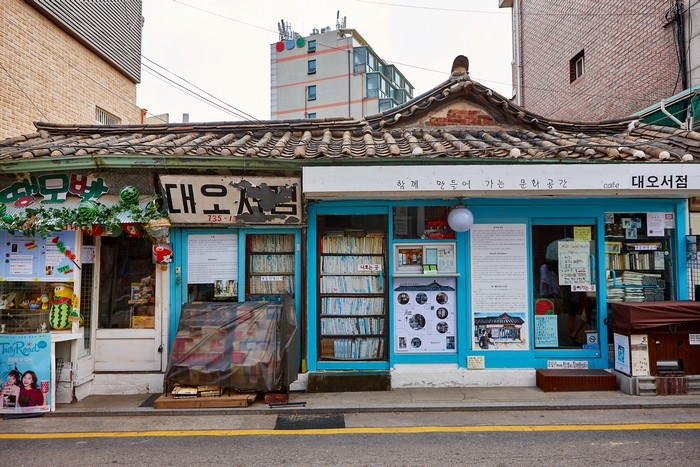
Daeo Bookstore (대오서점)
1.5Km 2025-11-05
55 Jahamun-ro 7-gil, Jongno-gu, Seoul
Daeo Bookstore is the oldest bookstore in Seoul that has been maintained in one place since it opened in 1951. Recently, it has been refurbished as a cultural space with a cafe, where one can enjoy coffee, exhibitions, and performances while looking at the yard. Visitors who just want to browse can purchase a souvenir postcard set for admission. Taking a closer look at books that feel the years and objects that have traces of use, they appear to come rather new.
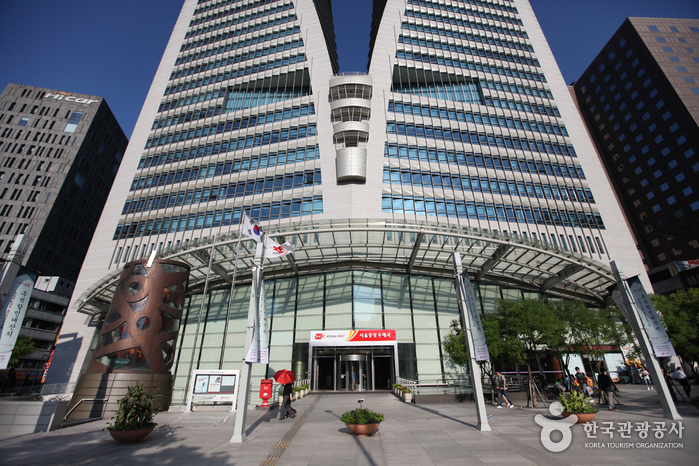
Korea Postage Stamp Museum (우표박물관(구.우표문화누리))
1.5Km 2024-03-06
B2, 70, Sogong-ro, Jung-gu, Seoul
The Korea Postage Stamp Museum was established to promote stamp culture. Here, visitors can explore the history of stamps throughout the ages, with a wide variety of subjects and types. Its main facilities include Postal Service History, Hands-on Postage Stamp Experience, Informative Postage Stamps, and Philately Classroom. Reservations are required for weekend tours and can be made on the website.
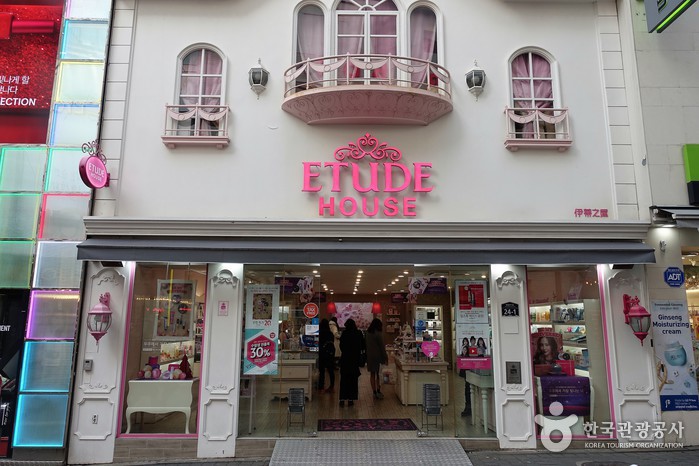
Etude house myeongdong chungmuro / 에뛰드하우스(명동충무로점)
1.5Km 2025-08-11
24-1, Myeongdong 8na-gil, Jung-gu, Seoul
Etude House is a cosmetics brand that sells makeup, hair, and fragrance products. The Etude House Myeongdong Chungmuro Branch, located in the heart of a major shopping district, carries a wide selection of cosmetics that customers may test before purchasing. Moreover, the brightly lit store interior, designed with a princess bedroom decor, adds fun to the experience.
It is visited largely by foreign customers from Japan, Thailand, China and other East Asian countries. To facilitate an easy shopping experience, the shop always has foreign staff available to assist. The most popular items include creams made using snail extract, lipsticks and eye shadows. Etude House also has many sales on facial mask packs, and tax refunds are available.
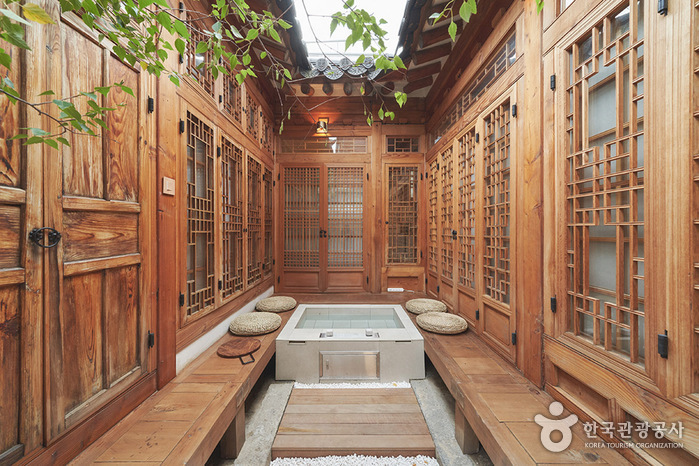
Of one book and stay (일독일박)
1.5Km 2024-12-23
11-1 , Pirundae-ro 3-gil, Jongno-gu, Seoul
Ildogilbak in Seochon Village, Seoul, is a private hanok stay that has been stylishly renovated with modern facilities. The bedroom, kitchen and dining room are located around the courtyard. Tired travellers can soak their feet in the small courtyard footbath while sitting on the veranda. There’s a queen size bed in the bedroom, and a large table in the dining room where you can read a book and chat. There is also an attic space where you can fall asleep looking at the stars through a small skylight. The kitchen is well equipped, and there’s a tub in the bathroom.
Harmony Mart Myeong-dong Station Branch (하모니마트 명동역점)
1.5Km 2024-12-23
58 , Myeongdong 10-gil, Jung-gu, Seoul
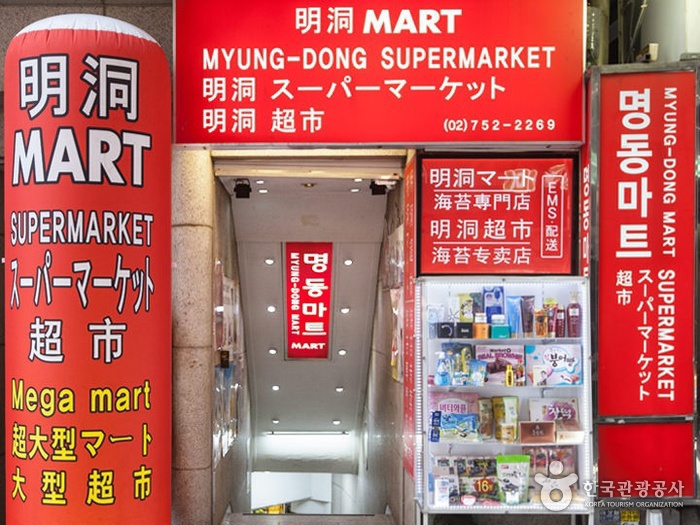
Harmony Mart Myeongdong Station Branch is a discount supermarket specializing in Korean products popular with foreign tourists. It’s on the 1st basement floor of the Shinil Building annex, just a minute's walk from Exit 8 of Myeongdong Subway Station, Jungu, Seoul. Shop here for kimchi, seaweed, ginseng products, tea, ramen, handicrafts, daily necessities and souvenirs. English, Chinese, and Japanese are spoken, and payments can be made in yen and yuan. With purchases of KRW 50,000 or more, there’s free delivery to accomodations within a 5km radius.

Reberry Clinic Myeongdong (리베리의원 명동점)
1.5Km 2025-11-28
#201, 2nd Floor & #301, 3rd Floor, 58 Myeongdong 10-gil, Jung-gu, Seoul
1. A dedicated medical director is personally assigned to each client, ensuring responsible and individualized care.
2. We go beyond consultation — every session is a professional medical treatment.
3. With our LifeBiz AI-powered 3D analysis camera, we provide an objective and precise facial assessment.
4. Our treatments are guided by a scientific skin-type classification system for accurate and tailored results.
5. Through 3D facial analysis, pigmentation diagnosis, and skin-type classification, we design a fully customized treatment pathway.
6. At Libery Clinic Aesthetic, we offer not only advanced medical procedures, but also warm décolleté and therapeutic massage care for a holistic experience.
Gyeonghuigung Palace (경희궁)
1.5Km 2024-07-09
45 Saemunan-ro, Jongno-gu, Seoul
Gyeonghuigung Palace, a designated Historic Site, was originally called the large palace by Saemun Gate, or the Western Palace, for its location within the city. It was not until the eighth year of Gwanghaegun (1616) that the palace was used as a royal residence for the king, changing the name to Gyeongdeokgung Palace. The name later changed again to the current Gyeonghuigung Palace in 1760. The palace grounds included many halls but they were mostly all burned down in a fire in 1829. After the Japanese occupation began, all remaining buildings on the site were torn down and the palace grounds were turned into Gyeongseong Middle School (now Seoul High School). The school moved to Gangnam area in 1987, afterwhich the previous location was turned into a park. The palace grounds currently hold Seoul Museum of Art and walking paths, as well as a restoration of Heunghwamun Gate, the main gate of the palace, and Sungjeongjeon Hall, the main hall, completed in November 1994.
Jeongdong Guksi (정동국시)
1.5Km 2024-06-19
5 Jeongdong-gil, Jung-gu, Seoul
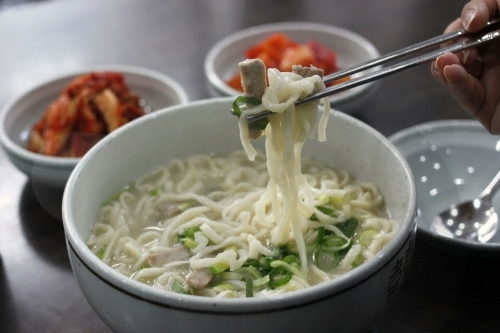
Jeongdong Guksi features a rich soup with a clean taste, created by carefully removing the oil dozens of times while boiling Korean beef bones for 15 hours. The restaurant uses this same beef bone broth in their mandutguk (dumpling soup), something not many restaurants do. The rich flavor of the broth combined with the soft dumplings, made in-house daily, is a must-try. The restaurant is also surrounded by many cultural and artistic spaces, making it a great addition to tours in the area.
Samcheong Park (삼청공원)
1.5Km 2024-03-18
44, Insadong-gil, Jongno-gu, Seoul
Samcheong Park is a park that blooms in cherry blossoms in spring and fall colors in fall near Gyeongbokgung Palace. The park is home to a forest library and a café, and visitors can follow the trails to find acupressure trails, exercise equipment, badminton court, tennis court, playground, and a convenience store. The area surrounding the park is home to many galleries and restaurants, so it is a popular destination for walking among the people of Seoul.
Seoul Sajik Park (사직공원(서울))
1.5Km 2021-11-12
89, Sajik-ro, Jongno-gu, Seoul
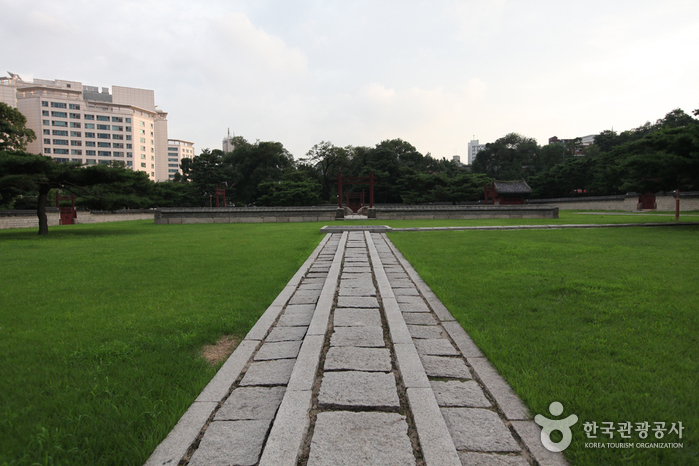
Sajik Park is one of the three most popular parks in Jongno-gu along with Tapgol Park and Samcheong Park. Located west of the Government Complex-Seoul on the southeastern foothills of Inwangsan Mountain, the park measures an impressive 188,710 m².
The name of the park dates back to 1395 when Taejo Yi Sung-gye made Sajik Altar (altar to the State deities) at the center of the park. "Sa" refers to the deity of the earth while "jik" refers to the deity of the five grains. Rites wishing for a good harvest were held regularly at Sajik Altar.
In the park are several playgrounds, statues of Sin Saimdang, Hwanghakjeong, and Yulkog Yi I, and the Municipal Children's Library. Dangun Shrine and Jongno Library are situated nearby. By following the path next to Sajik Park for approximately 5 minutes, travelers can reach the Inwangsan hiking path with relative ease.
 English
 한국어
한국어 日本語
日本語 中文(简体)
 Deutsch
 Français
 Español
 Русский


