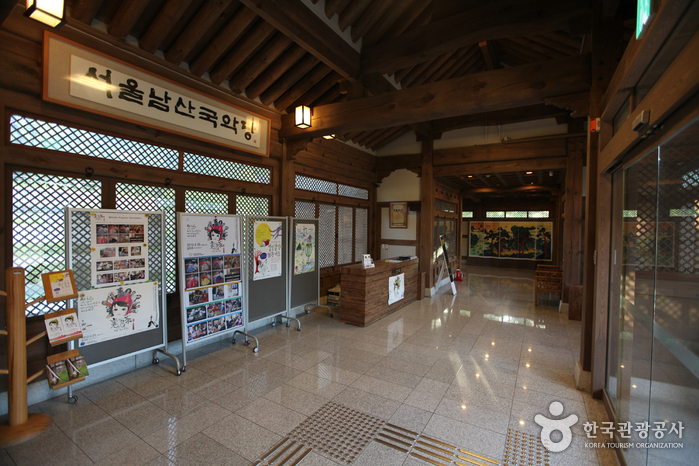
Seoul Namsan Gugakdang (서울 남산국악당)
9.0Km 2021-08-02
28, Toegye-ro 34-gil, Jung-gu, Seoul
+82-2-2261-0500
Seoul Namsan Gukakdang was established by Seoul Metropolitan Government as a representative traditional art-centered performance hall in 2007. It is comprised of one ground and two basement levels. The performance hall is located on the basement floor with 300 seats, equipped with facilities that deliver pansori sounds and gayageum music to every seat. Visitors can make a reservation at the Namsangol Hanok Village website.
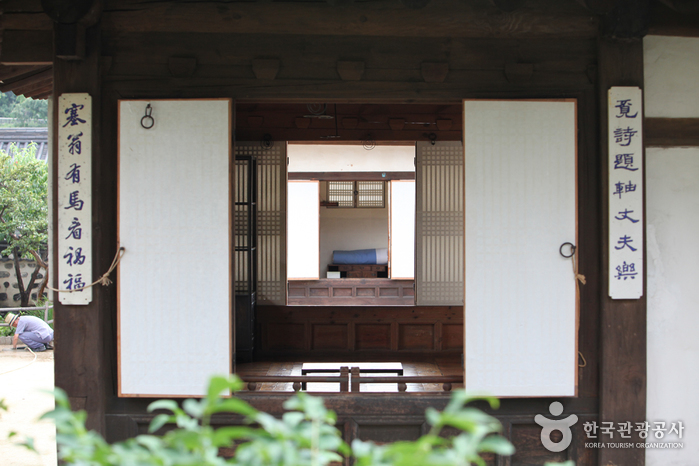
Haepungbuwongun Yun Taekyeong's Jaesil (해풍부원군윤택영댁재실)
9.0Km 2021-11-10
28, Toegye-ro 34-gil, Jung-gu, Seoul
+82-2-3396-5882
Haepungbuwongun Yun Taekyeong's Jaesil is a shrine house built by the father-in-law of King Sunjong of Joseon dynasty in 1906 when his daughter was proclaimed the crowned princess of Joseon and entered Changdeokgung Palace to later become Queen Sunjeong. Red pine trees salvaged from the demolition of Gyeongungung Palace were used to construct the house. It was originally located in Jegi-dong, Dongdaemun-gu, but was later restored and moved to its present location. The shrine of the house that was destroyed in 1960 was also restored.
Because the house is more of a shrine rather than residential living quarters, it has many unique features. For example, unlike other houses, it has the anchae (women’s quarters) located across from sarangbang (men’s quarters) with daecheong (living room) positioned between them.

Samsung Medical Center (삼성서울병원)
9.0Km 2025-10-23
81 Irwon-ro, Gangnam-gu, Seoul
Samsung Medical Center (SMC) has been at the forefront of change in the Korean medical field since its foundation in 1994. Guided by its new vision, "We aspire to be the frontier of future medicine," SMC is committed to delivering excellent treatment results for patients with severe and complex diseases by using the latest medical technologies. SMC's International Healthcare Center (IHC) operates an outpatient clinic dedicated exclusively to foreign patients.
D-cube Arts Center (디큐브아트센터)
9.0Km 2023-11-15
662 Gyeongin-ro, Guro-gu, Seoul
D-cube Arts Center is a state-of-the-art theater dedicated to musicals in D-cube City in Sindorim built by Daesung Energy. It took eight years to complete the 1,242-seated theater with the cooperation of Korea's best music and construction engineers and expert stage technicians. It is the largest theater in southwestern Seoul and can accommodate all kinds of musical performances. Diverse musicals were held at this center, including Mamma Mia!, Man of La Mancha, Chicago, and Rent. The center also has necessary amenities like a rehearsal room and dressing room. Not only is D-cube Arts Center easy to reach by public transportation, but it is also easy to find thanks to the passageway that connects the center from and to Sindorim Station (Seoul Subway Lines 1 & 2). D-cube Arts Center aims to act as the centerpiece of cultural arts and contribute to artistic interaction in the Sindorim area in Seoul's southwest.
Leaders Dermatology Clinic Myeongdong (리더스피부과의원 명동점)
9.0Km 2025-10-23
B1 Floor, 72 Toegye-ro (Hoehyeon-dong 1-ga, SK Leaders' View Namsan), Jung-gu, Seoul
Founded in 2001 by board-certified dermatologists from Seoul National University College of Medicine, Leaders Dermatology has grown into a trusted network of over 12 clinics across Korea and internationally, with a team of more than 20 dermatologists and 150 medical professionals.
Our doctors are actively involved in global academic circles delivering lectures at renowned conferences and seminars and are dedicated to raising the bar for dermatological care. With a systematic, patient-centered approach, our mission is to become the No.1 dermatology clinic in customer satisfaction through excellence in service and results.
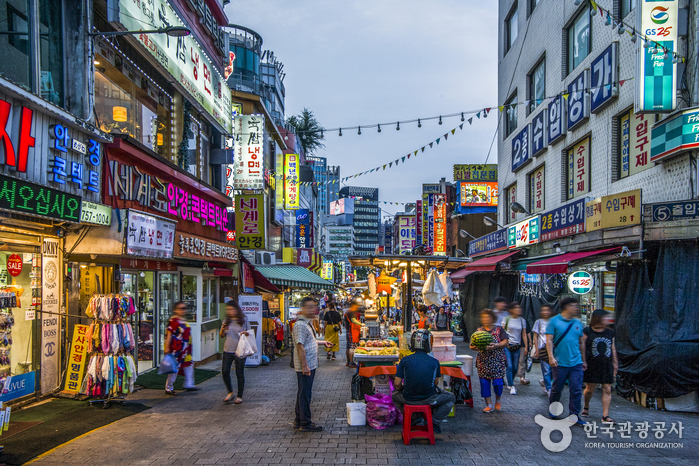
Namdaemun Market (남대문시장)
9.1Km 2024-05-17
21, Namdaemunsijang 4-gil, Jung-gu, Seoul
+82-2-753-2805
Opened in 1964, Namdaemun Market is the largest traditional market in Korea with shops selling various goods. All products are sold at affordable prices and the stores in this area also function as wholesale markets.
Most of the goods are made directly by the storeowners. Namdaemun Market is even open overnight, from 23:00 to 04:00, and is crowded with retailers from all over the country. When day breaks, the site of busy shoppers bustling around the market creates a unique scene that attracts tourists worldwide. Namdaemun Market sells a variety of clothes, glasses, kitchenware, toys, mountain gear, fishing equipment, stationery, fine arts, accessories, hats, carpets, flowers, ginseng, and imported goods.
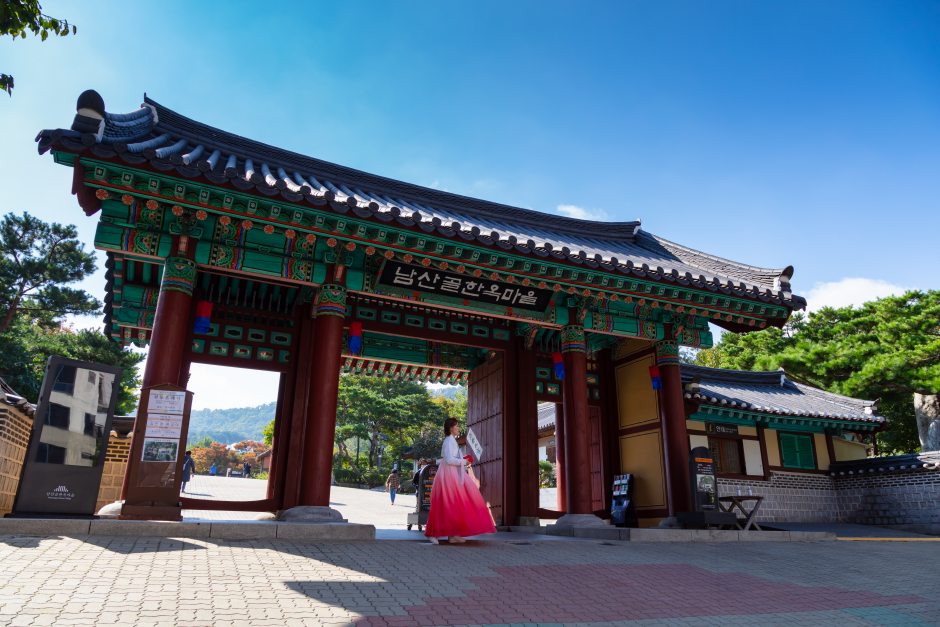
Namsangol Hanok Village (남산골한옥마을)
9.1Km 2025-07-14
28 Toegye-ro 34-gil, Jung-gu, Seoul
Namsangol Hanok Village opened in 1998 on the northern side of Namsan Mountain in the center of the capital. This village has five restored hanok (traditional Korean house) premises, a pavilion, a traditional garden, a performance art stage, and a time capsule plaza, making it a perfect spot for locals and tourists to take a leisure walk. Upon entering from the front gate, visitors will get a taste of Korea's traditional life while escaping from bustling city life. The traditional garden with its pavilion and old houses creates a peaceful ambiance before the forested Namsan Mountain. A time capsule commemorating Seoul’s 600th anniversary was buried in 1994 at the highest point of the village and is scheduled to be reopened 400 years later in 2394.
The five hanok premises at Namsangol Hanok Village once belonged to aristocrats and government officials of the Joseon dynasty. Each house was originally located in a different neighborhood, but they were all moved to this area and restored to their original form. The houses were rebuilt using their original materials, except for one house, where the materials were too old and deteriorated to be reused. The premises were carefully restored and replicated according to their original form to depict the owners’ social class and personality. These buildings are now used as an exhibit to portray the living environment during the Joseon dynasty and as a venue for educational and cultural programs for children and tourists.
Some of the unique programs and activities to participate in include wearing hanbok, folding hanji (traditional Korean paper), writing in Korean, traditional tea ceremony, traditional etiquette school, and herbal medicine experience. There are also taekwondo demonstrations and other various performances held around the village. Visitors can also try traditional games such as yunnori (traditional board game), or understand more about the area through a guided tour.
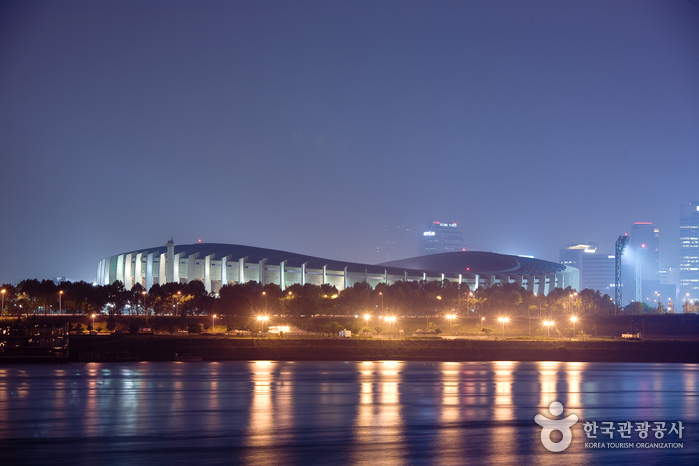
Seoul Sports Complex (Jamsil Sports Complex) (서울종합운동장(잠실종합운동장))
9.1Km 2024-12-02
25 Olympic-ro, Songpa-gu, Seoul
Seoul Sports Complex, located in Songpa, Seoul, hosted the 1986 Asian Games and the 1988 Summer Olympics. It consists of a main stadium, a baseball stadium, an indoor stadium, a students' gymnasium, an indoor swimming pool, and auxiliary stadiums. It serves as the venue for professional baseball and basketball games in Korea, as well as frequent K-pop concerts. Conveniently linked to subway lines 2 and 9, it offers easy access for visitors.
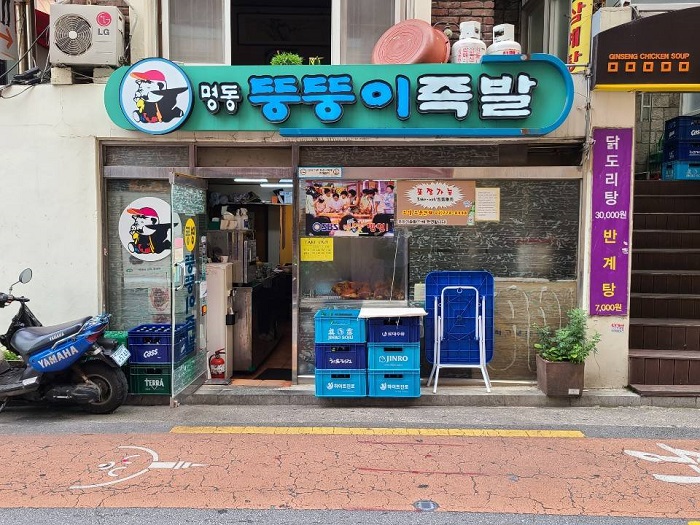
Myeong-dong Ttungttungi Jokbal (명동뚱뚱이족발)
9.1Km 2024-10-15
9, Toegye-ro, 20-gil, Jung-gu, Seoul
+82-2-778-8998
One of the old restaurants in Myeong-dong featured in Korean gourmet programs. This Korean dishes restaurant is located in Jung-gu, Seoul. The most famous menu is braised pigs' feet.
![Heolleung and Illeung Royal Tombs [UNESCO World Heritage] (서울 헌릉(태종,원경왕후)과 인릉(순조,순원왕후) [유네스코 세계문화유산])](http://tong.visitkorea.or.kr/cms/resource/42/1985242_image2_1.jpg)
Heolleung and Illeung Royal Tombs [UNESCO World Heritage] (서울 헌릉(태종,원경왕후)과 인릉(순조,순원왕후) [유네스코 세계문화유산])
9.1Km 2021-07-24
36-10, Heonilleung-gil, Seocho-gu, Seoul
+82-2-445-0347
Heolleung and Illeung Royal Tombs house the mounds for two kings of the Joseon dynasty (1392-1910) and their wives: King Taejong (1401-1418) and Queen Wongyeong, along with King Sunjo (1800-1834) and Queen Sunwon. Together, the tombs are referred to as Heonilleung Royal Tomb. The site possesses numerous stone statues and vestiges, and is a good place to experience the culture of the Joseon dynasty.
 English
 한국어
한국어 日本語
日本語 中文(简体)
 Deutsch
 Français
 Español
 Русский


