
ID Clinic (Sinsa Branch) (아이디의원(신사점))
5.2Km 2025-10-23
6F, 142 Dosan-daero, Gangnam-gu, Seoul
ID Cosmedical Group, consisting of ID Plastic Surgery and ID Dermatology, has launched a beauty clinic brand with a new concept that combines its extensive expertise and experience.
Based on its high-quality medical services, ID Clinic offers personalized beauty solutions with exceptional convenience at reasonable costs.
Ebookers Korea Inc. ((주)이부커스코리아)
5.2Km 2025-10-23
(2nd Floor), 212 Jangchungdan-ro, Jung-gu, Seoul
We strive for a special kind of tourism that combines wellness tourism (healing) and medical tourism (treatment).
We are a Korean wellness and medical tourism company leading the country’s safe and healthy travel culture.
* Products and Services
Wellness medical tourism programs that uniquely combine wellness and medical tourism
Referral and reservation service for selected wellness destinations and Korean hospitals with excellent medical technology
Guidance services provided at local partner companies
Content creation and reservation based on our personalized service system
Convenient tourism programs catering to each patient's health conditions
Medical tourism visa application and referral services on C33VISA site
* A medical tourism product brand
Medi Well Come products: Health checkup / general practice (minor / major / female / preventive / eye problems)
Anxin International Medical Co,.Ltd (안심국제 주식회사)
5.2Km 2025-10-23
(#3532), 41 Nonhyeon-ro 151-gil, Gangnam-gu, Seoul
Established in 2016, Anxin International Medical has been dedicated to attracting international patients since its inception. Over the past eight years, we have grown into a specialized medical tourism company with extensive experience. The company holds international travel agency permits, certified coordinators, and cosmetologist licenses, having served over 1,000 tourists during this time. Anxin International Medical offers a comprehensive range of services, including Korean medical consulting, interpretation, appointment scheduling, caregiving, airport pickups, and guided tours. The company has strong partnerships with numerous reputable Korean plastic surgery clinics, dermatology centers, health checkup clinics, dental clinics, hair transplant centers, obstetrics and gynecology clinics, and general hospitals. We remains committed to our founding principle: providing a "safe and reliable journey in Korea".
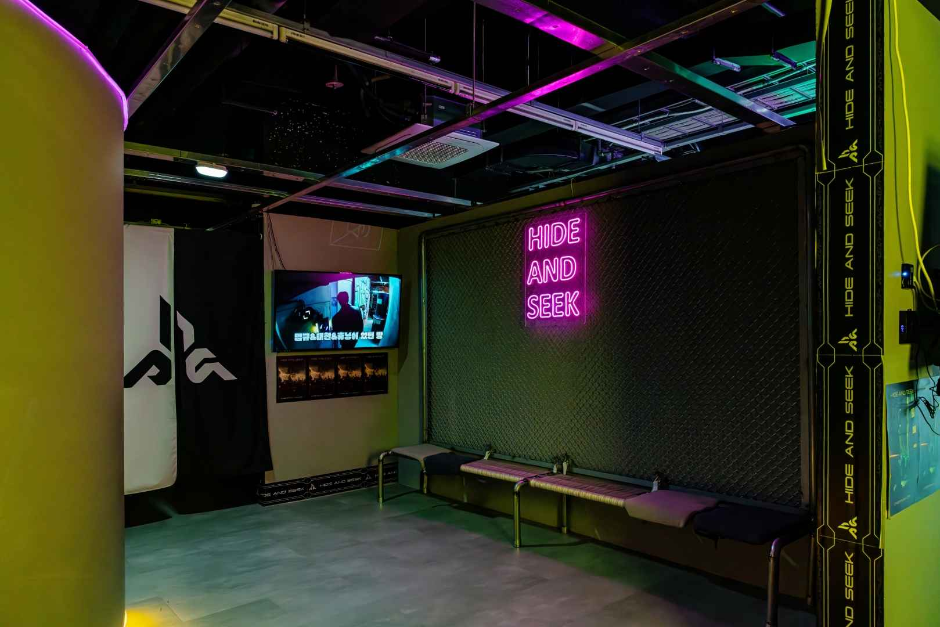
HIDE AND SEEK - Ssamzigil Branch (하이드앤시크 쌈지길점)
5.3Km 2025-11-06
44 Insadong-gil, Jongno-gu, Seoul
This is where TXT members enjoyed escape games on their own series, “TO DO X TXT.” Chosen as the tagger by random draw, Huening Kai showed impressive game skills, using his instincts to “eliminate” the other members.
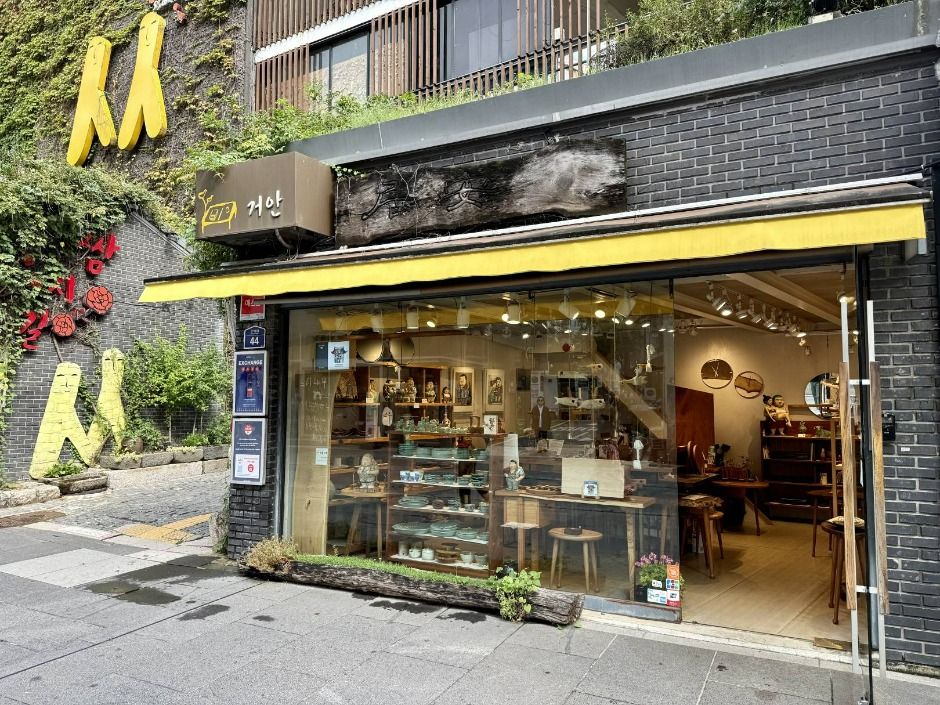
Geoan (거안)
5.3Km 2025-10-23
44 Insadong-gil, Jongno-gu, Seoul
Geoan, a store in Insa-dong, specializes in wooden furniture and accessories. Visitors can purchase products on display in the store or customize their pieces according to their preferences. In addition to furniture production, the shop also exhibits and sells various artworks such as celadon, lacquer mother-of-pearl, and sculptures by artists, making it a classy art space that harmonizes tradition and modernity.
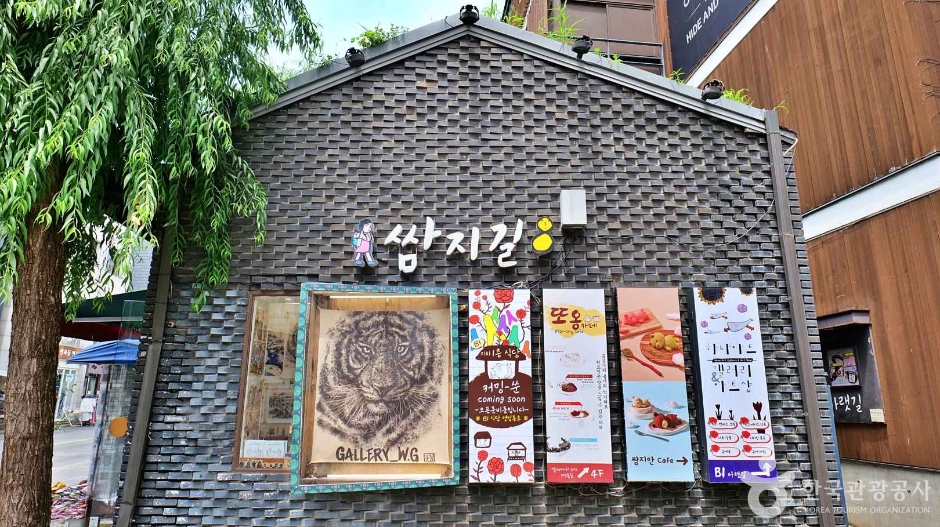
Ssamzigil (쌈지길)
5.3Km 2025-10-23
44 Insadong-gil, Jongno-gu, Seoul
Ssamzigil is an Insa-dong landmark and a shopping mall specializing in crafts. It is a place where the traditions of Korea come together with its present. Follow the paths that lead seamlessly from the lower floors to the upper floors and browse the small craft shops that inhabit the floors. You can find both works of traditional craft and contemporary craft here. Some craft shops also offer craft experiences, and one can also find restaurants and galleries within the complex.

Toin (토인)
5.3Km 2025-11-05
48 Insadong-gil, Jongno-gu, Seoul
Toy store where you can buy Dalgona sets
It is a retro-style store that sells nostalgic toys and snacks. The small space is filled with colorfully colored wrapping paper and toys that are difficult to understand at first glance. As soon as you enter this place, children and adults will feel excited and their eyes will sparkle. Among the various products, the most popular item is by far the Dalgona set. It is good to make new memories by choosing snacks and toys that suit your taste
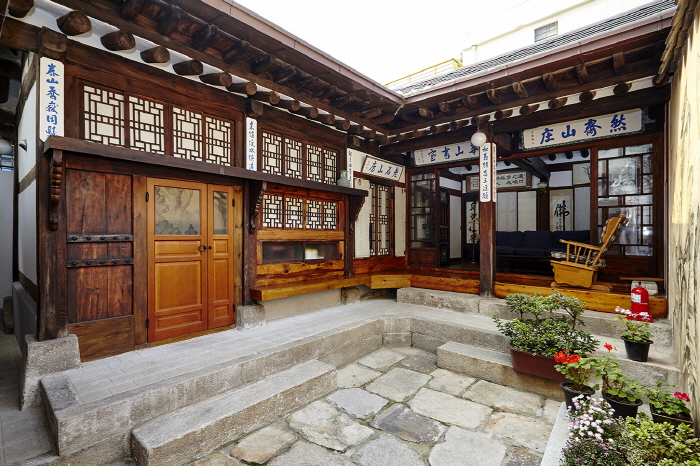
Sieunjae (시은재)
5.3Km 2024-12-23
439 , Samil-daero, Jongno-gu, Seoul
Sieunjae is a hanok stay that has stood in the midst of busy Gyeongun-dong, Jongno-gu, Seoul, for generations. The guestrooms comprise an anbang (bedroom plus living room), three smaller rooms, and a byeolchae or detached house. All rooms have a toilet, and there’s a well-equipped shared kitchen and a washing machine. Guests can either rent individual rooms or the whole hanok. Jongno is convenient for travel to all the historic sites of Seoul, and there’s a public carpark nearby.
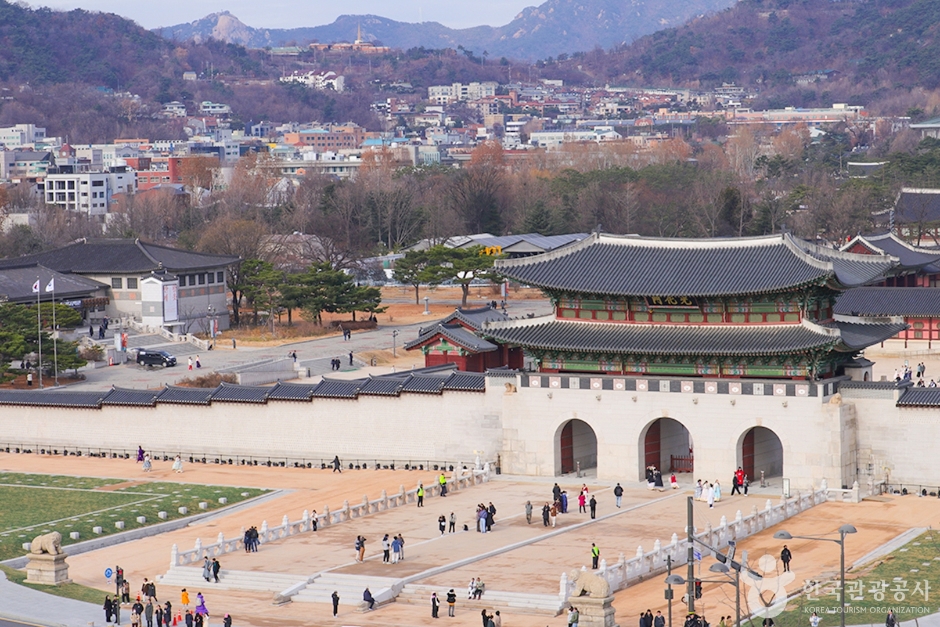
Gwanghwamun Gate (광화문)
5.3Km 2024-12-04
161 Sajik-ro, Jongno-gu, Seoul
Built in 1395 under the reign of King Taejo, the first king of the Joseon dynasty, Gwanghwamun Gate is the southern gate of Gyeongbokgung Palace. It is also the main gate of the palace, therefore larger and fancier in comparison to the other gates. Gwanghwamun Gate consists of three arched gates; the center gate was used by the king, while the other two were used by the crown prince and royal officials. The tall granite walls of the gate serve as a platform for the wooden gate tower that watches over the city. The gate has a sign with its name written at the top center of the gate tower.
Gwanghwamun Gate went through several damages and restorations over the course of history. It was first severely damaged during the Imjin War (1592-1598) and was not restored until the reconstruction of Gyeongbokgung Palace in 1864. Under the Japanese administration, the gate was demolished and relocated to the north of the palace's eastern gate, followed by series of damages during the Korean War (1950-1953). In 1968, Gwanghwamun Gate was relocated back to the south of the palace and was rebuilt using concrete; however, the gate’s position was shifted a few meters away from its original location. In 2006, a major reconstruction project took place to restore Gwanghwamun Gate to its original state and location, disassembling the structure completely and replacing concrete with granite and wood. After three years and eight months of construction, Gwanghwamun Gate was fully restored to its original form and was open to the public on August 15, 2010.
 English
 한국어
한국어 日本語
日本語 中文(简体)
 Deutsch
 Français
 Español
 Русский


