![ER NC Department Store - Bulgwang Branch [Tax Refund Shop] (ER NC백화점 불광)](http://tong.visitkorea.or.kr/cms/resource/21/2888421_image2_1.jpg)
ER NC Department Store - Bulgwang Branch [Tax Refund Shop] (ER NC백화점 불광)
2.3Km 2024-04-22
8F, 20, Bulgwang-ro, Eunpyeong-gu, Seoul
-
![Roem - NC Bulgwang Branch [Tax Refund Shop] (로엠 NC불광)](http://tong.visitkorea.or.kr/cms/resource/19/3314719_image2_1.jpg)
Roem - NC Bulgwang Branch [Tax Refund Shop] (로엠 NC불광)
2.3Km 2024-07-01
20, Bulgwang-ro, Eunpyeong-gu, Seoul
-
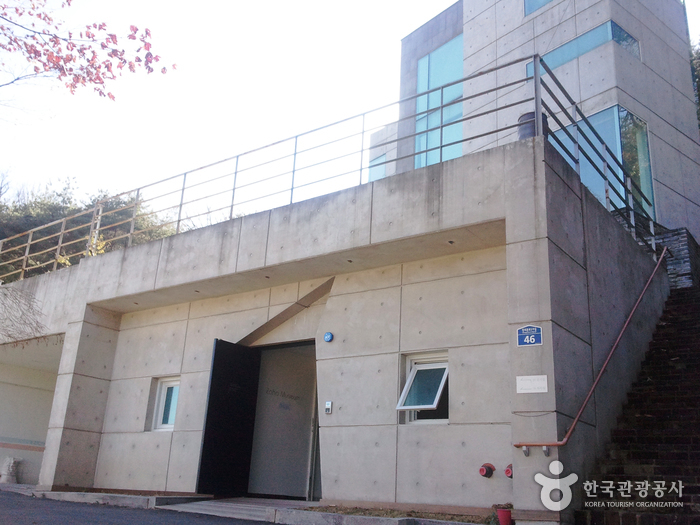
Zaha Museum (자하미술관)
2.3Km 2021-03-09
46, Changuimun-ro 5ga-gil, Jongno-gu, Seoul
+82-2-395-3222
Located in Buam-dong, Jongno-gu, Zaha Museum is the highest art gallery in Seoul. Reaching
the museum involves a bit of an uphill walk, but the breathtaking scenery that includes Bugaksan Mountain and Inwangsan Mountain makes it worth the effort.
Opened on March 1, 2008, the two-story museum exhibits experimental works of young artists. There are two exhibition halls and a small garden on the second floor with a great view of the mountains.

PETERPAN 1978 (피터팬1978)
2.3Km 2025-10-29
10 Jeungga-ro, Seodaemun-gu, Seoul
◎ Travel information to meet Hallyu’s charm - "BLACKPINK's Favorite Spots"
Jennie found it on YouTube during her bread tour in Yeonhui-dong. Since opening in 1978, it has been in the same place for over 40 years. There are many delicious breads such as the signature bread “Baby Buttocks” and “Sweet Red Bean Bread 1978,” which has kept the same flavor since 1978. There are many breads that give off a deep flavor when you take a bite, but the “Potato Bread” recommended by JENNIE is particularly savory for its fluffy texture.
National Memorial of Korean Provisional Government (국립대한민국임시정부기념관)
2.3Km 2023-01-16
279-24, Tongil-ro, Seodaemun-gu, Seoul
The National Memorial of Korean Provisional Government was established to shine a light on the proud history of the Korean Provisional Government's independence and the spirit of a democratic republic and to pass it on to future generations. The four-story memorial building with three underground floors houses three permanent exhibits, one special exhibit, Larchiveum, Symbol Plaza, storage, multi-purpose hall, and rooftop garden over a total area of 3,656 square meters, a total floor area of 9,703 square meters and a total exhibition space of 2,240 square meters. The permanent exhibits consist of a series of historic events from the March 1st Movement, which served as a turning point for the formation of the Provisional Government, to the foundation of the Korean Government that succeeded the mantle of the provisional government, while the special exhibit on the 1st floor currently hosts a special opening exhibition under the title of 『The Return of the Provisional Government of the Republic of Korea』. Moreover, a symbolic wall installation under the theme of "Waves of History" is displayed in the outdoor plaza on the 1st floor of the memorial expressing the Provisional Government’s desire for independence and the dynamics of the past, present, and future of Korea.
Seokparang (석파랑)
2.4Km 2024-09-02
309 Jahamun-ro, Jongno-gu, Seoul
+82-2-395-2500
Seokparang is a place built by relocating the Sarangchae of Heungseon Daewongun, the father of King Gojong of the Joseon dynasty. It boasts beautiful late Joseon-style gardens and three traditional hanok buildings. Here, one can enjoy authentic Gungjung hanjeongsik (royal Korean table d'hote) for both lunch and dinner, featuring meticulously prepared dishes such as traditional porridge, chilled salads, steamed prawns, kimchi cabbage wraps with pork, soybean paste jjigae set menu, and desserts. Diners can also savor traditional liquors crafted by artisans from across the country.
Seodaemun Independence Park (서대문독립공원)
2.4Km 2022-12-15
251, Tongil-ro, Seodaemun-gu, Seoul
+82-2-3140-8305
Seodaemun Independence Park was built on the former Seoul Detention Camp. It was used to imprison thousands of Korean independence activists until the liberation from the Japanese occupation on August 15, 1945, as well as the political prisoners during the political turmoil in the 1960s. When the prison was moved to Uiwang-si, Gyeonggi-do in November 1987, the area was restored and turned into a memorial park in August 15, 1992 to honor the sacrifices of the martyrs. The park preserves seven prison buildings, an execution ground, underground women’s prison, and the March 1st Movement Monument that has been moved from Tapgol Park in Jongno.
One of the most significant monuments of the Seodaemun Independence Park is Dongnimmun Gate (Independence Gate), which has been designated a Historic Site. Nearby is Dongnipgwan (Independence Hall), originally called Mohwagwan, which was used to greet Chinese envoys during the Joseon dynasty. Today, the hall enshrines 2,327 tablets inscribed with the names of Koreans who died for the cause of national independence. Standing right next to Dongnimmun Gate are the remnants of Yeongeunmun Gate, another Historic Site. Other sights inside the park include the Patriotic Martyr Monument, Declaration of Independence Monument, and Statue of Dr. Seo Jae-pil, who was an independence activist and publisher of Korea’s first independent newspaper. The main highlight of the park is the Seodaemun Prison History Hall, a former prison building that was renovated into a history museum.
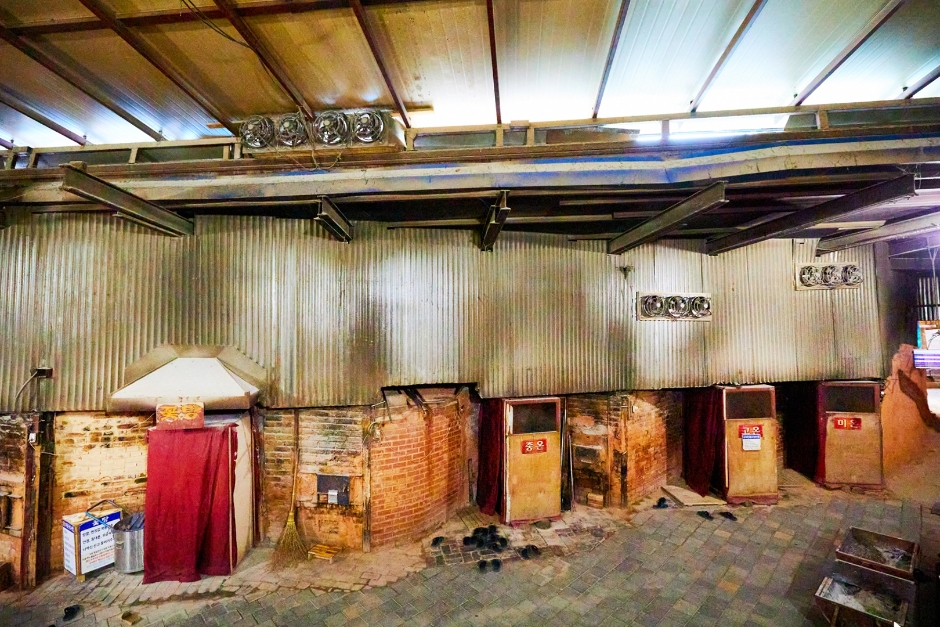
Supsok Hanbang Land (숲속한방랜드)
2.4Km 2024-03-18
75-7 Bongwonsa-gil, Seodaemun-gu, Seoul
Jjimjjilbang, a Korean-style sauna that combines a traditional bathhouse with a hot steam room, is often ranked high among the unique experiences in Korea chosen by foreigners. Taking a steam bath in a charcoal kiln discharges waste products from the skin through sweat and eliminates accumulated fatigue. Supsok Hanbang Land has several charcoal kilns for different temperatures. Using them in order from low to high-temperature rooms is good, but the highest-temperature room, “Kkottang,” has a risk of causing skinburn, so visitors are advised to wear socks and cotton gloves to enter the room. Another unique experience is to grill sweet potatoes or rice cakes on the brazier in front of the charcoal kiln.
![LG Best Shop - Bulgwang Main Branch [Tax Refund Shop] (엘지베스트샵 불광 본점)](http://tong.visitkorea.or.kr/cms/resource/77/2890377_image2_1.jpg)
LG Best Shop - Bulgwang Main Branch [Tax Refund Shop] (엘지베스트샵 불광 본점)
2.4Km 2024-04-18
41, Bulgwang-ro, Eunpyeong-gu, Seoul
-
Dongnimmun Gate (독립문)
2.5Km 2022-12-15
251, Tongil-ro, Seodaemun-gu, Seoul
Dongnimmun stands at the location originally known as Yeongeun, where envoys were once treated. When a Chinese envoy visited, the King would go out through this door to greet. In 1898, to announce the independence from Japan, Dongnimun was constructed with the fund collected by the citizens. The traces of the past still remain on Dongnimmun with two pillars in front of Dongnimmun being the remains of Yeongeunmun.
The Arc de Triomphe in France can be recalled in comparison to Dongnimmun. Dongnimmun was built using granite with a passageway x_height of 14.28 meters. On the top it is written ‘Dongnimmun’ in Korean with the national flag drawn on each side. On the inner-left side there are stone stairs leading to the attic. The national flower Mugunghwa are planted around Dongnimmun. Now it is surrounded by roads and it is eye-catching to view when passing by.
 English
 한국어
한국어 日本語
日本語 中文(简体)
 Deutsch
 Français
 Español
 Русский


