
World Cup Park (월드컵공원)
19.1Km 2024-10-23
243-60 World Cup-ro, Mapo-gu, Seoul
Opened on May 1st, 2002, the Wolrd Cup Park was once a 15-year-old landfill that held over 92 million tons of garbage. The park is located near Seoul World Cup Stadium, and is made up of five smaller parks - Pyeonghwa (Peace) Park, Haneul (Sky) Park, Noeul (Sunset) Park, Nanjicheon Park, and Nanji Hangang Park.
* Pyeonghwa Park: Closest to Seoul World Cup Stadium, it holds a pond, garden, children’s playground, and forest. As a representative park of World Cup Park, the park was designed in hopes of peace and harmony between mankind and nature. It is often used as a picnic area and place for nature studies.
* Nanji Hangang Park: Nanji Hangang Park was developed on the banks of the Hangang River. In contrast to other Hangang River parks, Nanji Hangang Park is a water-friendly park that has a gradual slope towards the riverbank. The park consists of a camping ground, soccer field, basketball court, grass field, cruise ship port, and an area for nature studies.
* Haneul Park: Haneul Park consists of vast grassland located at the highest elevation of the five parks. The park's pasture is covered with eulalias and wild flowers in their most natural state. In addition, 30,000 butterflies of different species were introduced in 2000 to stabilize the ecosystem. Five wind-powered generators provide power to the park and the park’s maintenance office. Once a mountain of garbage, it is now a green hill with 22 lookout points offering breathtaking views of Seoul, including the N Seoul Tower, Bukhansan Mountain, and Hangang River. Tall trees are line the park to provide shades and serve as resting spots for visitors. As a popular spot to enjoy the sight of eulalias, the park usually remains open until late in the evening during the Eulalia Festival period.
* Noeul Park: In order to prevent the vast area of land of what was once a wasteland from becoming an unnecessary chunk of land, a nine-hole golf course was constructed in what is now known as Noeul Park. The golf course serves as an environment friendly entertainment park to visitors while stabilizing the geographical formation and has an urban park nearby that offers scenic views of the Hangang River and beautiful sunset. Located west of the golf park is Noeul Square, decorated with shrubs and flowers.
* Nanjicheon Park: Nanjicheon Park was developed from the Nanji Stream, which flowed under Haneul Park. It was once overflowing with sewage runoff from a nearby landfill, but it has since been beautifully restored into a park with clear water. The park is built to serve as a recreational spot for those with for youths, elders, and people with disabilities.
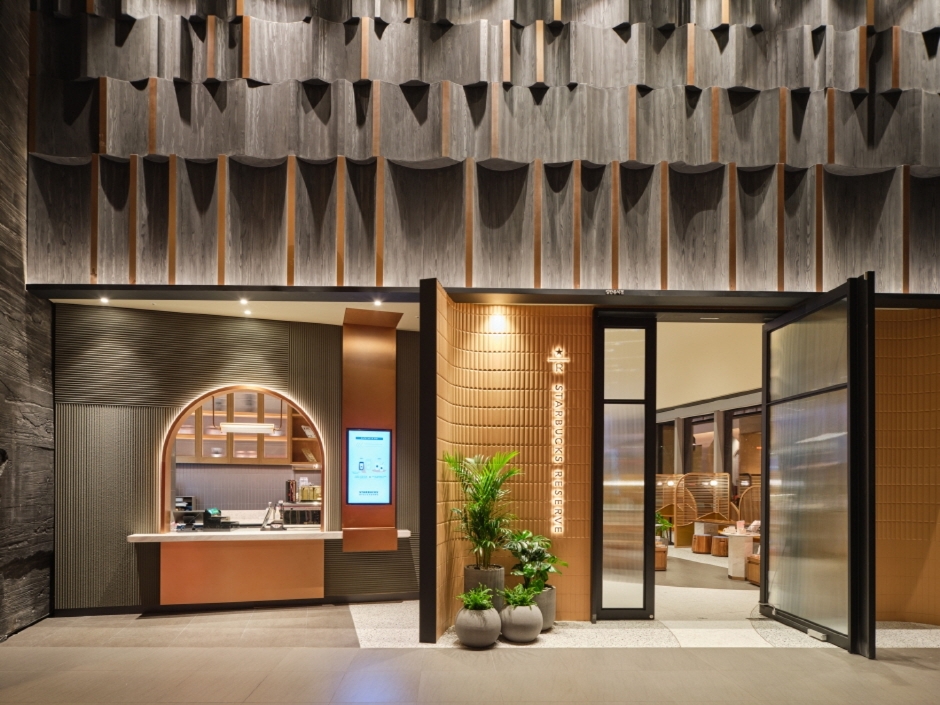
Starbucks Byuldabang (스타벅스 별다방)
19.1Km 2024-12-27
100 Toegye-ro, Jung-gu, Seoul
Byuldabang is a cozy space in the city, where the present and future of Starbucks coexist
Byuldabang is a special name. It combines the Korean words byul, which means stars, and dabang, which means a traditional space where people gather and talk over tea or drink. Byuldabang is the nickname Koreans generally use for Starbucks. Starbucks Byuldabang store opened in appreciation of customers of Starbucks Korea, celebrating its 22nd anniversary. This particular store is a Starbucks Reserve store with new concept food items, and is the first among Starbucks stores worldwide to have digital art wall decorations. The images projected to the art wall are “The Journey of Siren.” It is a surreal journey of Siren, who delivers coffee messages around the ocean, day and night. Customers love the story.
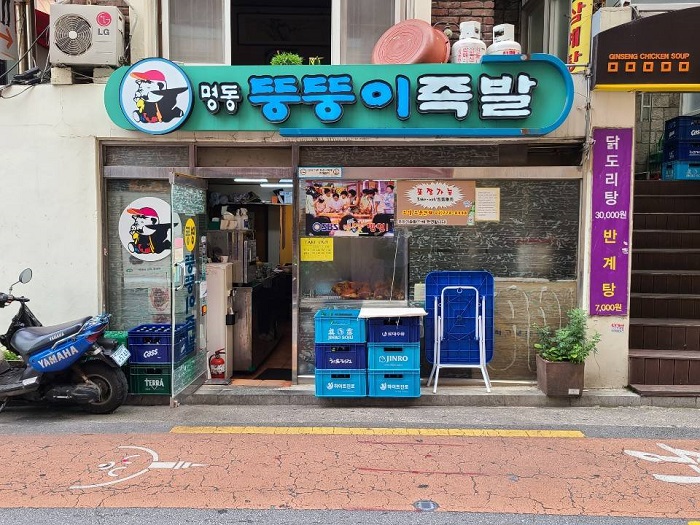
Myeong-dong Ttungttungi Jokbal (명동뚱뚱이족발)
19.1Km 2024-10-15
9, Toegye-ro, 20-gil, Jung-gu, Seoul
+82-2-778-8998
One of the old restaurants in Myeong-dong featured in Korean gourmet programs. This Korean dishes restaurant is located in Jung-gu, Seoul. The most famous menu is braised pigs' feet.
Shinsegae Department Store - Main Store (신세계백화점 (본점))
19.1Km 2025-04-07
63 Sogong-ro, Jung-gu, Seoul
+82-1588-1234
Shinsegae Department Store opened its doors as the first modern department store in the country in 1960. It stands where Korea's first department store, the Japanese Misreukkosi Department Store, used to be in the 1930s. After undergoing remodeling in 2007, it reopened as a luxury hall, featuring diverse brands ranging from the top three international luxury brands to new designer brands. In addition, the Trinity Gardens and art halls in the department store serve as a cultural space for a shopping experience that combines art and shopping.
Wowvos ((주)와우보스)
19.2Km 2025-10-23
(4th Floor, Buil Building), 135 Sohyang-ro, Bucheon-si, Gyeonggi-do
The name WOWVOS combines the exclamation WOW and the acronym VOS, which stands for V (vital), O (optimal), and S (support). We aim to become a global medical tour hub by providing optimal patient support, critical for their healthy and long lives. WOWVOS has cemented its standing as a leading force in global healthcare innovation. We are fully committed to providing overseas patients in Russia, CIS, and numerous other countries with innovative, patient-centered solutions to ensure they receive quality healthcare. We spare no effort in integrating all of our services to continue to provide the best possible care and services, and meet the individual needs of our patients. We strive to be a trusted partner in patients’ medical journey.
Jinju Hoegwan (진주회관)
19.2Km 2024-06-19
26 Sejong-daero 11-gil, Jung-gu, Seoul
+82-2-753-5388
Jinju Hoegwan is a renowned kongguksu (noodles in cold soybean soup) eatery near City Hall Station. Kongguksu is a traditional Korean summer dish made by boiling and grinding soybeans into a creamy broth, served with noodles, offering a refreshing and nutty flavor. Kongguksu is available from March to November. Their staff-recommended menu includes kimchi bokkeumbap (kimchi fried rice), freshly roasted by the staff, along with kimchi jjigae and samgyeopsal (pork belly).
Incheon Himchan General Hospital (인천힘찬종합병원)
19.2Km 2025-11-26
72 Nonhyeon-ro (Nonhyeon-dong), Namdong-gu, Incheon
Incheon Himchan General Hospital has specialized in joint, spine, and internal medicine care since 2002. It is located about one hour by car from Incheon International Airport. The hospital provides joint and spine surgeries and operates a robotic joint replacement center. It has an integrated internal medicine consultation system to support the treatment and recovery of patients with complex conditions. The health promotion center and rehabilitation center are well established, and the wards are clean and patient-centered.
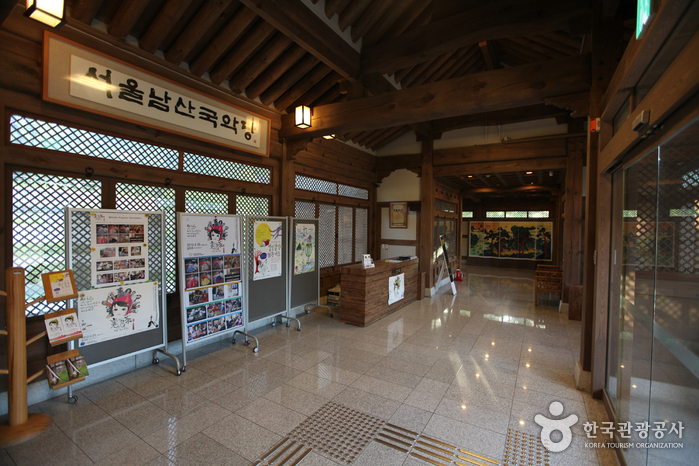
Seoul Namsan Gugakdang (서울 남산국악당)
19.2Km 2021-08-02
28, Toegye-ro 34-gil, Jung-gu, Seoul
+82-2-2261-0500
Seoul Namsan Gukakdang was established by Seoul Metropolitan Government as a representative traditional art-centered performance hall in 2007. It is comprised of one ground and two basement levels. The performance hall is located on the basement floor with 300 seats, equipped with facilities that deliver pansori sounds and gayageum music to every seat. Visitors can make a reservation at the Namsangol Hanok Village website.
Seoul Eungbongsan Mountain (응봉산(서울))
19.2Km 2024-07-05
1540 Geumho-dong 4-ga, Seongdong-gu, Seoul
+82-2-2286-6061
From Eungbongsan Mountain, one can easily see the Hangang River, Seoul Forest, Jamsil Sports Complex and more in the eastern part of Seoul. With such a great view of the Hangang River, the mountain is often packed with visitors including many photographers. The mountain serves as a venue for diverse events, including a sunrise festival on New Year's Day and forsythia festival around April during the flowering season.
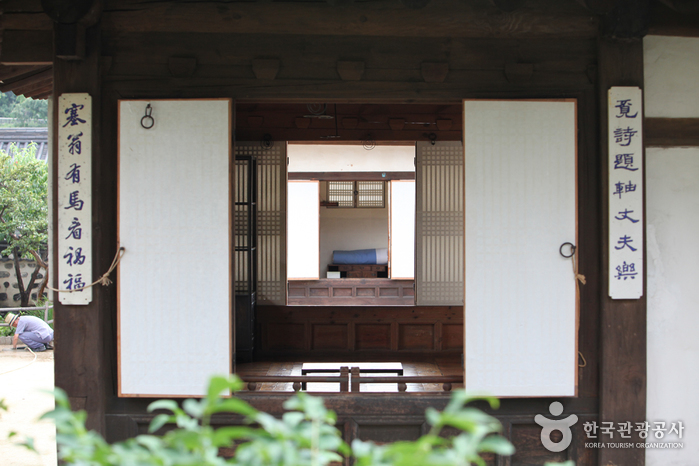
Haepungbuwongun Yun Taekyeong's Jaesil (해풍부원군윤택영댁재실)
19.2Km 2021-11-10
28, Toegye-ro 34-gil, Jung-gu, Seoul
+82-2-3396-5882
Haepungbuwongun Yun Taekyeong's Jaesil is a shrine house built by the father-in-law of King Sunjong of Joseon dynasty in 1906 when his daughter was proclaimed the crowned princess of Joseon and entered Changdeokgung Palace to later become Queen Sunjeong. Red pine trees salvaged from the demolition of Gyeongungung Palace were used to construct the house. It was originally located in Jegi-dong, Dongdaemun-gu, but was later restored and moved to its present location. The shrine of the house that was destroyed in 1960 was also restored.
Because the house is more of a shrine rather than residential living quarters, it has many unique features. For example, unlike other houses, it has the anchae (women’s quarters) located across from sarangbang (men’s quarters) with daecheong (living room) positioned between them.
 English
 한국어
한국어 日本語
日本語 中文(简体)
 Deutsch
 Français
 Español
 Русский


