
Seoul Miz Hospital (서울미즈병원)
18.4Km 2025-10-23
1041 Cheonho-daero, Gangdong-gu, Seoul
Seoul Miz Hospital is a women’s specialized hospital located in Gangdong-gu, Seoul. It provides medical services in obstetrics and gynecology, breast and thyroid surgery, internal medicine, dermatology and plastic surgery, and pediatrics, while also operating a health promotion center. With its newly expanded building, the hospital has established an International Medical Center to support the treatment of foreign patients.
![[Seoul Trail Course 1] Suraksan · Buramsan Mountain Course ([서울 둘레길 1코스] 수락 · 불암산 코스)](http://tong.visitkorea.or.kr/cms/resource/16/2658216_image2_1.jpg)
[Seoul Trail Course 1] Suraksan · Buramsan Mountain Course ([서울 둘레길 1코스] 수락 · 불암산 코스)
18.4Km 2025-01-06
Junggye-dong, Nowon-gu, Seoul, Republic of Korea
Seoul Trail is a walking trail that encompasses the entire city of Seoul, with a total length of 157km and 8 courses. It weaves together the history, culture, and natural ecology of Seoul through various stories. The 1st course is a gentle path from Suraksan Mountain to Buramsan Mountain, covering 18.6km and taking approximately 8 hours and 10 minutes. This trekking course around Buramsan Mountain passes through Iris Garden, Deongneung-gogae, Information Center, Taereung Royal Tomb, Suamsa Temple, and Hakdoam Temple.
![Yangju Olleung Royal Tomb [UNESCO World Heritage] (양주 온릉(단경왕후) [유네스코 세계문화유산])](http://tong.visitkorea.or.kr/cms/resource/10/757410_image2_1.jpg)
Yangju Olleung Royal Tomb [UNESCO World Heritage] (양주 온릉(단경왕후) [유네스코 세계문화유산])
18.4Km 2025-01-07
255-41, Hoguk-ro, Yangju-si, Gyeonggi-do
+82-31-855-5228
Olleung Royal Tomb is the royal tomb of Queen Dangyeong (1487-1557), consort of King Jungjong, the 11th ruler of the Joseon dynasty. Queen Dangyeong married King Jungjong when she was 13 years old. In 1506, when King Jungjong ascended to the throne, she became a queen as well, but she was deposed due to her father leading a coup against her husband's acendancy. Therefore, her grave was not regarded as a royal tomb until 1739.
Amsa-dong Prehistoric Site Museum (암사동선사유적박물관)
18.5Km 2023-12-22
875 Olympic-ro, Gangdong-gu, Seoul
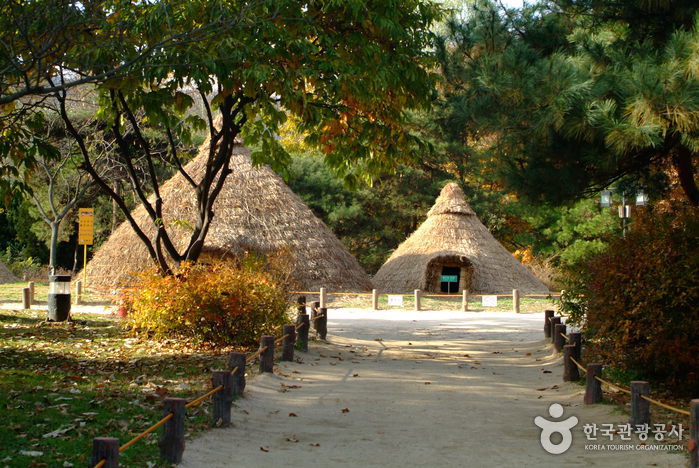
The archaeological sites in Amsa-dong, Seoul, were a collective settlement where people lived during the Neolithic Age about 6,000 years ago and became known to the world after the sand dunes along the Hangang River caved in during the great flood of 1925, exposing numerous pieces of comb-patterned pottery. The area designated as a historic site in 1979, and excavation of the site took place from 1981 to 1988. The cultural heritage protection area was expanded to a total area of 78,133㎡. Currently, nine Neolithic dugout huts and one experiential dugout hut have been restored. The exhibitions currently open to the public are Exhibition Hall 1, which displays a restoration of a Neolithic Age dugout, and Exhibition Hall 2, which displays various panels and models to help understand the prehistoric era as a whole.
Archaeological Site in Amsa-dong, Seoul (서울 암사동 유적)
18.5Km 2021-07-27
875, Olympic-ro, Gangdong-gu, Seoul
+82-2-3425-6520
The Archaeological Site in Amsa-dong reproduces the lifestyle of the Neolithic Era. Even the entrance gate is shaped like a huge dolmen and the trash cans are ancient diagonal-line patterned earthenware. Archaeological Site in Amsa-dong was excavated in 1925 when a flood washed away the soil on the banks of the Hangang River and exposed a large number of diagonal-line patterned earthenware. After several excavations, the Archaeological Site in Amsa-dong was established.
The site was a location for a massive colony, thus many ancient buildings, stone axes and stone arrows have been uncovered as well as countless diagonal-line patterned earthenware. The housing site is round with a spot in the center for fire. The site is colossal and possesses nine mud huts, two exhibition halls displaying ancient artifacts and an open mud hut where visitors can experience life in the Neolithic Era. The site offers many attractions such as mud huts and promenades. Archaeological Site in Amsa-dong is also very educational for children and families who want to learn and experience the Neolithic Age.
Bupyeong Haemultang (Seafood Stew) Street (부평 해물탕거리)
18.5Km 2022-10-26
113, Bupyeongmunhwa-ro, Bupyeong-gu, Incheon
+82-32-832-3031
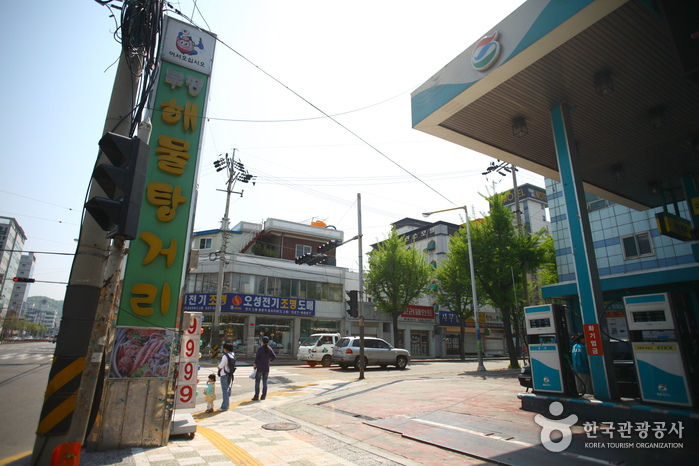
The history of Bupyeong Haemultang Street began 30-40 years ago, when there were just three restaurants on the street. Over the years, the street gained a reputation for serving delicious haemultang (seafood stew), and there are now ten seafood restaurants on the street. Each restaurant offers a rich, yet distinctly different flavored seafood stew prepared with aromatic vegetables and fresh seafood purchased from the marketplace every morning. The Haemultang Street has become so popular that many people travel the long distance from Seoul just for a satisfying meal of seafood stew. The restaurants specialize in stew and steamed seafood dishes, but also continue to develop new fusion menus to please all taste buds.
The Hyoosik Aank Hotel Incheon Bupyeong (더휴식 아늑호텔 인천 부평점)
18.8Km 2025-04-08
18-8 Gyeongwon-daero 1417beon-gil, Bupyeong-gu, Incheon
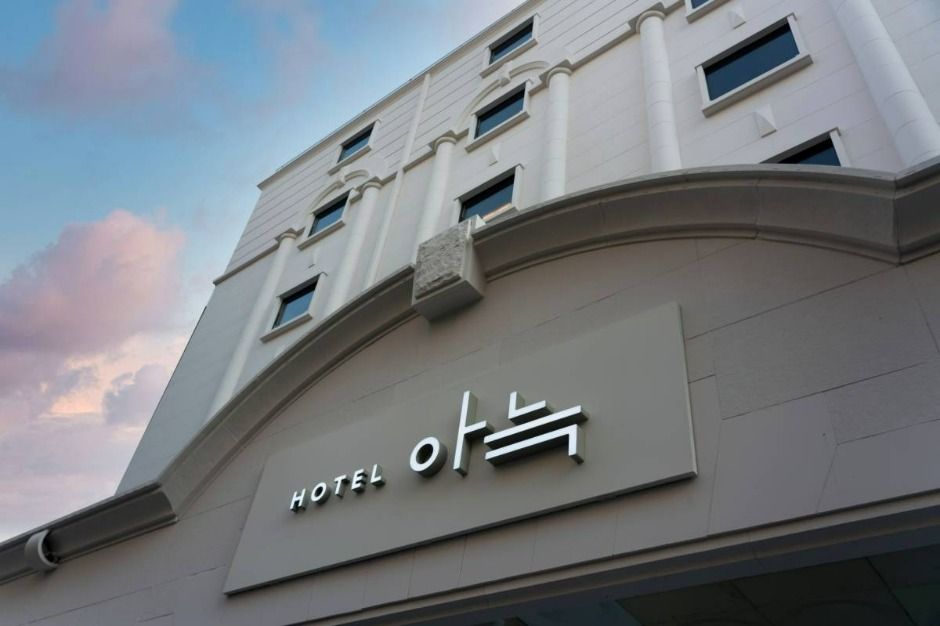
The Hyoosik Aank Hotel Incheon Bupyeong offers a variety of room types focusing on a specific theme for both leisure and relaxation, such as a deep sleep room with a premium massage chair, a singing room with noraebang equipment and soundproof walls, a deluxe couple room with two high-end gaming PCs, a movie room with a beam projector, a spa room with a tile tub, a party room, a twin bedroom, and a regular standard room. The hotel also has a parking lot and a guest lounge.
Gangnam Brand Eye Clinic (강남브랜드안과)
18.8Km 2025-10-23
2F-3F, 32 Sijang-ro, Bupyeong-gu, Incheon
Gangnam Brand Eye Clinic puts the highest priority on safety. Its chief director directly cares for the entire clinical process from surgery to post-surgery progress, to treatment. The clinic develops individualized treatment plans to generate the optimal outcome; and providing patients with a convenient service is its top priority.
The clinic introduced the fifth-generation SMILE LASIK equipment for the first time in Incheon. In 2024, Gangnam Brand Eye Clinic was recognized for its excellence in SCHWIND ATOS, based on numerous cases and research, to become the first SMILE LASIK training institute in Korea.
The medical staff at Gangnam Brand Eye Clinic receives advice on SMILE LASIK and shares medical knowledge through continuous global exchanges with SCHWIND headquarters, in addition to teaching and training medical staff. The clinic takes a double verification process through its collaborative care system to achieve optimal results. It is making sincere efforts so patients can see and remember cherished and beautiful moments more clearly.
Gyeonggi Cheonggyesa Temple (청계사(경기))
18.9Km 2021-11-23
475, Cheonggye-ro, Uiwang-si, Gyeonggi-do
+82-31-345-2533
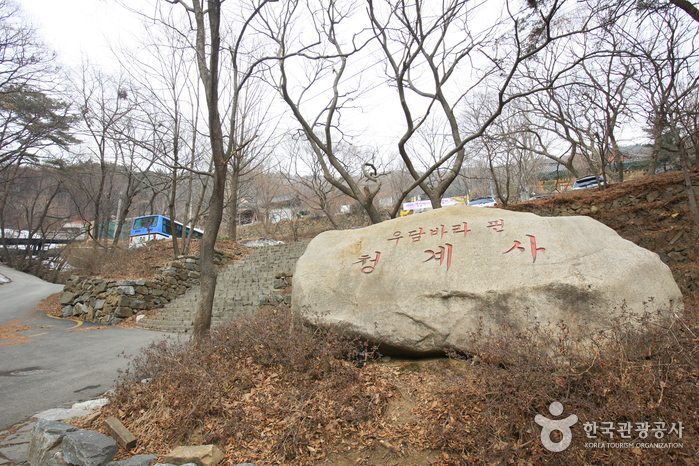
Cheonggyesa Temple is a Buddhist temple near Baegunhosu Lake that became well-known as the site of udumbara flower, a rarity that blooms on Buddhist statues. Built during the Silla Kingdom, the temple offers many sights, including the Cheonggyesa Temple Monument, Geungnakjeon Hall, the bell tower, Samseonggak Shrine, Ksitigarbha Hall, and Gamnoji Pond. Among the many things to see, visitors should not miss a glimpse of the Bronze Bell of Cheonggyesa Temple and the Wood Printing Block in Cheonggyesa Temple. Created in the 27th year of the reign of King Sukjong (1701) of the Joseon dynasty, the Bronze Bell has been designated as a national treasure, and is adorned with elaborate patterns.
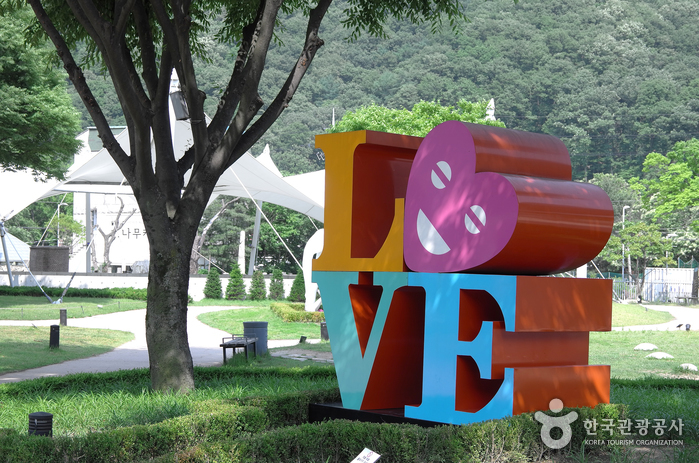
Gana Art Park (가나아트파크)
18.9Km 2024-02-07
117 Gwonyul-ro, Jangheung-myeon, Yangju-si, Gyeonggi-do
Gana Art Park is a park featuring an art museum, playground, performing stage, art shop, restaurant, and more. The park includes the Gana Children’s Art Museum, showcasing artworks by Korean and international contemporary art masters. There is also the Blue Space, where a work of Picasso is displayed, the Red Space dedicated to artworks of contemporary masters, and the Yellow Space, which is a playground equipped with nets
 English
 한국어
한국어 日本語
日本語 中文(简体)
 Deutsch
 Français
 Español
 Русский


