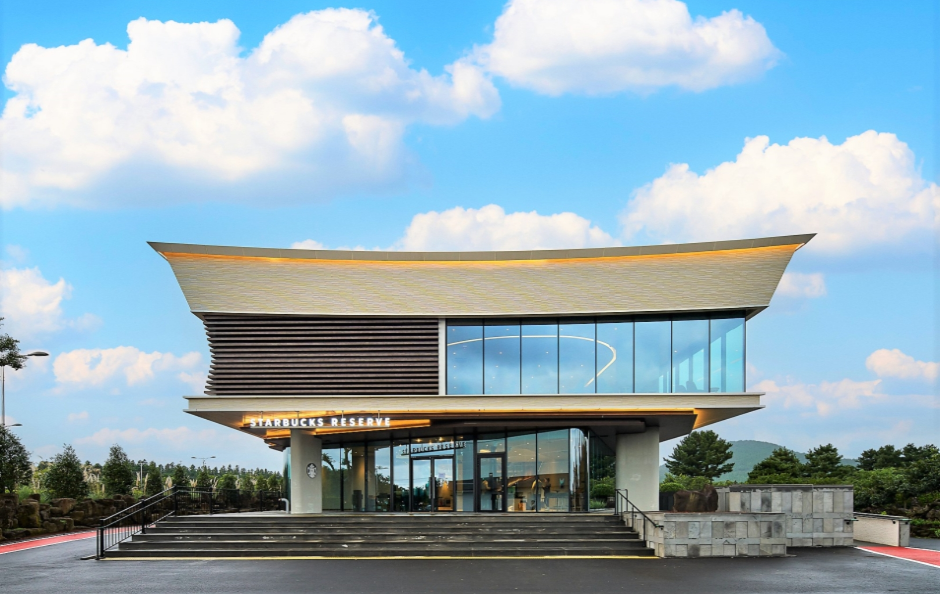
Starbucks Jeju Songdangpark R (스타벅스 더제주송당파크R)
16.3Km 2024-12-27
1189 Bijarim-ro Gujwa-eup, Jeju-si, Jeju-do
Korea's largest Starbucks Reserve exclusive store. Enjoy special coffee along with nature and culture
Starbucks Jeju Songdang R store is Korea’s largest Starbucks Reserve exclusive store. The store offers views of Hallasan Mountain and Jeju Stone Park, so you can leisurely enjoy the scenery of nature with various coffee beverages and foods in and out of the store. There are various specialty beverages, foods, and merchandise available only at the Jeju Songdang R store. As a Starbucks Reserve exclusive store, you can enjoy kinetic artwork representing coffee stories and an exhibition of photographer An Woong-chul's works in collaboration with the global camera manufacturer Leica.

Bengdwigul Cave [UNESCO World Natural Heritage Site] (제주 선흘리 벵뒤굴 [유네스코 세계자연유산])
16.7Km 2022-12-27
Jocheon-eup, Jeju-si, Jeju-do
+82-1600-0064
With a total length of 4,481 meters, Bengdwigul Cave is shaped like a maze and has one of the most complex lava tube structures in the world. For geologists, this cave is invaluable since it demonstrates how lava continuously flowed over the surface of the ground and the complex route it took to eventually form a tube deep underground. Created particularly close to the earth’s surface, this cave has a number of entrance holes to the tunnel. Inside, the complex structure of the cave unfolds in the form of double-tiered or triple-tiered rooms. A range of lava formations such as lava columns and lava bridges have developed inside this mystical tube.
* The UNESCO World Heritage designated Geomunoreum Lava Tube System of Bengdwigul, Manjanggul Cave, Gimnyeonggul, Yongcheondonggul and Dangcheomuldonggul Caves.
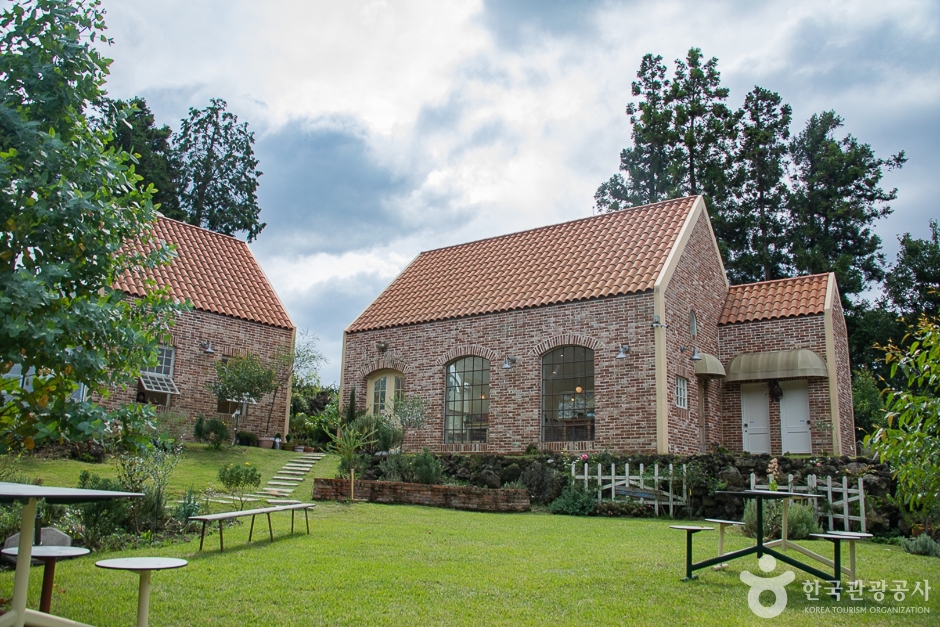
Jas de Bouffan (자드부팡)
16.8Km 2024-02-20
385-216 Bukheul-ro, Jocheon-eup, Jeju-si, Jeju-do
Café Jas de Bouffan is nestled within Dongbaek-Dongsan forest, featuring a European-style building that, along with the surrounding forest, creates stunning scenery. The signature item on the menu is the coconut cream latte. Guests can savor a range of desserts and drinks amidst the café's exotic atmosphere. Nearby attractions such as Gimnyeong Beach, Bijarim Forest, and Manjanggul Lava Tube enhance the appeal of visiting this unique spot.
Jeju World Natural Heritage Center (제주 세계자연유산센터)
16.9Km 2021-05-31
569-36, Seongyo-ro, Jeju-si, Jeju-do
+82-1800-2002
The Jeju World Natural Heritage Center was established to acknowledge Jeju Island’s value as the sole UNESCO World Natural Heritage in Korea. It is comprised of various facilities including a 4D video room, lava tunnel experience, origins of Jeju-do, and many other activities that visitors can experience first-hand. Jeju World Natural Heritage Center is located in the Geomunoreum Lava Tube System, which was designated as a UNESCO World Natural Heritage in 2007, one of the 20 ecological tourism spots selected by the Ministry of Environment of Korea in 2009, as well as a Korean-style ecological tourism model.
* Opening date: September 4, 2012
![Geomunoreum Lava Tube [UNESCO World Natural Heritage Site] (거문오름 [유네스코 세계자연유산])](http://tong.visitkorea.or.kr/cms/resource/61/2661661_image2_1.jpg)
Geomunoreum Lava Tube [UNESCO World Natural Heritage Site] (거문오름 [유네스코 세계자연유산])
16.9Km 2025-03-13
569-36 Seongyo-ro, Jocheon-eup, Jeju-si, Jeju-do
+82-64-710-8981
Geomunoreum Lava Tube stands out as one of the distinct oreum (the Jeju language term for parasitic cones) on Jeju Island, marked by its extensive network of around 20 lava tubes running through the volcanic structure. This site is not only a geological marvel but also a sanctuary for diverse biological species. Visitors begin their journey at the Jeju World Natural Heritage Center, from where a path leads directly to the Geomunoreum Lava Tube. It is important to note that prior reservations are required to visit. The significance of this location as a key geological feature was recognized when it was designated as a UNESCO World Natural Heritage Site in 2007. Additionally, an international trekking event is hosted annually to celebrate its global importance.
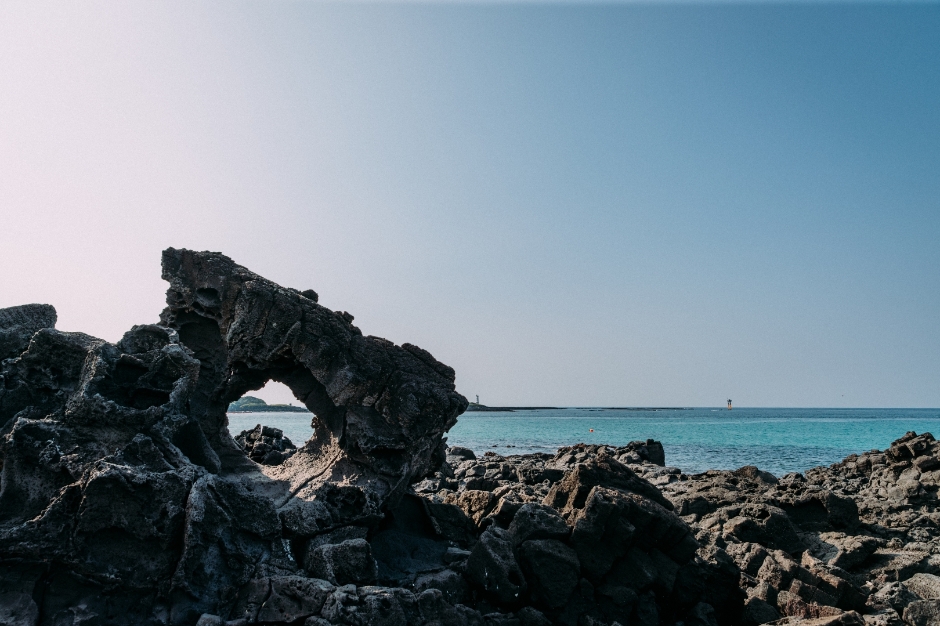
Changkkom (창꼼)
18.8Km 2025-10-29
393 Bukchon-ri, Jocheon-eup, Jeju-si, Jeju-do
Changkkom is a unique rock formation with a window-shaped hole, popular among tourists for taking photos.
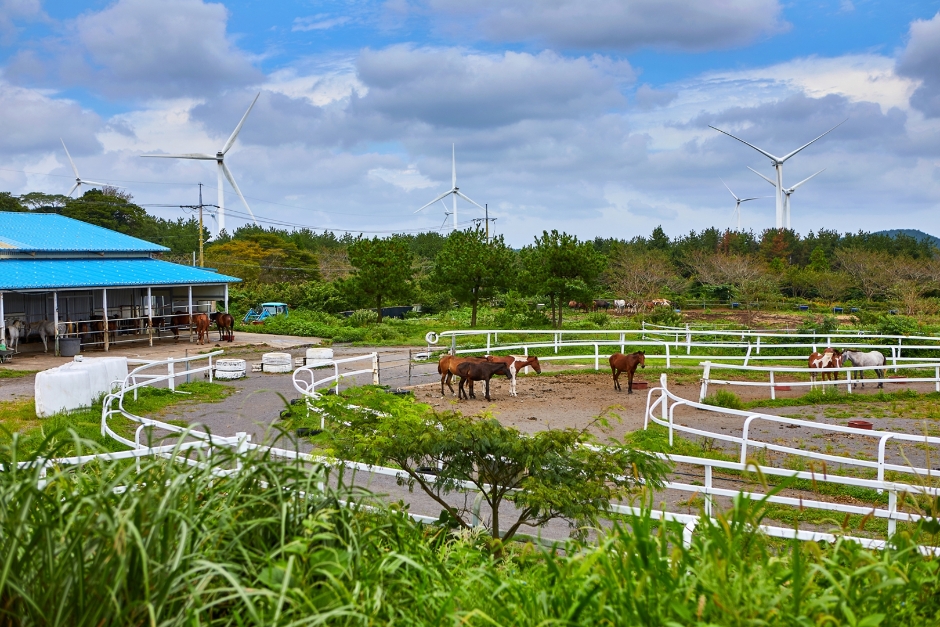
Jeju Horse Park (조랑말체험공원)
19.1Km 2024-01-11
381-15 Noksan-ro, Seogwipo-si, Jeju-do
Jeju Horse Park offers a venue to promote Jeju’s horse culture in an easy and fun way. The park has kept intact the 600-year history of nomadic culture at the site of Gasi-ri Village which used to house Gammajang, the place for raising the best horses during the Joseon dynasty. The park includes the Jeju Horse Museum, Ttarabi horseback riding track, Maeum Cafe, Mongol Yurt Guesthouse, camping site, Art Shop, and an experience place to focus on the Project for a New Cultural Space Creation through the support of the Ministry of Agriculture, Food and Rural Affairs. The Jeju Horse Museum was the first national museum created by a village and its main theme covers the history and culture of the village. It is also regarded as a new form of community business model.
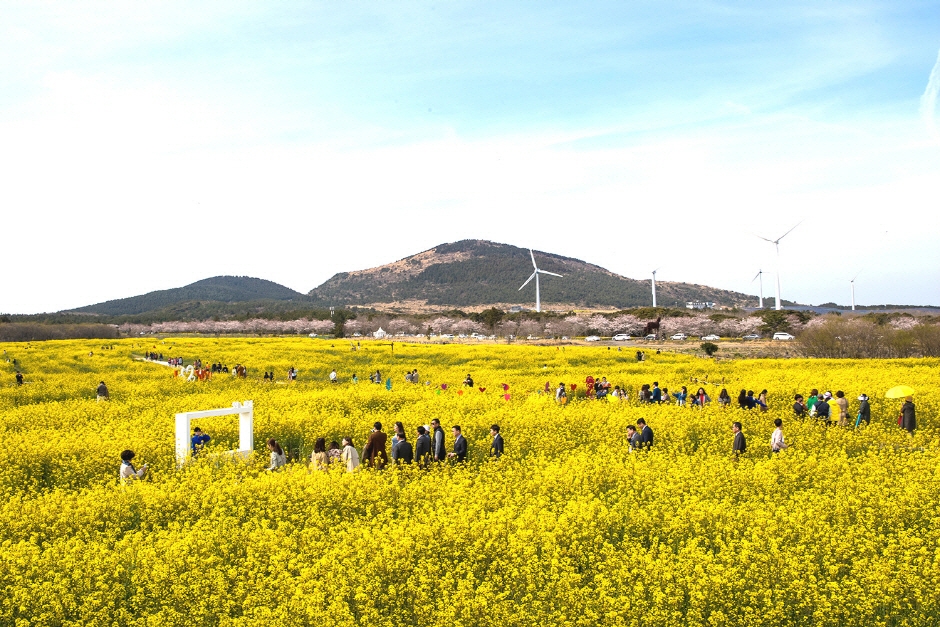
Jeju Canola Flower Festival (서귀포유채꽃축제)
19.1Km 2025-03-25
381-17 Noksan-ro, Seogwipo-si, Jeju-do
+82-64-760-3942
The Jeju Canola Flower Festival is one of the most famous festivals in Jeju, bringing news of spring arrival with fields upon fields of bright yellow flowers. Large numbers of visitors come to the festival every year to take in this beauty. In addition to enjoying the vibrant landscape, visitors can participate in a variety of festival events that showcase the unique spirit of Jeju Island.
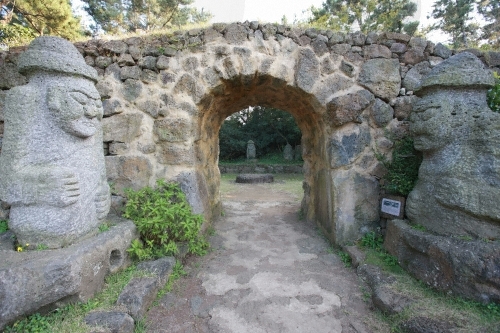
Dolhareubang Museum (돌하르방미술관)
19.2Km 2024-03-12
70 Bukchonseo 1-gil, Jocheon-eup, Jeju-si, Jeju-do
+82-64-782-0570
Dolhareubang Museum is an outdoor art gallery that exhibits 48 original dolhareubang sculptures recreated by artists native to Jeju Island. Visitors can enjoy the artworks while strolling through the Gotjawal in Jeju. Along the forest path, there are various interpretations of dolhareubang, such as dolhareubang practicing yoga and dolhareubang throwing hearts, providing a fresh perspective on these iconic stone statues.
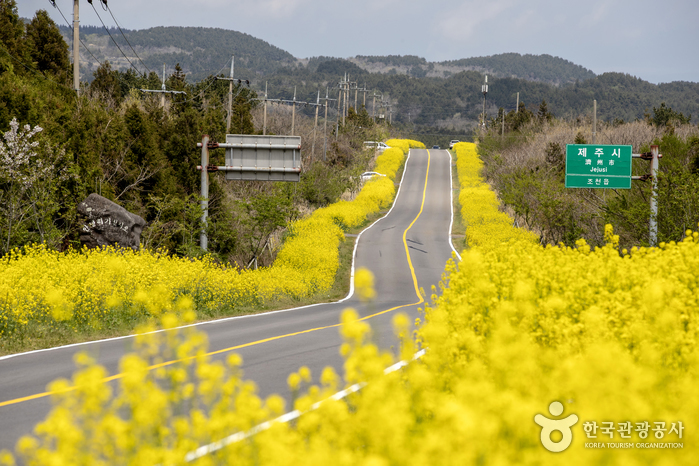
Seogwipo Gasiri Village (Noksan-ro Canola Flower Road) (서귀포 가시리마을 (녹산로 유채꽃도로))
19.5Km 2024-01-09
20 Gasi-ro 565beon-gil, Pyoseon-myeon, Seogwipo-si, Jeju-do
Seogwipo Gasiri Village is where canola flowers and cherry blossoms bloom simultaneously over a 10-kiliometer section from its access road every April, boasting a picturesque driving route. The combination of yellow canola flowers and light pink cherry blossoms is very special. Selected as one of the “100 Beautiful Roads in Korea,” Gasiri Noksan-ro Road is a road that passes through Noksanjang and Gammajang, which were the best horse farms of the Joseon period, and is currently one of the best canola flower roads in Jeju. As such, it is called the "First Sight of the Ten Sights of Gasiri Village." In addition, visitors can enjoy beautiful natural scenery unique to Jeju, such as Ttarabioreum and Keunsaseumioreum Parastic Cones.
 English
 한국어
한국어 日本語
日本語 中文(简体)
 Deutsch
 Français
 Español
 Русский


